
The Environmental Journal of Southern Appalachia

Knoxville Area Transit navigates length, depth and breadth

Written by

270741409 285060456987101 7670318144827675720 n

Shut up and get on the bus

KNOXVILLE Everyone needs to be everywhere at once: School, work, the grocery story, the mall and back home.

Locked into a society run by time, we tend to prefer methods of transportation that make for the quickest journey from place to place.

The modern car, usually powered by gasoline, provides individuals with quick transportation, which saves time. Private transportation embodies convenience.

But how far will we go to accommodate these vehicles that harm our environment? The average passenger vehicle will exhaust about 4.6 metric tons of carbon dioxide in one year (equaling the weight of a standard-sized ambulance), according to the Environmental Protection Agency. Carbon dioxide is the main greenhouse gas emitted by cars, but smaller amounts of methane and nitrogen oxide are also released into the atmosphere and contribute to the warming of the Earth’s climate. 

One solution — sometimes not appealing but available to many — is public transit. Compared to the pound of carbon dioxide per passenger mile produced by private transport, the U.S. Department of Transportation calculated that bus transit produces an average of 0.64 pounds of CO2 per passenger mile, and an average of 33 percent less greenhouse gases than cars.

Despite the environmental perks of public transit, the public is not yet sold on the concepts of bus stops far from their initial location, paying for each ride, and having to ride with other passengers.

For the past 23 years, Knoxville Area Transit Director of Planning and Public Information Belinda Woodiel-Brill has organized the best transit routes to serve the most people in Knoxville while also encouraging ridership to promote a more environmentally friendly means of transportation in the city.

“We are painfully aware of the very un-level playing field that is transportation in the United States. It is 90-percent car focused. It is not about moving people. It is about moving cars and it is about moving trucks,” Woodiel-Brill said.

Interstate highway and road systems and an emphasis on individual transportation and freight transport have kept a focus on private transit, which in turn has shifted interest away from the benefits that buses and other means of public transportation provide to the public — and the atmosphere we all share.

Many elements factor into whether people will use public transit, despite its obvious benefits.

Small, seemingly insignificant factors, like the location of sidewalks and grocery stores, are major planning points for Woodiel-Brill when evaluating where route service is most needed. One of the biggest challenges in transit is determining how much coverage buses can provide with limited funding and resources while still encouraging ridership. KAT has been faced with a balancing act in deciding service areas. KAT can reduce miles on one route and switch them to another, but that might leave the public without transportation in some areas.

“Transportation (costs) can be 25 percent of household income on average in East Tennessee, and obviously that is higher when you are looking at low-income households,” Woodiel-Brill said.

Woodiel-Brill evaluates potential routes on factors that include population density, how accessible road networks are, and the distance of bus stops from highly populated areas. Neighborhoods built on hillsides with narrow roads and limited sidewalks pose a challenge for bus routes.

“There is no concerted effort to think about anything besides driving their own car when developments like that happen,” she said.

KAT prioritizes routes in the most-visited places by the public in the city rather than the county. Subsequently, far-flung places like Turkey Creek and Halls are considered areas without need of “good service,” while areas such as Market Square and the city center require concentrated and frequent service.

Poor city air quality has on occasion prompted KAT to offer periodic incentives to the public to increase ridership. 

KAT has received grant funding to make fares free for passengers to reduce local vehicle emissions when air quality is especially bad.

Woodiel-Brill said ridership increased on free-fare days, and that provided the transportation agency with a correlation between personal transit and those who chose to take advantage of free transportation.

“In our work, we try to be as useful to people as we can. We want people to see it as an option,” she said.

With technology innovations and an increased transportation demand, Knoxville Area Transit has been working on a new project called the Comprehensive Operational Analysis.

“We have automatic passenger counters on buses, and we are putting them on all routes to see where people are getting on, where people are getting off,” Woodiel-Brill said.

KAT is also distributing passenger surveys to determine where a passenger boards a bus compared to where the passenger came from. This information will allow Woodiel-Brill to determine the areas in most need of public transit and guide her in planning future bus routes in the city.

In another nod to the importance of public transit agencies in reducing local and regional air pollution, KAT is testing electric buses that will reduce the carbon footprint of public transit. KAT will put more electric buses into service in 2022.

Public transit can be unappealing to those who have their own means of transportation, but new technologies will tempt the public with accessibility. To move from the outdated practices of cash fares, KAT is developing a mobile app that will offer real-time bus tracking and online payment options.

She hopes passengers will embrace the modernization and convenience of the improved public transit systems to reduce individual vehicle trips.

“Technology will help people see that using public transit is much better for the environment than taking an Uber or driving yourself,” Woodiel-Brill said.
 

Rate this item
(2 votes)
Published in News

Related items

  • Food myths hurt Mother Earth
    Save money and our planet with tips from Cheddar News

    The average American family of four annually spends more than $2,000 on food they never eat!

    Nearly one in nine people suffer from hunger worldwide.

    Agriculture contributes to global greenhouse gas emissions, deforestation and soil degradation.

    Climate change increases crop losses.

    One third of all food produced in the world is lost or wasted.

    It’s not just the food that’s wasted.

    Consider the energy wasted to grow, process and transport it.

    That all contributes to climate change, food shortages and to the rising costs of food, energy and health care.

    Food waste stresses our environment, humanity and the economy.

    — EarthSolidarity™

  • SACE sees many silver linings in Senate climate bill; House passage expected
    in News

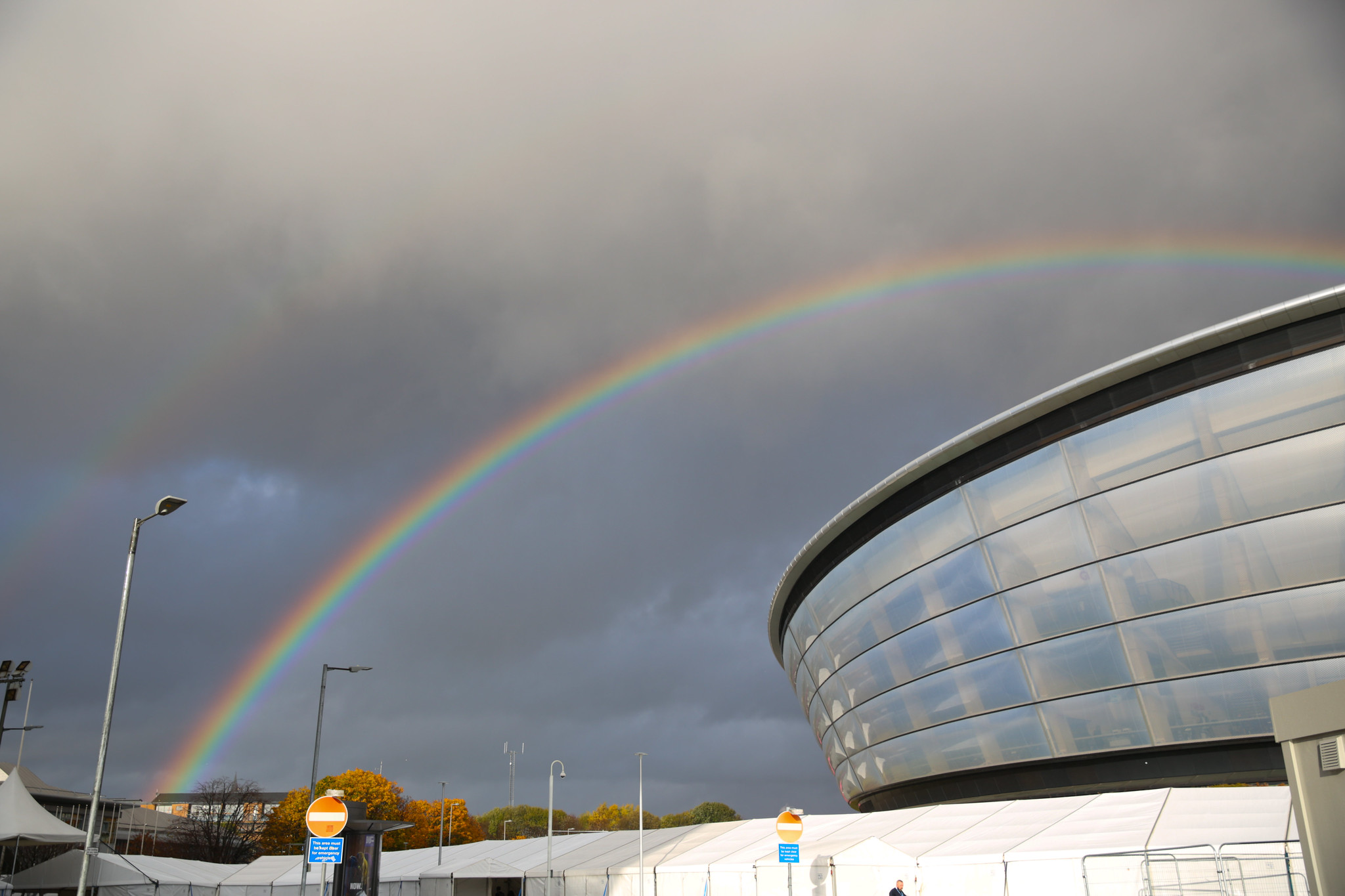
    UN Climate ChangeA rainbow pierces gray skies during the 2021 United Nations Climate Change Conference in Glasgow. United Nations

    Climate activists stress positives of Senate climate bill despite its shortcomings 

    Amy Rawe is communications director for Knoxville-based Southern Alliance for Clean Energy.

    KNOXVILLE — The U.S. Senate passed the Inflation Reduction Act (IRA), an estimated $430 billion bill, of which approximately $370 billion will be allocated to investments in clean energy and to address climate change.

    It’s the single largest climate investment in U.S. history, and if it passes the House, will put the country on a path to be able to achieve roughly 40 percent emissions reduction from 2005 levels by 2030, reestablishing our influence in meeting the Paris Agreement goal of limiting global warming to 1.5 degrees Celsius. 

  • Southeast electric vehicle sales increased 49 percent last year. Overall U.S. auto sales increased only 3 percent.
    in News

    car driving toward sunlightIllustration courtesy of Southern Alliance for Clean Energy

    Annual SACE, Atlas Public Policy data indicates rapidly escalating and enduring demand for electric vehicles in Southern U.S.

    Stan Cross leads Knoxville-based Southern Alliance for Clean Energy's electric transportation policy and utility reform efforts across the Southeast.

    When will the electrification of America’s cars, trucks, and buses really take off?

    Imminently, if not already. Look to the Southeast, which is experiencing impressive EV market growth despite a lack of state-level EV-supportive policies, incentives and regulations.

    The Southern Alliance for Clean Energy and partner, Atlas Public Policy, updated key year-end indicator data from the annual “Transportation Electrification in the Southeast” report to capture regional and state-specific growth in Alabama, Florida, Georgia, North Carolina, South Carolina and Tennessee.

    This is a critical time for the expanding EV market. The pandemic has exposed global supply chain weaknesses related to auto manufacturing and battery production that can only be solved by increasing domestic production of critical materials and components.

    The Russian invasion of Ukraine is once again exposing the entanglement of America’s commitment to global democracy and dependency on oil for transportation, and highlighting the national security benefits of rapidly transitioning to electric mobility powered by domestic electricity. 

  • Waste not want not at the University of Tennessee
    in News

    Food for deep thought

    KNOXVILLE On a Saturday afternoon, cheers (rare until recently) echo through Neyland Stadium. Guests in skyboxes watch the football game.

    Platters line the buffet: Piled high with chicken wings. Packed with hotdogs. Brimming with bowtie pasta. Flush with alfredo.

    It is nearing the end of the fourth quarter, and more than half of the food hasn’t been eaten. The Office of Sustainability will be by soon to transport these covered platters to the Culinary Institute to be recovered.

  • Permafrost is a ticking methane bomb

    Smithsonian: In Russia, even rocks emit greenhouse gases

    The melting Siberian tundra north of the Arctic Circle released millions of tons of methane last year as regional temperatures rose to 11 degrees (°F) above average.

    Methane has a shorter effect than carbon dioxide on global atmospheric change but is still 70 times more potent than CO2 in its overall global-warming potential. Its accelerated release on such a vast scale represents an immediate challenge to restricting overall global warming to less than 3 degrees (°F) by the end of the century, which scientists agree is necessary to prevent dramatic climate change. Methane’s potent global warming potential is why many conservationists oppose the use of natural gas as an energy source.

    But in Siberia, even the rocks are emitting methane. Scientists were surprised to find that limestone exposed by disappearing permafrost itself generated high levels of methane. Tundra fires have also accelerated the release of methane and other gases, and have come at great cost to the Russian government and the rural inhabitants of the vast region.

    That means economical and practical means must be developed elsewhere, at least, for methane management.

    But according to the United Nations Economic Council for Europe:

    “Despite methane’s short residence time, the fact that it has a much higher warming potential than CO2 and that its atmospheric volumes are continuously replenished make effective methane management a potentially important element in countries’ climate change mitigation strategies. As of today, however, there is neither a common technological approach to monitoring and recording methane emissions, nor a standard method for reporting them.“

  • J.J. takes a bus down Electric Avenue

    884E1F2D 2A2F 4F68 A15E 80F9458D1FB0Hard Knox Wire: City takes media and politicos on a spin aboard KAT’s newest electric bus

    The city demonstrated and offered rides aboard the Knoxville Area Transit’s new electric buses at Caswell Park on Thursday. The city and Knoxville Area Transit (KAT) plan to acquire a total of 18 electric buses as part of a plan to reduce the city’s carbon emissions by 80 percent over the next thirty years. Five of the buses, built by Canada-based manufacturer New Flyer, have arrived.

    “In the United States, transportation is the largest contributor to greenhouse gas emissions and consequently climate change. Transit has the power to change that,” city transit director Isaac Thorne told Hard Knox Wire.

    “By drawing new people to consider transit, reducing reliance on cars, opening up opportunities, and providing sustainable mobility choices, transit can make cities more livable, make the air cleaner, and help meet our challenging but achievable climate goals,” he said.

    The city plans to have 18 electric buses representing 26 percent of KAT’s fleet in regular operation by the end of next year. Another 41 percent of the existing fleet are hybrids, according to KAT.

    The Knoxville Utilities Board is installing multiple chargers to service the electricity needs of the new fleet.

    The new buses will undergo multiple trial runs before they hit the road with public passengers in January, probably along the Sutherland and Magnolia routes.

    “KAT’s fleet of 71 buses carry around 3 million passengers each year on its 23 bus routes and three downtown trolley routes. There are 1,150 bus stops scattered throughout the city, and bus routes come within a half-mile of 80 percent of the population,” Hard Knox Wire reported.

    “Today marks a dramatic milestone for Knoxville — this is a major step on our path toward a more clean and resilient future for our children and grandchildren,” Mayor Indya Kincannon said in a news release from KAT.

    “These high-efficiency electric buses are an investment in clean air, in healthy neighborhoods, and mobility for our residents.”

  • United Nations climate report: We are in dire straits and it’s getting too late

    Washington Post: Carbon dioxide levels at highest point in 2 million years

    A United Nations climate report authored by 34 people mining 14,000 scientific studies concludes that substantial climate change and its effects are now largely unavoidable but nations, municipalities and individuals can still take steps to minimize the consequences as much as possible.

    Here are some key points from the Intergovernmental Panel on Climate Change report:

    — Human-caused global climate change is an irrefutable fact. Now the debate is what we do about it.

    — Few if any signatories to the 2015 Paris Climate Accord met their pledged reduction targets.

    — At current emissions rates, the Earth will have heated to or beyond 2.7 degrees (F) above pre-industrial levels by the 2030s.

    — Hurricanes, cyclones, droughts, heat waves and other weather anomalies will worsen.

    The report comes as many present disasters linked to global warming unfold around the world. The second-largest wildfire in California history burned in the drought-stricken state; Greece dealt with historic wildfires; and Germany and the European Lowcountry reeled from an unprecedented rainstorm that destroyed entire towns and killed more than 200 people. Another heat wave is supposed to arrive in the Pacific Northwest this week.

  • Tell TVA: Don’t replace Kingston Coal with new fossil gas plants or pipelines!

    TVA's 2008 Kingston Fossil Plant coal fly ash slurry spillRemember TVA’s 2008 Kingston Fossil Plant coal fly ash slurry spill

    The Tennessee Valley Authority plans to retire the Kingston plant and its four other remaining coal-fired power plants by 2035.

    But it is seriously considering replacing them with large fossil gas power plants and new gas pipelines!

    Natural gas is cleaner than coal, but is yet another fossil fuel source that releases carbon dioxide. Such a replacement would be contrary to the national and global consensus that we must reduce the use of fossil fuels quickly to constrain the runaway climate crisis as much as we can.

    A plan based on emerging technologies for increased energy efficiency combined with distributed use of renewable energies and energy storage can increase community resilience; create more good, long-term jobs; diversify local business opportunities; and provide immediate public health benefits.

    TVA accepts public comments electronically through the end of July 15, 2021. 

    Don’t miss the opportunity to tell TVA that customers don’t want to pay for a yesteryear “solution” that does not really address the clear and present dangers to humanity. The Southern Alliance for Clean Energy has made it easy for you:  

    Submit your comment to TVA by tapping or clicking this link NOW:  

    Tell TVA, No New Fossil Gas Plants + Pipelines  

    You can also email TVA directly attn: Chevales Williams, This email address is being protected from spambots. You need JavaScript enabled to view it. 

    Source: TVA — Kingston Fossil Plant Retirement 


  • Knoxville electric bus fleet expands; furthers city efforts to reduce its carbon footprint
    in News

    kat electricbus1

    Grant to expand electric fleet will help city advance its emissions-reduction goals

    The federal government kicked down a $4.8 million grant to Knoxville for additional electric transit buses. It will expand the current Knoxville Area Transit electric fleet by six vehicles, the city announced July 12. That means KAT could have a total of 18 electric buses operating on routes across the city by the end of next year.

    The funds were disbursed from the federal Low and No Emission Vehicle Grant Program, which helps municipal transit agencies acquire low- or zero-emission buses and other transit vehicles, according to the city. Sen. Bill Hagerty and Rep. Tim Burchett supported the grant application. 

    KAT wants to electrify its entire 71-bus fleet within eight years. 

    “This will go a long way in helping KAT transition to an all-electric fleet,” Mayor Indya Kincannon said in the news release. “With each new electric bus, we are reducing our carbon footprint. We are moving closer toward our goal of cutting greenhouse gas emissions associated with City operations by 50 percent by 2030 — and a communitywide reduction of 80 percent by 2050.”  

    The grant furthers a city goal of replacing aging KAT diesel buses “with state-of-the-art electric buses that are about three times more fuel-efficient than a standard diesel bus (13 MPGDE vs. 4.4 MPG),” according to the city. 

    “Knoxville Area Transit provides an important service for folks in Knoxville, which is why earlier this year I asked the Federal Transit Administration to give KAT’s Low-No application grant full consideration,” Burchett said in the city release. “I’m glad this grant was awarded to our community so KAT can modernize its fleet to be more efficient and environmentally friendly.” 

  • Outrage + Optimism

    Global Optimism: “We Have to Be At War With Carbon”

    The first 15 minutes of this podcast analyze the Shortcomings of the G7 Summit.

    The second 15-minute segment is a conversation with the CEO of Rolls Royce about its goal to make long-distance flights Net Zero by 2050.