

13 Climate Action (20)
Take urgent action to combat climate change and its impacts
The South’s hidden climate threat
Written by Dan Chapman Spreading avens are seen in bloom in the Appalachians. The endangered long-stemmed perennials survive in higher mountain elevations but their lack of space to move higher in elevation in times of climate change and warming further threaten the plant. USFWS
It’s not just the coastlines that are recording climate change. Even the mountains of North Carolina are feeling the heat — including some endangered plants
“Atlanta reporter Dan Chapman retraced John Muir’s 1867 trek through the South, including the naturalist’s troubling legacy, to reveal environmental damage and loss that’s been largely overlooked.” This is an excerpt published by The Revelator from his book, A Road Running Southward: Following John Muir’s Journey Through an Endangered Land.
BOONE — It’s a wonder anything survives the ice, snow, and winds that pummel the ridge, let alone the delicate-seeming yellow flowers known as spreading avens.
The lovely, long-stemmed perennials are exceedingly rare, officially listed as endangered, and found only in the intemperate highlands of North Carolina and Tennessee. They sprout from shallow acidic soils underlying craggy rock faces and grassy heath balds. At times blasted with full sun, but mostly shrouded in mist, the avens are survivors, Ice Age throwbacks that refuse to die. Geum radiatum is only known to exist in fourteen places, including hard-to-find alpine redoubts reached via deer trail or brambly bushwhacking.
Hot weather doesn’t always equal evidence of climate change, but the puzzle is almost complete
Written by JJ Stambaugh Thomas Fraser/Hellbender Press
TVA sets record power day for June as region swelters and common sense degrades
This story was originally published by Hard Knox Wire.
KNOXVILLE — City residents this week joined scores of others around the world — from the Southwest United States to the Indian subcontinent — sweltering through late spring with eyes toward a summer that portends to be very hot.
Whether directly attributed to climate change or not, the heat waves are causing untold misery in locations across the Northern Hemisphere, straining power grids to the brink and causing a sharp rise in heat-related illnesses.
Knoxville Utilities Board asked this week that consumers curtail their electricity use by setting their thermostats a little higher and holding off until night on energy-sucking tasks like doing laundry or running the dishwasher. That request was met in many cases with derision and unsubstantiated claims that charging electric vehicles had overburdened energy infrastructure.
So exactly how hot is it in East Tennessee and how bad is it going to get?
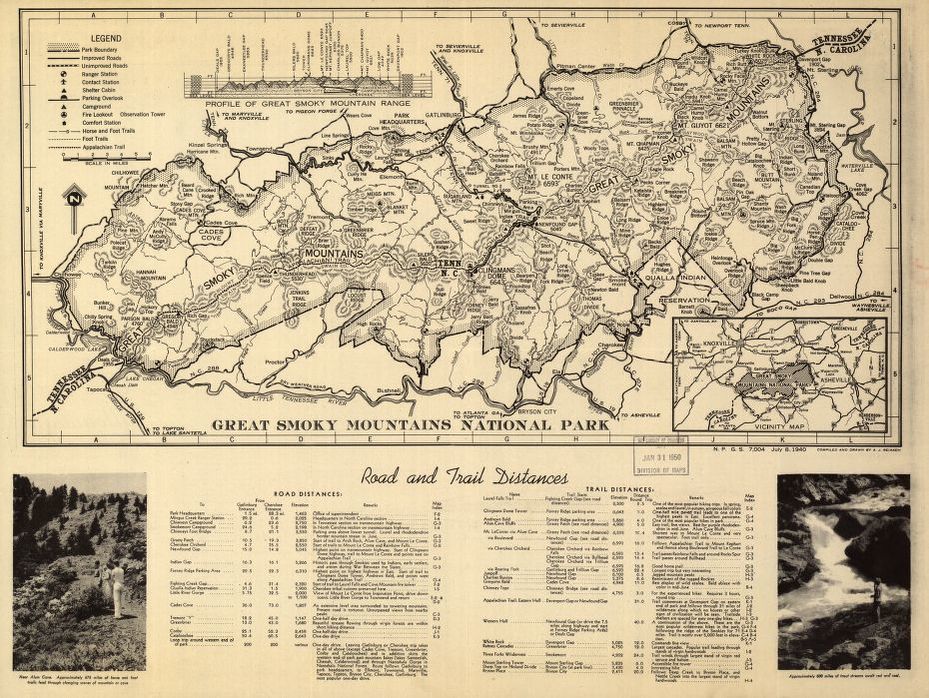 Many climate-change related issues have appeared since publication of this vintage map of Great Smoky Mountains National Park. Library of Congress
Invasive insects are among the vanguard of noticeable climate changes in America’s most-visited national park
GATLINBURG — Ants scurry beneath the carpet of last year’s leaves in Great Smoky Mountains National Park. The native ants are busy spreading the seeds of violets and bloodroot, preparing a new carpet of spring wildflowers to draw thousands of visitors.
But the local insects aren’t alone under there. They have become prey to venomous Asian needle ants that also prowl the leaf litter.
These invaders dine on termites, other ants and insects, while stealing habitat from them. Unlike invasive fire ants, needle ants can live in pristine forests and build large colonies with hundreds of queens. But like fire ants, needle ants have a painful sting that can trigger an allergic reaction.
Climate change is expected to make it easier for invasive species like needle ants to upset the delicate balance of this temperate rainforest full of rare plants and animals. That’s just one example.
- great smoky mountains
- climate change appalachia
- southern appalachian climate change
- great smoky mountains national park climate change
- needle ant
- are ants affected by climate change
- daniel malagon
- ana barro
- jason fridley
- paul super
- ipcc
- climate precipitation change
- smokies science
- national ecological observatory network
- neon
- armadillo
- invasive species
- change in precipitation
- importance of cloud to water balance highelevation ecosystem
- biodiversity
- climate change research
- sampling plot
Keeping energy inside: Grant to install 3-D printed walls at Knoxville’s oldest public housing complex
Written by S. Heather Duncan This is a possible result of ORNL/KCDC energy efficiency improvements set for Knoxville public housing funded by a Department of Energy grant. The project will include the Boys & Girls Club. © 2016 urban design association
Energy-efficiency upgrades based on ORNL walls set for Knoxville public housing
KNOXVILLE — A city public housing project almost a century old is going to receive 3-D printed energy efficiency upgrades thanks to a grant from the U.S. Department of Energy.
Scientists at Oak Ridge National Laboratory will partner with Knoxville’s Community Development Corporation to retrofit eight to 12 buildings at Western Heights using 3-D printed exterior “overclad” panels equipped with heat pumps and heat recovery systems. The Boys & Girls Club building at Five Points in Morningside will receive the same treatment.
- ornl science news
- oak ridge national laboratory
- morningside knoxville
- public housing efficiency
- 3d printing
- knoxville housing complex
- knoxville public housing
- ornl and knoxville
- ornl science outreach
- kcdc
- heather duncan
- western heights knoxville
- energy conservation
- energy efficiency
- innovative techology
- affordable housing
- low income
- costburdened renter
 Alex Pulsipher holds a sign demanding that TVA transition to 100 percent renewable energy at a rally Wednesday in Market Square in Knoxville. Courtesy Amy Rawe/Southern Alliance for Clean Energy
Varied environmental groups offer unified plea for clean energy, coal ash management and accountability from TVA
It was people power generating energy at Market Square in downtown Knoxville on Wednesday.
A coalition of civic and environmental groups and their representatives met at the bottom of the two Tennessee Valley Authority towers urging the public utility to reopen meetings to public comment; swear off all fossil fuels by 2030; and carefully tend to the needs of those affected by coal ash and devise a plan to contain it for the safety of current and future generations.
- tva clean energy
- coal ash
- kingston coal ash spill
- southern alliance for clean energy
- kingston coal ash worker
- tva coal ash
- sunrise movement
- appalachian voices
- sierra club
- tennessee valley authority
- accountability
- public comment
- tva board meeting
- carbon reduction
- climate action
- carbon free by 2030
- renewable energy