The Environmental Journal of Southern Appalachia

Hai! It’s a summer baby cuteness boom at the Tennessee Aquarium

Written by

The Tennessee Aquariums Gentoo Penguin chick weighs more than two kilograms at just 28 days oldThe Tennessee Aquarium’s Gentoo penguin chick weighs more than 2 kilograms at 28 weeks old. Casey Phillips/Tennessee Aquarium 

Baby penguin, endangered turtles and puffer fish are the newest additions to the Tennessee Aquarium

(Casey Phillips is a communications specialist at the Tennessee Aquarium in Chattanooga)

As any parent knows, kids tend to do whatever you least expect. In the case of an endangered four-eyed turtle hatchling at the Tennessee Aquarium, however, merely existing was — in itself — a huge surprise. 

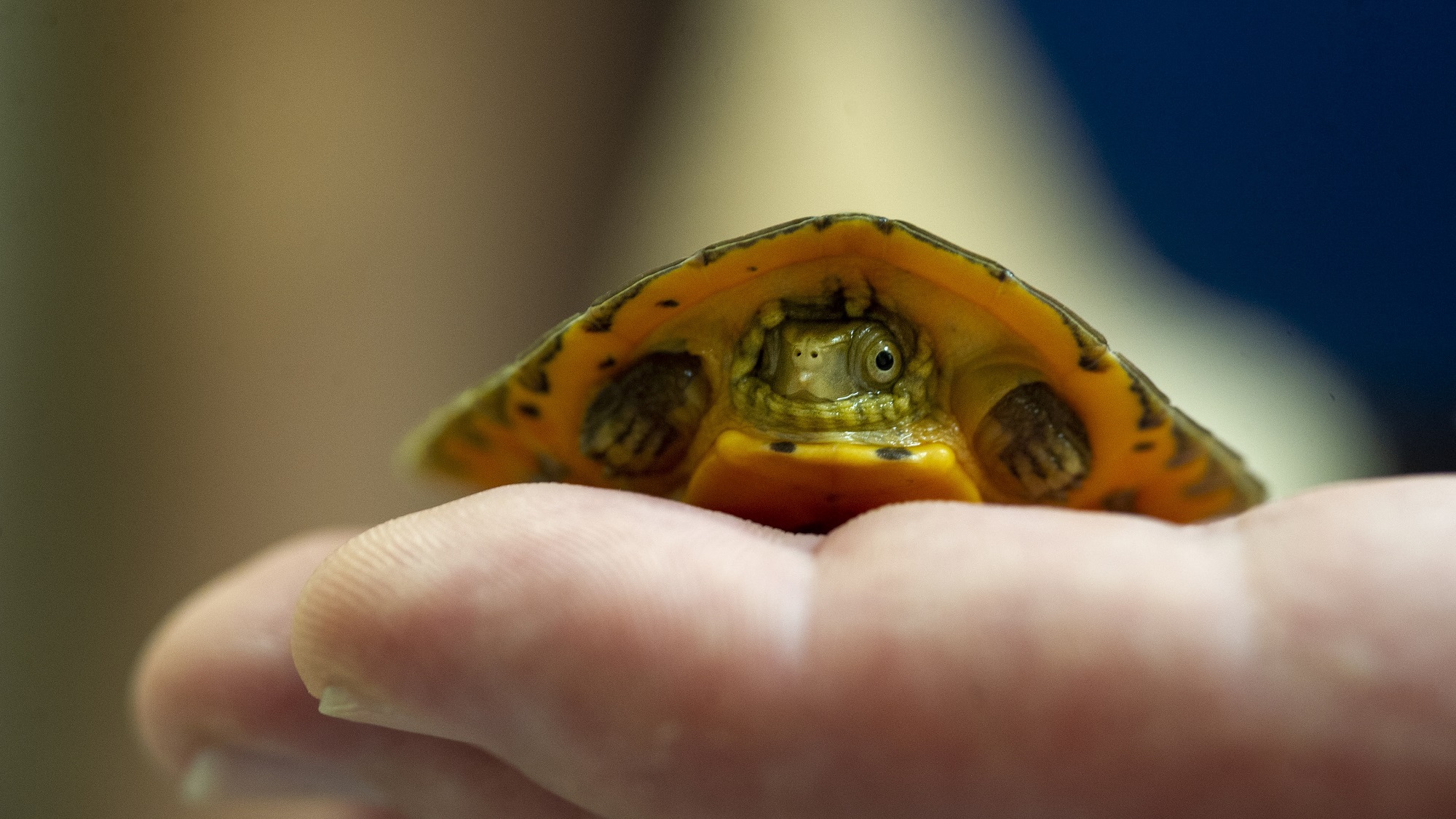
On July 11, a volunteer was tending an enclosure in a backup area of the River Journey exhibit. This habitat was only supposed to house a female endangered four-eyed turtle (Sacalia quadriocellata, a largely montaine species native to parts of China and Vietnam), but the volunteer soon discovered that the adult turtle wasn’t alone. Perched atop a layer of vegetation was a tiny hatchling that, by all accounts, shouldn’t have been there.

“The adult female hadn’t been with a male in over a year, so we did not check to see if she had laid this year,” says Bill Hughes, the aquarium’s herpetology coordinator. “To say the least, finding an egg, let alone a hatchling, was unexpected.”

Tennessee Aquarium Herpetology Coordinator holds a recently hatched Four eyed TurtleTennessee Aquarium Herpetology Coordinator Bill Hughes holds a recently hatched endangered four-eyed turtle. Casey Phillips/Tennessee Aquarium

 Hughes says females of some turtle species have been documented to store sperm until conditions favor fertilization. This adaptation may be behind the unexpected hatching, but at the moment, the tiny turtle’s origins remain a mystery. 

The baby four-eyed joins another that hatched on June 10 from an egg husbandry staff were aware of and had been monitoring. The first hatchling emerged from an egg laid on April 15. Both are eating and doing well.

Since 2007, the aquarium has successfully hatched 47 four-eyed turtles, which are so named for the distinctive eye-like markings on the back of their heads. Found only in mountainous streams and ponds in Southeast Asia, this species has been listed as endangered by the International Union for Conservation of Nature since 2000, thanks to over-collection in the wild and habitat loss.

“These turtles fall under a species survival plan that I manage,” said Hughes, who also oversees a program managing the closely related, critically endangered Beal’s four-eyed turtle (Sacalia bealei). “Increasing their population is a long-term goal, so every hatchling is a step further in the right direction.”

Visitors to the aquarium can see adorable examples of four-eyed and Beal’s four-eyed turtles in the hatchling nursery of River Journey’s Turtles of the World Gallery.

But tiny turtles aren’t the only recent arrivals at the aquarium.

On June 24, the aquarium celebrated the arrival of a Gentoo penguin chick in the Penguins’ Rock gallery. It began the herculean task of leaving its egg two days earlier on June 22, when animal care specialists first saw its beak and heard its squeaking vocalizations. This fuzzy newcomer is the offspring of Flower (mom) and Blue (dad), a newly minted pair of veteran parents.

During a routine veterinary checkup the day after it hatched, the chick weighed 132 grams — about 4.5 ounces. After a month of attentive care by its parents and close observation by aquarium staff, the formerly tiny, peeping ball of fluff now weighs 2.4 kilograms (5.3 pounds), an increase of more than 1,800 percent. If a human child were to grow at the same rate, a newborn weighing seven pounds at birth would tip the scales at 127 pounds four weeks later. 

Size isn’t the only thing that’s bigger about the chick, though, says Loribeth Lee, the aquarium’s senior aviculturist.

“For the first two weeks, it was pretty mellow, just looking around and studying everything,” Lee says. “Once two weeks hit, though, it developed a strong personality and loves to yell and slap at anything that moves too close!”

At the moment, the chick is still being fed by its parents, but aquarists plan to begin hand-feeding it solid food in the next two weeks. Visitors to the aquarium can observe the chick in its nest, which is encircled by clear acrylic panels, for the next six to seven weeks, when it will be old enough to join the rest of the colony. Its gender will remain unknown, pending the results of a routine blood test in November.

To keep tabs on the aquarium’s Gentoo and Macaroni penguins, digital visitors can watch a live video feed of the Penguins’ Rock gallery at tnaqua.org/live/penguins-rock/.
Rate this item
(2 votes)
Published in Earth

Related items

  • For the win: The storied snail darter swims back from the brink
    in News

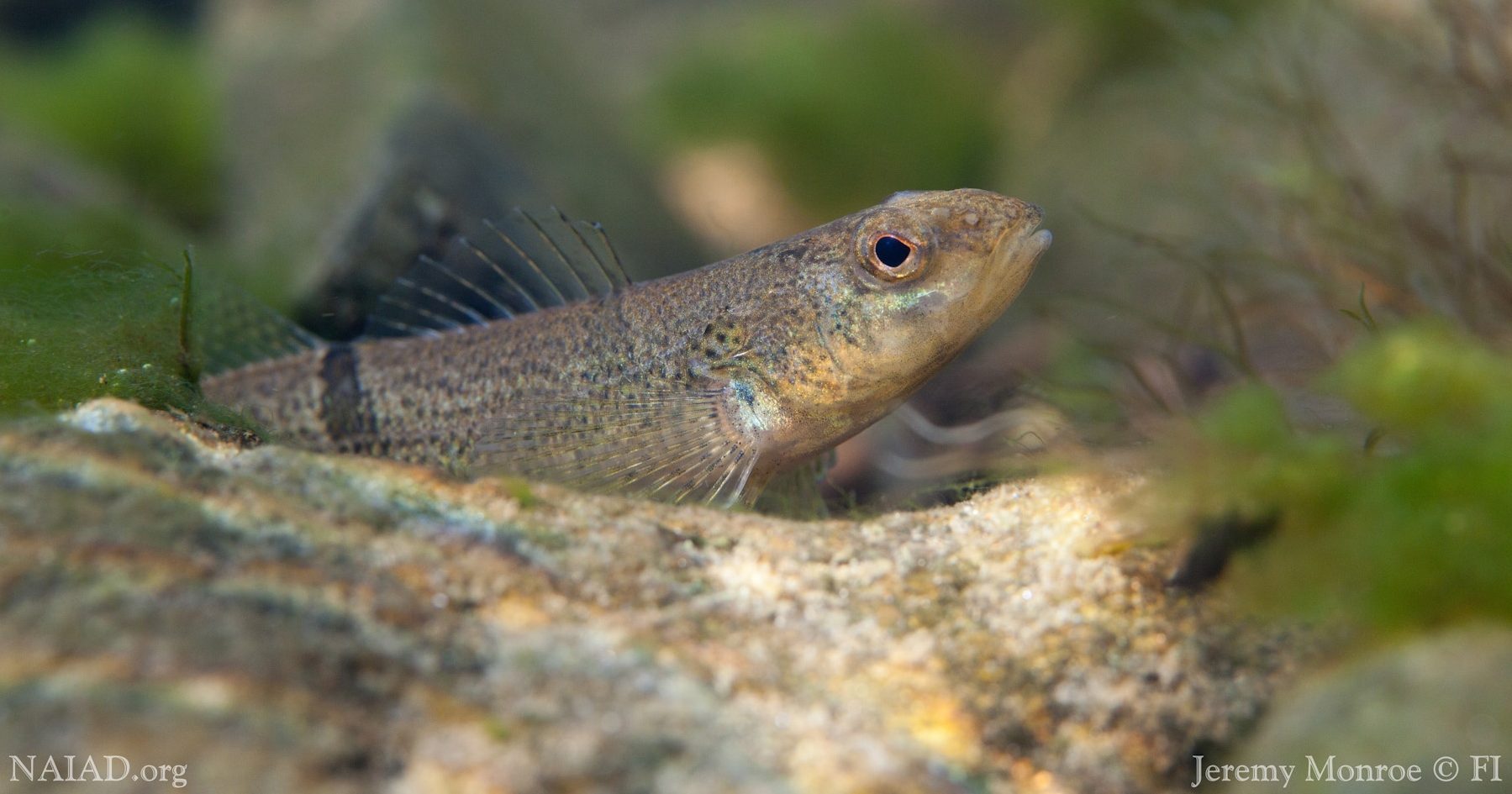
    Snail DarterThe snail darter, which caused an epic battle around TVA plans to dam the Tellico River in the 1970s, was recently removed from the Endangered Species List. Jeremy Monroe/Tennessee Aquarium

    The little fish that caused a maelstrom over a TVA dam project gets the last laugh

    TELLICO — In a win for endangered species protected by federal law, the U.S. Fish and Wildlife Service announced this week the fabled snail darter’s recovery and removal from the Federal List of Threatened and Endangered Wildlife. 

    Native to the Tennessee River watershed in Alabama, Georgia, Mississippi and Tennessee, the fish has long been an Endangered Species Act icon thanks to conservation efforts to save its habitat starting in the 1970s, when the Tennessee Valley Authority proposed construction of a dam on the Little Tennessee River. The snail darter (Percina tanasi) was central in the 1978 U.S. Supreme Court case Tennessee Valley Authority v. Hill, which solidified the scope of the then recently passed ESA. 

  • These artists are a bunch of animals
    in News

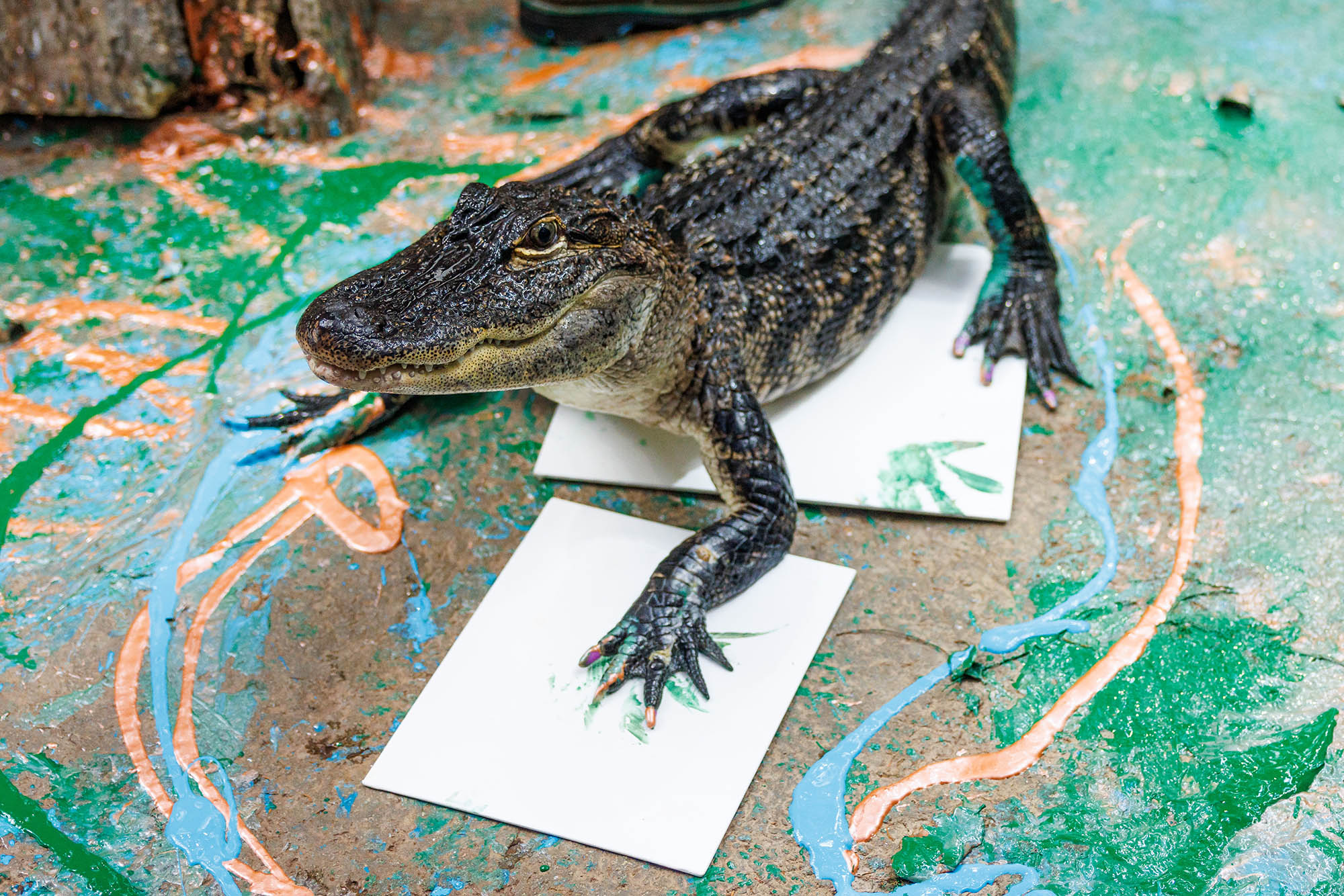
    American Alligators (Alligator mississippiensis) paint art for the Aquarium's fall fundraising auction.An American alligator (Alligator mississippiensis) paints art for the fall fundraising auction for the Tennessee Aquarium. The auction runs through Sept. 26.  Tennessee Aquarium

    Wildlife masterpieces mark an artistic autumnal fundraiser for the Tennessee Aquarium

    CHATTANOOGA — While getting ready to tackle his next artistic masterpiece at the Tennessee Aquarium, Avior the red-ruffed lemur likes to take a few steps to center himself: languid naps in the sunshine, delicate nibbles of romaine lettuce, a resounding howl to focus his energy. 

    Only after these rituals are complete can this master of composition — a true “Lemur-nardo” da Vinci — begin putting paw and tail to canvas to create his next opus. 

    Avior’s latest triumph — made using non-toxic, animal-friendly tempura paint, naturally — is a 16-by-20-inch piece created in collaboration with his fellow lemurs and social media star Atlanta-based artist Andrea Nelson (TikTok video). Avior and Nelson’s masterwork is one of more than two dozen pieces of art made by aquarium animals now up for bid during the Tennessee Aquarium’s online fall fundraising auction. The auction will conclude at noon on Monday, Sept. 26.

  • Southeast Tennessee ridges and rivers will benefit from $10m infusion of federal natural resource funding
    in News
    Crimper on Sequatchie Valley FarmA crimper is attached to the back of a tractor on a farm in the Sequatchie River Valley. A relatively recent agricultural technique, crimping has been shown to reduce farmers’ input costs and improve soil quality. Recently, USDA approved funneling $10 million into a six-county region of Southeast Tennessee. This money will fuel conservation-minded improvements for landowners, including lowering the cost to rent equipment like crimpers and subsidize the planting of cover crops to improve soil health and reduce sedimentation in nearby streams.  Tennessee Aquarium
     

    Targeted collaborative conservation will help local agricultural operations improve soil and water quality and protect aquatic life

    CHATTANOOGA Tennessee is as much a patchwork quilt of farms as it is an intricately woven lacework of streams and rivers. Soon, farmers and the aquatic life living alongside them will reap the benefits of $10 million in federal funds to support water-friendly agricultural improvements in the rolling uplands of the state’s southeastern corner.

    The U.S. Department of Agriculture (USDA) approved the allocation of more than $197 million to support Regional Conservation Partnership Programs (RCPP) throughout the nation. These initiatives promote coordination between USDA’s Natural Resources Conservation Service (NRCS) and partnering organizations that are already engaged in conservation efforts.

  • Monarch butterflies, an ephemeral but regular glimpse of beauty, are fluttering toward extinction
    in News

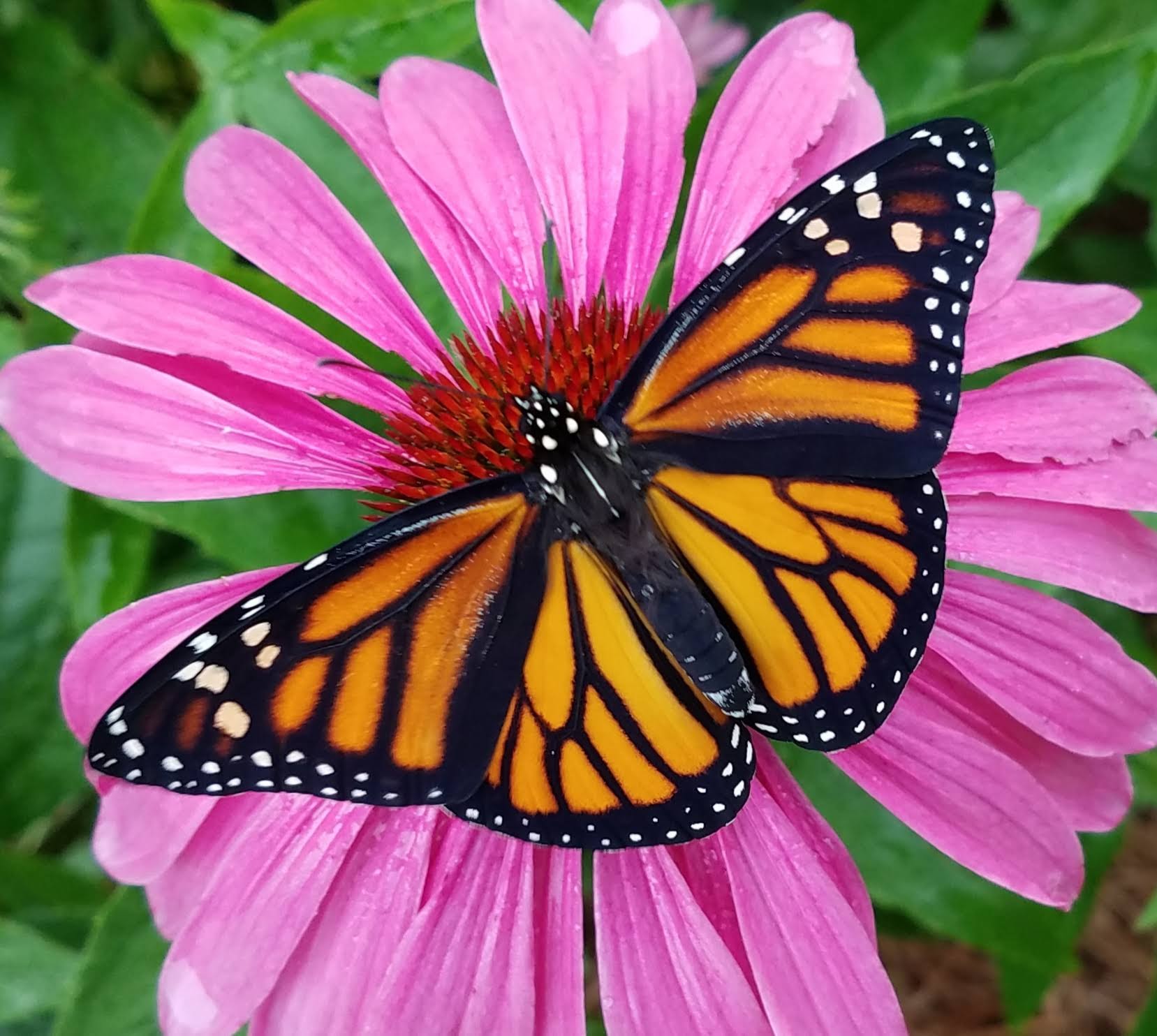
     Bales Monarch on coneflowerA monarch butterfly, recently declared endangered despite decades of conservation, is seen atop a coneflower. Stephen Lyn Bales

    Dramatic monarch declines mean the bell tolls for we

    KNOXVILLE — Monarch butterflies are ephemeral by nature. The orange and black dalliances that flitter through our lives, our yards, and our countryside like motes of dust are here one minute and gone the next. We pause for a few seconds to watch the “flutter-bys” and then move on.

    For about all of the Lepidopteran family, where they come from, where they go, their raison d'être, we don’t ask. They are winged wisps that pass through our busy lives. But that is not true with this orange and black butterfly, named to honor King William III of England, the Prince of Orange. But two people did ask.

    Norah and Fred Urquhart lived in Southern Canada and in the late 1930s they noticed that the monarch butterflies seemed to all be fluttering south this time of the year. Could they possibly be migrating and if so, where did they go? The notion that a butterfly might migrate south for the winter seemed hard to fathom. Yes, broad-winged hawks migrate. But a flimsy butterfly?

  • Nursing vanishing sharks far from the sea
    in News
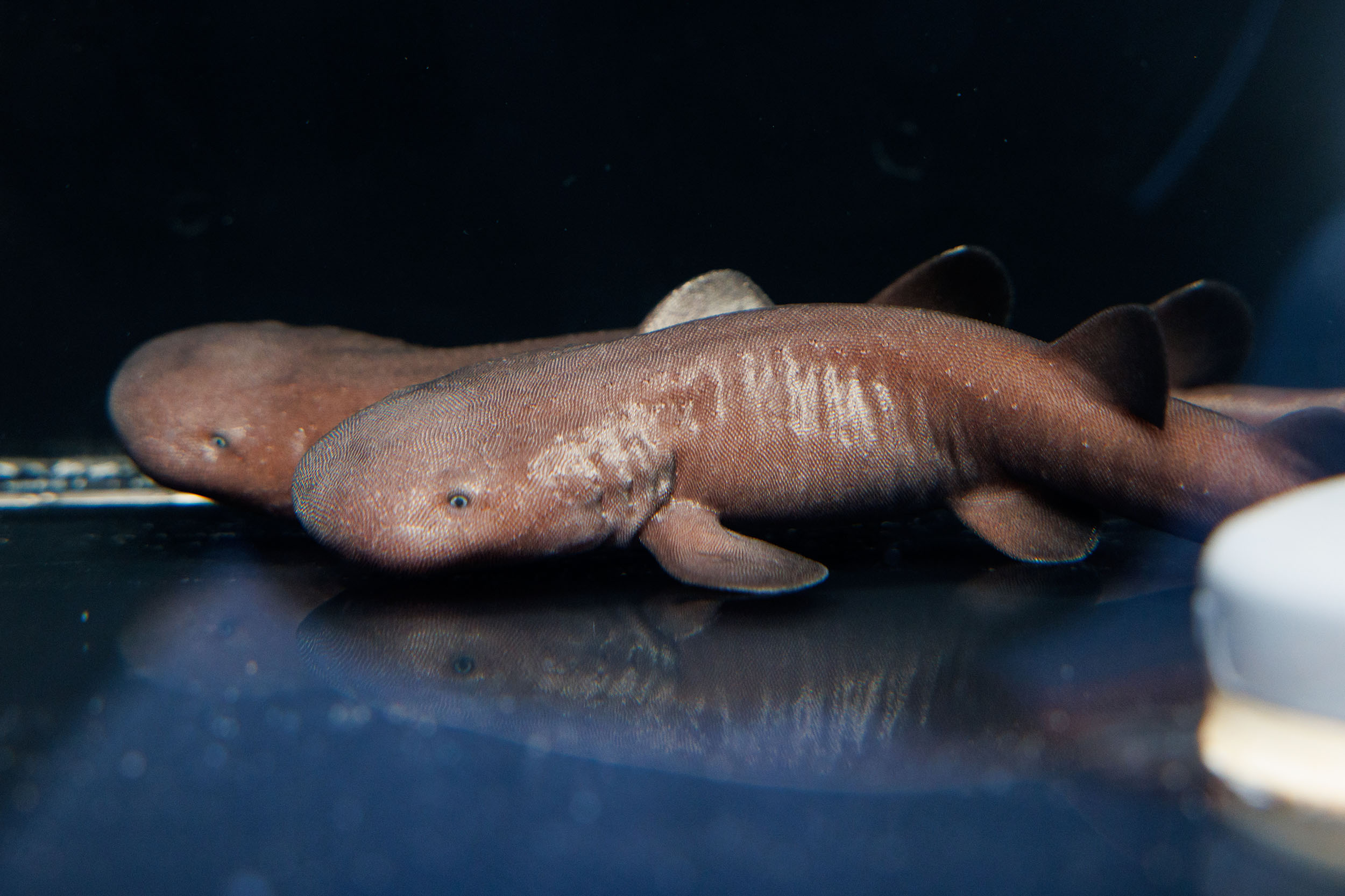
    Newly hatched Shorttail Nurse Shark pups (Pseudoginglymostoma brevicaudatum) at the Tennessee Aquarium.Tennessee Aquarium
     

    Tennessee Aquarium hatches endangered shark species

    CHATTANOOGA — The Tennessee Aquarium reached a significant milestone just in time for Shark Week with the recent hatching of three critically endangered short-tail nurse shark pups. 

    The diminutive youngsters, which hatched July 7, are the product of three adult short-tail nurse sharks — one male and two females — which arrived at the aquarium along with eight juveniles and eight fertilized eggs from a facility in Canada last year.

  • Tennessee Aquarium diversifies its scientific assets
    in News

    Jim Hill Fellow for Conservation Breelyn Bigbee holds a viewing window with a Logperch in Long Swamp Creek while conducting fieldwork in search of Bridled Darters near Jasper, Georgia.Jim Hill Fellow for Conservation Breelyn Bigbee holds a viewing window with a logperch in Long Swamp Creek while conducting fieldwork in search of bridled darters near Jasper, Georgia. Tennessee Aquarium

    Tennessee Aquarium fellowships bring minorities into the science space

    CHATTANOOGA — Never let it be said that all summer jobs are created equal.

    Squatting on his heels to dangle the flexible hose of an environmental DNA pump into a briskly flowing North Georgia stream, the last few weeks have been anything but ordinary for Spencer Trimpe. With the pump’s droning motor steadily collecting a sample of water to filter out genetic traces of the stream’s inhabitants, he doesn’t bother holding back a smile.

    A lanky junior biology major from Thomas More University, Trimpe is one of two students selected as part of the Tennessee Aquarium’s George Benz Aquatic Ecology Fellowship. Instead of manning a cash register or waiting tables this summer, he’s assisting freshwater scientists from the Tennessee Aquarium Conservation Institute with a variety of research projects.

  • Rare bipartisan legal effort under way for widespread wildlife protections
    NYT: Recovering America’s Wildlife Act a big bipartisan push to preserve animal species

    New York Times columnist Margaret Renkl noted recently that a precious opportunity has presented itself to strengthen wildlife-protection laws and add to environmental protections across the nation.

    The Nashville-based journalist said the act, known as RAWA, “is poised to become the single most effective tool in combating biodiversity loss since the Endangered Species Act.” The resolution is carried in the House by Michigan Democrat Rep. Debbie Dingell.

    “This bill provides funding for (1) the conservation or restoration of wildlife and plant species of greatest conservation need; (2) the wildlife conservation strategies of states, territories, or the District of Columbia; and (3) wildlife conservation education and recreation projects,” according to the U.S. Congress.

    “The Department of the Interior must use a portion of the funding for a grant program. The grants must be used for innovative recovery efforts for species of greatest conservation need, species listed as endangered or threatened species, or the habitats of such species.

    “In addition, the bill requires certain revenues generated from fees and penalties for violations of environmental requirements to be used as a source for the funding.”

    The legislation, which has already passed the House of Representatives, would allocate $1.4 billion each year across the country to protect and restore endangered plant and animal populations, and protect species already tipping toward endangered status. It is up for consideration in the Senate, where it has already garnered the support of at least a dozen Republicans and a majority of Democrats, virtually ensuring its passage, according to Renkl.

    “You don’t have to nurse a fondness for spotted owls or snail darters — creatures at the heart of two of the most contentious environmental debates in recent history — to understand that what is best for the ecosystems we share with nonhuman animals is what’s best for us, too,” Renkl wrote.

  • Tennessee Aquarium marks a milestone in its effort to bring native brook trout back to mountain streams
    in News

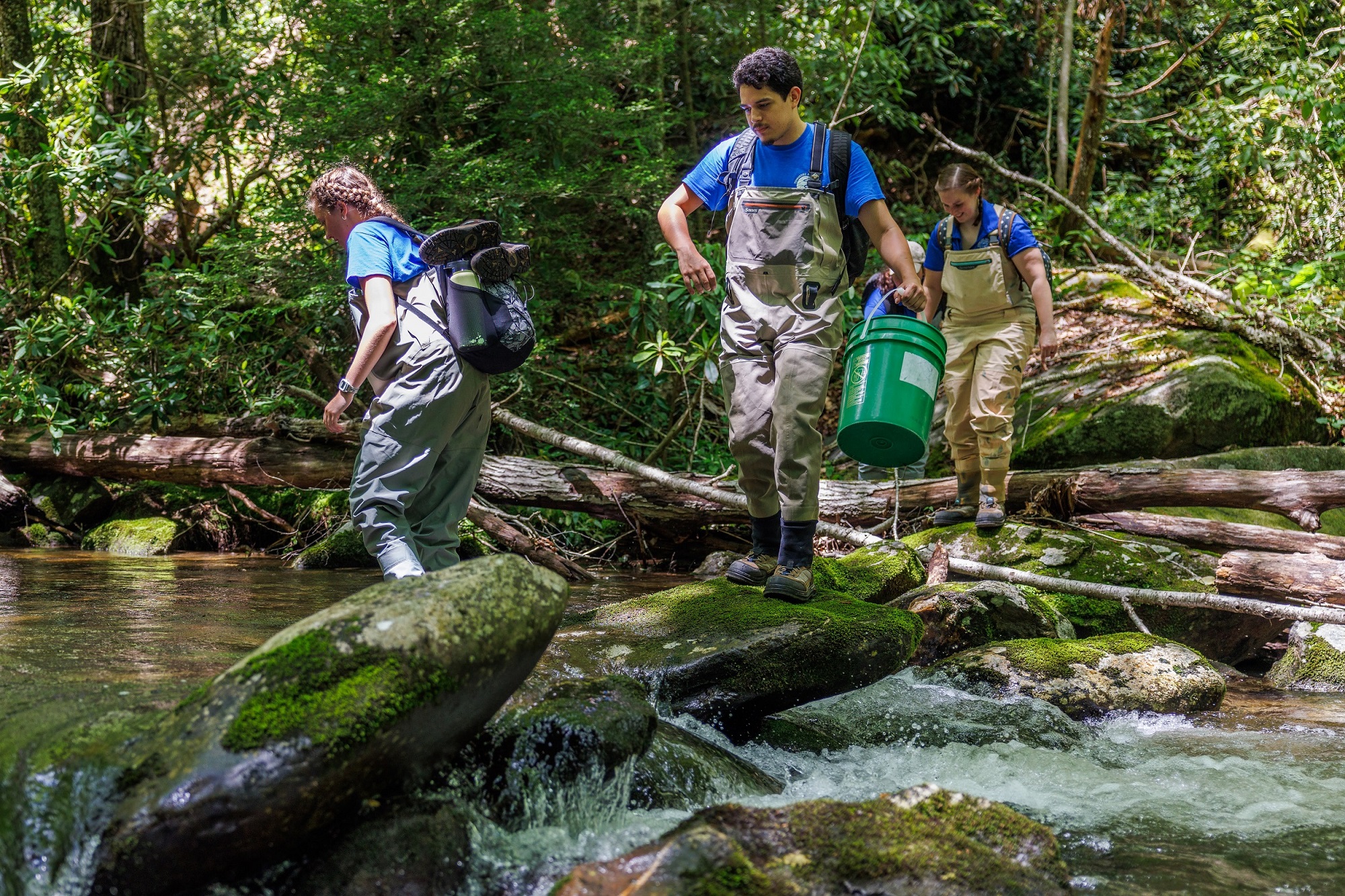
    Reintroduction Assistant Kaylee Clayton, left, Jim Hill Fellow for Conservation Anthony Hernandez, center, and Reintroduction Biologist Teresa Israel cross a stream during a Southern Appalachian Brook Trout release.Reintroduction Assistant Kaylee Clayton, left, Jim Hill Fellow for Conservation Anthony Hernandez, center, and Reintroduction Biologist Teresa Israel cross a stream during a Southern Appalachian brook trout release. Tennessee Aquarium

    Emblematic brook trout get a second chance at home in Southern Appalachian streams

    Casey Phillips is a writer for the Tennessee Aquarium.

    CHATTANOOGA — A team from the Tennessee Aquarium, Tennessee Wildlife Resources Agency and Trout Unlimited hiked along — and occasionally waded through — a pristine tributary of South Fork Citico Creek in Cherokee National Forest. 

     Navigating an obstacle course of tangled mountain laurel branches and moss-slickened boulders in late May, the team followed the stream as it gently descended through the Appalachian uplands. When a calm pool or shaded rocky overhang presented itself, they paused to dip their nets into five-gallon buckets filled with wriggling juvenile Southern Appalachian brook trout.

    These little fish, raised to about two inches over six months, were the focus of more than six months of work at the Tennessee Aquarium Conservation Institute and the impetus for the hours-long trek into the East Tennessee woods.

  • Dinosaurs released in Chattanooga to honor Earth Day 2022
    in News

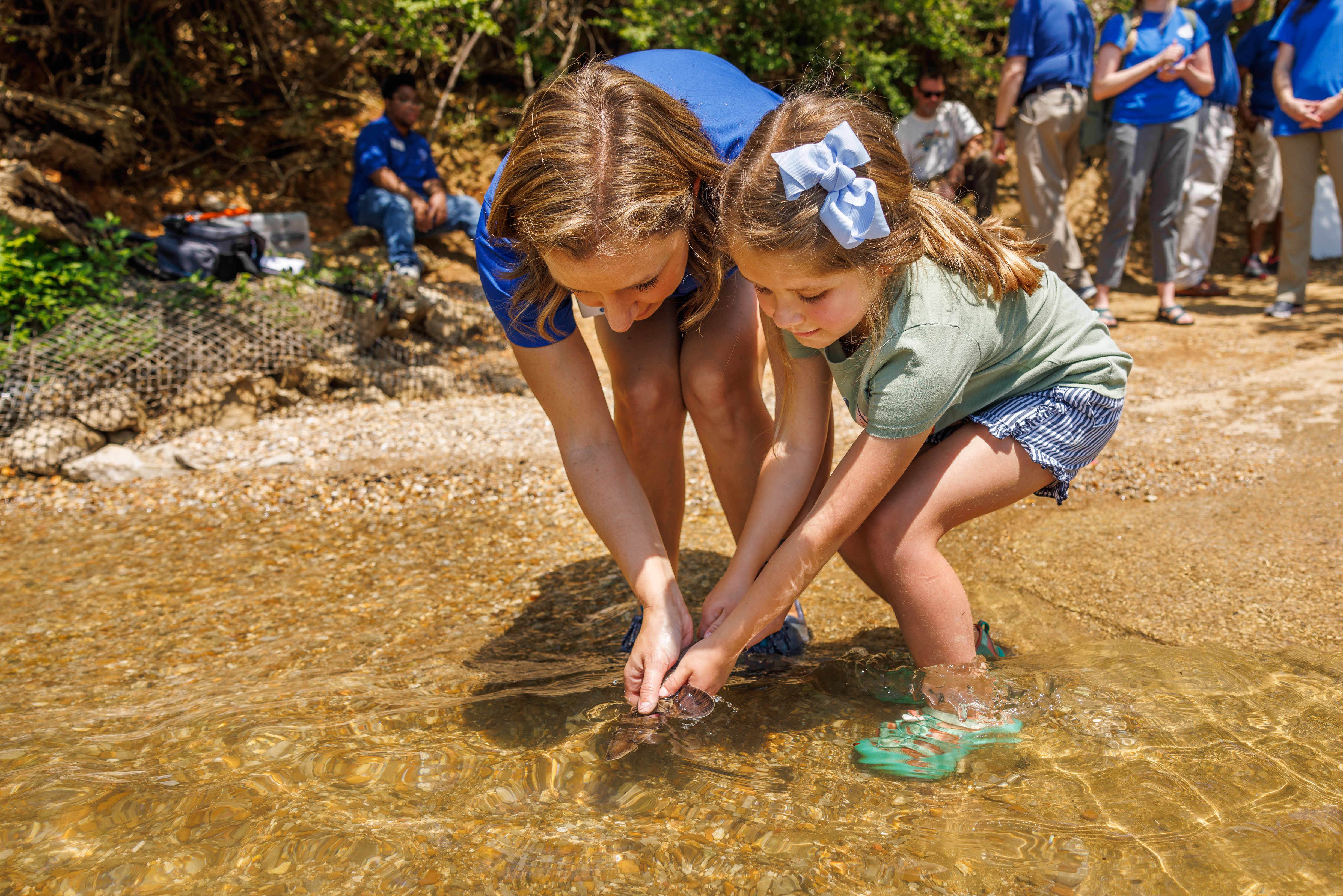
    Director of Hospitality and Marketing Meredith Roberts, right, and her daughter Lucy release Lake Sturgeon.Tennessee Aquarium Director of Hospitality and Marketing Meredith Roberts and her daughter Lucy release a juvenile lake sturgeon during an Earth Day event on the Chattanooga riverfront.  Tennessee Aquarium

    Tennessee Aquarium releases endangered sturgeon on a fin and a prayer

    CHATTANOOGA — Lake sturgeon are living fossils.

    They are dinosaur fish. They have no scales. They are protected by a tough skin with boney plates, and are unchanged for millennia. They are part of a widespread related group of fish, with 23 species worldwide, and are an endangered species in Tennessee.

    Tennessee Aquarium staff released some of these dinosaurs into the Tennessee River here on Earth Day, observed this year on April 22. Aquarium staff were joined by 30 students from Calvin Donaldson Elementary School and the public to release 65 juvenile lake sturgeon into the Tennessee River at Chattanooga’s Coolidge Park.

  • Like a message in a bottle, washed-up plastic signals a growing threat to global health
    in News

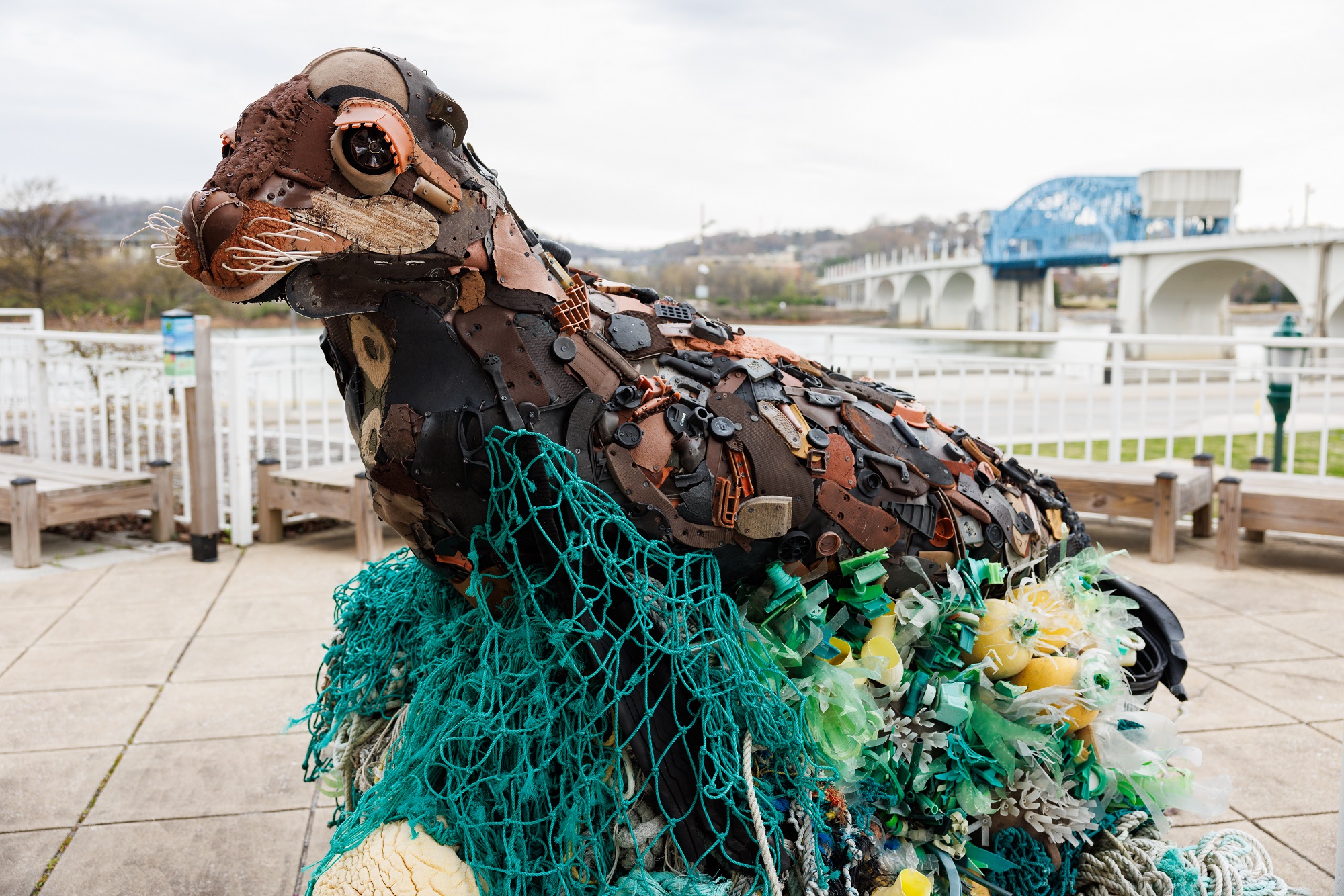
    A Sea Lion sculpture from the Washed Ashore art exhibit.A sea lion sculpture from the Washed Ashore art exhibit that will open this weekend at the Tennessee Aquarium in Chattanooga.  Tennessee Aquarium/Washed Ashore

    Poignant plastic-waste art exhibit washes ashore at Tennessee Aquarium  

    CHATTANOOGA — Visitors to the Tennessee Aquarium will see a dire warning in the guise of colorful art crafted from plastic debris at a unique exhibit beginning April 16.

    Washed Ashore is an Oregon-based nonprofit organization dedicated to repurposing plastic waste through artists and sparking conservation conversations. The Tennessee Aquarium will host an exhibit of its sculptures and collages.

    Those who walk ocean and lake beaches see the accumulated debris. Some may try to ignore it. Others may abandon their favorite places for recreation and relaxation because they can no longer bear the unsightly wreckage. Plastics impact every living creature.