
Displaying items by tag: cades cove
National park reopens Cades Cove road traced for centuries
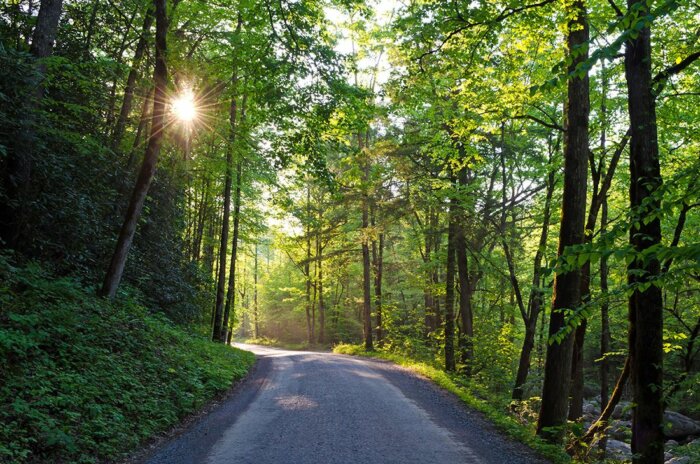 Parson Branch Road in Great Smoky Mountains National Park was reopened May 26 after a six-year closure. National Park Service
Parson Branch Road had been closed since 2016 because of washouts and danger from trees killed by the hemlock woolly adelgid
This article was provided by Great Smoky Mountains National Park Public Information Officer Dana Soehn.
CADES COVE — Great Smoky Mountains National Park officials celebrated on Thursday (May 26) the reopening of Parson Branch Road with a ribbon-cutting event honoring the crew who performed the needed work and the Friends of the Smokies who provided critical funding to support the efforts. The historic gravel road, originally constructed in 1838, is now reopened to the public after a six-year closure.
“We are pleased to reopen Parson Branch Road in time for the 2022 summer season,” said Deputy Superintendent Alan Sumeriski. “Not only does this restore access to one of the most special places in the Smokies, it also allows another opportunity for people of all abilities to spread out and explore less traveled areas of this very busy park.”
Smokies to reopen Parson Branch Road after massive clearance of trees killed by exotic insect
CADES COVE — Great Smoky Mountains National Park on Thursday plans to officially reopen Parson Branch Road, first cut through the ridges around Cades Cove 180 years ago.
The narrow, 8-mile one-way mountain road out of Cades Cove to U.S. 129 has been closed since 2016 following washouts that were compounded by a steady diet of collapsing diseased and dead hemlocks. A ceremony is set for Thursday morning at the beginning of the road in Caves Cove.
The road was closed because of the tree hazards and damage to the road surface. The hemlocks succumbed to the hemlock woolly adelgid, an exotic insect that has wreaked havoc on hemlock stands and their accompanying ecosystems.
A nursing bear and her cubs share an intimate Great Smokies moment
A window on ursine motherhood in Cades Cove
As I was descending a wooded hillside in the heart of Cades Cove on a June afternoon, a motionless black bulk caught my eye off to my left.
I turned my attention there, regarded the scene for a few moments, and realized the sprawling blur was a large sleeping bear. A few moments more of inspection revealed three cubs snoozing in the branches overhead.
Update: Great Smoky Mountains National Park officials postpone controlled burn in Wears Cove to reduce wildfire fuel
Park service postpones 175-acre controlled burn
Citing low humidity and dry conditions, park officials postponed the planned burn until at least Tuesday along the park boundary in Wears Valley in the Metcalf Bottoms area. Another burn is planned near Sparks Lane in Cades Cove later in the week, depending on weather conditions.
Park managers plan a controlled burn along the park boundary in Wears Cove starting Monday. Don’t freak if you see heavy smoke in the area. March is an opportune time to conduct controlled burns for hazardous debris removal and habitat improvement in the interface between rural habitation and protected natural areas.
Fire prevention practices have become more widespread in Great Smoky Mountains National Park since a devastating and deadly November 2016 wildfire that spread into populated areas of Gatlinburg and Sevier County.
Here’s the straight skinny from the park service, per a release:
“Great Smoky Mountains National Park and the Appalachian-Piedmont-Coastal Zone fire management staff plan to conduct a 175-acre prescribed burn along the park boundary in Wears Valley to the Metcalf Bottoms Picnic Area. The burn will take place between Monday, March 8 through Thursday, March 11, depending on weather. Prescribed burn operations are expected to take two days.
A National Park Service (NPS) crew of wildland fire specialists will conduct the prescribed burn to reduce the amount of flammable brush along the park’s boundary with residential homes. This unit was burned successfully in 2009 and is part of a multi-year plan to reduce flammable materials along the park boundary with residential areas.
“A long-term goal of this project is to maintain fire and drought tolerant trees like oak and pine on upper slopes and ridges in the park,” said Fire Ecologist Rob Klein. “Open woodlands of oak and pine provide habitat for a diverse set of plants and animals, and the health of these sites benefits from frequent, low-intensity burning.”