
Stephen Lyn Bales
How we saved the birds that carry the sky on their backs
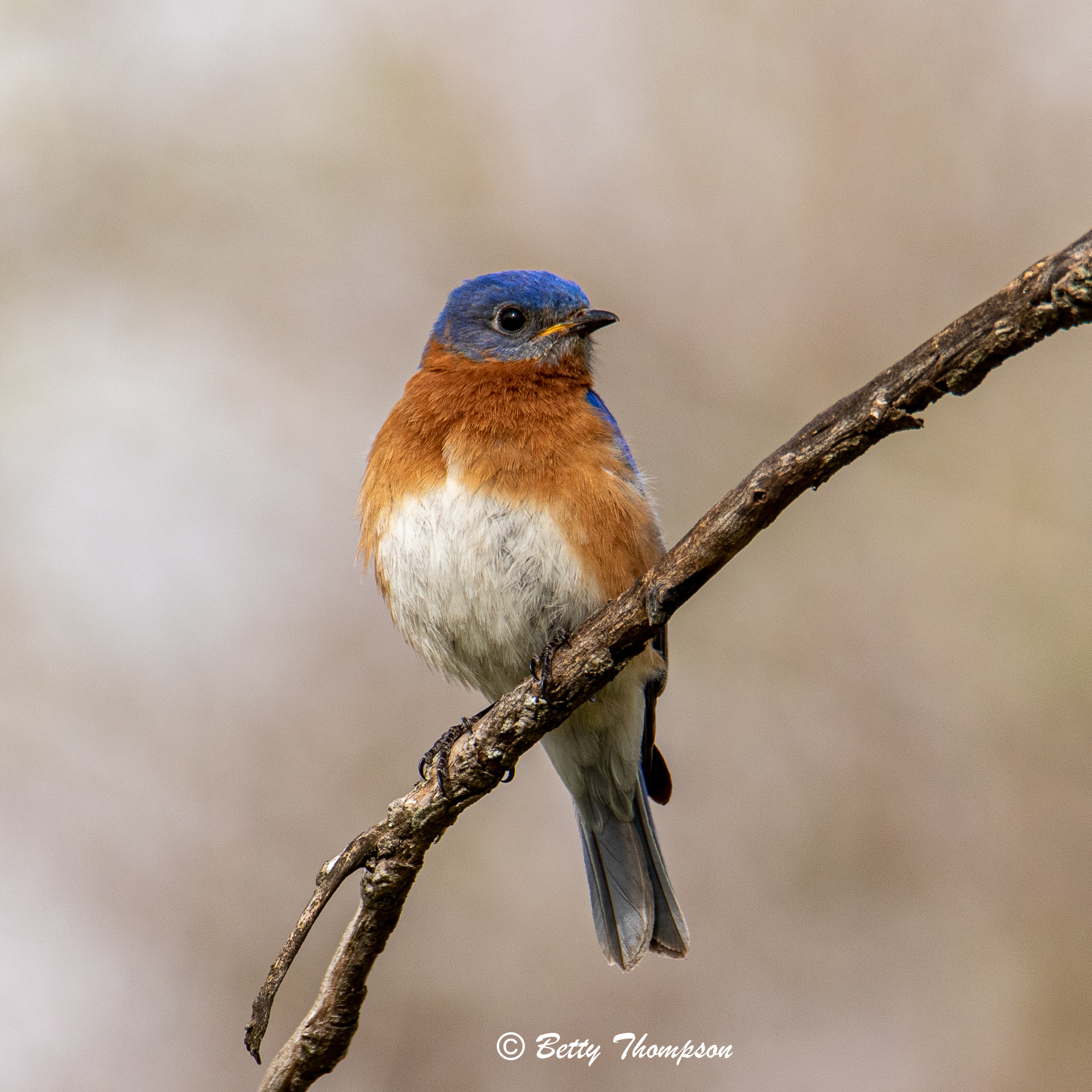
One man’s initial efforts led to the bluebird’s recovery
Eastern bluebirds have long been cherished.
Henry David Thoreau was this country’s first widely regarded and, perhaps, foremost nature writer. He rigorously kept a journal, recording the happenings around his home in Concord, Massachusetts. On April 26, 1838 he scribed a poem that began, “In the midst of the poplar that stands by our door, we planted a bluebird box, and we hoped before summer was o’er, a transient pair to coax.”
Thoreau ended the long entry with the lines, “The bluebird had come from the distant South, to his box in the poplar tree, and he opened wide his slender mouth, on purpose to sing to me.”
It has now been 183 years since the master of Walden waxed poetic about Eastern bluebirds, but his words seem just as appropriate today as they were then because people still love the birds that “carry the sky on their backs” and a song in their hearts.
Into the Royal Blue: Public and private lands crucial for cerulean warbler preservation

Ephemeral birds of lasting beauty dependent on Tennessee forest
Think azure. A male cerulean warbler is sky blue. And to see one, you have to climb to the tops of certain Appalachian ridges and look toward the wild blue. To see one is to see a bit of heaven in an eight-gram bird.
East Tennessee’s Royal Blue Unit is not named in honor of the cerulean warbler but it's appropriate to think so. The land parcel is part of the North Cumberland Wildlife Management Area and is one of the few places — very few places — the sky-blue passerines still nest in North America. It is estimated that 80 percent of the remaining population nests in the Appalachians.
The cerulean is the fastest declining migratory songbird in North America, said ornithologist David Aborn, an assistant professor of biology, geology and environmental science at UT Chattanooga. The Breeding Bird Survey estimates that cerulean warbler population declined by 70 percent between 1966 and 2008.
“The species is not in danger of imminent extinction, but is rare enough to warrant concern, and its future is not assured,” the U.S. Fish and Wildlife Service reported in 2020.
Currently a management goal of “no net loss” is in place. “Management programs can be instituted at the present time that do not require major changes in land-use practices, but do consider silviculture appropriate to producing habitat for the species,” the report concluded.
The American Bird Conservancy and ProAves Colombia purchased 500 acres of rural land identified as wintering sites for the migratory bird. The Cerulean Warbler Reserve is the first in Latin America set aside for a migrant bird. It’s a start. But the beautiful bird faces many challenges here and abroad.
Brood X cicadas to emerge this spring for last gestures of beauty, reproduction and death

After 17-year wait, millions of cicadas are coming
“Do not go gentle into that good night, Old age should burn and rave at the close of day; Rage, rage against the dying of the light." — Dylan Thomas
Imagine living 99.99 percent of your life underground largely unseen and then emerging above the earth for one last grand gesture of panache and reproduction and death.
This year it’s time for the 17-year cicada Brood X to pop up. The last time they appeared in Knox County was 2004. Periodical cicadas are related to the more frequently seen and heard Dog Day cicadas or harvestflies that appear every July.
Periodical cicadas remain subterranean for years. Here in the Tennessee Valley, we actually have two populations that overlap. Brood X, known as “the big brood” that will be seen and heard this summer, emerges every 17 years. Brood XIX climbs from the ground every 13 years, and is not scheduled to reappear in the valley until 2024.
Annual cicadas look like large green flies. Periodical cicadas are more colorful: bluish with red eyes and gold wings. Both groups are in the insect order Hemiptera and spend their larval stage underground tapping into tree roots for nourishment.
At this moment, this year’s brood is inching its way upward. The cicadas lie in wait below the surface until the right conditions — day length and temperature — signal it’s time to move out. If you happen to be in an area where the cicadas are, you’ll see hundreds, maybe thousands, all over the place. It’s truly one of nature’s most spectacular occurrences.
They usually begin to climb from the ground at dusk in early May and quickly scurry to a nearby tall object that they climb and shed their last larval skin. After their wings dry, the new adults leave behind the husk of their former life and fly away. For the next few weeks, the males buzz to attract the females. After they mate, the females lay eggs in tender branches. All the adults die in a few weeks; when the eggs hatch the tiny larva crawl to the ground to disappear for another 17 years.
Still no glimpses of the ghost bird
 The red-cockaded woodpecker is vanishingly rare, but its true status in the wild is not known. Courtesy Stephen Lyn Bales
‘Lord God Bird’ of lore, a sad reminder of what we have lost
We stood agape. Before us, on a white countertop as big as a ping pong table, lay 17 dead ivory-billed woodpeckers. They were museum specimens neatly arranged in two groups: nine males and eight females, all lined up like ears of corn in separate wooden trays. Each had a paper label attached to a leg with handwritten notation of when and where it had been collected; most seemed to date from the late 1800s. Being in the presence of so many rendered us reverently speechless.