
Displaying items by tag: stephen bales
Monarch butterflies, an ephemeral but regular glimpse of beauty, are fluttering toward extinction
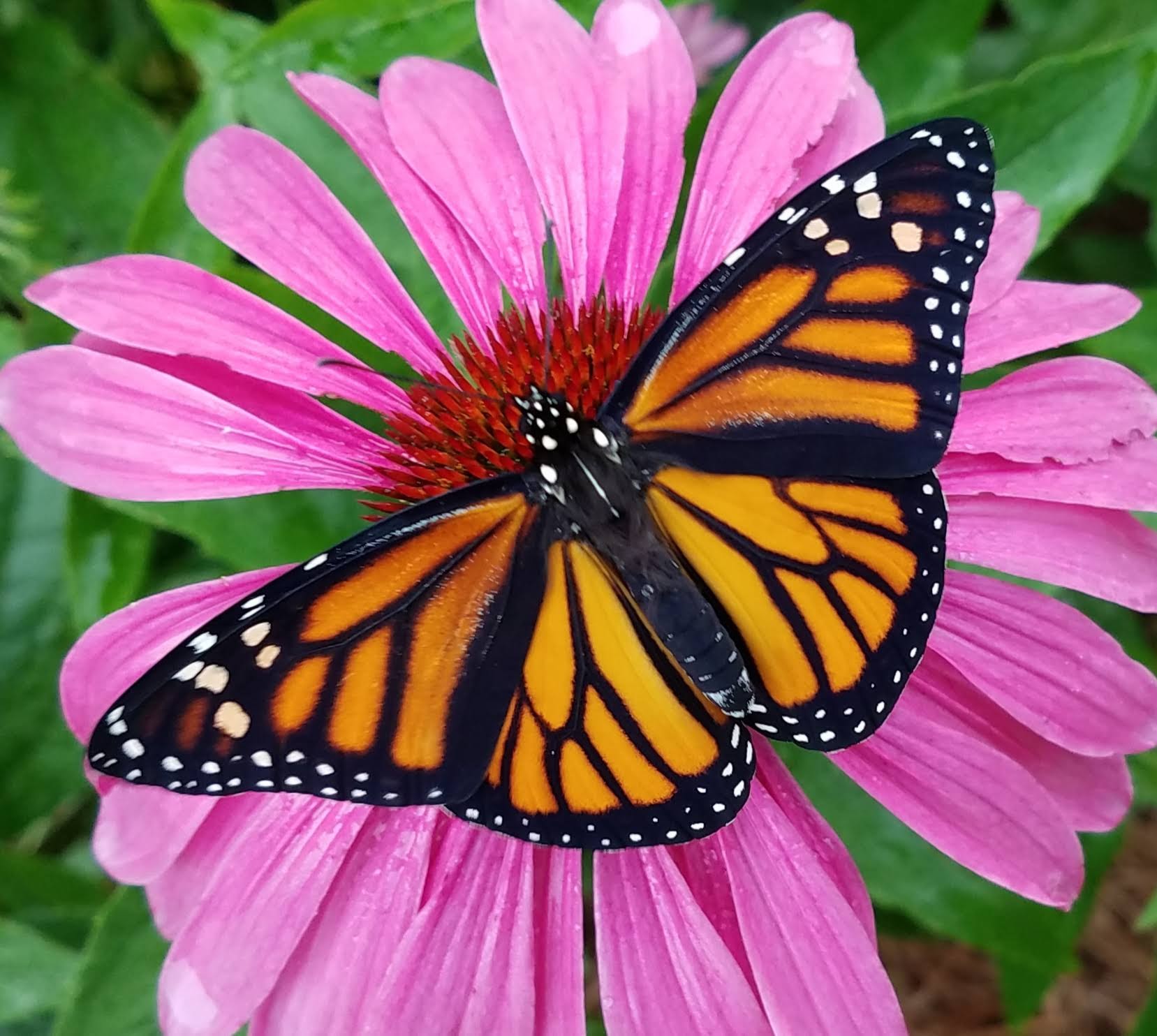 A monarch butterfly, recently declared endangered despite decades of conservation, is seen atop a coneflower. Stephen Lyn Bales
Dramatic monarch declines mean the bell tolls for we
KNOXVILLE — Monarch butterflies are ephemeral by nature. The orange and black dalliances that flitter through our lives, our yards, and our countryside like motes of dust are here one minute and gone the next. We pause for a few seconds to watch the “flutter-bys” and then move on.
For about all of the Lepidopteran family, where they come from, where they go, their raison d'être, we don’t ask. They are winged wisps that pass through our busy lives. But that is not true with this orange and black butterfly, named to honor King William III of England, the Prince of Orange. But two people did ask.
Norah and Fred Urquhart lived in Southern Canada and in the late 1930s they noticed that the monarch butterflies seemed to all be fluttering south this time of the year. Could they possibly be migrating and if so, where did they go? The notion that a butterfly might migrate south for the winter seemed hard to fathom. Yes, broad-winged hawks migrate. But a flimsy butterfly?
- monarch butterfly
- monarch
- are monarchs endangered?
- stephen lyn bales
- stephen bales
- ijams nature center
- lepidoptera
- catalina aguado
- norah and fred urquhart
- flight of the butterflies
- xerces society
- great smoky mountains institute at tremont
- danaus plexippus ssp plexippus
- endangered species
- international union for conservation of nature
- pesticide
- pollinator
- habitat loss
- climate change
- herbicide
- mexico
Requiem for the Lord God Bird
The ivory-billed woodpecker is officially extinct, and it strikes a chord in Knoxville
Clinging to a maple in the bayou, Jim Tanner finally had the rare nestling in his grasp.
He fitted it with a numbered leg band and placed the bird back in its hole high off the ground.
But true to its seldom-seen self, the juvenile ivory-billed woodpecker squirmed free and fluttered to the base of a giant maple tree in a southern Louisiana swamp owned at the time by the Singer Sewing Machine Co.
The year was 1936, and Jim Tanner was in the midst of doctorate research at Cornell University funded by the Audubon Society as part of a push to prevent the pending extinctions of multiple bird species, including the California condor, roseate spoonbill, whooping crane and ivory-billed woodpecker. Eighty-five years later, the regal woodpecker would be the only one grounded for eternity.
In the heat and rain of mucky, gassy bayous, Tanner compiled data on the range, population, habitat and prevalence of ivory-billed woodpeckers. He camped for weeks at a time in the swamps of the birds’ original range.
On this day, his only goal was to band the bird but he rushed down the tree and picked up the agitated but uninjured woodpecker.
He also wanted photographs.
Tanner took advantage of the moment.
He placed the bird upon the shoulder of an accompanying and accommodating game warden for 14 shots from his Leica.
They were probably the first, and perhaps the last, photographs of a juvenile ivory-billed woodpecker photographed by Tanner in its natural habitat. He named the bird Sonny, and he was the only known member of the species to be banded with a number.
The regal, smart, athletic bird, which peaceably flew over its small slice of Earth for some 10,000 years, was declared extinct last month by the Fish and Wildlife Service. Twenty-two other species also qualified for removal from the Endangered Species List — in the worst possible way.
The ivory bill inhabited the swamps of the Deep South, far removed from Rocky Top, but old visages of the departed were found in Little Switzerland in South Knoxville. The work of Tanner, who would go on to complete a rich ecological research career at the University of Tennessee, has been memorialized by a talented East Tennessee science writer.
And the Southern Appalachian region has other long-gone kinships with species that vanished from the Earth a long time ago.
Bald eagles fly with the Tennessee angels who helped save them from extinction. We must keep them on the wing.
 American Eagle Foundation founder Al Cecere releases a rehabilitated bald eagle at Ijams Nature Center on Aug. 12, 2016. The foundation named her Summit in honor of UT Lady Vols basketball coach Pat Summit. Photo by Chuck Cooper.
Is the bald eagle’s remarkable comeback fading down the stretch?
(Part one in a series)
It was a damp morning in early spring 2005 when Paul James and I met Linda Claussen at Seven Islands Wildlife Refuge along the French Broad River in east Knox County. Heavy rains had fallen through the night, but the clouds were beginning to break. As we walked down Kelly Lane toward the river the vocalized yearnings of thousands of chorus frogs could be heard singing from the soppy floodplain along the river. Spring was definitely here.
The refuge itself was the brainchild of Linda’s late husband, Pete. In the late 1990s, he formed the Seven Islands Foundation, a privately owned land conservancy, and began setting aside property to be protected and restored to a variety of natural habitats. Most of the acreage had recently been fescue pasture maintained for grazing livestock and hay production.
Still no glimpses of the ghost bird
 The red-cockaded woodpecker is vanishingly rare, but its true status in the wild is not known. Courtesy Stephen Lyn Bales
‘Lord God Bird’ of lore, a sad reminder of what we have lost
We stood agape. Before us, on a white countertop as big as a ping pong table, lay 17 dead ivory-billed woodpeckers. They were museum specimens neatly arranged in two groups: nine males and eight females, all lined up like ears of corn in separate wooden trays. Each had a paper label attached to a leg with handwritten notation of when and where it had been collected; most seemed to date from the late 1800s. Being in the presence of so many rendered us reverently speechless.