The Environmental Journal of Southern Appalachia

Ancient civilizations, natural resources and the rise of tree conservation

Written by

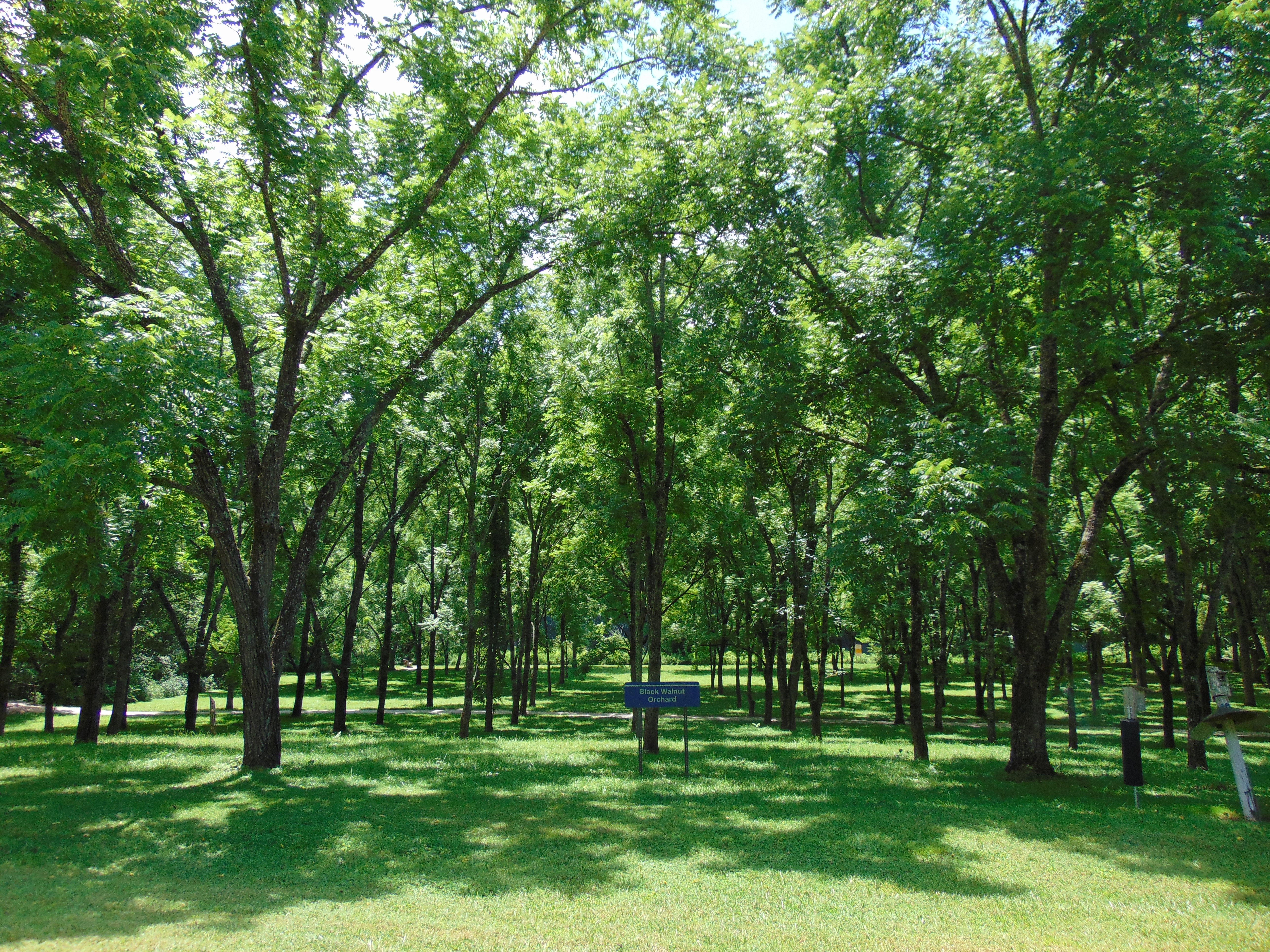
Color photograph shows the grassy herbaceous ground cover and the trees planted in straight rows; This walnut orchard was planted by the Tennessee Valley Authority as part of its early mission to promote the growth of economically useful trees in the Tennessee Valley.   Courtesy UT Tree Improvement Program

Part I of this three-part series examines how the development of civilizations and rapid population growth gave rise to forest tree domestication. Parts II and III will discuss the role that the University of Tennessee’s Tree Improvement Program has played in forest sustainability by contributing to the productivity and health of Tennessee’s present and future forests.

Wood and lumber figured prominently in ancient civilizations, ranging from everyday use for warmth, cooking, and shelter to specialty uses like veneers for furniture and construction with scented woods. 

No matter what continent or hemisphere, as human civilizations evolved from collections of nomad hunter-gatherers to the steel, brick, glass, and mortar cities of today, the impact on forested land proportionally increased. As villages became towns and, eventually, cities, forests were harvested in an ever-increasing radius around the population centers. Wild animals and plants were also harvested in the same manner, drastically altering ecosystems and causing massive erosion.

Nations that quickly exhausted the best trees in their limited forested lands, like ancient Egypt and Greece, met wood demands for construction or specialty products by importing wood from other nations. The then-rich forests of Lebanon and Cyprus were harvested to export timber to countries suffering from a timber famine.  

Early conservation efforts

The impact of environmental destruction and economic sustainability was recognized in ancient times, as it is today. Response was varied; policy to minimize harvest in Lebanese forests was initiated by King Artaxerxes I in about 450 B.C., and trees were planted in ancient Greece to restore over-harvested forests.     

The Roman Empire had an insatiable appetite for wood for building and ship construction. Vast amounts of wood were also used to fuel their baths. Private Roman baths consumed an estimated 114 tons of wood each year.

Romans developed a forest classification system to ensure supply could meet the varied demands. Forests were classified by use such as:  coppice forests (stump sprouts after harvest) for needs that used small dimension wood (Silva caedua); state forests with large older trees reserved for military, naval, and large building construction; forests reserved to supply wood for public baths; and acorn production forests (Silva glandaria) to feed swine.  By 167 B.C., Rome had prohibited timber harvests in Macedonia because of depleted forests.

Plant domestication

Plant domestication started with selections for desirable traits, such as seed or fruit size, within a wild plant species. Those selections were then propagated and refined by further selection cycles.  

In any evolving civilization, sustenance of the general population by hunting and gathering eventually exhausts naturally occurring plants and animals around the growing urban centers to such an extent that even importation is not practical. Demand is met through cultivating selected plants in a managed environment. There are many examples of this occurring throughout history.  Wheat was domesticated more than 10,000 years ago in the region we know today as the Middle East. Domestication of rice occurred a little later, about 8,000 years ago. 

In the New World, maize (corn) was developed in approximately the same time frame as rice. Eventually, early colonial settlers found that Native Americans were cultivating a variety of crops, clearing the forest to create agricultural fields. The major crop species in eastern North America were the “Three Sisters” -- corn, beans, and squash, with beans and squash both being domesticated about 10,000 years ago.

The “take-home” message is that the progressive development of civilization has a negative and progressive impact on natural environments, depleting plant species that provide food or products used by humans. Domestication has been shown to mitigate the impact on natural resources by providing specific products in sufficient quantity to allow for continued population growth and further the development of a civilization.

In a similar manner, forest trees also were depleted from the natural landscape. Domestication has been relatively slower than row crops or horticultural plants, however, due to physical size, long-term reproductive cycles, and the length of time required to reproductive maturity.

In the United States, the vast forests of the east and west provided enough wood products to meet the nation’s needs without domestication until the 20th century. Increased domestication efforts began around mid-century in response to a growing demand for wood products caused by rapid population growth and the progressive harvesting of naturally occurring forests. Selection, testing, and breeding programs of certain conifers and short-rotation hardwood species -- such as poplars --important to the wood-products industry began at various locations in the country. These research programs were often led by or in conjunction with agricultural experiment stations at land grant universities and the USDA Forest Service.

Tree improvement

In Southern states, the Tennessee Valley Authority initiated a tree-improvement effort in the 1950s, which was somewhat different than other programs. A major emphasis of the TVA program was the early steps in fine hardwood species domestication. Fine hardwoods are trees that produce relatively valuable lumber, such as white oak, black walnut, and black cherry. At the time (and continuing to the present), high-grading harvest practices were common, which removed the best trees from the forest, leaving slow growing trees with often substandard form.

Domestication of selected forest tree species has been shown to be successful in producing faster growing trees with superior wood characteristics.  For example, loblolly pine is now in its fourth generation of breeding and testing, and loblolly pine seedlings now planted in Southern states are all genetically improved.

Unfortunately, the last 30 years have seen a dramatic decline of tree improvement research and development nationwide. In Tennessee, the TVA tree improvement effort was suspended in 1982 because of a combination of budget constraints and the lack of success in planting hardwood seedlings. The Tennessee Division of Forestry’s 53 year-old tree improvement program was terminated in 2017 because of budget cuts in state government.  

In contrast to national and state trends, however, the University of Tennessee’s Tree Improvement Program is still functioning.  This R&D program was founded in 1959, when the Tennessee Agricultural Experiment Station (now referred to as AgResearch), within the University of Tennessee, hired a Norwegian-born forest geneticist, Eyvind Thor.  

The program’s mission is to genetically improve forest tree species for increased productivity in the value areas important to Tennessee landowners. Professor Thor directed the UT Tree Improvement Program from 1959 until 1982 and pioneered work with a number of hardwood species, including  yellow poplar, American chestnut, northern red and white oaks, and coniferous species such as eastern white pine, loblolly pine, and Virginia pine.  

Thor was also one of the founders of the Tennessee Christmas tree industry and supported it through various research studies. Following his retirement, the university hired the author in 1984, who continues to build upon the very firm foundation laid by Professor Thor.

The second installment of this series will introduce the University of Tennessee’s Tree Improvement Program (UT-TIP) to Hellbender Press readers and describe the Program’s R&D efforts and cooperation with state and federal agencies and the Jack Daniel Distillery.  Part III will discuss applications of the UT-TIP research in the changing forests of the future.

Scott E. Schlarbaum is a professor at the University of Tennessee and the director of the UT Tree Improvement Program.

 

UT TIP Seal


Rate this item
(2 votes)
Published in Voices

Related items

  • Wither wisteria: ‘People care about our land’
    in News

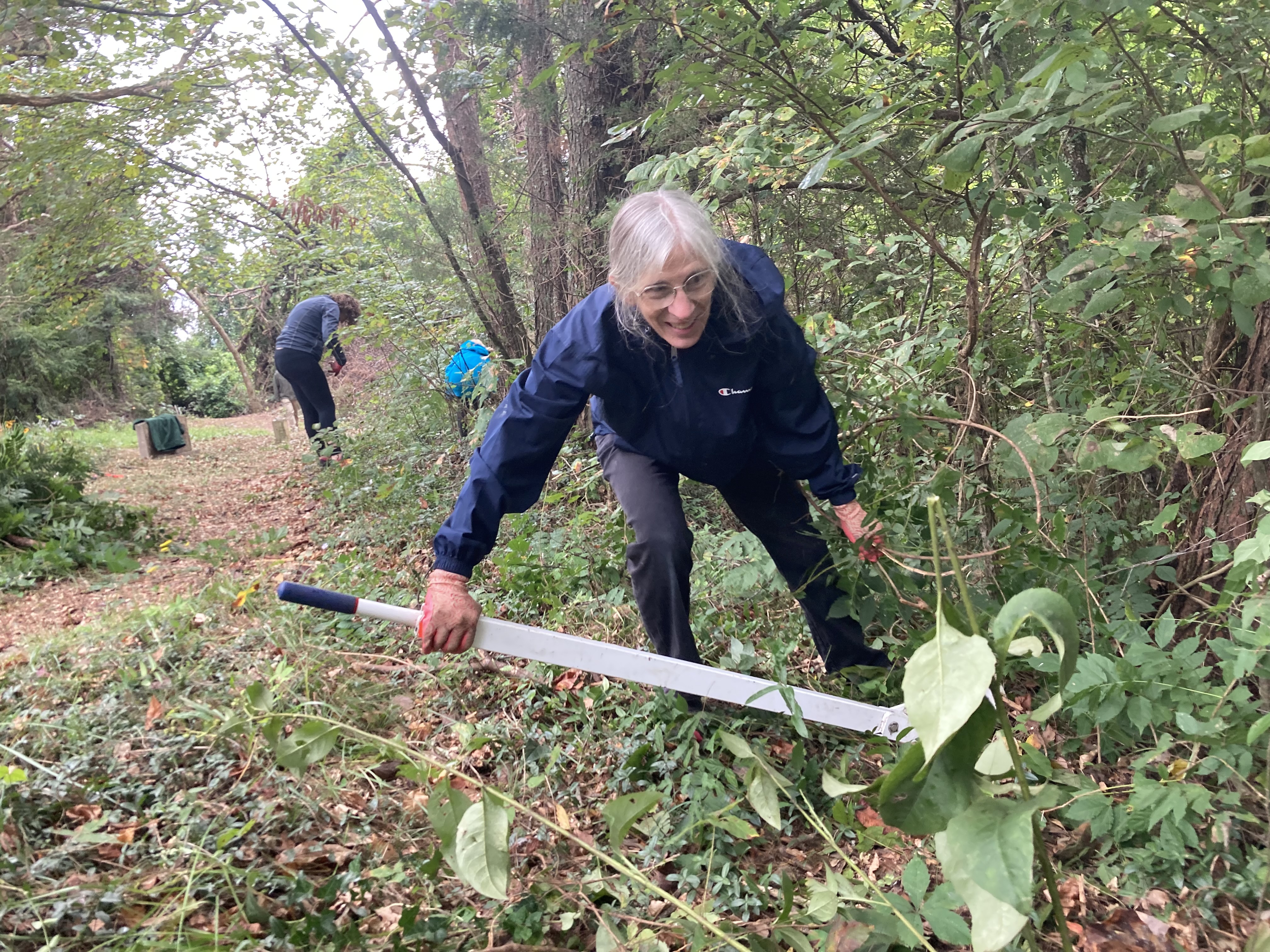
    IMG 4106Anne Child removes invasive exotic plants during a recent Tennessee Citizens for Wilderness Planning event to mark National Public Lands Day at TVA’s Worthington Cemetery in Oak Ridge. Ben Pounds/Hellbender Press

    Citizens pay it back on Public Lands Day in Oak Ridge, Smokies and beyond

    OAK RIDGE — Rain drizzled as volunteers dug and clipped plants in woods around an old cemetery turned science lab.

    It was a Public Lands Day event at Tennessee Valley Authority Worthington Cemetery Ecological Study area in Oak Ridge near Melton Hill Lake. Tennessee Citizens for Wilderness Planning, an environmental organization based in Oak Ridge, led the Sept. 24 work party in support of American public lands.

    Other events were held throughout the country to mark the date (including Great Smoky Mountains National Park), which has proven itself to be the most productive day of the year for citizen sweat equity in public lands.

  • APIEL, the 13th Appalachian Public Interest and Environmental Law conference is set for Saturday, October 1
    in News

    ELOlogoELO is a student-run organization at the University of Tennessee College of Law. It is not directly affiliated with the University of Tennesse or any particular non-profit organization. It is dedicated to providing students and attorneys with learning opportunities and leadership experiences.

    Networking environmental leaders across Appalachia and the State of Tennessee

    Knoxville — APIEL is a relative newcomer to the small circle of inclusive U.S. public interest environmental law conferences. Because it is organized by law school student volunteers, APIEL is affordable to attend for students as well as citizens from all walks of life.

    APIEL is much loved and considered essential by regional nonprofit leaders and activists. It is also highly acclaimed by seasoned environmental lawyers. With just 12 conferences under its belt, APIEL has risen to rank among leading peer conferences with a much longer track record, such as the  Public Interest Environmental Law Conference (PIELC) at the University of Oregon School of Law (39 events), the Red Clay Conference at the University of Georgia School of Law (34) and the Public Interest Environmental Conference (PIEC) at the University of Florida’s Levin College of Law (28).

  • Enviros to TVA: Retire the fossil-fuel pacifier
    in News

    Cumberland FPTVA’s Cumberland Fossil Plant near Clarksville is the subject of a suit filed by environmental groups, including Appalachian Voices and Southern Environmental Law Center.  Tennessee Valley Authority

    SELC, others file suit in hopes of dissuading TVA from future fossil options

    This story was originally published by Tennessee Lookout.

    CLARKSVILLE — On behalf of the Tennessee Chapter of the Sierra Club and Appalachian Voices, the Southern Environmental Law Center asked TVA to prepare a supplemental environmental statement to address concerns with TVA’s draft environmental impact statement, which details the agency’s plans to retire the Cumberland Fossil Plant.

    The Cumberland Fossil Plant, about 22 miles southwest of Clarksville, is TVA’s largest coal-fired power station and was built between 1968 and 1973. TVA plans to retire each unit of the two-unit, coal-fired steam-generation plant separately: one unit no later than 2030, and the second unit no later than 2033. But the plant will need to be replaced, and TVA is currently considering three alternatives to fossil fuel, including natural gas and solar energy, according to its draft EIS.

    (Tennessee Valley Authority already plans to close down the Knoxville-area Bull Run fossil plant in Claxton next year).

  • There’s a whole world in the dirt beneath your feet
    in News
    Dust bowl soilThe Dust Bowl of the 1930s resulted in the displacement of tons of soil in the midst of a drought similar to the one that grips the Southwest today. Library of Congress
     

    Dirt is far from just dirt. It’s a foundation for life.

    This story was originally published by The Revelator.

    Look down. You may not see the soil beneath your feet as teeming with life, but it is.

    Better scientific tools are helping us understand that dirt isn’t just dirt. Life in the soil includes microbes like bacteria and fungi; invertebrates such as earthworms and nematodes; plant roots; and even mammals like gophers and badgers who spend part of their time below ground.

    It’s commonly said that a quarter of all the planet’s biodiversity lives in the soil, but that’s likely a vast understatement. Many species that reside there, particularly microorganisms such as viruses, bacteria, fungi and protists, aren’t yet known to science.

  • U.S. Supreme Court’s recent clean-air ruling renews spotlight on fossil-energy producers like TVA
    in News

    TVA 4 Cumberland FP

    Supreme Court air-pollution ruling calls into stark context all that must be done

    This story was originally published by Tennessee Lookout.

    KNOXVILLE — The U.S. Supreme Court’s ruling limiting the power of the Environmental Protection Agency to regulate carbon emissions that cause climate change has renewed the spotlight on the Tennessee Valley Authority, the nation’s largest public utility and Tennessee’s primary source of electricity.

    The case involved EPA efforts to implement a key provision of the Clean Air Act in a challenge brought by 15 Republican-led states. That provision, which never went into effect, would have required existing power plants to shift from dirty sources of energy — such as coal — to cleaner sources, including solar and wind, as part of an urgent effort to reduce global warming.

  • SACE released its annual utility decarbonization tracking report, and it’s not pretty
    in News

    methane leaksBloomberg reports that methane leaks from the natural gas sector may be far worse than estimated by the EPA. While replacing coal-fired power plants with natural gas ones reduces air pollution it may not help at all with climate change because methane is 30 times more effective as a greenhouse gas than CO2.  Image source: Kayrros SAS

    Report: Many utilities are not reducing carbon emissions despite public assurances to the contrary

    KNOXVILLE — Global greenhouse gas emissions must peak by 2025 and experience rapid and deep reductions to avoid a potentially catastrophic future, according to a new analysis by air-quality and climate advocates. Emissions must reach net zero by the early 2050s to limit warming to 1.5 degrees (C) in order to avoid the worst impacts of the climate crisis.

    Many utilities and municipalities have acknowledged this dynamic, but the Southern Alliance for Clean Energy s fourth annual “Tracking Decarbonization in the Southeast" report highlights that current utility resource plans are not in line with this overarching target. Obstacles to getting utilities on track that are discussed in our report include: increasing reliance on fossil gas, underutilizing energy efficiency, and placing limitations on popular technologies such as rooftop solar. There’s still a lot of work to do before any Southeast utility is on track to decarbonize.

  • Hot weather doesn’t always equal evidence of climate change, but the puzzle is almost complete
    in News

    heat photoThomas Fraser/Hellbender Press

    TVA sets record power day for June as region swelters and common sense degrades

    This story was originally published by Hard Knox Wire.

    KNOXVILLE — City residents this week joined scores of others around the world — from the Southwest United States to the Indian subcontinent — sweltering through late spring with eyes toward a summer that portends to be very hot.

    Whether directly attributed to climate change or not, the heat waves are causing untold misery in locations across the Northern Hemisphere, straining power grids to the brink and causing a sharp rise in heat-related illnesses. 

    Knoxville Utilities Board asked this week that consumers curtail their electricity use by setting their thermostats a little higher and holding off until night on energy-sucking tasks like doing laundry or running the dishwasher. That request was met in many cases with derision and unsubstantiated claims that charging electric vehicles had overburdened energy infrastructure.

    So exactly how hot is it in East Tennessee and how bad is it going to get?

  • Court finds TVA contractor potentially liable for Kingston coal-ash cleanup injuries and deaths

    coalash tvaspill dotgriffithOn Dec. 23, 2008, a massive dam at the Kingston coal-fired power plant in Harriman, Tenn., ruptured and spilled 1.1 billion gallons of coal ash into the Clinch and Emory rivers. Appalachian Voices teamed up with Southwings to take pictures from the air and launched two separate missions by water to test the river and fish for pollutants as a result of the spill.  Appalachian Voices

    Contractor that cleaned up infamous TVA ash spill not immune from responsibility for alleged unsafe worksite

    This story was originally published by Tennessee Lookout.

    CINCINNATI — A federal appellate court last week struck down a last-ditch appeal by a Tennessee Valley Authority contractor accused in the mass poisoning by radioactive coal ash waste of the utility’s Kingston disaster workforce.

    The 6th Circuit U.S. Court of Appeals ruled Jacobs Engineering Inc. cannot ride the coattails of TVA governmental immunity because TVA itself would not have been immune from liability had sickened workers chosen to sue the utility.

  • Seal it up: Inefficiency increases energy costs across the board

    Editors note: SACE executive director Stephen Smith is on the board of Foundation for Global Sustainability. Hellbender Press operates under the FGS nonprofit umbrella.

    The Southern Alliance for Clean Energy (SACE) released its fourth annual “Energy Efficiency in the Southeast” report, which tracks recent policy developments and performance trends in electric utility efficiency from 2020.

    It continues to highlight that despite being a proven low-cost clean energy resource with enormous potential to reduce carbon emissions and customers’ energy burden, Southeastern utilities continue to underinvest in energy efficiency.

    As a result, households in many Southeastern states have some of the highest electricity usage and monthly energy bills in the nation. Some states and utilities are making progress, and it’s not too late for local policymakers to take advantage of untapped efficiency savings to help reach crucial decarbonization goals.

  • Is TVA providing the best prices for energy consumers? Congress wants to know.
    kingstonThe Tennessee Valley Authority's fossil plant at Kingston. TVA
     

    Southern Alliance for Clean Energy: TVA is not coming clean in Congressional inquiries

    KNOXVILLE — On Jan. 13, the U.S. House of Representatives Committee on Energy and Commerce sent a letter to the Tennessee Valley Authority (TVA) requesting information regarding business practices that appear inconsistent with TVA’s statutory requirement to provide low-cost power to residents of the Tennessee Valley.
    TVA’s response to the committee’s 16 questions dodges some of the committee members’ key concerns and provides misleading information on several issues, including: