The Environmental Journal of Southern Appalachia

FGS calls on TVA to get serious about addressing the climate crisis

Written by

As Hellbender Press reported in April, the Tennessee Valley Authority plans to phase out its use of coal. And as we mentioned in an action alert, TVA is conducting a scoping process pertaining to the preparation of an Environmental Impact Statement (EIS) for retirement and replacement of the Kingston Fossil Plant. TVA is preparing similar EIS for its other remaining coal-fired power plants as well.

Although TVA lists "construction and operation of solar and storage facilities" in these scoping documents as an alternative for replacement of coal as the power source, it has made no secret of its belief that construction of gas-powered combustion turbines (CT) and natural gas pipelines to feed them will be the best solution to replace the outdated generation capacity.

Unlike other power utilities, TVA has been making it more difficult, financially unattractive or impossible for distributed renewable energy, storage and even efficiency projects to get realized, according to proponents of renewables and some of TVA’s local power distribution partners. TVA also reneged on its agreement with other utilities to make large amounts of wind power available to the Southeastern United States through the Plains & Eastern Clean Line high-voltage direct-current power line project.

Below, we reprint the statement submitted by FGS during the public comment period for the Kingston Fossil Plan Retirement.

(Hellbender Press is a self-funded project of FGS).


The Foundation for Global Sustainability urges TVA to truly step up to the challenges of climate change

The action alternatives in the dockets for the replacement of TVA’s coal fired power plants are shortsighted and most disappointing.

As a quasi-federal entity with a de-facto monopoly over a vast area of our nation, the Tennessee Valley Authority should strive to spearhead, exemplify, and not only meet — but exceed — most of the federal goals for decarbonization.

By basing plans primarily on data of historic trends — unquestioningly projected into the future — TVA is apt to commit yet another horrendous miscalculation; it is prone to saddle itself with even more stranded assets.

Addressing the climate change crisis

Rarely a month passes without scientific discoveries of natural feedback mechanisms that aggravate the consequences of climate change. Signs that Earth’s natural life-support systems are approaching tipping points are multiplying.

At the same time that uncertainty about prevailing conditions over the lifetime of infrastructure investments is growing, technologies are evolving at an increasing pace. Many private-sector corporations have already realized that time-proven business practices are no survival strategy.

What’s called for today is more nimble management. TVA needs to focus on cooperative, adaptive planning for more flexible, responsive operations.

A multitude of smaller investments that seek to attack problems from a diversity of facets will have greater probability of success than monolithic huge investments that are hard to revert, abandon, or repurpose.

We encourage TVA to take a step back, to first look at what it can do to help improve the sustainability and resilience of our regional and local economies and of its large, small, and individual customers, WITHOUT investments that lock in carbon emissions for decades.

Although we welcomed, appreciated, and supported TVA initiatives such as Energy Right, Green Power Switch and Generation Partners, one has to admit that in the larger context they amounted to little more than public relations Band-aids.

Distributed renewable energy generation and storage

It is high time for TVA to stop stonewalling renewable energies.

The promising potential of widely distributed renewable energy generation and storage to minimize transmission losses and to boost community resilience is still largely untapped. It lends itself to easily manageable, quick turn-around, incremental projects that can readily be evolved and fine-tuned as new conditions, greater insights, and better technologies emerge.

People in TVA’s service areas are no less likely to welcome and personally invest in solar energy and storage than the people of Germany have done, despite getting far less sunlight in their northern latitudes than we enjoy here; if only TVA relaxes its severe restrictions and abandons its adversarial stance.

We call upon TVA to embrace, as major planning objectives, environmental sustainability and efficiency from energy generation all the way through end use.

Sincerely,

Wolf Naegeli, PhD
President
Foundation for Global Sustainability
Rate this item
(1 Vote)

Related items

  • 5 big threats to the world’s rivers
    in News

    fresh water Conservation FisheriesA biologist with Conservation Fisheries surveys a stretch of Little River near Walland, Tennessee to determine fish viability and identify rare species for transplantation. Thomas Fraser/Hellbender Press

    Human activities have imperiled our waterways — along with a third of freshwater fish and other aquatic species

    This story was originally published by The Revelator.

    If we needed more motivation to save our ailing rivers, it could come with the findings of a recent study that determined the biodiversity crisis is most acute in freshwater ecosystems, which thread the Southern landscape like crucial veins and arteries.

    Rivers, lakes and inland wetlands cover 1 percent of the Earth but provide homes for 10 percent of all its species, including one-third of all vertebrates. And many of those species are imperiled — some 27 percent of the nearly 30,000 freshwater species so far assessed by the IUCN Red List. This includes nearly one-third of all freshwater fish.

    How did things get so bad? For some species it’s a single action — like building a dam. But for most, it’s a confluence of factors — an accumulation of harm — that builds for years or decades.

  • Austria to sue the European Union if it labels nuclear and gas power plants as “green infrastructure”

    VIENNA — Leonore Gewessler, Austria’s energy and climate minister announced that she would take the case to the European Court of Justice if the union’s executive proceeds with plans to include nuclear and natural gas in the EU taxonomy of sustainable finance.

    About gas, Gewessler said that it releases unconscionable amounts of greenhouse gases. “Just because something is less bad than coal doesn’t make it good or sustainable.”

    Regarding nuclear energy she said it has unpredictably high risks, referring to Chernobyl and Fukushima. She also mentioned as great concerns, the safe disposal of spent nuclear fuel and lack of a global solution for its final storage.

    Since the COP26 climate summit in Glasgow, Austria is aligned with Germany, Luxembourg, Denmark and Portugal in opposing further investments in nuclear power.

    However, France, Finland and ten other EU countries have been pushing for nuclear expansion. They still claim it is a low-carbon technology and trust that the radioactive waste problem can be solved.

    Luxemburg, Germany and Spain stated they will join Austria before the court, if necessary. Svenja Schulze, Gewesser’s German counterpart said of nuclear power, “it is too risky, it is too slow, it is too expensive!"

  • Brutal Hurricane Ian was just one of budding global weather emergencies at the time
    in News

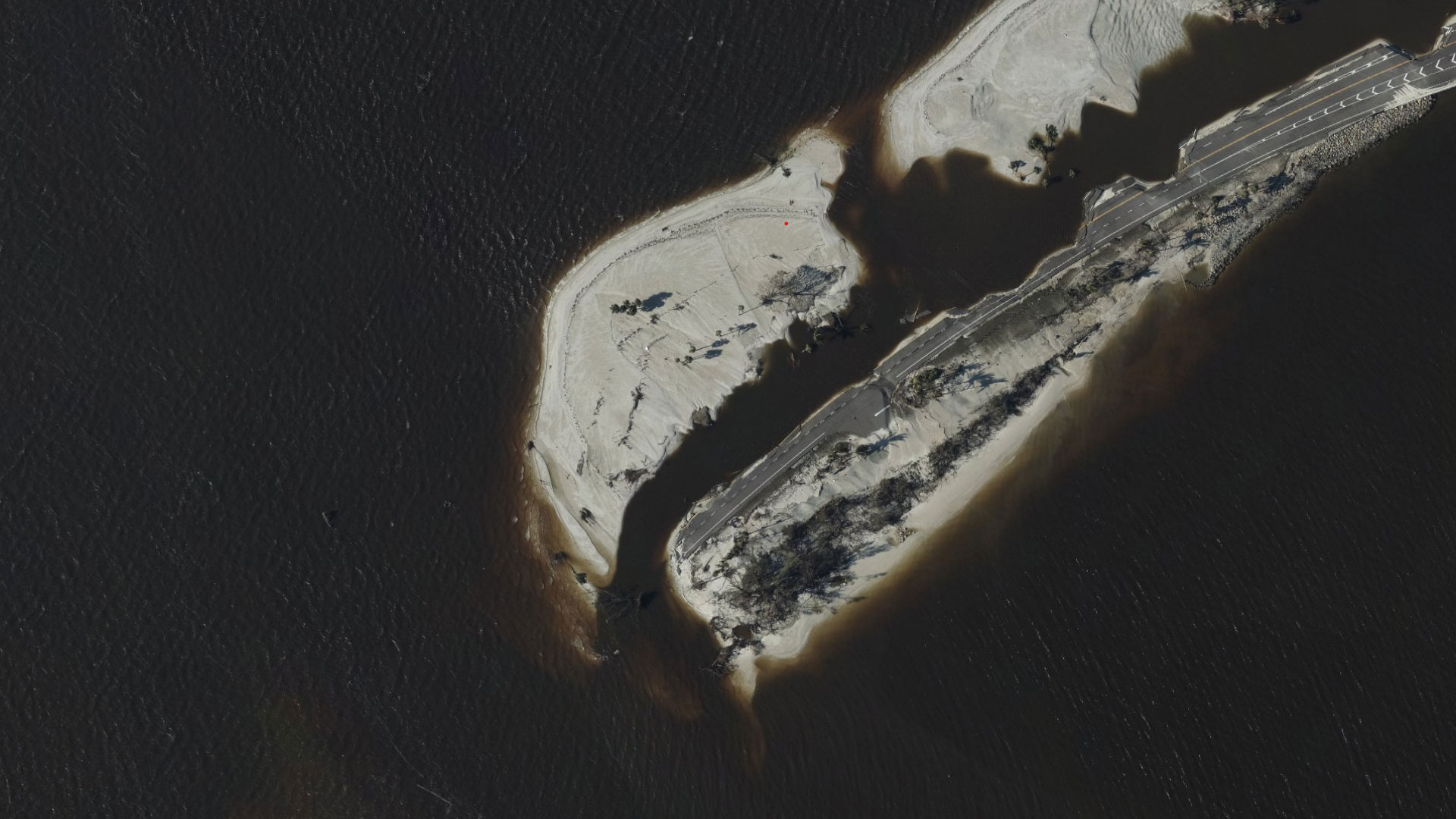
    overflight storm ianCatastrophic damage to the Sanibel Island Causeway is shown in this NOAA overflight after Hurricane Ian absolutely demolished most of Fort Myers Beach, Florida.

    Evidence mounts that climate change is creating monster storms as death toll climbs in Ian’s wake

    This story was originally published by The Conversation.

    FORT MYERS BEACH — When Hurricane Ian hit Florida and killed at least 100 people, it was one of the United States’s most powerful hurricanes on record, and it followed a two-week string of massive, devastating storms around the world.

    A few days earlier in the Philippines, Typhoon Noru gave new meaning to rapid intensification when it blew up from a tropical storm with 50 mph winds to a Category 5 monster with 155 mph winds the next day. Hurricane Fiona flooded Puerto Rico, then became Canada’s most intense storm on record. Typhoon Merbok gained strength over a warm Pacific Ocean and tore up over 1,000 miles of the Alaska coast.

  • Wither wisteria: ‘People care about our land’
    in News

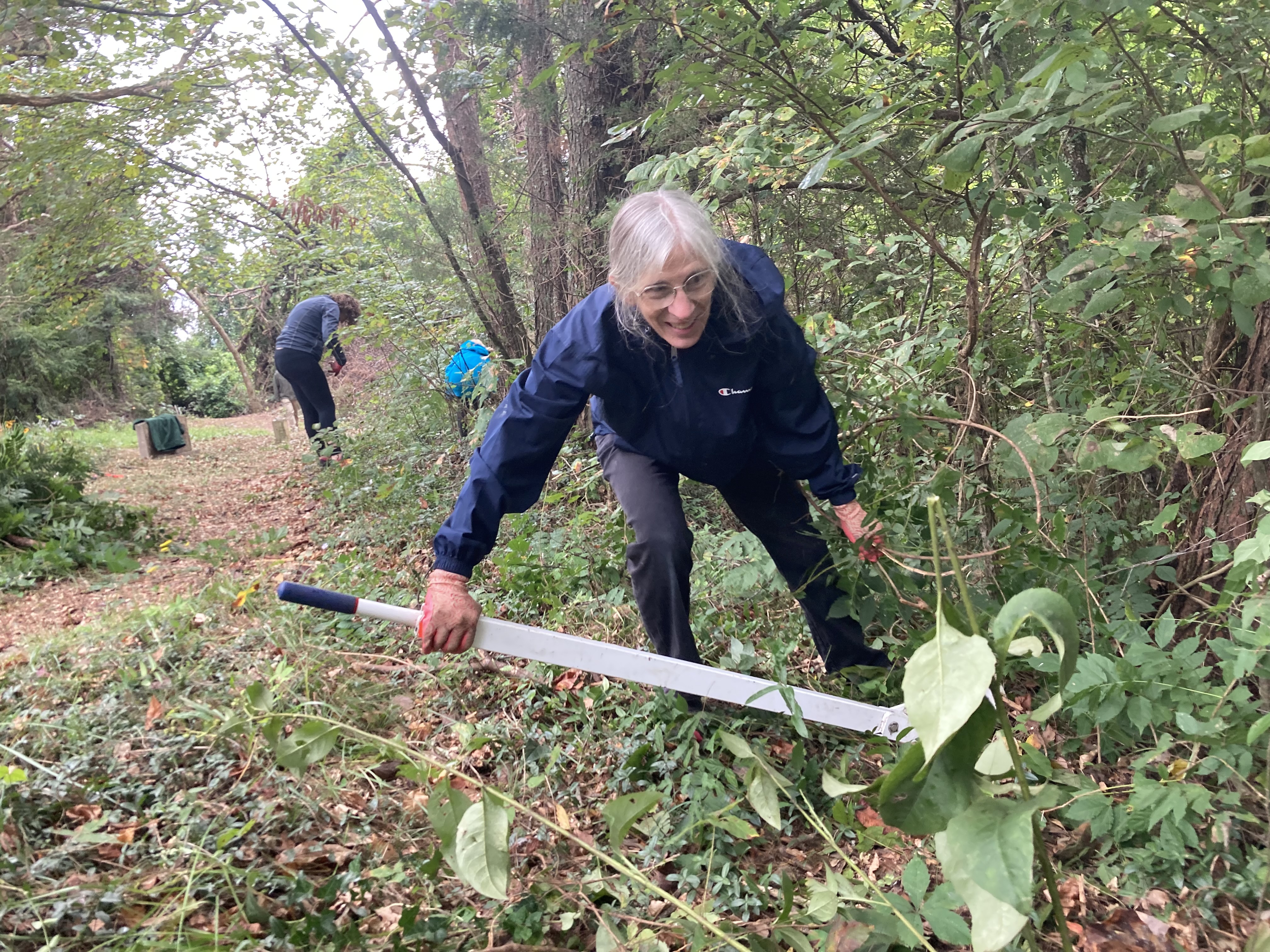
    IMG 4106Anne Child removes invasive exotic plants during a recent Tennessee Citizens for Wilderness Planning event to mark National Public Lands Day at TVA’s Worthington Cemetery in Oak Ridge. Ben Pounds/Hellbender Press

    Citizens pay it back on Public Lands Day in Oak Ridge, Smokies and beyond

    OAK RIDGE — Rain drizzled as volunteers dug and clipped plants in woods around an old cemetery turned science lab.

    It was a Public Lands Day event at Tennessee Valley Authority Worthington Cemetery Ecological Study area in Oak Ridge near Melton Hill Lake. Tennessee Citizens for Wilderness Planning, an environmental organization based in Oak Ridge, led the Sept. 24 work party in support of American public lands.

    Other events were held throughout the country to mark the date (including Great Smoky Mountains National Park), which has proven itself to be the most productive day of the year for citizen sweat equity in public lands.

  • APIEL, the 13th Appalachian Public Interest and Environmental Law conference is set for Saturday, October 1
    in News

    ELOlogoELO is a student-run organization at the University of Tennessee College of Law. It is not directly affiliated with the University of Tennesse or any particular non-profit organization. It is dedicated to providing students and attorneys with learning opportunities and leadership experiences.

    Networking environmental leaders across Appalachia and the State of Tennessee

    Knoxville — APIEL is a relative newcomer to the small circle of inclusive U.S. public interest environmental law conferences. Because it is organized by law school student volunteers, APIEL is affordable to attend for students as well as citizens from all walks of life.

    APIEL is much loved and considered essential by regional nonprofit leaders and activists. It is also highly acclaimed by seasoned environmental lawyers. With just 12 conferences under its belt, APIEL has risen to rank among leading peer conferences with a much longer track record, such as the  Public Interest Environmental Law Conference (PIELC) at the University of Oregon School of Law (39 events), the Red Clay Conference at the University of Georgia School of Law (34) and the Public Interest Environmental Conference (PIEC) at the University of Florida’s Levin College of Law (28).

  • Enviros to TVA: Retire the fossil-fuel pacifier
    in News

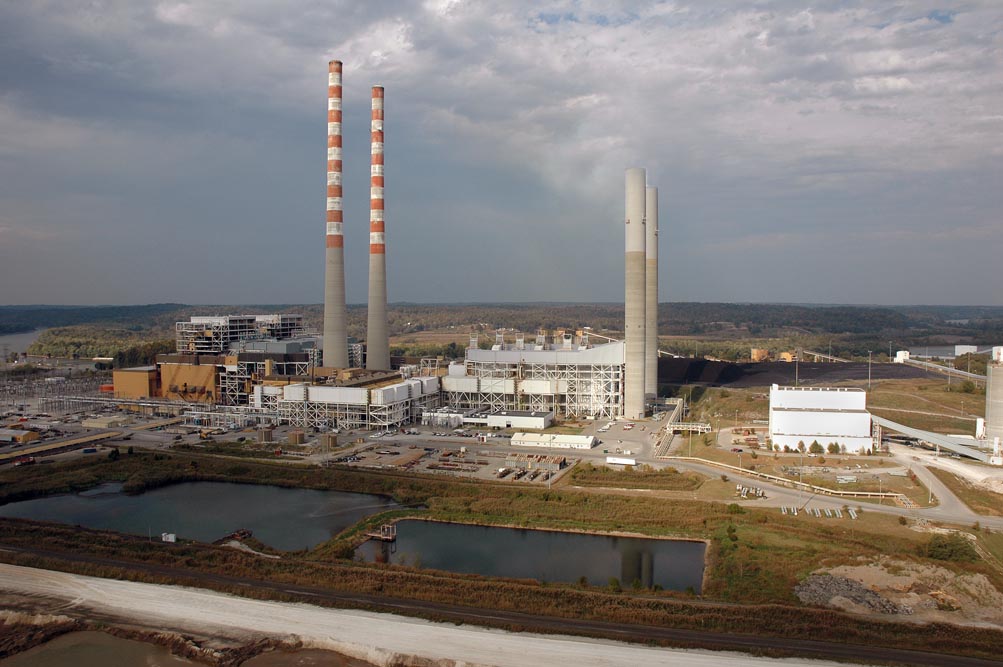
    Cumberland FPTVA’s Cumberland Fossil Plant near Clarksville is the subject of a suit filed by environmental groups, including Appalachian Voices and Southern Environmental Law Center.  Tennessee Valley Authority

    SELC, others file suit in hopes of dissuading TVA from future fossil options

    This story was originally published by Tennessee Lookout.

    CLARKSVILLE — On behalf of the Tennessee Chapter of the Sierra Club and Appalachian Voices, the Southern Environmental Law Center asked TVA to prepare a supplemental environmental statement to address concerns with TVA’s draft environmental impact statement, which details the agency’s plans to retire the Cumberland Fossil Plant.

    The Cumberland Fossil Plant, about 22 miles southwest of Clarksville, is TVA’s largest coal-fired power station and was built between 1968 and 1973. TVA plans to retire each unit of the two-unit, coal-fired steam-generation plant separately: one unit no later than 2030, and the second unit no later than 2033. But the plant will need to be replaced, and TVA is currently considering three alternatives to fossil fuel, including natural gas and solar energy, according to its draft EIS.

    (Tennessee Valley Authority already plans to close down the Knoxville-area Bull Run fossil plant in Claxton next year).

  • There’s a whole world in the dirt beneath your feet
    in News
    Dust bowl soilThe Dust Bowl of the 1930s resulted in the displacement of tons of soil in the midst of a drought similar to the one that grips the Southwest today. Library of Congress
     

    Dirt is far from just dirt. It’s a foundation for life.

    This story was originally published by The Revelator.

    Look down. You may not see the soil beneath your feet as teeming with life, but it is.

    Better scientific tools are helping us understand that dirt isn’t just dirt. Life in the soil includes microbes like bacteria and fungi; invertebrates such as earthworms and nematodes; plant roots; and even mammals like gophers and badgers who spend part of their time below ground.

    It’s commonly said that a quarter of all the planet’s biodiversity lives in the soil, but that’s likely a vast understatement. Many species that reside there, particularly microorganisms such as viruses, bacteria, fungi and protists, aren’t yet known to science.

  • SACE belays solar power on Global Climbing Day
    in Air

    MEMPHIS Area residents were invited to a film screening of “Keep the Lights On” and a panel discussion at the Memphis Rox climbing gym with community members, local advocates and policy experts. The event, which ran from 10 a.m. to 4 p.m. Saturday, Aug. 20, coincided with Global Climbing Day, and professional rock climbers Nina Williams, Manoah Ainuu (who recently summited Everest), Olympic Silver Medalist Nathaniel Coleman, and Fred Campbell hosted and participated in community and climbing-oriented events prior to the film screening and conversation. 

    The film follows Memphis Rox staff member and leader Jarmond Johnson, recounting his experiences with intermittent energy access growing up in South Memphis, his growth into a gang activist and mentorship role at Rox, and, ultimately, working with professional rock climber and environmental activist Alex Honnold (best known for the academy award-winning film, Free Solo) to bring solar energy to the gym. Following the screening, Jarmond and a panel of experts discussed takeaways from the film, and how equitable access to solar energy could help all Memphians keep their lights on. 

    — Southern Alliance for Clean Energy

  • Monarch butterflies, an ephemeral but regular glimpse of beauty, are fluttering toward extinction
    in News

     Bales Monarch on coneflowerA monarch butterfly, recently declared endangered despite decades of conservation, is seen atop a coneflower. Stephen Lyn Bales

    Dramatic monarch declines mean the bell tolls for we

    KNOXVILLE — Monarch butterflies are ephemeral by nature. The orange and black dalliances that flitter through our lives, our yards, and our countryside like motes of dust are here one minute and gone the next. We pause for a few seconds to watch the “flutter-bys” and then move on.

    For about all of the Lepidopteran family, where they come from, where they go, their raison d'être, we don’t ask. They are winged wisps that pass through our busy lives. But that is not true with this orange and black butterfly, named to honor King William III of England, the Prince of Orange. But two people did ask.

    Norah and Fred Urquhart lived in Southern Canada and in the late 1930s they noticed that the monarch butterflies seemed to all be fluttering south this time of the year. Could they possibly be migrating and if so, where did they go? The notion that a butterfly might migrate south for the winter seemed hard to fathom. Yes, broad-winged hawks migrate. But a flimsy butterfly?

  • Dems pass huge climate bill assailed by some as another fossil energy sop
    in News

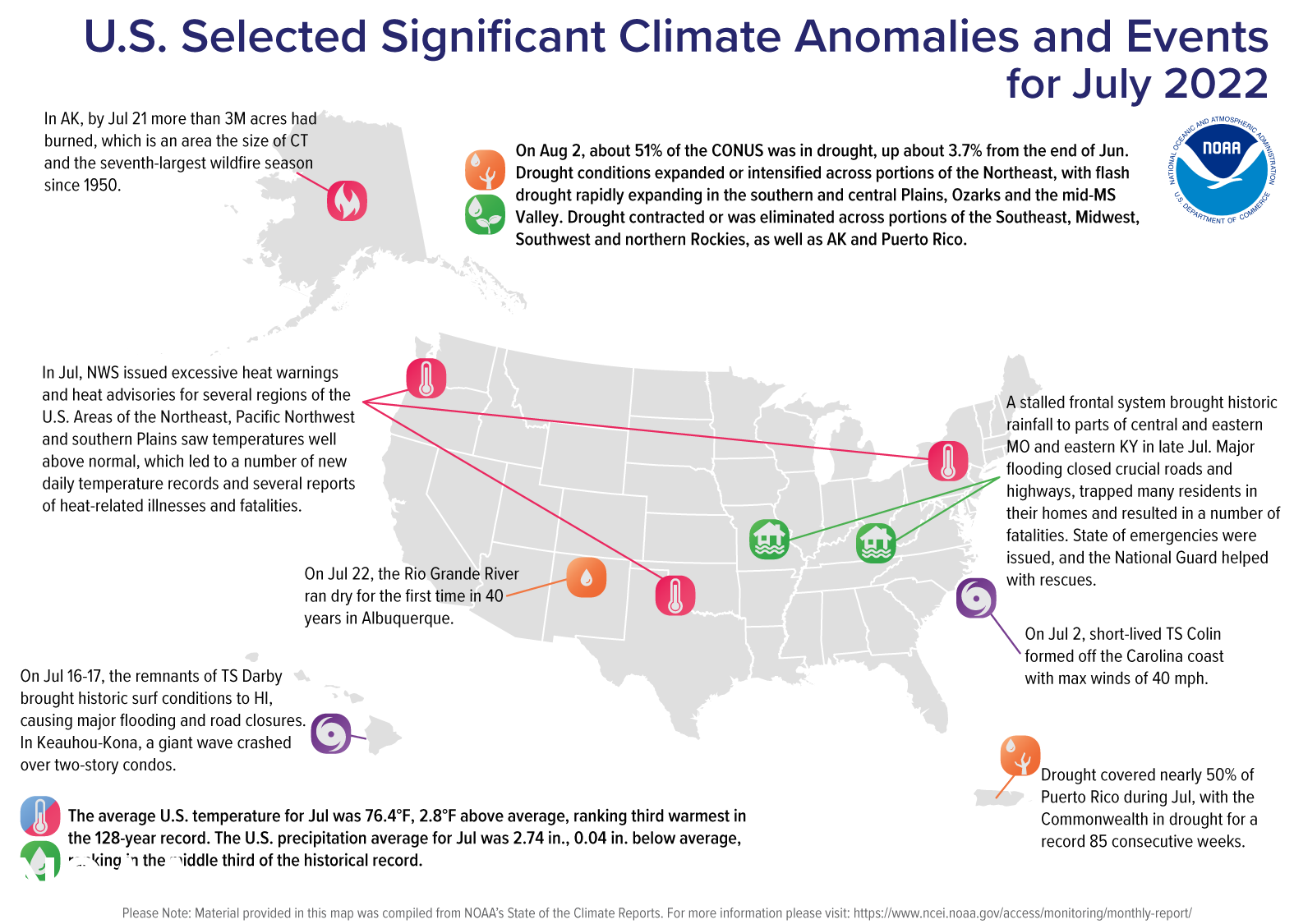
    5 July 2022 US Significant Climate Events Map

    Record-setting bill will fund extensive efforts to address climate change, but the sausage-making deal is decried by some as a ‘suicide pact’

    This story was originally published by Tennessee Lookout.

    WASHINGTON — The U.S. Senate, along party lines, passed a sweeping energy, health care, climate and tax package Sunday afternoon, following an overnight marathon of votes that resulted in just a handful of notable changes to the legislation.

    The 755-page bill was passed after Vice President Kamala Harris broke a 50-50 tie in the evenly divided Senate. It now heads to the House, where Democratic leaders have announced they will take it up on Friday.

    At last, we have arrived,” Senate Majority Leader Chuck Schumer said.  Democratic senators broke out into applause as Harris announced passage of the bill, expected to total more than $700 billion.

    Schumer, a New York Democrat, said he dedicated the measure to young Americans who have pushed and protested for the Senate to take action on climate change.