
14 Life Below Water (15)
Conserve and sustainably use the oceans, seas and marine resources for sustainable development
5 big threats to the world’s rivers
Written by Tara Lohan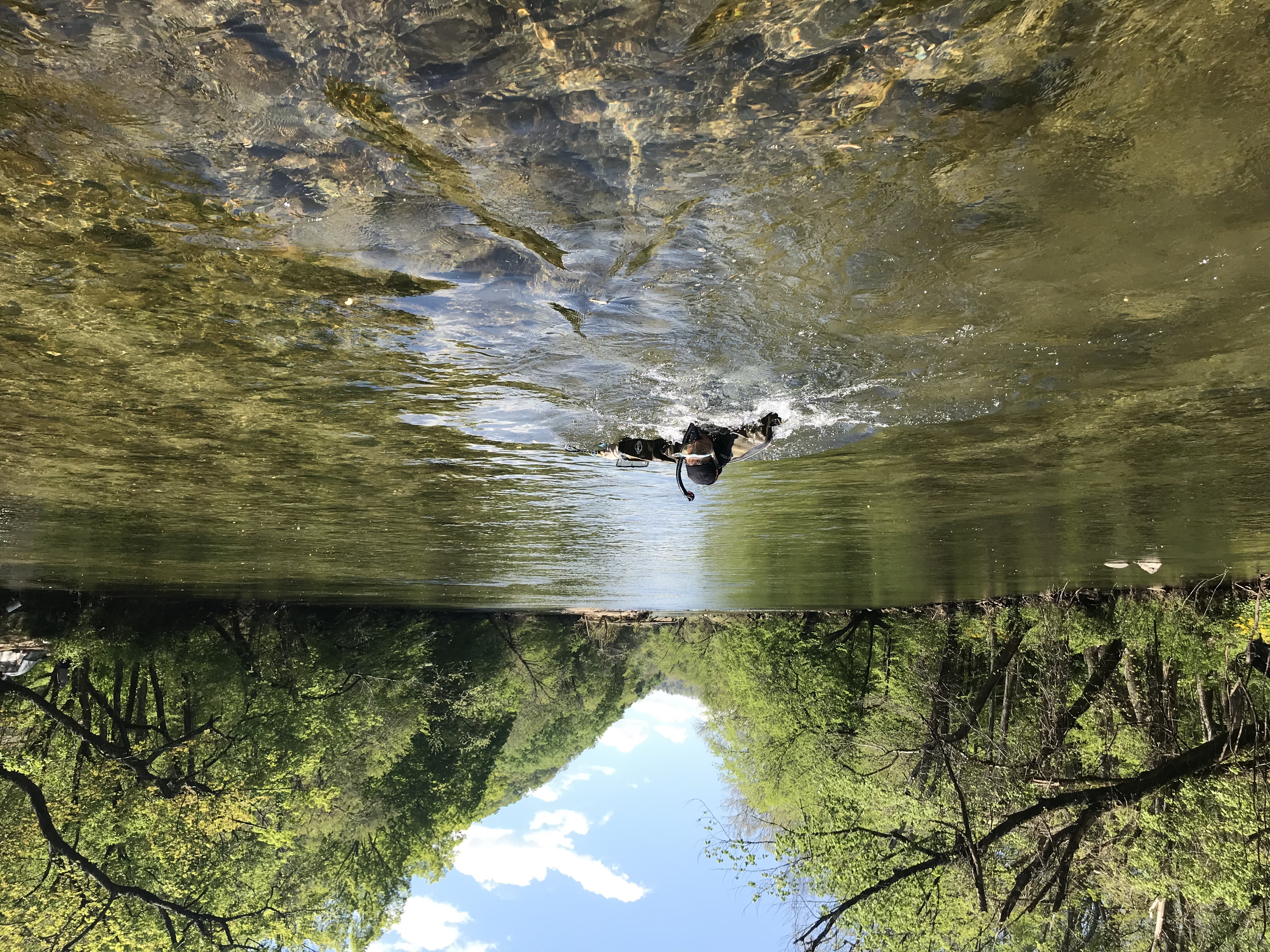 A biologist with Conservation Fisheries surveys a stretch of Little River near Walland, Tennessee to determine fish viability and identify rare species for transplantation. Thomas Fraser/Hellbender Press
Human activities have imperiled our waterways — along with a third of freshwater fish and other aquatic species
This story was originally published by The Revelator.
If we needed more motivation to save our ailing rivers, it could come with the findings of a recent study that determined the biodiversity crisis is most acute in freshwater ecosystems, which thread the Southern landscape like crucial veins and arteries.
Rivers, lakes and inland wetlands cover 1 percent of the Earth but provide homes for 10 percent of all its species, including one-third of all vertebrates. And many of those species are imperiled — some 27 percent of the nearly 30,000 freshwater species so far assessed by the IUCN Red List. This includes nearly one-third of all freshwater fish.
How did things get so bad? For some species it’s a single action — like building a dam. But for most, it’s a confluence of factors — an accumulation of harm — that builds for years or decades.
- freshwater science
- threats to rivers
- the conversation
- biodiversity
- freshwater biodiversity
- what are biggest threats to rivers and water
- are dams bad
- climate change in appalachia
- threats to clean water
- tara lohan
- dam obstructions
- grazing impacts on waterways
- river democracy act
- climate change
- dams
- water pollution
- freshwater pollution
- pollution prevention
- conservation fisheries
For the win: The storied snail darter swims back from the brink
Written by Southern Environmental Law Center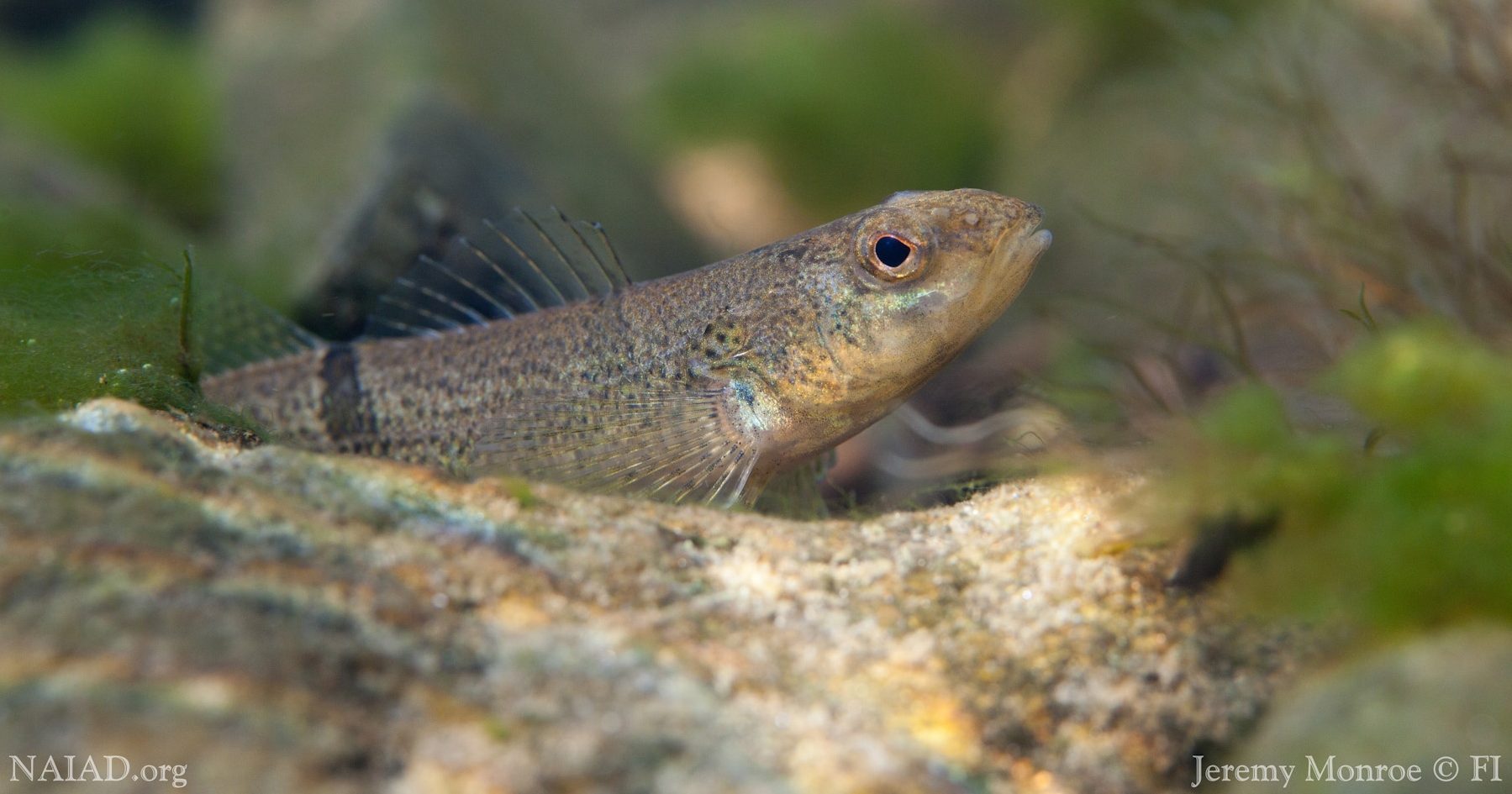 The snail darter, which caused an epic battle around TVA plans to dam the Tellico River in the 1970s, was recently removed from the Endangered Species List. Jeremy Monroe/Tennessee Aquarium
The little fish that caused a maelstrom over a TVA dam project gets the last laugh
TELLICO — In a win for endangered species protected by federal law, the U.S. Fish and Wildlife Service announced this week the fabled snail darter’s recovery and removal from the Federal List of Threatened and Endangered Wildlife.
Native to the Tennessee River watershed in Alabama, Georgia, Mississippi and Tennessee, the fish has long been an Endangered Species Act icon thanks to conservation efforts to save its habitat starting in the 1970s, when the Tennessee Valley Authority proposed construction of a dam on the Little Tennessee River. The snail darter (Percina tanasi) was central in the 1978 U.S. Supreme Court case Tennessee Valley Authority v. Hill, which solidified the scope of the then recently passed ESA.
- snail darter
- endangered species
- endangered species act
- tellico dam
- southern environmental law center
- snail darter removed from endangered species list
- tva vs hill
- little tennessee river
- eastern band of cherokee indians
- ramona mcgee
- george nolan
- tennessee valley authority v hill
- habitat conservation
- us supreme court
- percina tanasi
- threatened species
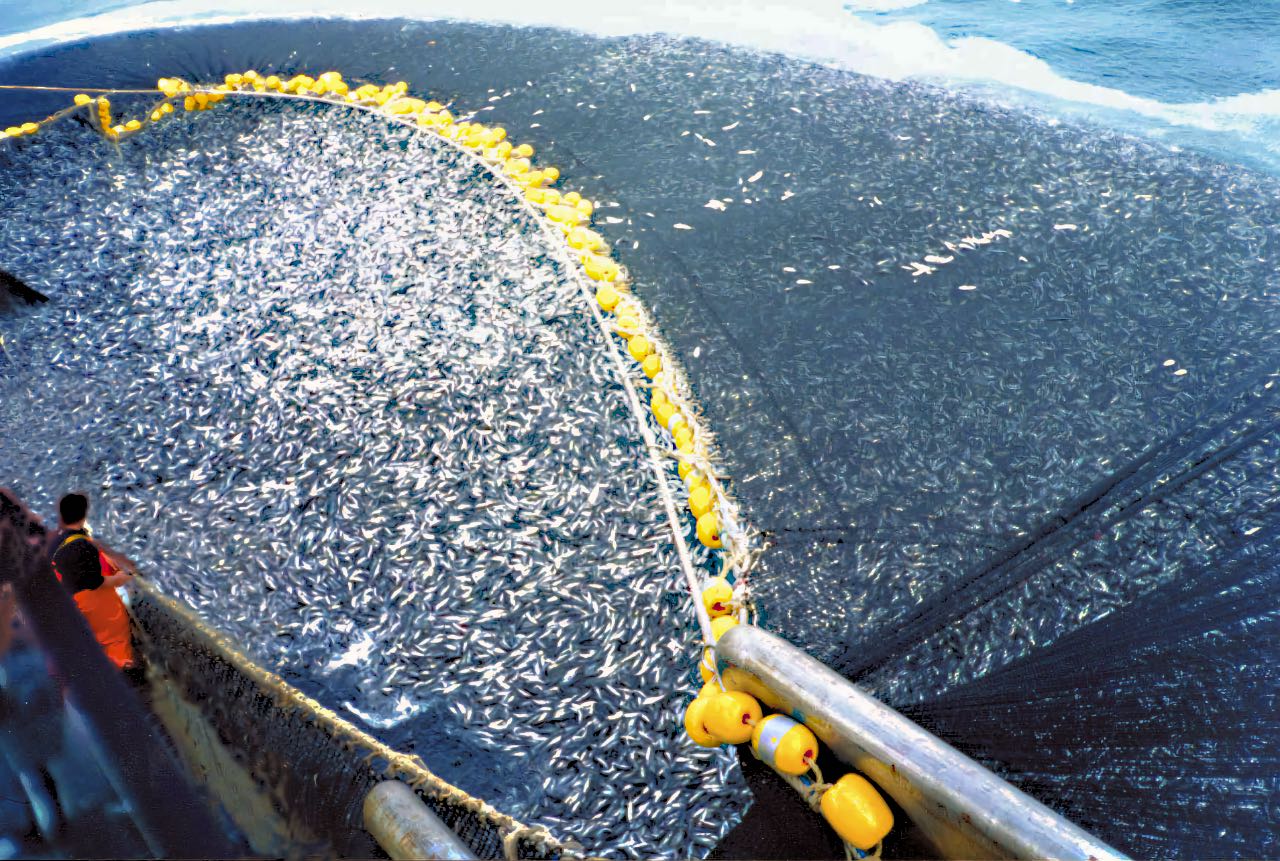 A purse seine on a Chilean fishing vessel captures tons of mackerel. NOAA
We need to navigate to where fish sticks in your mind
You can read Coty Perry’s full report on overfishing at YourBassGuy.com.
When you hear about sustainability, one thing that often flies under the finder is the topic of overfishing. Many will say that overfishing is a natural response to the need for more fish, but it runs much deeper than that.
The goal of this article is not to shame any specific industry, country or company. The goal is to shine light on an issue I believe is highly under-reported by mainstream media.
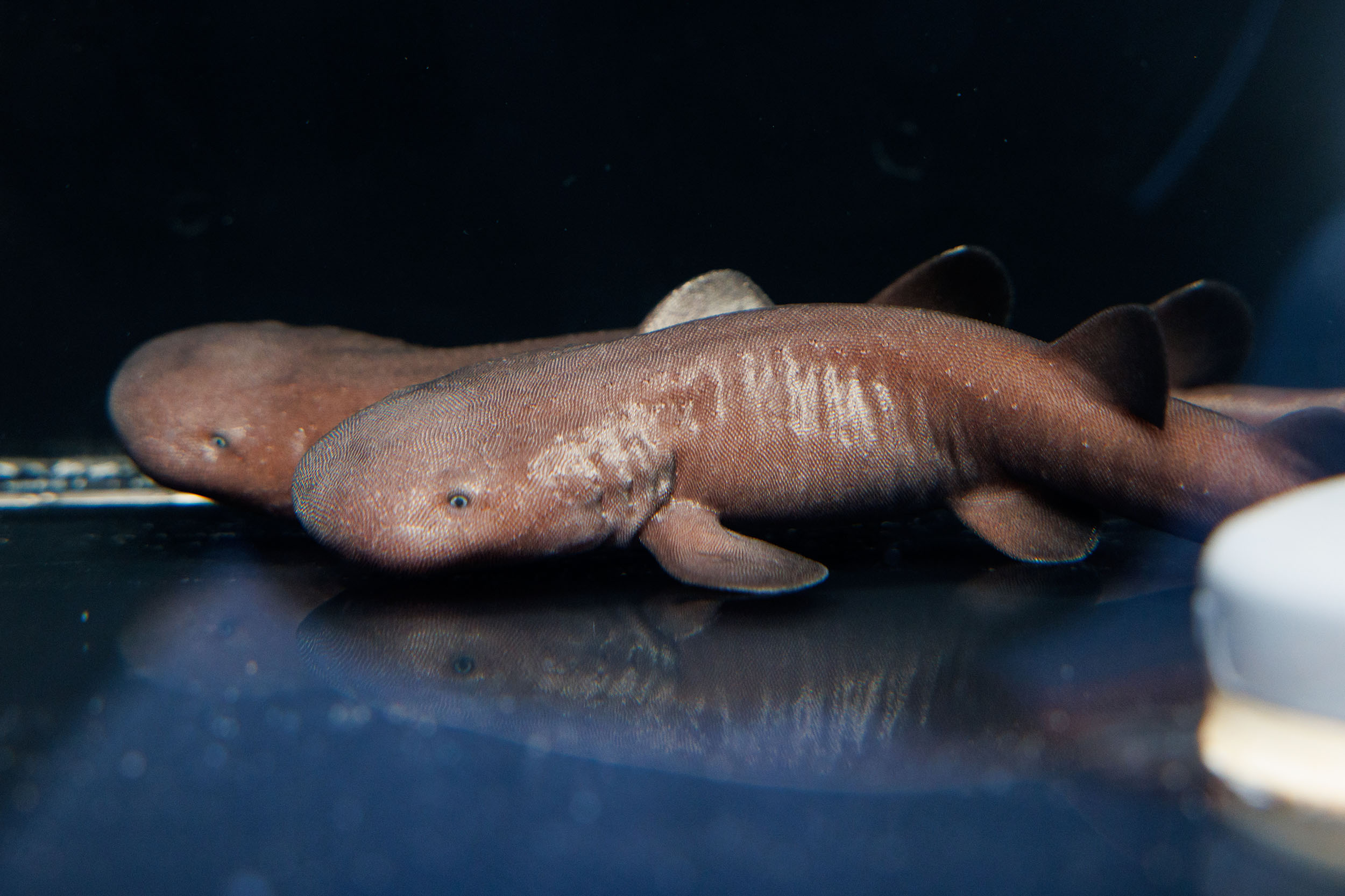 Tennessee Aquarium
Tennessee Aquarium hatches endangered shark species
CHATTANOOGA — The Tennessee Aquarium reached a significant milestone just in time for Shark Week with the recent hatching of three critically endangered short-tail nurse shark pups.
The diminutive youngsters, which hatched July 7, are the product of three adult short-tail nurse sharks — one male and two females — which arrived at the aquarium along with eight juveniles and eight fertilized eggs from a facility in Canada last year.
Falcons in flight: Gatlinburg couple earns top conservation honors from Tennessee Wildlife Federation
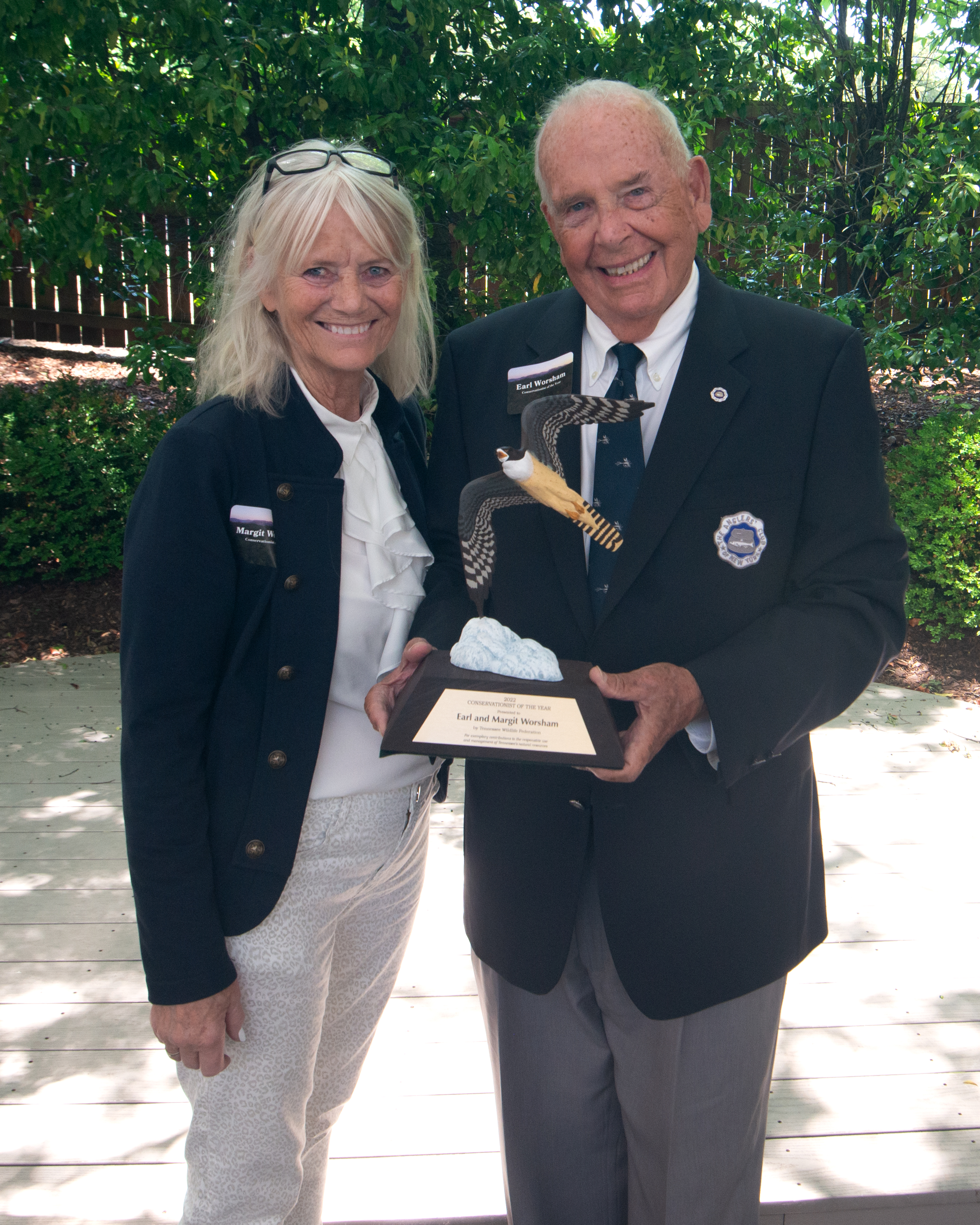
Written by Deborah Sosower![Worsham Conservationist of the Year1]() Arrowmont supporters Margit and Earl Worsham named Conservationists of the Year by Tennessee Wildlife Federation
Arrowmont supporters Margit and Earl Worsham named Conservationists of the Year by Tennessee Wildlife Federation
This story was provided by Arrowmont School of Arts and Crafts.
GATLINBURG — Margit and Earl Worsham stood in front of family, friends, and fellow conservationists on stage in Nashville this spring and were presented with a unique award of mahogany shaped like a peregrine falcon in flight.
They were named the Tennessee Wildlife Federation’s 2022 Conservationists of the Year at the federation’s 57th Annual Conservation Awards in May.
It’s a prestigious honor presented to nominees considered to have the most significant contribution to the cause of natural resources conservation in Tennessee.
HuffPost: More than 50 House Republicans want to repeal a century-old excise tax that bankrolls wildlife conservation
In the latest “gun rights” lash-out from the GOP, legislation has been filed to abolish firearms taxes levied on gunmakers that fund wildlife conservation.
The Republican legislation is framed as a way to defend gun purchasers from odious taxation under the 2nd Amendment umbrella, but leading hunting and fishing interests said the proposal is misguided and misses the target by a wide mark.
The levy as currently written applies to gunmakers, not individual firearms purchasers.
The GOP target is the Pittman-Robertson Act, which “helped confront decades of overhunting and habitat loss by creating a financial link between hunting and conservation,” according to HuffPost.
“This year, the Interior Department will distribute a record $1.5 billion to state wildlife agencies through the Pittman-Robertson Act and its fisheries equivalent, the Dingell-Johnson Sport Fish Restoration Act. To date, the programs have divvied up a combined $25.5 billion for conservation and outdoor recreation projects,” according to reporting from HuffPo reporter Chris D’Angelo.
 Jim Hill Fellow for Conservation Breelyn Bigbee holds a viewing window with a logperch in Long Swamp Creek while conducting fieldwork in search of bridled darters near Jasper, Georgia. Tennessee Aquarium
Tennessee Aquarium fellowships bring minorities into the science space
CHATTANOOGA — Never let it be said that all summer jobs are created equal.
Squatting on his heels to dangle the flexible hose of an environmental DNA pump into a briskly flowing North Georgia stream, the last few weeks have been anything but ordinary for Spencer Trimpe. With the pump’s droning motor steadily collecting a sample of water to filter out genetic traces of the stream’s inhabitants, he doesn’t bother holding back a smile.
A lanky junior biology major from Thomas More University, Trimpe is one of two students selected as part of the Tennessee Aquarium’s George Benz Aquatic Ecology Fellowship. Instead of manning a cash register or waiting tables this summer, he’s assisting freshwater scientists from the Tennessee Aquarium Conservation Institute with a variety of research projects.
Rare bipartisan legal effort under way for widespread wildlife protections
NYT: Recovering America’s Wildlife Act a big bipartisan push to preserve animal species
New York Times columnist Margaret Renkl noted recently that a precious opportunity has presented itself to strengthen wildlife-protection laws and add to environmental protections across the nation.
The Nashville-based journalist said the act, known as RAWA, “is poised to become the single most effective tool in combating biodiversity loss since the Endangered Species Act.” The resolution is carried in the House by Michigan Democrat Rep. Debbie Dingell.
“This bill provides funding for (1) the conservation or restoration of wildlife and plant species of greatest conservation need; (2) the wildlife conservation strategies of states, territories, or the District of Columbia; and (3) wildlife conservation education and recreation projects,” according to the U.S. Congress.
“The Department of the Interior must use a portion of the funding for a grant program. The grants must be used for innovative recovery efforts for species of greatest conservation need, species listed as endangered or threatened species, or the habitats of such species.
“In addition, the bill requires certain revenues generated from fees and penalties for violations of environmental requirements to be used as a source for the funding.”
The legislation, which has already passed the House of Representatives, would allocate $1.4 billion each year across the country to protect and restore endangered plant and animal populations, and protect species already tipping toward endangered status. It is up for consideration in the Senate, where it has already garnered the support of at least a dozen Republicans and a majority of Democrats, virtually ensuring its passage, according to Renkl.
“You don’t have to nurse a fondness for spotted owls or snail darters — creatures at the heart of two of the most contentious environmental debates in recent history — to understand that what is best for the ecosystems we share with nonhuman animals is what’s best for us, too,” Renkl wrote.
Georgia’s Ocmulgee River is a case study in the decline of Southern river fisheries, and their revival
Ethan Hatchett is a writer for the Georgia Department of Natural Resources.
MACON — The Ocmulgee River has changed. The cloudy water once ran clear. The sandy bottom was once rocky. Fish swam upriver to breed from places as distant as the Altamaha River, which the Ocmulgee and Oconee rivers join to form near Lumber City and the Atlantic Ocean.
European settlement changed the river. Centuries of agriculture and development stripped away much of the land’s vegetation that filtered the flow, causing the Ocmulgee to fill with sediment. The soil particles gradually moved through the waterway, covering gravel that fish spawned in, smothering fishes’ eggs, mucking up the water and even building up on the banks, saturating the ground with sediment.
It is impossible to know how many freshwater fish the Ocmulgee lost since the first Europeans arrived. Many species disappeared without being discovered. Yet on a clear afternoon in May, DNR aquatics biologist Paula Marcinek led a team on the upper Ocmulgee in search of robust redhorse, a “lost” fish found in 1991.
Read DNR’s blog post about efforts to restore the robust redhorse, plus news of a new grant that will expand the work and rare video of these fish spawning.
Tennessee Aquarium marks a milestone in its effort to bring native brook trout back to mountain streams
Written by Casey Phillips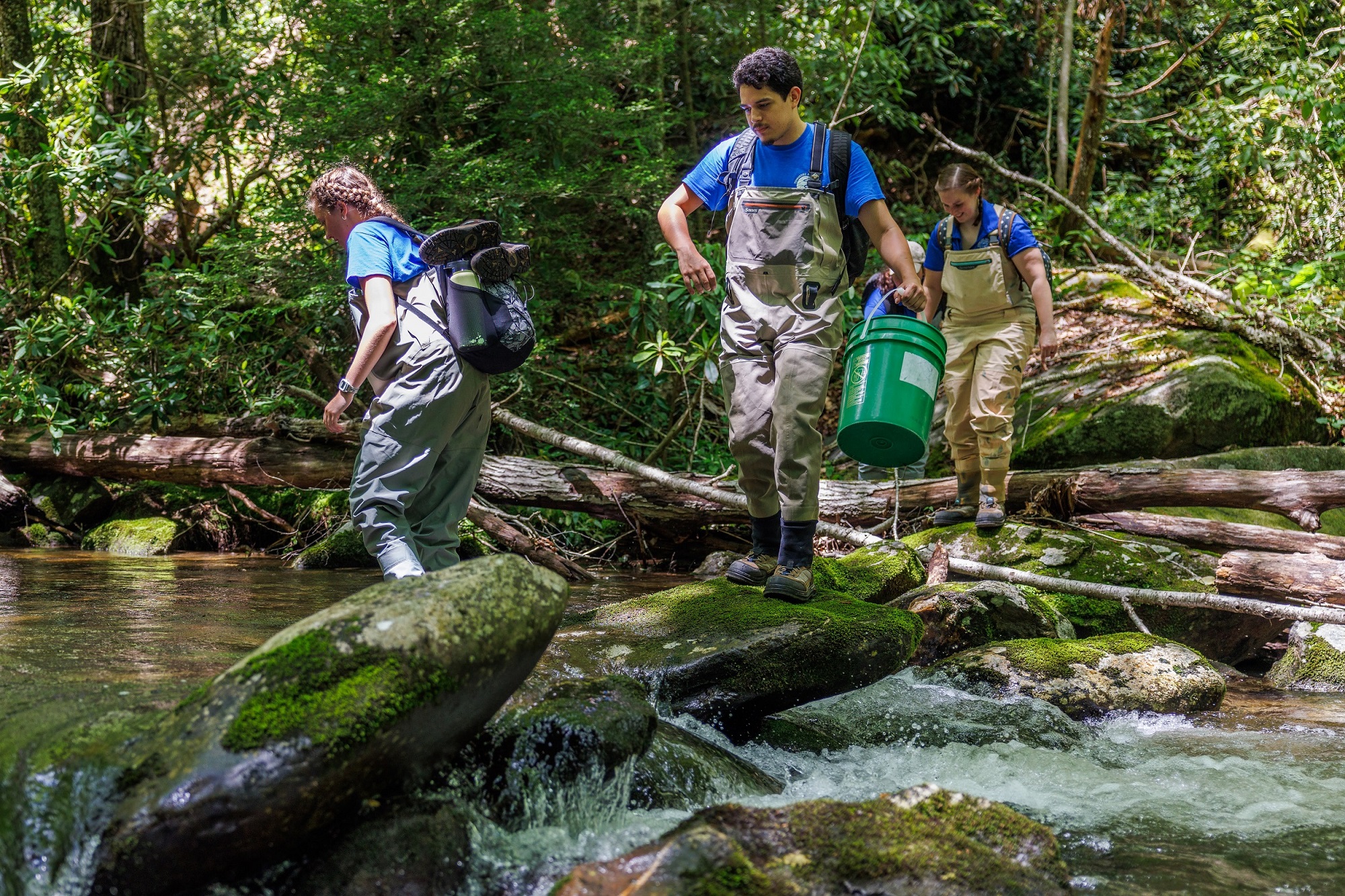 Reintroduction Assistant Kaylee Clayton, left, Jim Hill Fellow for Conservation Anthony Hernandez, center, and Reintroduction Biologist Teresa Israel cross a stream during a Southern Appalachian brook trout release. Tennessee Aquarium
Emblematic brook trout get a second chance at home in Southern Appalachian streams
Casey Phillips is a writer for the Tennessee Aquarium.
CHATTANOOGA — A team from the Tennessee Aquarium, Tennessee Wildlife Resources Agency and Trout Unlimited hiked along — and occasionally waded through — a pristine tributary of South Fork Citico Creek in Cherokee National Forest.
Navigating an obstacle course of tangled mountain laurel branches and moss-slickened boulders in late May, the team followed the stream as it gently descended through the Appalachian uplands. When a calm pool or shaded rocky overhang presented itself, they paused to dip their nets into five-gallon buckets filled with wriggling juvenile Southern Appalachian brook trout.
These little fish, raised to about two inches over six months, were the focus of more than six months of work at the Tennessee Aquarium Conservation Institute and the impetus for the hours-long trek into the East Tennessee woods.
More...
Ancient river, new threats: Water quality officials declare 19 miles of French Broad River in NC impaired by pollutants
Written by Jason Sandford Recreational uses of the French Broad River in Asheville, including tubing, kayaking and canoeing, have grown dramatically in recent years. Jason Sandford/Ashevegas Hot Sheet
Booming construction and development, combined with more frequent heavy rains and an aging stormwater system, continue to threaten the age-old Appalachian river
This story was originally published by Jason Sandford of the Ashevegas Hot Sheet.
ASHEVILLE — North Carolina water quality officials declared a 19-mile section of the French Broad River in Buncombe County as officially “impaired” because of fecal coliform levels found during recent testing. It’s a sobering alarm bell (though there have been plenty of warning signs, as you’ll see below.) In Asheville, interest in the river as an economic force and tourist destination has never been higher. (The confluence of the French Broad and Holston rivers forms the Tennessee River above Knoxville.)
The designation will come as no surprise to even casual observers of the wide, northward-flowing river. Often, it runs a chocolate brown color, a clear sign of the sediment and other pollutants running through the waterway.
- french broad river
- ashevegas
- jason sandford
- asheville environment
- is french broad river clean
- tubing in asheville
- fecal coliform french broad
- is french broad part of tennessee river
- what direction does the french broad flow
- kayaking on french broad
- hot springs environment
- french broad sedimentation
- french broad impaired river
- is french broad river polluted?
- what forms the tennessee river
- french broad river asheville
- river health
- threats to french broad river
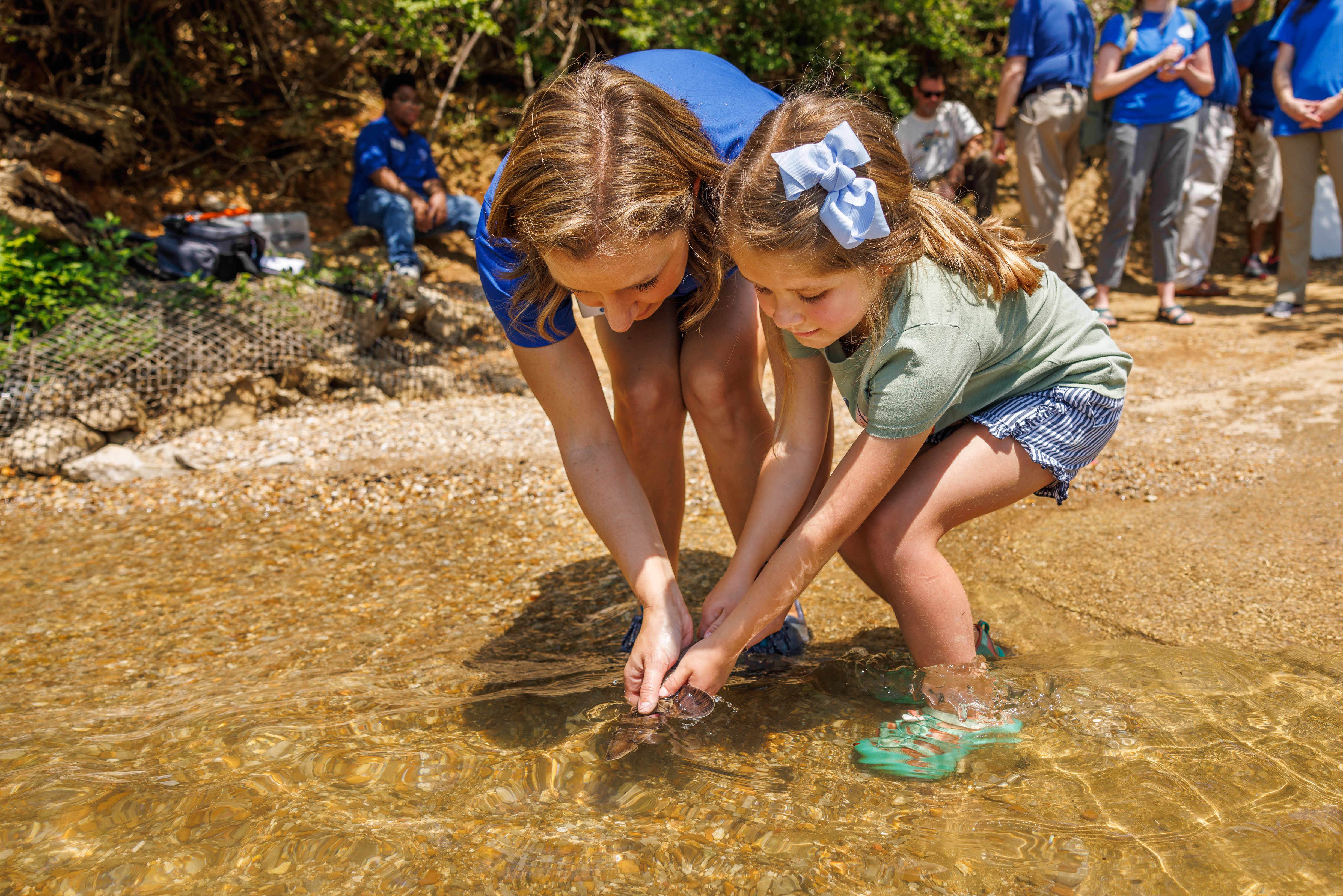 Tennessee Aquarium Director of Hospitality and Marketing Meredith Roberts and her daughter Lucy release a juvenile lake sturgeon during an Earth Day event on the Chattanooga riverfront. Tennessee Aquarium
Tennessee Aquarium releases endangered sturgeon on a fin and a prayer
CHATTANOOGA — Lake sturgeon are living fossils.
They are dinosaur fish. They have no scales. They are protected by a tough skin with boney plates, and are unchanged for millennia. They are part of a widespread related group of fish, with 23 species worldwide, and are an endangered species in Tennessee.
Tennessee Aquarium staff released some of these dinosaurs into the Tennessee River here on Earth Day, observed this year on April 22. Aquarium staff were joined by 30 students from Calvin Donaldson Elementary School and the public to release 65 juvenile lake sturgeon into the Tennessee River at Chattanooga’s Coolidge Park.
Maybe we should call it Ocean Day
Written by Wolf NaegeliBest Earth Day feature: We still know so little about so much that is vital to life on our planet
CBS News — Stunning midwater creatures of the deep sea
You have to endure a half-minute commercial to see this 6-minute report on the fascinating footage captured by a high-tech marine science project of the Monterey Bay Aquarium.
Make sure to turn on full-screen viewing, if you can. Have you ever seen a bloody belly comb jelly?
We think you’ll agree it’s the most worthwile video you watched today.