

4 Quality Education (7)
Ensure inclusive and equitable quality education and promote lifelong learning opportunities for all
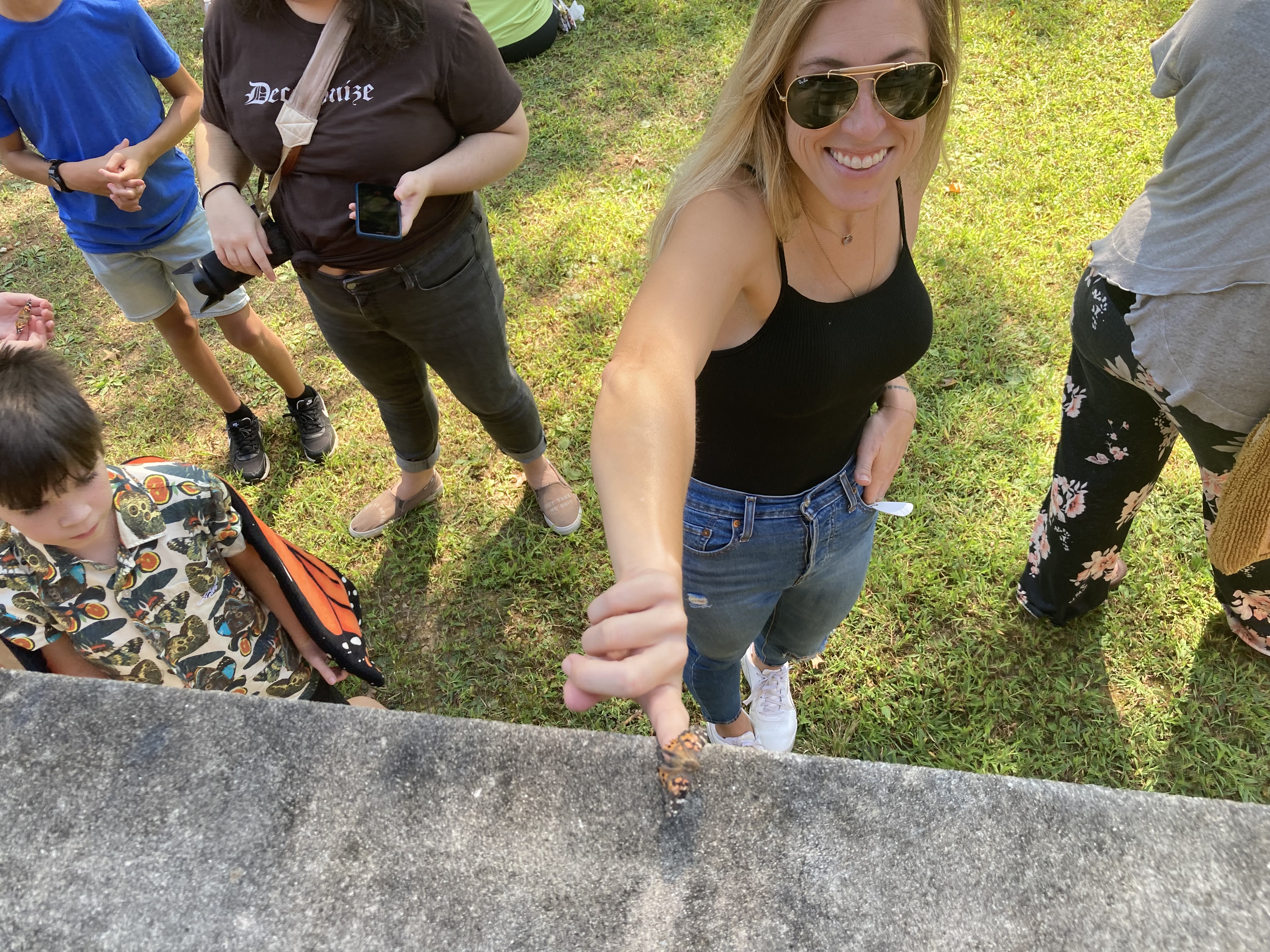 Kat Johnson meets a butterfly during a recent event at the University of Tennessee Arboretum in Oak Ridge. Ben Pounds/Hellbender Press
UT Arboretum event reminds us to love and care for the butterflies among us
OAK RIDGE — With an orange flutter, a cluster of painted lady butterflies took to the sky.
It was a timed release, coming toward the end of the seventh annual University of Tennessee Arboretum’s Butterfly Festival last month.
Earlier, other live painted lady butterflies were available to watch in mesh tents. Visitors got a chance to touch Madagascar hissing cockroaches and look at preserved insect collections with butterflies and other creatures from around the world. Children ran around the event with butterfly face paint, butterfly masks and butterfly wings. But the event was also a chance to buy butterfly-friendly plants and learn about butterflies and their relationships with other species.
- butterfly
- university of tennessee arboretum
- butterfly festival
- pollinator plant
- tennessee naturscapes
- michelle campanis
- stephen lynn bales
- georgeann eubanks
- family garden as butterfly habitat
- jerome grant
- migratory butterfly
- cosmopolitan butterfly
- butterfly garden
- painted lady butterfly
- zebra swallow butterfly
- tennessee state butterfly
- pawpaw
 Jim Hill Fellow for Conservation Breelyn Bigbee holds a viewing window with a logperch in Long Swamp Creek while conducting fieldwork in search of bridled darters near Jasper, Georgia. Tennessee Aquarium
Tennessee Aquarium fellowships bring minorities into the science space
CHATTANOOGA — Never let it be said that all summer jobs are created equal.
Squatting on his heels to dangle the flexible hose of an environmental DNA pump into a briskly flowing North Georgia stream, the last few weeks have been anything but ordinary for Spencer Trimpe. With the pump’s droning motor steadily collecting a sample of water to filter out genetic traces of the stream’s inhabitants, he doesn’t bother holding back a smile.
A lanky junior biology major from Thomas More University, Trimpe is one of two students selected as part of the Tennessee Aquarium’s George Benz Aquatic Ecology Fellowship. Instead of manning a cash register or waiting tables this summer, he’s assisting freshwater scientists from the Tennessee Aquarium Conservation Institute with a variety of research projects.
In throwback to early naturalist techniques, Big Camera! helps us picture plants under the sun
Written by Ben Pounds![big camera]() Donna Moore and Anna Lawrence are pictured at a Big Camera! event in May at Ijams Nature Center in South Knoxville. Ben Pounds/Hellbender PressLessons in early and enduring photo techniques are an organic way to spread the arts and cultivate love of nature
Donna Moore and Anna Lawrence are pictured at a Big Camera! event in May at Ijams Nature Center in South Knoxville. Ben Pounds/Hellbender PressLessons in early and enduring photo techniques are an organic way to spread the arts and cultivate love of nature
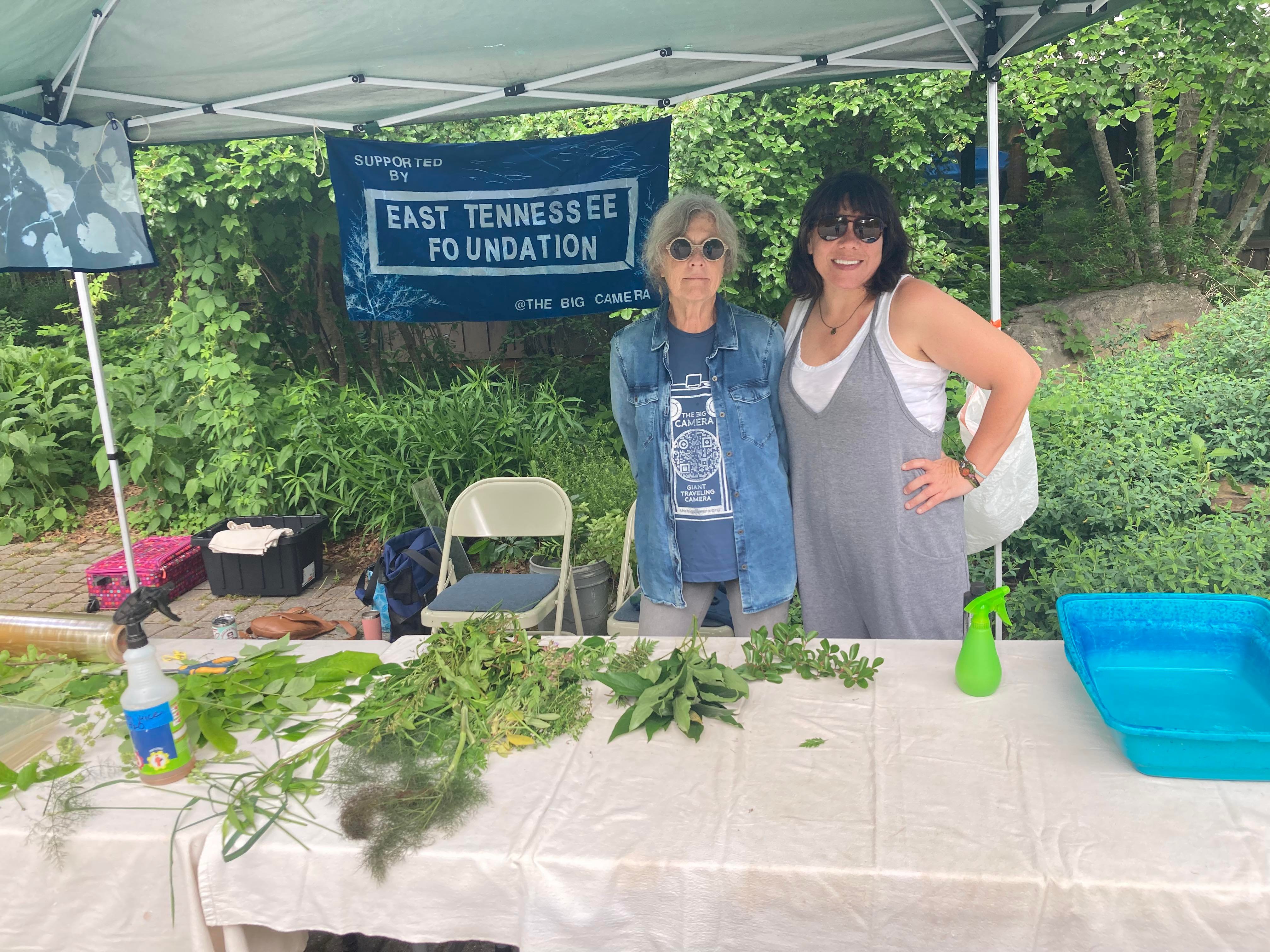
KNOXVILLE — Donna Moore and Anna Lawrence showed people how to take photos with the sun.
The method, demonstrated this spring at Ijams Nature Center, involved putting one or more leaves on photo paper and spraying it with two sprays. One spray contained lemon and water. The other contained water with vinegar.
Children then placed these leaves on wet photo paper in the sun. The sun’s light gives a permanent impression of the leaf on the paper.
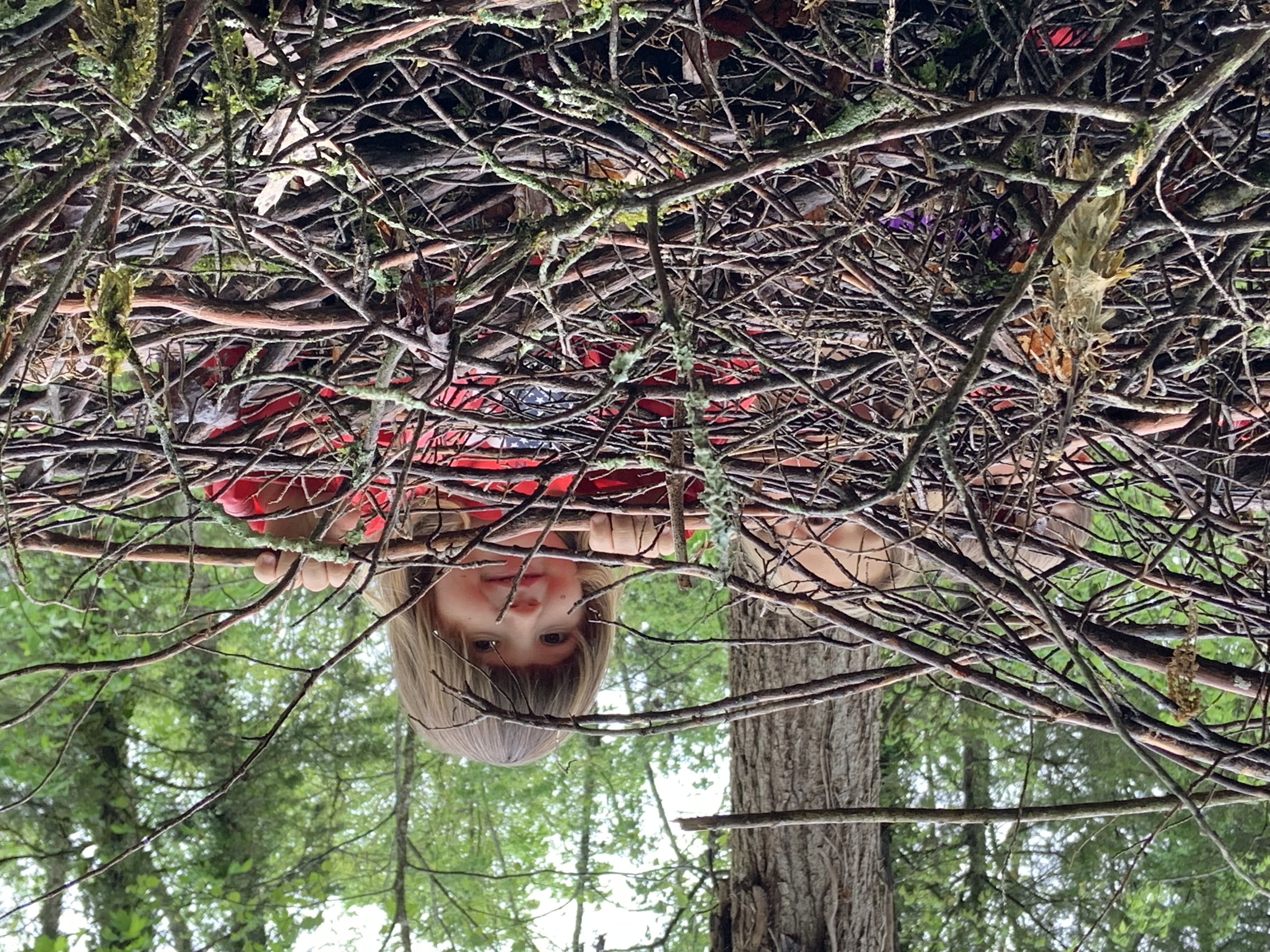 A child defends an elaborate stick fort at Ijams Natural Playscape, which opened this week at the South Knoxville nature center. Ijams Nature Center
New Ijams playground reconnects kids with neighborhood woods, forts and creeks of yore
KNOXVILLE — Ijams Nature Center officially opened a portal into pure childhood beast mode this week.
The Ijams Nature Playscape at Grayson Subaru Preserve is specifically designed for young children to play in a creek, climb hills, dig, build, crawl and engage with nature in an organic, unstructured way. The new space features a large nest, tunnels, log steps and different rooms to play in.
“For generations, many of us had the opportunity to roam and play in the woods, empty lots and fields that surrounded our homes and neighborhoods,” Ijams Executive Director Amber Parker said. “We remember the freedom we had to use our imagination, test ourselves and become a part of the natural landscape, at least until we were called home for dinner.”
- ijams nature center
- ijams educational program
- ijams natural playscape
- kid at ijams
- ijams activity
- cindy hassil
- grayson at ijams
- knoxville outdoor activities for kid
- is knoxville sustainable
- knoxville good place for kid
- childhood outdoor education
- south knoxville
- amber parker
- grayson subaru knoxville
- grayson nature
- is grayson sustainable?
- ijams history
- playgrounds knoxville
- playgrounds near knoxville downtown
- natural playground
- importance of children playing in nature
- nature daycamp knoxville
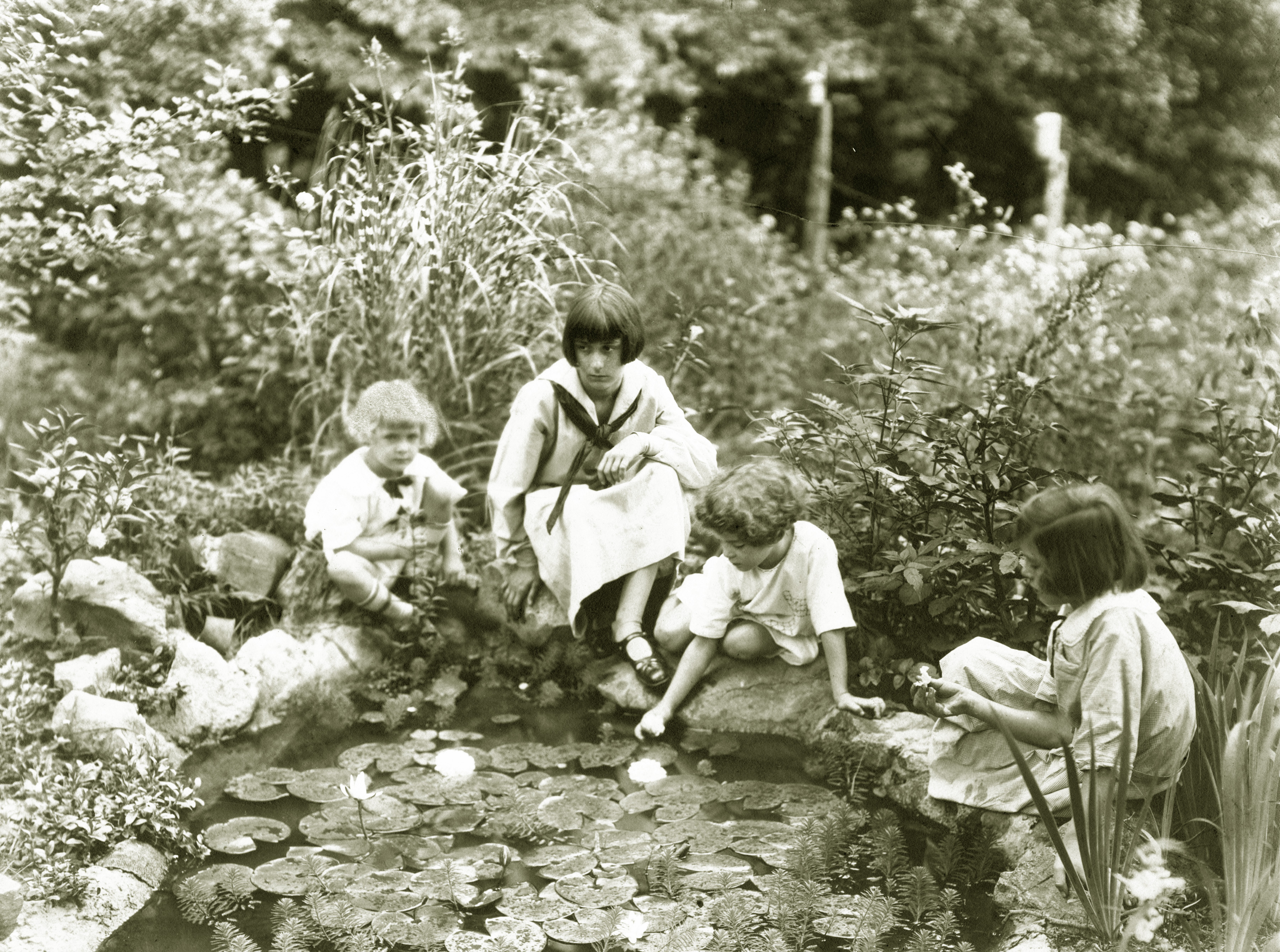 Martha, Elizabeth, Mary, and Josephine Ijams (from left) are seen in this 1923 photo. The girls were active in scouting and became accomplished naturalists early in life. Ijams Nature Center
Help give thanks across history to founders of the South Knoxville nature center and celebrate the addition of 3 acres
Cindy Hassil is a writer for Ijams Nature Center.
KNOXVILLE When H.P. and Alice Ijams purchased 20 acres of land along the Tennessee River in 1910, they couldn’t have known their family would still be contributing to the legacy that would become the 318-acre nonprofit Ijams Nature Center more than a century later.
Ijams Nature Center will celebrate the contributions of the Ijams family and dedicate three acres of land recently donated to the nature center by H.P. and Alice’s granddaughter, Martha Kern, at 10 a.m. Thursday, April 28. The public is invited.
Empty halls, full hearts: Farragut students and teachers adapted with aplomb to pandemic challenge
Written by Ivy Zhang An empty corridor at Farragut High School. Ivy Zhang/Hellbender Press
Despite COVID restrictions, Farragut High students still sought their shine
Hellbender Press intern Ivy Zhang is a junior at Farragut High School. She plans a career in journalism and digital media.
KNOXVILLE — For the 2020-2021 school year, Knox County Schools provided two choices for families: virtual learning or in-person schooling. Many students chose to do virtual school and participated in less extracurricular activities.
Students felt isolated. School clubs halted for the entire school year. The disruption caused by the novel coronavirus (COVID-19) affected the whole world, as well as local communities.
Farragut High School, No. 2 in Knox County rankings, is a great example of how the COVID-19 pandemic affected students.
- farragut high school
- farragut high school science
- ivy zhang
- hellbender press intern
- covid impact on school
- covid19 in knoxville
- covid19 precaution
- student response to covid
- covid remote learning problem
- covid 19 learning success
- farragut ap class
- farragut calculus
- farragut chess club
- virtual class
- virtual learning
- teaching challenge
The days the Earth stood still (Part 2): South Knoxville’s Ijams Nature Center weathered Covid with grit, gifts and gratitude. Naturally.
Written by Thomas Fraser Members of a Covid-era outdoor education class at Ijams Nature Center net insects. The South Knoxville nature center weathered the Covid-19 pandemic with donations, federal loan guarantees and common-sense maneuvering, like moving all educational programming outside. Photos courtesy Ijams Nature Center.
Ijams posted record visitation during pandemic even as resources were challenged
(This is the second in an occasional Hellbender Press series about the effects of the Covid-19 pandemic on the natural world. Here's the first installment about air quality improvements in the Smokies.)
Individuals and organizations can learn a lot from a pandemic.
You up your technology game. You innovate and run harder and get leaner. You realize the importance of face time (the real face time).
You learn the power of allies and those who really love you.
And in the case of Ijams Nature Center in South Knoxville, you learn just how much people need and value the natural world and the outdoors, especially in times of acute stress and uncertainty.
Ijams played host to a record number of visitors in 2020; there was no usual winter slowdown. Parking lots were full virtually every day during the height of the pandemic that claimed the lives of at least 600,000 people in the U.S. That visitation trend has continued at Ijams, with the coronavirus somewhat comfortably in the rear-view mirror.
An estimated 160,000 people visit the popular nature center annually, but there’s no exact count. Officials said the 2020 visitation substantially surpassed that number, and they plan a visitation study because a very “porous border” prevents an accurate count.
“The one great thing that has come out of Covid, is that people have recognized the importance of nature in their lives; they’ve recognized it as a place for solace, a place to get out and be safe and feel comfortable,” said Ijams Nature Center Executive Director Amber Parker.
“The sheer mass number of people coming were new to Ijams, or maybe come once or twice coming multiple times a week,” said Ijams Development Director Cindy Hassil.
“We were so excited to be this refuge for everyone,” Parker added.
The two women spoke on a sunny spring afternoon on the fetching expanse of stone terrace behind the visitors center in the shade of tulip poplars, red buds and dogwoods. Cardinals chirped and early 17-year cicadas throbbed behind a natural green curtain.