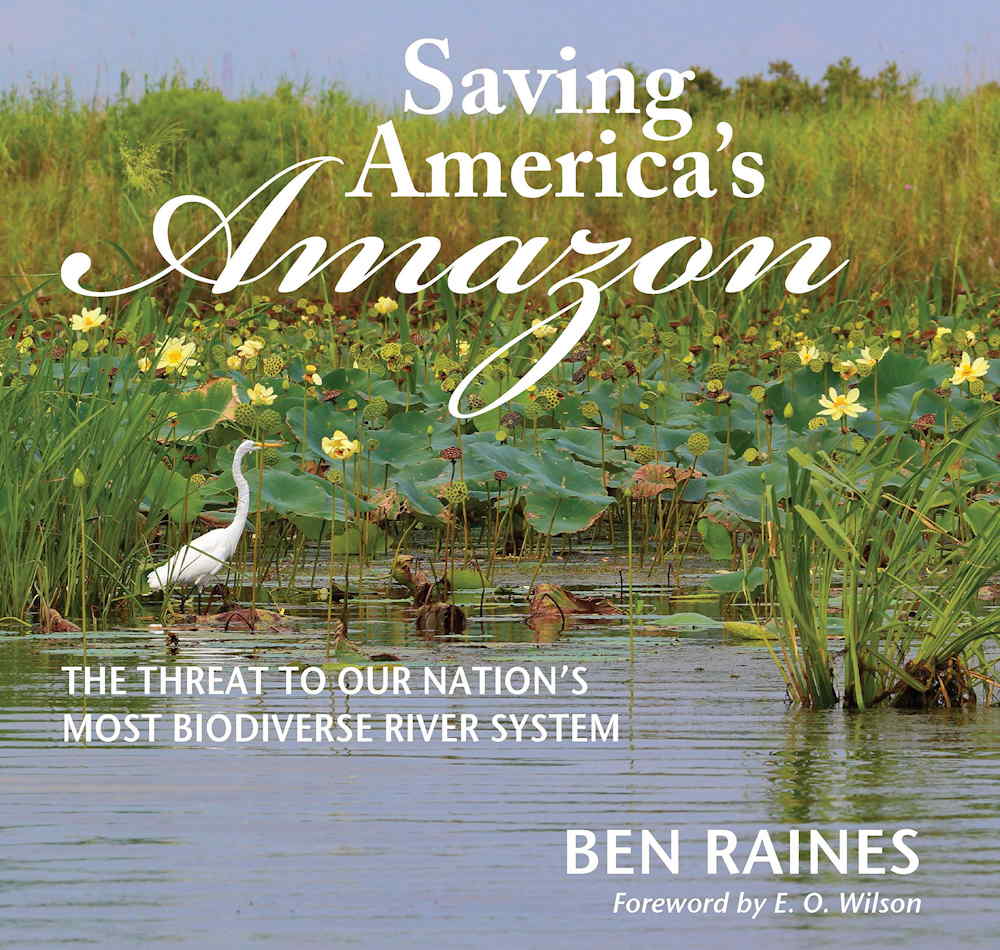
As you write about in your book, all this newly discovered biodiversity is at risk. What’s happening?
Alabama is in a very precarious situation. We have the worst environmental laws in the country and the state environmental agency has been the lowest funded of any state going back decades. So there’s very little enforcement. Maybe that’s because nobody realized how rich this place was in terms of diversity, so there was no move to protect it.
But Alabama’s early history, from the discovery of coal, which happened in the 1800s, has been one of exploitation. Massive amounts of forests were taken down in the 1800s for cotton fields. This state produced more cotton than any other back then, and that took a huge natural toll. And typically it’s people from other places, or even other countries, coming here to harvest the natural resources.
When I was born in Alabama in 1970, there were 15 steel mills in Birmingham going full blast. The air and water pollution from the steel mills and the coal mines were on a scale that’s almost unbelievable.
So even when we talk about the biodiversity we have now, we can’t even imagine what we’ve already lost. And this history of exploitation is still going on today. The largest factory built in the United States in the last 25 years was built in Alabama.
Alabama is inviting industry—and industry is coming because you can get a permit here in 30 to 60 days from the state environmental agency. That same permit in California would probably take 10 to 20 years to secure.
One example is the way Alabama does water permits: There’s no limit on how much water industries can take, no matter what environmental havoc may occur.
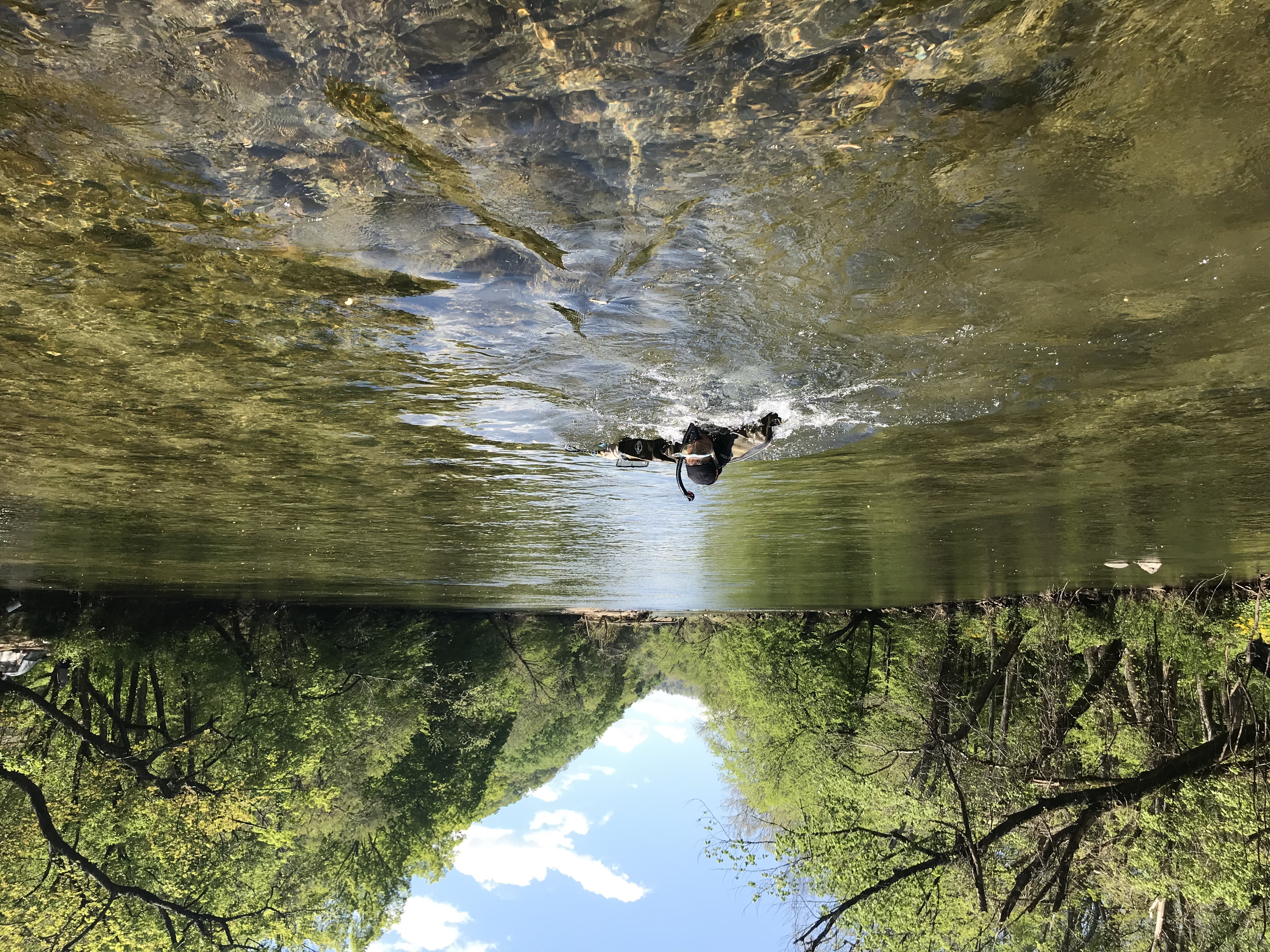
A couple of years ago we had droughts so bad we actually saw some of the state’s major rivers run dry. The Cahaba River is 150 miles long and it has 120 fish species — more than in the entire state of California.
And during this drought, the industries and golf courses were allowed to suck so much water out of the river it went dry. It only started flowing again downstream from a sewage plant. The entire flow of one of the most diverse rivers in America was the outfall from a sewage plant. It’s the kind of thing you can’t imagine happening in the United States, but it happened here and there were no laws to stop it.
Are there forces pushing back against this, and are people beginning to see the value of Alabama’s biodiversity?
Environmental groups here are having an amazing growth spurt. Twenty years ago our Baykeeper group, which is part of the Waterkeeper Alliance, was a one-woman show.
Now it has about a dozen employees and a huge membership. There are many other environmental groups now that have appeared and are doing good work all over the state.
That’s a big change.
As ecotourism is spreading across the country, it’s starting to happen here, too. The state is quickly catching up. There was great outrage among the populace when I wrote a story about the rivers running dry and now there’s an effort at the state level to make a water plan and to actually limit how much water industry can take.
It sounds like there’s still a long way to go for Alabama to catch up with environmental regulations—what else would you like to see happen?
I write a lot in the book about wetlands because so much of our diversity is in these edges where water and land meet. I would like to see the edges protected, but of course the problem is that’s where people want to be. They want to live on the river, on the bay, on the beach. When you couple that with rising sea levels, there’s a collision that’s coming between people and the edges.
I would also really like to see Alabama adopt the pollution standards that you see in the surrounding states. For reasons that escape me, the levels of PCBs in fish we allow people to consume before we issue a warning is 10 times higher than any other state. There’s no scientific reason why we would be so far out of step with our neighboring states. We have to protect that intertidal habitat now and then buy the uplands behind it to get ready for sea-level rise because otherwise our coastal habitats will have nowhere to go.
And then there’s the extinction issue. The rate of extinctions in Alabama is roughly double that seen anywhere else in the continental United States. It has more extinctions than Louisiana, Mississippi, Georgia, Florida and Tennessee put together.
We’re going to go from being the king of diversity to the king of extinctions. And that’ll be a terrible thing not just for Alabama, but for what we know about nature. Alabama has more than twice as many species per square mile as any other state. And if we start losing that diversity, we’re going to have no idea what we’ve lost.
What do you hope people do after reading your book?
I would hope they come to Alabama to see some of these things, because that’s what will make the powers that be care — when ecotourism becomes an industry that can rival industrial manufacturing, then ecotourism will carry as much weight among the lawmakers.
I’ve been here about 20 years, much of that time as the environment reporter for the state’s three biggest newspapers. Those papers were the environment’s best friend. But they’ve been basically destroyed. The papers are just too anemic. In Mobile, we had a newsroom with 90 people in it, and now they have three reporters. The last thing you’re going to see is an in-depth environmental story anymore.
So the book is a love letter and it’s a call to arms, and it’s saying, “love this place, but help.”
I guess at the end of the day, the story in Alabama about the natural world has been a story of taking and never giving back or appreciating what was here in the first place. That’s what has to change. Because if you just keep taking, you know how it will end. There’ll be nothing left.
Read the full story and view accompanying photos at The Revelator.