The Environmental Journal of Southern Appalachia

(News alert: Katy did it!) Seventeen-year cicadas were just an opening act. Now the woods are rolling with the rhythm of our annual insects.

Written by

Bales Common true katydidA true katydid is shown here. It’s one of the main insects that provides a permanent soundtrack to your summer life in the Knoxville area.  Stephen Lyn Bales/Hellbender Press

What’s that buzz? We thought Brood X was over.

In case you haven’t noticed: It’s hot!

The “dog days of summer,” are so called because the season coincides with the period of time when the brightest star Sirius, aka the Dog Star, rises and sets with the Sun: early July through August into September.

The ancients believed that when Sirius and the Sun were in the sky together, the days were hotter. I think they got it right.

August has never been that thrilling to me, more of a month to endure. The birds have finished raising their families and are going through their late-season molt. Some of the migratory birds have already started to move south. But that doesn’t mean that our backyards are totally silent because late summer is cacophonous with insects.

During the day, the trees are filled with large, green cicadas that generally spend three years underground in their larval stage, but they are not all in sync like Brood X was, so each summer we have plenty that mature to collect en masse in our neighborhoods.

To attract females, the male cicadas do the chainsaw buzzing, but the songs are not made with vocal chords but rather special organs on the sides of their abdomens called “tymbals.” In effect, their sides vibrate loudly.

Locally in the Knoxville region we have five species of these annual cicadas. Early in the morning and into the afternoon, swamp cicadas (Neotibicen tibicen) are calling. They are also known as morning cicadas because they usually crank up by 10 a.m. with a long uninterrupted rattle that builds in intensity.

During the hot part of the day we hear Robinson’s cicada (Neotibicen robinsonianus). They are plodding and rhythmic: creeeeeak, creeeeeak, creeeeeak, creeeeeak.

And from afternoon to twilight the scissor-grinder cicada (Neotibicen pruinosus) takes over. It supposedly sounds like someone sharpening a pair of scissors on a grindstone, with hyper-rhythmic pulses that build in intensity. Their calls have also been compared to a circular saw cutting though a two by four: zeeeer, zeeeer, zeeeeeer.

The last two local annual cicadas species: Lyric (Neotibicen lyricen) and Linne’s (Neotibicen linnei) are very high-pitched. They sound similar to Swamp Cicadas but their buzzes are at 7 kHz, a range that many people cannot hear or barely hear.

Did someone say “katy-did-it”?

Scissor-grinder cicadas buzz until darkness falls when they are replaced by the nighttime orthopterans that are in the same order as grasshoppers, locusts and crickets. Like the others in that insect group, katydids (Pterophylla camellifolia) have long legs in the rear that enable them to jump quickly. They are camouflaged to look like green leaves and spend their entire lives in the canopy, rarely being seen on the ground unless they fall.

Their common name comes from the sound they seem to make in the dark: katy-did-it, katy-did-it, katy-did-it!

Being able to identify these various insect courtship sounds make the Dog Days of summer a little cooler. And you can impress your friends sitting on the back deck or whiling away a few days in the woods.

Stephen Lyn Bales is a natural historian, the author of three UT Press books: "Natural Histories," "Ephemeral by Nature," and "Ghost Birds." He’s also a monthly speaker (via Zoom) for the UT Arboretum Society. He can be reached via email at This email address is being protected from spambots. You need JavaScript enabled to view it.
Rate this item
(1 Vote)
Published in News

Related items

  • Monarch butterflies, an ephemeral but regular glimpse of beauty, are fluttering toward extinction
    in News

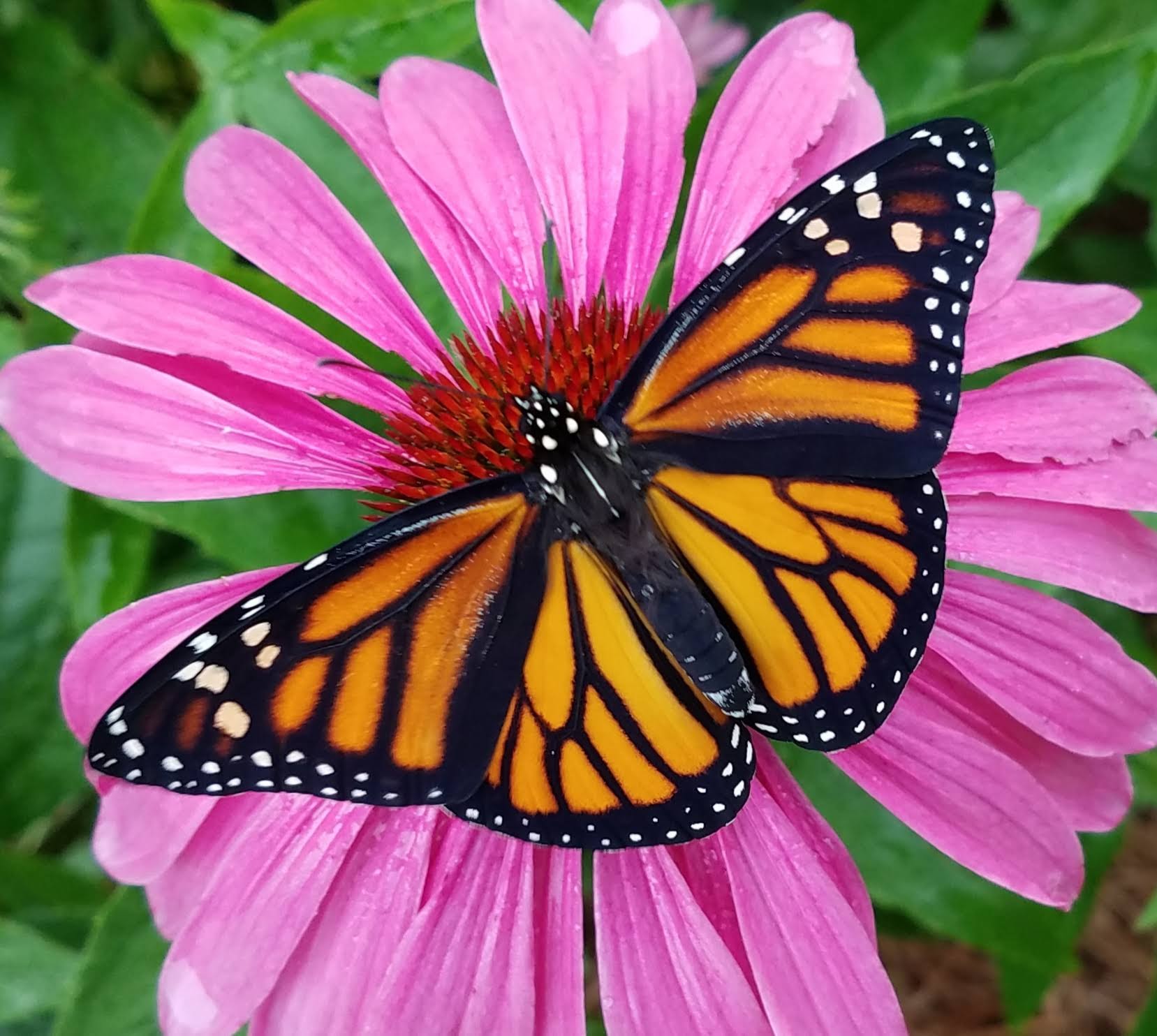
     Bales Monarch on coneflowerA monarch butterfly, recently declared endangered despite decades of conservation, is seen atop a coneflower. Stephen Lyn Bales

    Dramatic monarch declines mean the bell tolls for we

    KNOXVILLE — Monarch butterflies are ephemeral by nature. The orange and black dalliances that flitter through our lives, our yards, and our countryside like motes of dust are here one minute and gone the next. We pause for a few seconds to watch the “flutter-bys” and then move on.

    For about all of the Lepidopteran family, where they come from, where they go, their raison d'être, we don’t ask. They are winged wisps that pass through our busy lives. But that is not true with this orange and black butterfly, named to honor King William III of England, the Prince of Orange. But two people did ask.

    Norah and Fred Urquhart lived in Southern Canada and in the late 1930s they noticed that the monarch butterflies seemed to all be fluttering south this time of the year. Could they possibly be migrating and if so, where did they go? The notion that a butterfly might migrate south for the winter seemed hard to fathom. Yes, broad-winged hawks migrate. But a flimsy butterfly?

  • Hellbender Press nets two top awards from Society of Professional Journalists

    KNOXVILLE — Hellbender Press took home two awards from the 2021 Golden Press Card contest sponsored by the East Tennessee Society of Professional Journalists.

    Hellbender Press was recognized with two first-place awards for East Tennessee digital journalism: The Hal DeSelm Papers and Requiem for the Lord God Bird

    The Hal DeSelm story chronicled his decades-long effort to document terrestrial biomes in all but one Tennessee county, and subsequent work by the University of Tennessee to craft his datasets into an accessible database.

    The other award was for reporting on the extinction of the ivory-billed woodpecker relying heavily on the work of Ijams Nature Center naturalist Stephen Lyn Bales.

    Judging was conducted by the SPJ chapter in Cincinnati.

    “We are incredibly grateful to our editorial board, readers and others who helped with this great win,” said Hellbender Press editor Thomas Fraser. “Our stories are only as good as the sources.”

  • (Part 2) Flight to safety: Life finds a way like a great blue heron
    in News

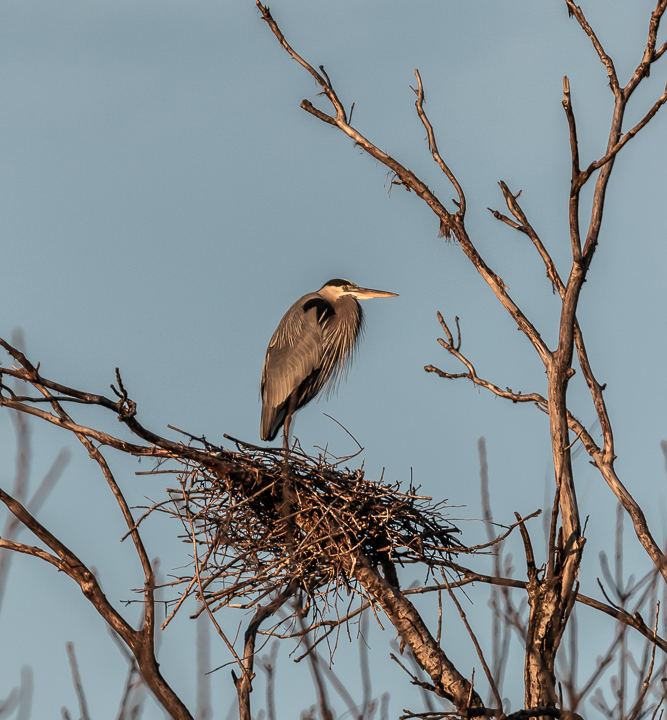
    Thompson GB Heron 2A great blue heron is seen above a nest in the Tennessee River Valley. Herons moved northward to the valley from tiny remaining Florida rookeries after the birds were annihilated in the early 20th century for hat decorations. Betty Thompson

    After their kind almost vanished, great blue herons took a minute to take to the Tennessee Valley. Now they are here in a big way. 

    "Life breaks free, it expands to new territories, and crashes through barriers painfully, maybe even dangerously, but, uh, well, there it is," said Jeff Goldblum's Malcolm in 'Jurassic Park.' "Life finds a way."

    In the early 20th century, after it became illegal to hunt for feathers, as referenced in this previous Hellbender Press story, herons began to recover.

    But it took a while. The curious thing with great blue herons, which perhaps attests to the tenacity of nature itself, is that for years they really had little presence in the Tennessee Valley, even after the principal dams and reservoirs were completed. There were plenty of shallow waters for fish eaters.

  • (Part 1) Flight to safety: Herons barely survived a bloody fashion trend
    in News

    Thompson GB Heron 1Great blue herons and other heron species were reduced to a handful of rookeries after numbers plummeted because of high demand for their plumage.  Courtesy Betty Thompson

    Herons were almost a victim of their own beauty

    plume. noun. a long, soft feather, or arrangement of feathers used by a bird for display 

    During our Gilded Age of opulence and corruption, members of polite society wore alligator shoes, top hats made from beaver pelts, ivory buttons, whalebone corsets and dead foxes draped around their shoulders. After all, status had its price and the surrounding wild lands were bountiful.

    In the late 1800s and early 1900s, most fashion-conscious women would not be seen in public without a hat adorned with feathers. In 1915, at the height of this fashion craze, an ounce of plumes sold for $32, the same going rate as an ounce of gold. The most highly coveted feathers were “aigrettes,” which are the long, silky white nuptial plumes of egrets and great blue herons. Plume hunters could make a sizable sum of money for a day’s work with a gun. 

  • Brood X is not a bust. Wait for it...
    in News

    cicada 1 EVAEva Millwood holds Brood X cicadas on her property in South Knoxville in this submitted photo.

    We will see a groundswell of East Tennessee 17-year cicadas as the heat comes on.

    We have been hearing about it for weeks, online and on TV and in print. After 17 years underground, millions of cicadas are going to climb out of their burrows, shed their juvenile skins, unfurl their wings and fly up into the trees for one last grand jester of panache and reproduction and death. You even read about Brood X cicadas in Hellbender Press.

    The Tennessee Wildlife Resources Agency posted a recent Instagram photo of a wild turkey jake with a crop stuffed full of cicadas, and there are reports of cicadas emerging en masse in parts of Tennessee. But your local searching self may ask: Where are they?

    Insects are largely ectothermic. That means their body temperature comes from the surrounding air, water or ground temperature. The periodical cicadas need a ground temperature of roughly 68 degrees, eight inches deep to become very active. And we really have not had that for a sustained length of time.

    Last week seemed to be destined to be the first big week of the emergence of Brood X. Monday started strong but the weather turned unusually cool for early May with daytime highs in the low 60s. Some of the cicadas started to ease out but it was primarily dozens, not hundreds or thousands, and certainly not 1.5 million per occupied acre. And remember, they are not everywhere.