The Environmental Journal of Southern Appalachia

Oak Ridge National Laboratory land is an international treasure of biodiversity

Written by

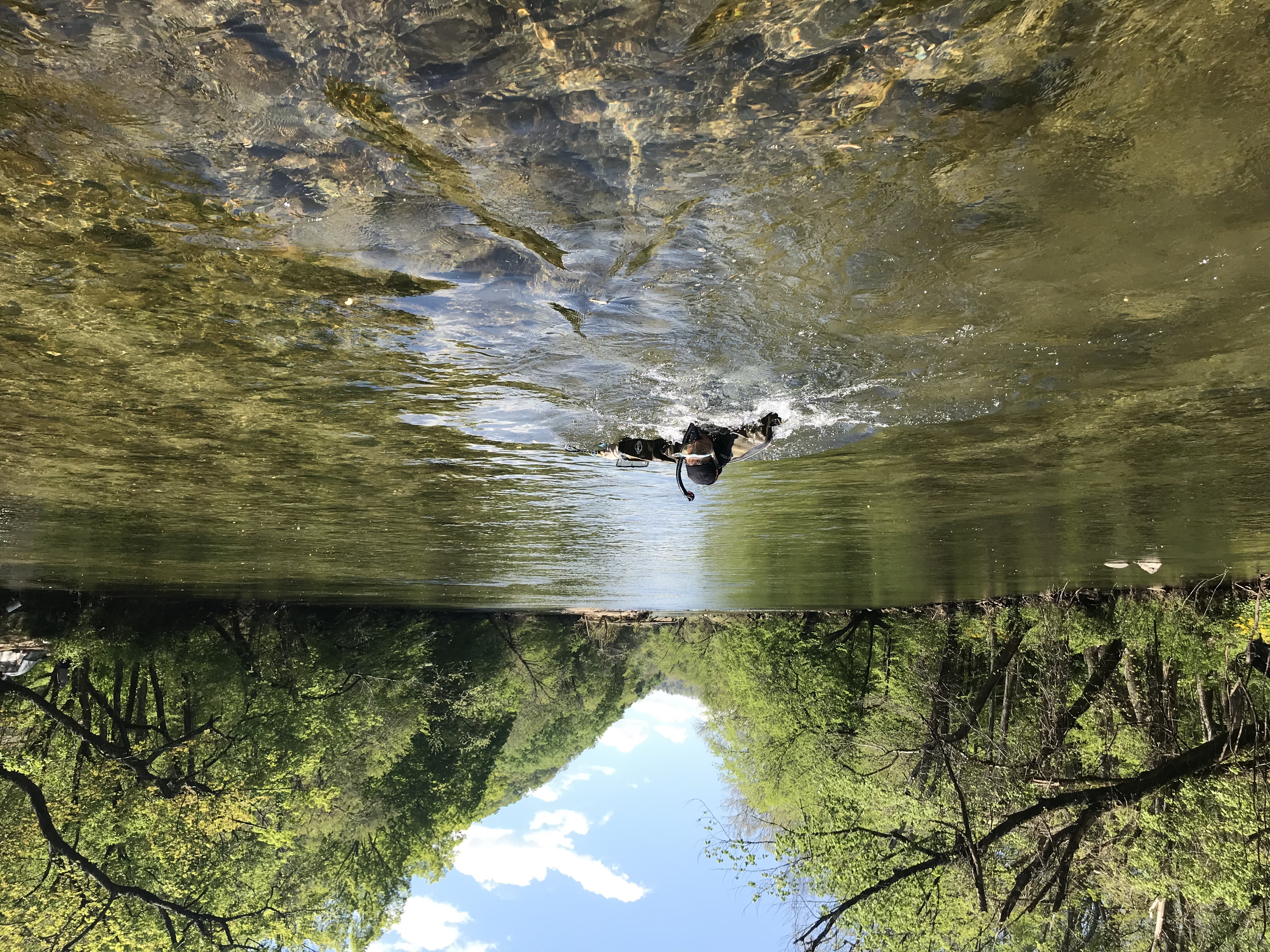
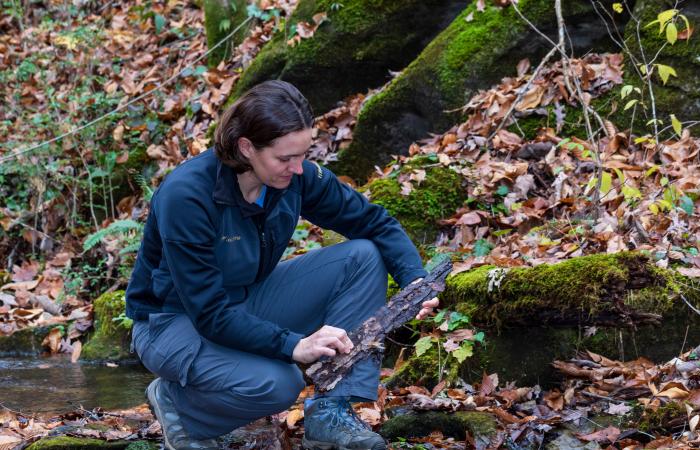
res1.jpgAquatic ecologist Natalie Griffiths studies nutrients and contaminants in the Weber Branch watershed, which is in the Oak Ridge Environmental Research Park. Courtesy Carlos Jones/ORNL

ORNL research lands are an international ecological benchmark and diverse wonderland of trees, plants, mammals, reptiles and amphibians

Abby Bower is a science writer for Oak Ridge National Laboratory.

The Department of Energy’s Oak Ridge National Laboratory (ORNL) is a hub for world-class science. The nearly 33,000-acre space surrounding the lab is less known, but also unique. The Oak Ridge Reservation (ORR) is a key hotspot for biodiversity in the Southeast and is home to more than 1,500 species of plants and animals.

At the intersection of Anderson and Roane counties is an important subset of the reservation — the Oak Ridge National Environmental Research Park, or NERP — a 20,000-acre ORNL research facility that has been internationally recognized by UNESCO as an official biosphere reserve unit.

“The National Environmental Research Park is a living laboratory and a major resource for conducting ecological studies,” said Evin Carter, an ORNL wildlife ecologist and director of the Southern Appalachian Man and the Biosphere Program, or SAMAB. The NERP has been a core part of SAMAB, which has focused on sustainable economic development and conserving biodiversity in Southern Appalachia since 1989.

With ORNL researchers and scientists from government agencies and academia using the NERP for diverse experiments each year, the park lives up to its status as a living laboratory.

It also lives up to its reputation as a biodiversity hotspot. As one of seven DOE-established environmental research parks reflecting North America’s major ecoregions, it represents the Eastern Deciduous Forest. The NERP comprises parts of this ecoregion that have been identified repeatedly as priorities for global biodiversity conservation, Carter said.

This designation means more than ever as climate change alters ecosystems and biodiversity declines worldwide. According to a landmark international report, on Biodiversity and Ecosystem Services, around one million plant and animal species are currently threatened with extinction. 

On the ORR and the NERP, a number of research projects and conservation initiatives are focused on addressing these challenging environmental problems to preserve species for generations to come.

Providing a haven for wildlife

A key way the ORR and NERP foster biodiversity is by maintaining connectivity between habitats. Established by the federal government during the Manhattan Project, the ORR has escaped some of the intense development that has impacted nearby areas.

Between intertwining highways and stretches of suburbia, the space contains large tracts of forests, native grasslands, wetlands, caves, cliffs and cedar barrens all within one contiguous area. As human activity fragments ecosystems, this is increasingly rare — and extremely important.

“That habitat diversity creates a situation where you’ve got animal species here that are not found in surrounding areas,” said ORNL Natural Resources Manager Neil Giffen. “It’s like an oasis for them.”

Among those species are uncommon birds, such as the purple gallinule, and rare amphibians, including the hellbender and four-toed salamander. Also present are charismatic mammals such as river otter, fox, coyote and even bobcat. ORNL’s Natural Resources Management Team monitors and manages this wildlife as part of their mission as primary stewards for DOE reservation management under the DOE ORNL Site Office.

Carter, for example, is leading a large-scale project tracking how different forms of wildlife move within and across the reservation. The project’s findings could better inform how to plan development for the federal facilities within the ORR, including ORNL and the Y-12 National Security Complex, while minimizing impacts on wildlife.

ORNL’s Kitty McCracken, ecosystem management coordinator for the ORR, spends much of her time managing invasive plants. But she also leads a program monitoring bats.

The ORR is home to two endangered bat species — the gray bat and Indiana bat — and one threatened species, the northern long-eared bat. McCracken uses acoustic monitoring technology to listen for each species’ distinct vocal signatures and may capture them for species verification using ultra-fine nets.

Since the program started in 2012, McCracken and colleagues have gained information about each species’ complex needs. In the summer, some species live only in certain types of trees, for instance, and some use different caves seasonally for various life stages, such as rearing pups or hibernating.

“Preserving a whole forest ecosystem is vital for taking care of the needs of these bats and other plants and animals,” McCracken said. Carter and McCracken work together to understand which of the ORR’s more than 40 caves are important to bats. Recent surveys of these caves have also revealed invertebrates and vertebrates not previously known to occur on the ORR, including two invertebrates that may be previously undiscovered species.

“There is undoubtedly more to be found,” Carter said.

Preserving plants for people

In addition to offering a sanctuary for animals, the ORR and NERP boast more than 1,100 plant species. The collection rivals that of the nearby Great Smoky Mountains National Park.

Some of these plants hold rich cultural importance. This fact prompted representatives of the NERP to participate in the Culturally Significant Plant Species Initiative, or CSPSI. This initiative is a collaboration between the Eastern Band of Cherokee Indians and SAMAB focused on the sustainability, conservation and management of plants with cultural significance to the Cherokee through education and increased access.

“As Cherokee, we’re not third-, fourth-, fifth-generation farmers,” said Tommy Cabe, the forester for Eastern Band’s natural resources program and CSPSI organizer. “We've been a part of this landscape for millennia, and we have the longest-running relationship with the diversity of this ecosystem.”

That relationship involves using native trees, shrubs, grasses and mosses in food, medicine, art and in artisan goods, Cabe said. White oaks, ramps and river cane, for example, play important roles in Cherokee basket making, cooking and as material resources, respectively. But as factors such as habitat loss and overharvesting by outside groups put these plants at risk, organizations involved in the NERP saw a need to collaborate to protect them. 

Jamie Herold, a plant ecologist at ORNL, has been involved with CSPSI since it launched in 2017. The program started as an effort to create a seed bank for plants of interest to the Cherokee.

“From that it grew at least tenfold,” Herold said. “We started having more meetings and ideas about how we can incorporate the science and the conservation efforts and education.”

After a strong start that included the publication of its charter and the formation of subcommittees, the COVID-19 pandemic slowed CSPSI’s progress. As uncertainty surrounding the pandemic lingers, the initiative’s constituents are making decisions about CSPSI’s next steps.

Outside of CSPSI, native plants are still top priority for the NERP, where Herold leads research and management of the park’s vegetation. Landscaping projects at ORNL harness native plants and in 2019, an area in the western part of ORNL’s campus featuring 52 native tree species became a certified arboretum. The ORR Plant and Animal Reference Collection additionally contains more than 3,000 plant specimens collected over 70 years — plus insect, mammal and bird specimens.

Studying invisible ecosystem forces

Over the years, many scientists in ORNL’s Environmental Sciences Division have used the NERP for large-scale environmental research on topics including clean air and water, impacts of energy sources and even tree growth under increased carbon dioxide conditions.

Much of this research was conducted in Walker Branch Watershed, a seminal research catchment that advanced understanding of the cycling of elements on land and in water beginning in the 1960s.

In stream ecosystems, nutrient cycles become elongated spirals as water carries elements downstream. The first study that developed and tested the methods for measuring the spiraling of nutrients in stream ecosystems took place in this watershed.

“These techniques are now used by scientists across the world,” said ORNL aquatic ecologist Natalie Griffiths. “In the past decade, we have applied these methods to examine not only how nitrogen and phosphorus individually spiral in stream ecosystems, but also how these nutrients interact to affect their spiraling dynamics.”

ORNL’s Elizabeth Herndon, an environmental geochemist, focuses on terrestrial cycles within the Walker Branch Watershed. “One of the research questions I’m working on is trying to understand how organic matter is stored in soil,” Herndon said. Organic matter contains carbon, so understanding the chemical and microbial processes by which organic matter is preserved or breaks down in soil and releases carbon into the atmosphere is vital information for climate change research, she added. 

Herndon and a team of postdocs and students are investigating what happens to leaf litter decomposition under the warming conditions associated with climate change. For almost a year, they’ve warmed leaf litter in mesh bags using small heaters and tracked the leaves’ decomposition. They’ve also tested adding manganese, a micronutrient thought to contribute to the breakdown process. 

Herndon said she benefits from her study plot’s short distance from ORNL and from the nearby Oak Ridge National Ecological Observatory Network field site, which provides her with supplemental data.

ORNL’s Scott Brooks uses the NERP to study a different global issue: mercury pollution. Brooks studies how microbial activity and hydrology influence the chemistry and cycling of mercury in the environment. A neurotoxin, mercury has negative health effects in people and can cause reproductive issues in animals.

For more than 10 years, Brooks has run experiments on decades-old mercury contamination in East Fork Poplar Creek and Bear Creek, which both wind through the ORR. The proximity of the creeks to the lab allows him to collect “samples of opportunity.”

“If we know something is going to change, we can get out and get samples quickly in advance of that event, such as rainfall that might stir up sediment and change the amount of mercury in the water,” Brooks said.

Whether studying microbes, bats or biodiversity, the researchers who use the ORR and the NERP agree: Like the species who call them home, these spaces are worth protecting.

Research within the Oak Ridge Reservation and ORNL National Environmental Research Park is supported by the Oak Ridge Office of Environmental Management and the Biological and Environmental Research Program within the DOE Office of Science.  

UT-Battelle manages ORNL for Department of Energy’s Office of Science, the single largest supporter of basic research in the physical sciences in the United States. The Office of Science is working to address some of the most pressing challenges of our time. For more information, please visit energy.gov/science

Rate this item
(2 votes)
Published in News

Related items

  • 5 big threats to the world’s rivers
    in News

    fresh water Conservation FisheriesA biologist with Conservation Fisheries surveys a stretch of Little River near Walland, Tennessee to determine fish viability and identify rare species for transplantation. Thomas Fraser/Hellbender Press

    Human activities have imperiled our waterways — along with a third of freshwater fish and other aquatic species

    This story was originally published by The Revelator.

    If we needed more motivation to save our ailing rivers, it could come with the findings of a recent study that determined the biodiversity crisis is most acute in freshwater ecosystems, which thread the Southern landscape like crucial veins and arteries.

    Rivers, lakes and inland wetlands cover 1 percent of the Earth but provide homes for 10 percent of all its species, including one-third of all vertebrates. And many of those species are imperiled — some 27 percent of the nearly 30,000 freshwater species so far assessed by the IUCN Red List. This includes nearly one-third of all freshwater fish.

    How did things get so bad? For some species it’s a single action — like building a dam. But for most, it’s a confluence of factors — an accumulation of harm — that builds for years or decades.

  • For the win: The storied snail darter swims back from the brink
    in News

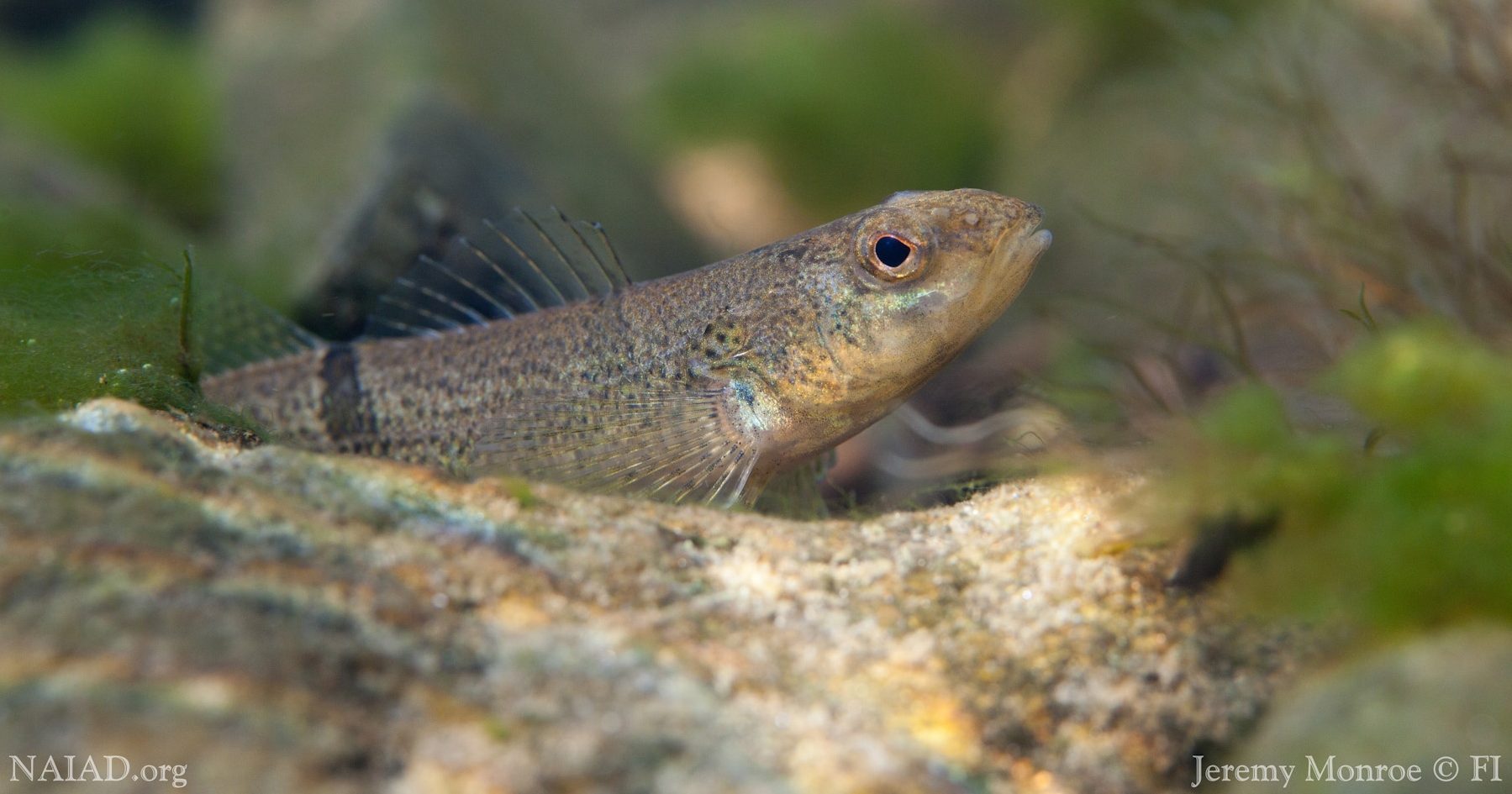
    Snail DarterThe snail darter, which caused an epic battle around TVA plans to dam the Tellico River in the 1970s, was recently removed from the Endangered Species List. Jeremy Monroe/Tennessee Aquarium

    The little fish that caused a maelstrom over a TVA dam project gets the last laugh

    TELLICO — In a win for endangered species protected by federal law, the U.S. Fish and Wildlife Service announced this week the fabled snail darter’s recovery and removal from the Federal List of Threatened and Endangered Wildlife. 

    Native to the Tennessee River watershed in Alabama, Georgia, Mississippi and Tennessee, the fish has long been an Endangered Species Act icon thanks to conservation efforts to save its habitat starting in the 1970s, when the Tennessee Valley Authority proposed construction of a dam on the Little Tennessee River. The snail darter (Percina tanasi) was central in the 1978 U.S. Supreme Court case Tennessee Valley Authority v. Hill, which solidified the scope of the then recently passed ESA. 

  • Citizen scientists are taking stock in Smokies, and the inventory keeps increasing
    in News

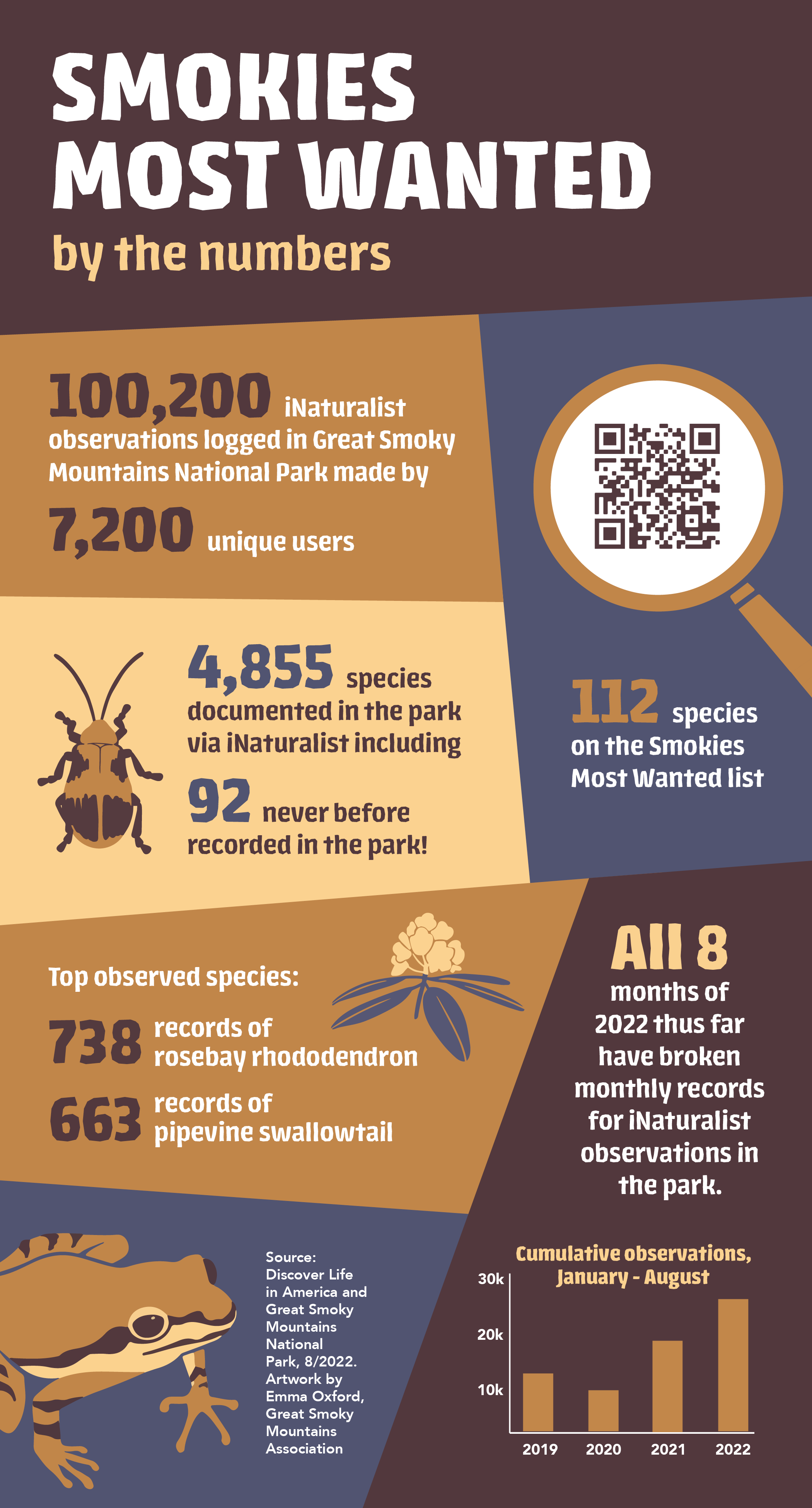
    1 smokies most wanted infographic credit Emma Oxford GSMA

    This story was provided by Great Smoky Mountains National Park.

    Next demonstration on Thursday, Oct. 20

    GATLINBURG — Great Smoky Mountains National Park is celebrating the success of a community science project led by nonprofit partner Discover Life in America (DLiA) called Smokies Most Wanted. The initiative encourages visitors to record life they find in the park through the iNaturalist nature app. DLiA and the park use these data points to map species range, track exotic species, and even discover new kinds of life in the park. 

    “iNaturalist usage in the Smokies has skyrocketed from just four users in 2011, to 3,800 in 2020, to now more than 7,100 users,” said Will Kuhn, DLIA’s director of science and research. 

    In August, the project reached a milestone, surpassing 100,000 records of insects, plants, fungi, and other Smokies life submitted through the app. Among them are 92 new species not previously seen in the park.

  • There’s a whole world in the dirt beneath your feet
    in News
    Dust bowl soilThe Dust Bowl of the 1930s resulted in the displacement of tons of soil in the midst of a drought similar to the one that grips the Southwest today. Library of Congress
     

    Dirt is far from just dirt. It’s a foundation for life.

    This story was originally published by The Revelator.

    Look down. You may not see the soil beneath your feet as teeming with life, but it is.

    Better scientific tools are helping us understand that dirt isn’t just dirt. Life in the soil includes microbes like bacteria and fungi; invertebrates such as earthworms and nematodes; plant roots; and even mammals like gophers and badgers who spend part of their time below ground.

    It’s commonly said that a quarter of all the planet’s biodiversity lives in the soil, but that’s likely a vast understatement. Many species that reside there, particularly microorganisms such as viruses, bacteria, fungi and protists, aren’t yet known to science.

  • Monarch butterflies, an ephemeral but regular glimpse of beauty, are fluttering toward extinction
    in News

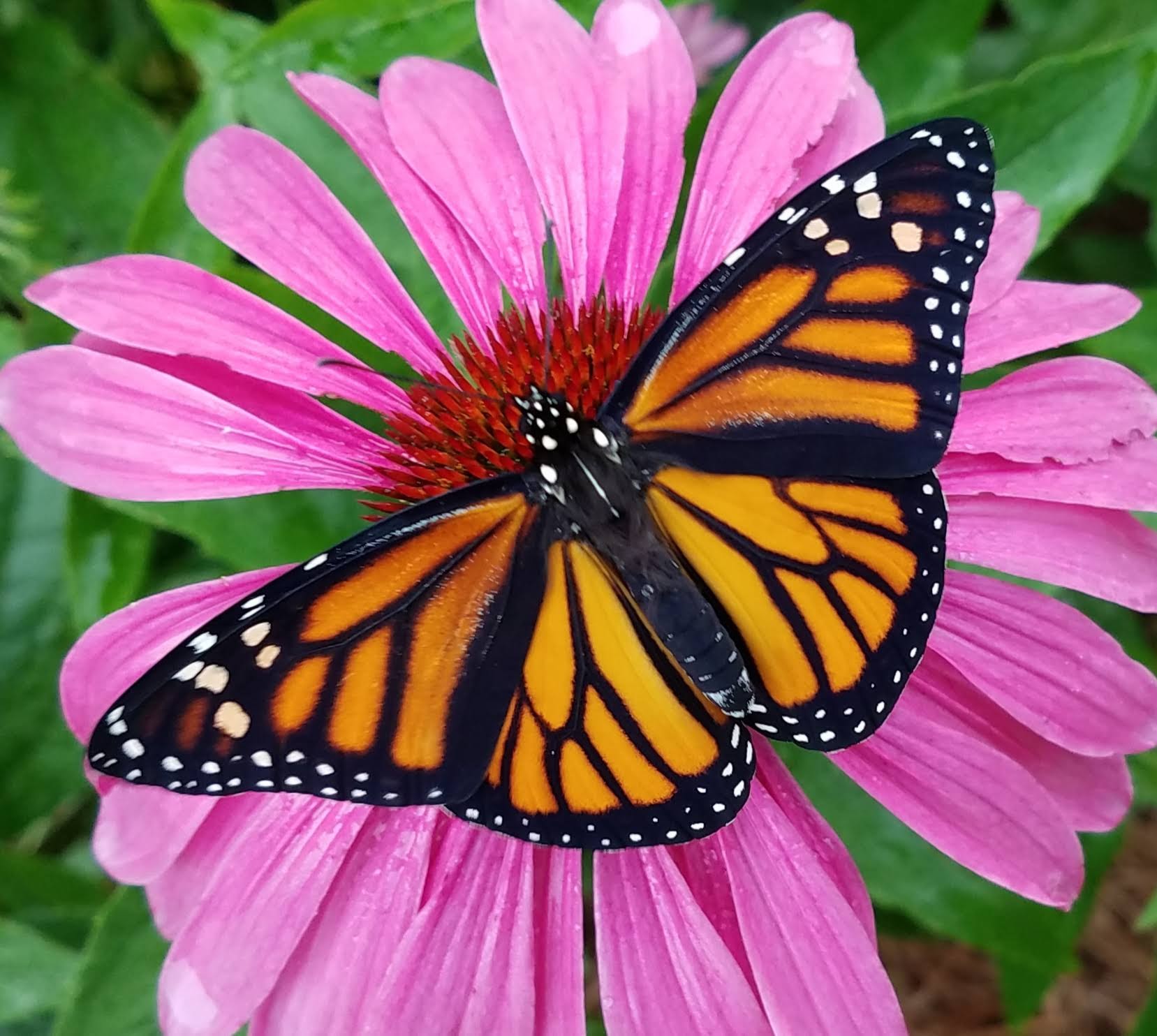
     Bales Monarch on coneflowerA monarch butterfly, recently declared endangered despite decades of conservation, is seen atop a coneflower. Stephen Lyn Bales

    Dramatic monarch declines mean the bell tolls for we

    KNOXVILLE — Monarch butterflies are ephemeral by nature. The orange and black dalliances that flitter through our lives, our yards, and our countryside like motes of dust are here one minute and gone the next. We pause for a few seconds to watch the “flutter-bys” and then move on.

    For about all of the Lepidopteran family, where they come from, where they go, their raison d'être, we don’t ask. They are winged wisps that pass through our busy lives. But that is not true with this orange and black butterfly, named to honor King William III of England, the Prince of Orange. But two people did ask.

    Norah and Fred Urquhart lived in Southern Canada and in the late 1930s they noticed that the monarch butterflies seemed to all be fluttering south this time of the year. Could they possibly be migrating and if so, where did they go? The notion that a butterfly might migrate south for the winter seemed hard to fathom. Yes, broad-winged hawks migrate. But a flimsy butterfly?

  • Has the Eastern Band of Cherokee Indians lost its ‘right way’ at Exit 407?
    in News

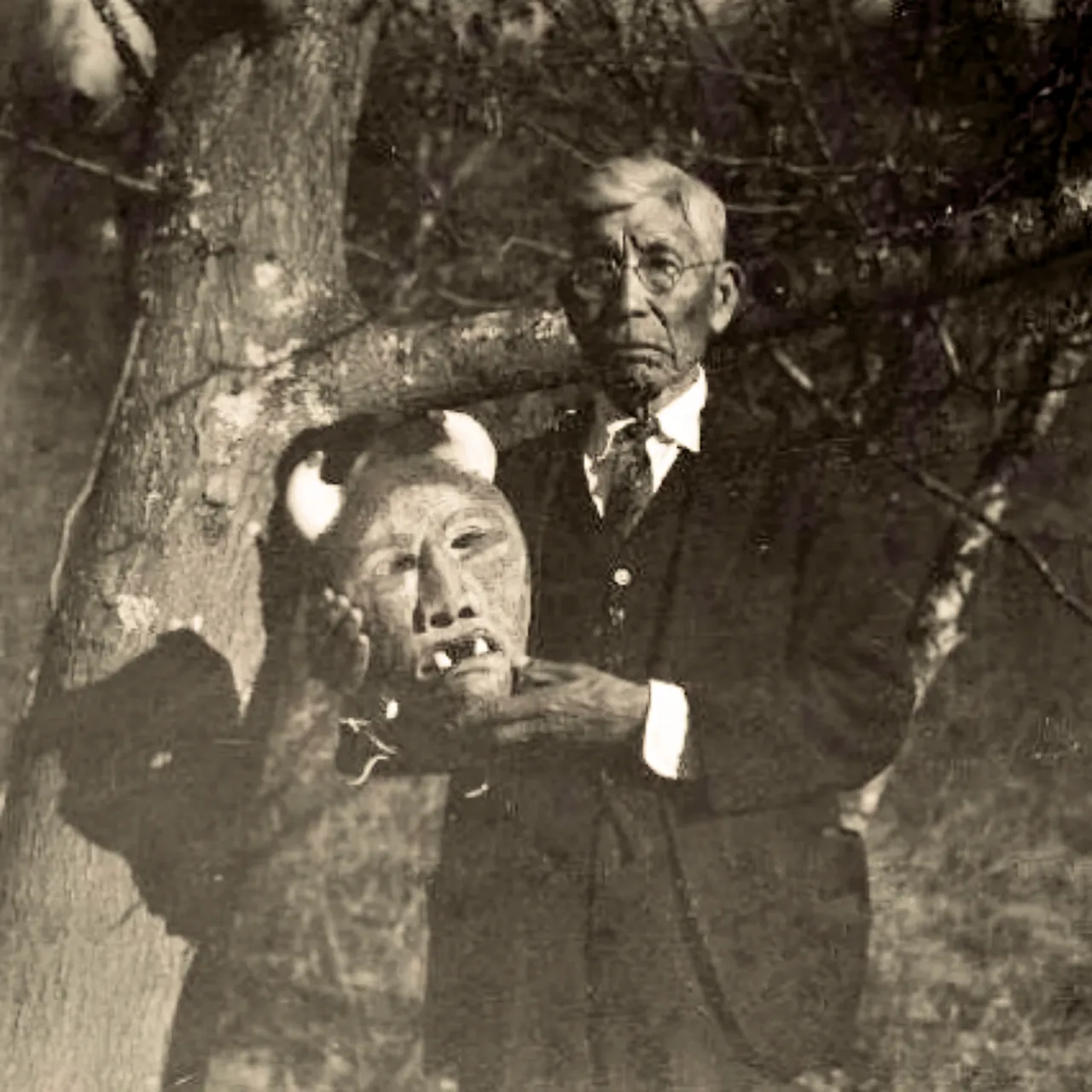
    Will West LongCherokee tribal council member, historian and ethnographer Will West Long holds a traditional Cherokee mask, which he often recreated. He was an active chronicler of Cherokee custom, heritage and tradition and died in 1947 on the Qualla Reservation in Swain County, North Carolina. WikiCommons

    As plans gel for massive new developments, has the Eastern Band lost its ancient way?

    SEVIERVILLE — The Tennessee Department of Transportation is eyeing a second interchange for exit 407 at Highway 66 along Interstate I-40 in Sevier County. 

    Exit 407, already one of the most congested interchanges in Southern Appalachia, accesses the main highway to Great Smoky Mountains National Park, the most visited national park in the nation. The park reported a record 14 million visitors in 2021.

    The exit also serves crowds flocking to Pigeon Forge and Gatlinburg.

    But the new interchange would primarily serve a 200-acre development to be called Exit 407: The Gateway to Adventure.   

    Scheduled to open spring 2023, and fully operational in 2024, it’s expected to attract 6.7 million people annually. The first phase includes a theme park and a 74,000-square-foot convenience store with 120 gas pumps, making it the world’s largest such store.

  • ORNL researcher models fire’s growing footprint in a changing climate
    in News

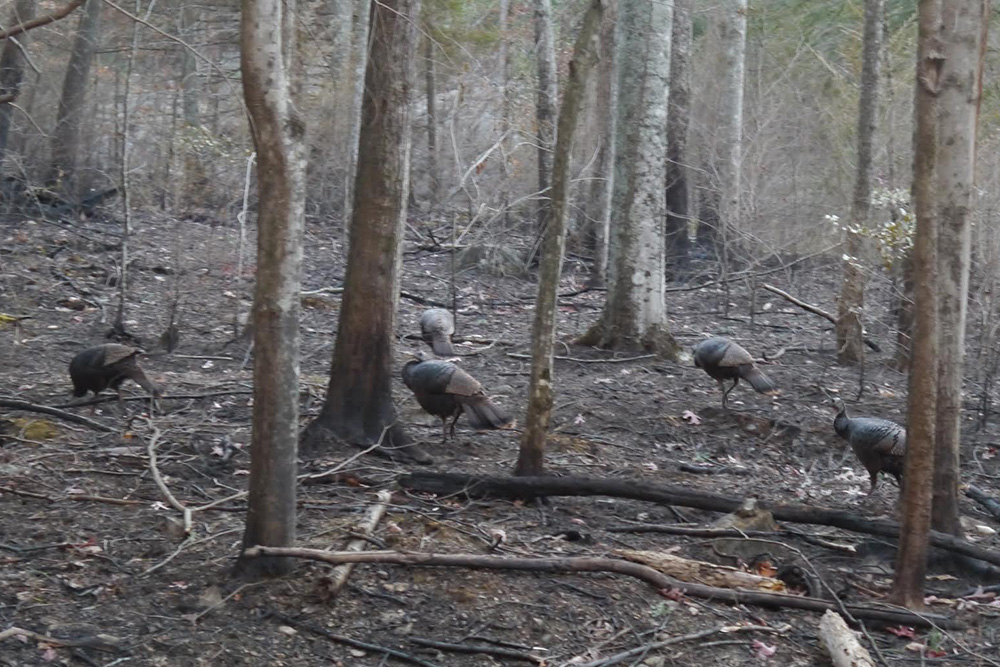
    COVER 1208 GatlinburgsInferno3Wild turkeys forage in charred hardwood forest soon after the 2016 Gatlinburg fires, which moved from the Smokies to developed areas in Sevier County. An ORNL model predicts wildfire threats will increase in the Southern Appalachians because of climate change. Thomas Fraser/Hellbender Press via Knoxville Mercury

    ORNL report: Local wildfire danger will likely loom larger because of climate change

    OAK RIDGE — This cruel summer, the Southern Appalachian region is already baking in above-normal temperatures and basking in poor air quality. 

    Air temperatures in Knoxville flirted with 100 degrees on July 6, which were well above average and prompted the National Weather Service to issue a heat advisory for much of the metropolitan area.

    It’s hard to definitively link a heat wave to global warming, but one oft-cited consequence of climate change is the growing intensity of wildfires, even in the traditionally moisture-rich Appalachians. The range of climate change effects is difficult to pin down, but one constant in the study of climate change is an expected increase in overall temperatures, which can power wildfires via both fuel increases and volatility.

  • Rare bipartisan legal effort under way for widespread wildlife protections
    NYT: Recovering America’s Wildlife Act a big bipartisan push to preserve animal species

    New York Times columnist Margaret Renkl noted recently that a precious opportunity has presented itself to strengthen wildlife-protection laws and add to environmental protections across the nation.

    The Nashville-based journalist said the act, known as RAWA, “is poised to become the single most effective tool in combating biodiversity loss since the Endangered Species Act.” The resolution is carried in the House by Michigan Democrat Rep. Debbie Dingell.

    “This bill provides funding for (1) the conservation or restoration of wildlife and plant species of greatest conservation need; (2) the wildlife conservation strategies of states, territories, or the District of Columbia; and (3) wildlife conservation education and recreation projects,” according to the U.S. Congress.

    “The Department of the Interior must use a portion of the funding for a grant program. The grants must be used for innovative recovery efforts for species of greatest conservation need, species listed as endangered or threatened species, or the habitats of such species.

    “In addition, the bill requires certain revenues generated from fees and penalties for violations of environmental requirements to be used as a source for the funding.”

    The legislation, which has already passed the House of Representatives, would allocate $1.4 billion each year across the country to protect and restore endangered plant and animal populations, and protect species already tipping toward endangered status. It is up for consideration in the Senate, where it has already garnered the support of at least a dozen Republicans and a majority of Democrats, virtually ensuring its passage, according to Renkl.

    “You don’t have to nurse a fondness for spotted owls or snail darters — creatures at the heart of two of the most contentious environmental debates in recent history — to understand that what is best for the ecosystems we share with nonhuman animals is what’s best for us, too,” Renkl wrote.

  • Report Card for U.S. Department of Energy, Oak Ridge Operations: Failing grades in stakeholder engagement and environmental decision making
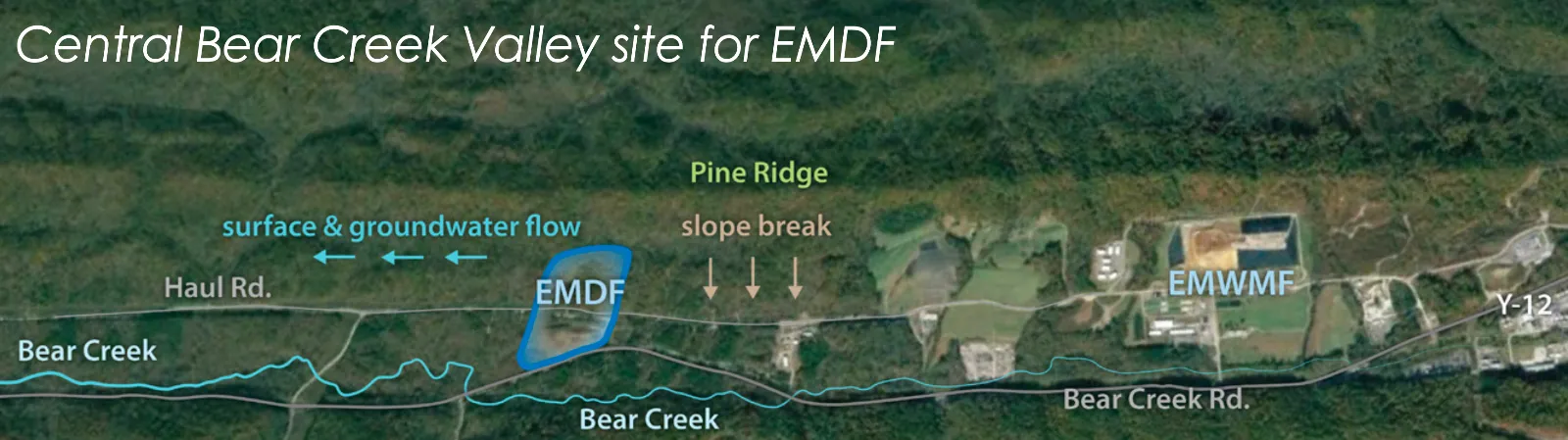
    EMDFlocation
     

    Editor’s note: As reported in Hellbender Press, the Department of Energy’s Oak Ridge Office of Environmental Management (OREM) was reprimanded by the Southern Environmental Law Center for neglecting its duty to follow guidelines and proper procedures mandated by the National Environmental Policy Act (NEPA). Of immediate concern was OREM’s pretext and information — or specifically lack of pertinent information — released ahead of the public meeting on May 17, 2022 about its project for a new “Environmental Management Disposal Facility” (EMDF).

    With regard to NEPA compliance, Oak Ridge Operations has been the black sheep in DOE’s stable because it never prepared the required site-wide environmental impact statement (EIS) for the Oak Ridge Reservation (ORR). At said public meeting, Virginia Dale, Corporate Fellow Emeritus of Oak Ridge National Laboratory, commented on another tangent of shortcomings — not spelled out by Federal law — but matters of common sense, competent decision making and good community spirit.

  • Opponents of Oak Ridge waste dump, citing comms breakdown, urge extension of public comment period
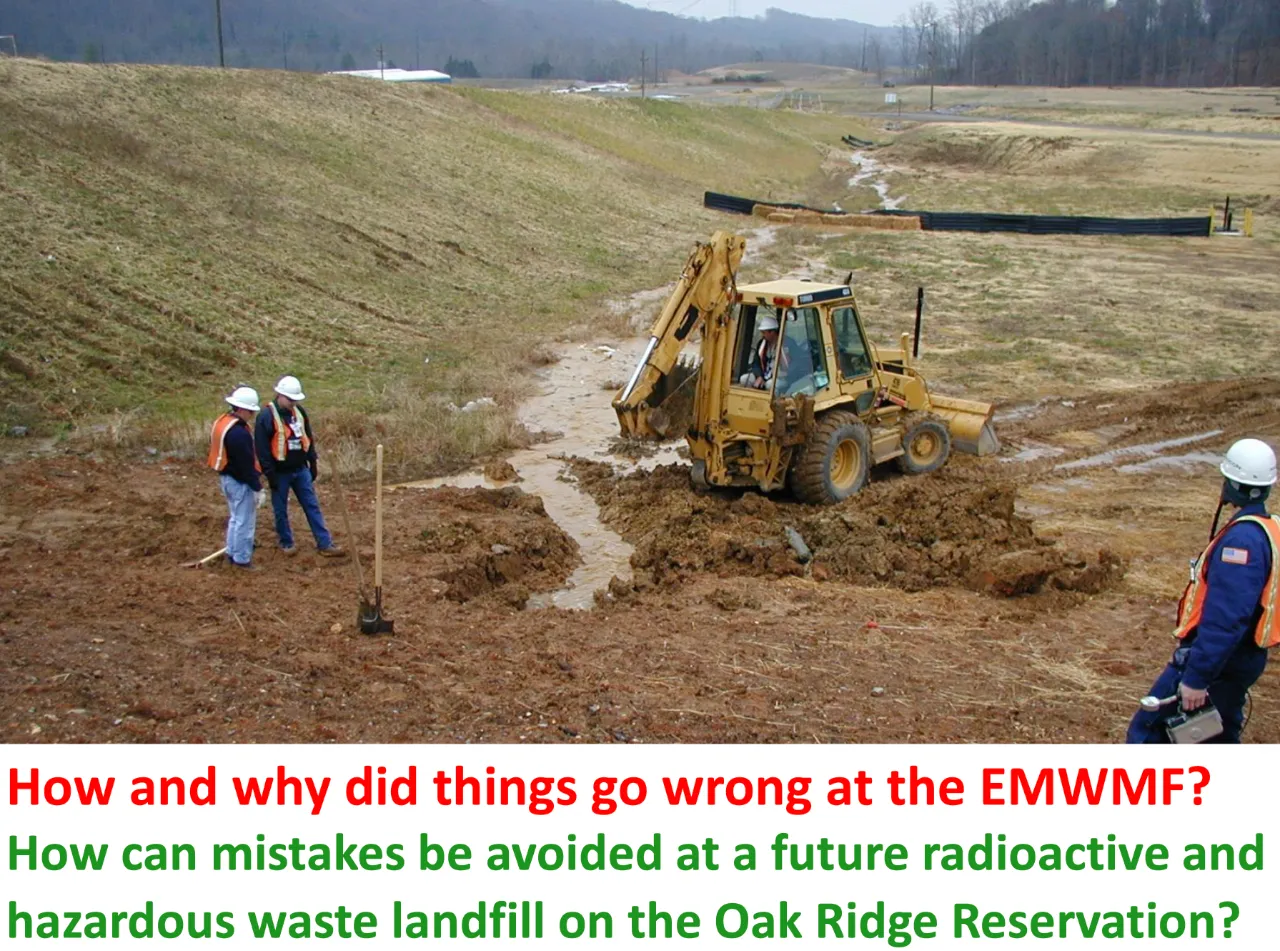
    How and why did things go wrong at the EMWMFImage from a 2018 memorandum authored by experts including former Department of Energy employees in Oak Ridge. EMWMF is the present landfill that has a history of failures and is reaching capacity. Ecologists say, after a decade DOE still is not adequately addressing waste acceptance criteria and feasible alternatives.


    Public can comment in person Tuesday night in Oak Ridge on proposed DOE waste dump

    OAK RIDGE — The Southern Environmental Law Center blistered the Department of Energy in a letter ahead of a May 17 hearing on construction of a toxic-waste landfill that opponents said poses contamination threats to portions of the Clinch River watershed and downstream TVA reservoirs.

    The hearing is set for 6-8 p.m. Tuesday, May 17 at the Pollard Technology Conference Center, 210 Badger Ave. This email address is being protected from spambots. You need JavaScript enabled to view it. will be accepted through June 7.

    The Department of Energy wants to bury contaminated debris from demolition of Manhattan Project-era complexes and associated legacy toxins from the Oak Ridge Reservation. The drawn-out debate about how best to safely store the materials now focuses on the transparency of the decision process and the health of the Bear Creek watershed and downstream pollution threats to the Clinch River.