
The Environmental Journal of Southern Appalachia

Naturalists have documented 77 new species in Smokies since 2011

Written by
Celithemis elisa femaleThe calico pennant dragonfly (Celithemis elisa) is among 77 new species discovered in Great Smoky Mountains National Park over the last decade. Wikipedia Commons

Apps and public research help uncover new layers of life in Southern Appalachia

This article was originally published by Smoky Mountain News.

Visitors armed only with a free app and love of nature have documented more than 4,000 species in Great Smoky Mountains National Park since 2011, according to the nonprofit Discover Life in America, including 77 not previously documented in the park by anyone else. 

DLiA, which manages the All Taxa Biodiversity Inventory project that aims to catalogue all species residing in the extremely diverse park, recently analyzed more than 71,000 records from the app, iNaturalist, to discover the impact these casual observations have made on the project. 

The batch of 77 new discoveries consisted mostly of insects and other arthropods, including 33 wasps, 15 kinds of flies and 10 beetle species. One new record was for a fungus called green beetle hanger, an external parasite of exotic Asian ladybird beetles. Forty different iNaturalist users made the observations, including six DLiA employees, three scientific researchers and a park employee. The remaining 30 people were members of the iNaturalist community who range from casual observers making their first trip to the Smokies to avid naturalists cataloguing their organisms of interest. DLiA expects to find additional new records as it continues its analysis. 

iNaturalist is a free app that does not require any scientific expertise to use. Its artificial intelligence helps users identify organisms from photos, as do other users on the platform, making it a fantastic tool for learning to distinguish the Smokies’ famous variety of wildflowers, trees and other life forms. 

It is used in other research projects, including citizen science that includes ongoing plotting of seasonal tree species changes as part of the the Smokies phenology project.

Rate this item
(3 votes)
Published in News

Related items

  • Celebrate the wild ties that bind Americans on Public Lands Day 2022 — Saturday, Sept. 24

    fontana

    GATLINBURG — The director of the National Park Service is expected in Great Smoky Mountains National Park on Saturday to celebrate National Public Lands Day.

    Director Chuck Sams plans to make some remarks in appreciation for the volunteers who help backstop national park maintenance costs before citizens fan out for various tasks across the park. Sams is the first Native American to head the park service, and he will be joined by Eastern Band of Cherokee Indians Chief Richard G. Sneed.

  • Citizen scientists are taking stock in Smokies, and the inventory keeps increasing
    in News

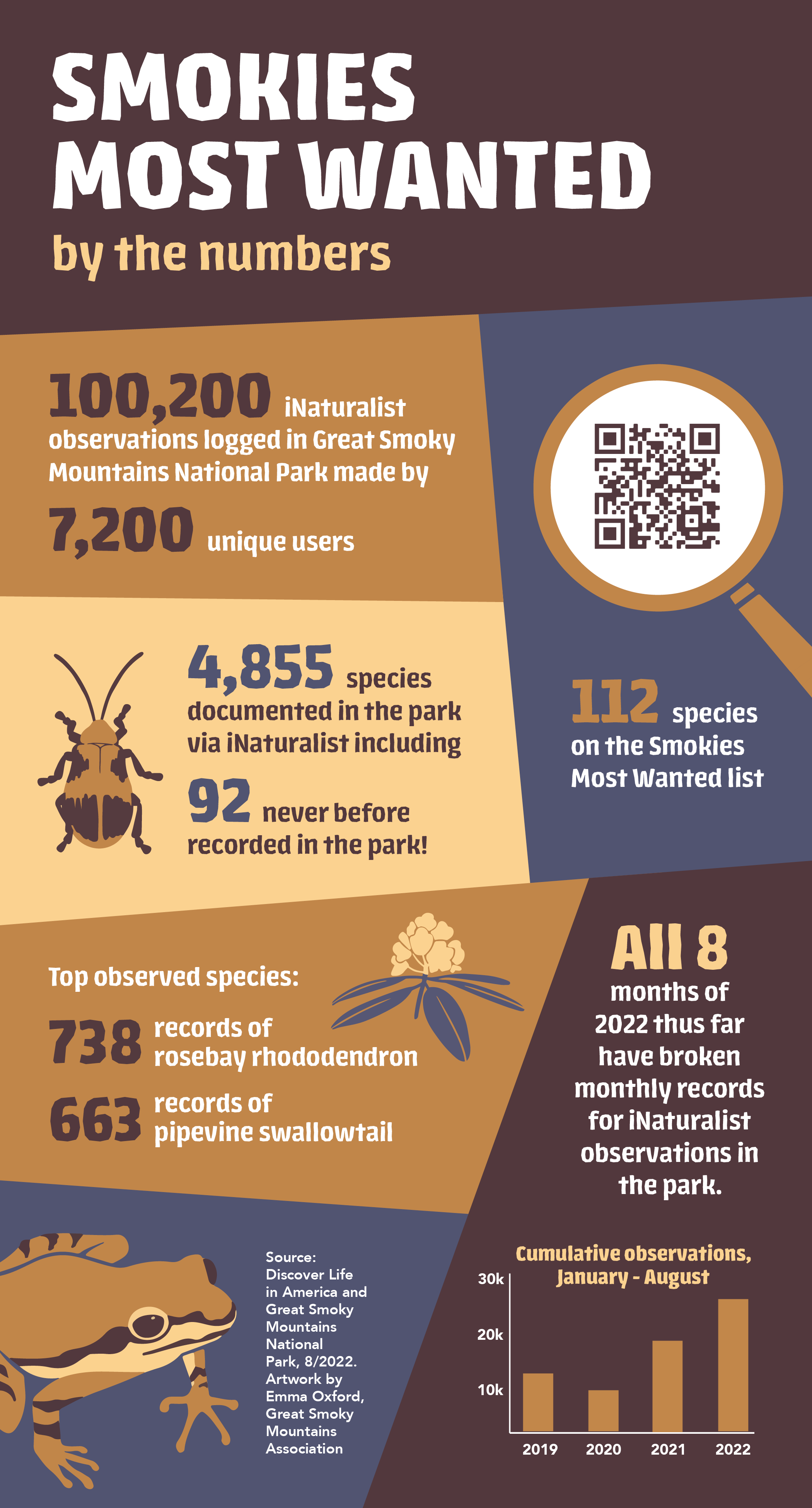
    1 smokies most wanted infographic credit Emma Oxford GSMA

    This story was provided by Great Smoky Mountains National Park.

    Next demonstration on Thursday, Oct. 20

    GATLINBURG — Great Smoky Mountains National Park is celebrating the success of a community science project led by nonprofit partner Discover Life in America (DLiA) called Smokies Most Wanted. The initiative encourages visitors to record life they find in the park through the iNaturalist nature app. DLiA and the park use these data points to map species range, track exotic species, and even discover new kinds of life in the park. 

    “iNaturalist usage in the Smokies has skyrocketed from just four users in 2011, to 3,800 in 2020, to now more than 7,100 users,” said Will Kuhn, DLIA’s director of science and research. 

    In August, the project reached a milestone, surpassing 100,000 records of insects, plants, fungi, and other Smokies life submitted through the app. Among them are 92 new species not previously seen in the park.

  • Falling trees accountable for very few deaths in Smokies, but they do happen

    CITIZEN TIMES: Child killed by falling tree was a very rare twist of horrible fate

    Karen Chavez of the Asheville Citizen Times wrote a great article on tree-related deaths in Great Smoky Mountains National Park and beyond following the death last week of a Georgia child killed by a falling tree as she was occupying a tent in Elkmont Campground.

    She reports the death of the child was only the 11th tree-linked death in the national park’s history.

    The first such death was reported in 1934, when a Civil Conservation Corps worker was killed. Tree-related deaths since are normally associated with roadways and hiking trails.

    “‘Deaths related to falling trees or limbs account for about 2 percent of total recorded deaths in the park. It’s an incredibly rare and tragic occurrence and accounts for the first-ever fatality caused by a tree falling on a tent in park history,’” according to an interview Chavez had with park spokeswoman Dana Soehn.

  • Updated: Summer of weather anomalies continues as deadly floods ravage SE Kentucky
    in News

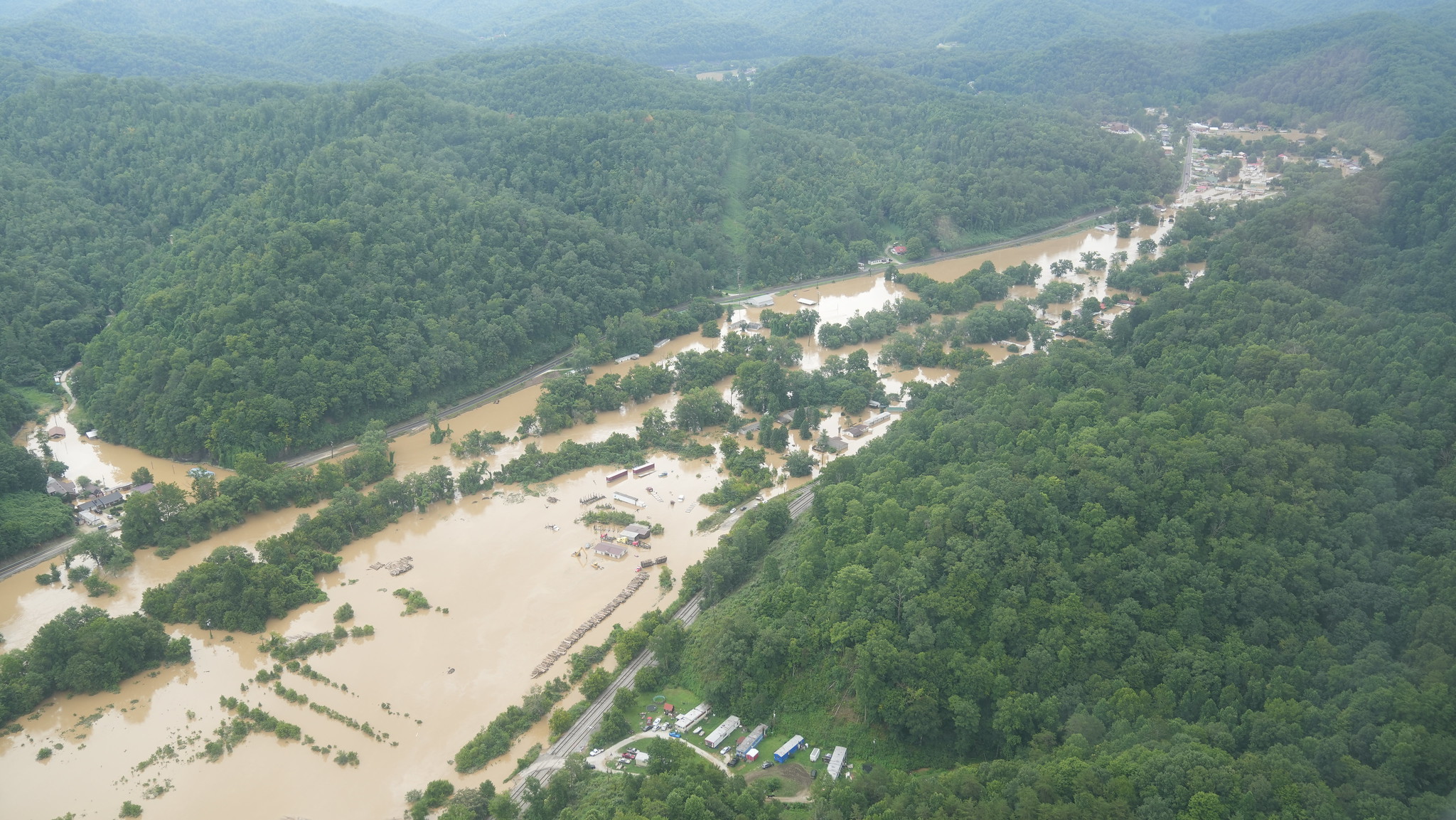
    ky floodsHeavy flooding is seen in eastern Kentucky this weekend. State of Kentucky/Office of Gov. Andy Beshear

    Another round of severe flooding hits the Southern Appalachian region

    UPDATED: The death toll from last week’s unprecedented flooding in Kentucky reached at least 29, as some areas contended with additional flooding over the weekend. Fifteen of those, including four children, died in Knott County, which is about 100 miles north of Kingsport.

    Water service to nearly 67,000 connections has been affected, as well as 17 wastewater-treatment systems in eastern Kentucky, according to Gov. Andy Beshear’s office. 

    “We are currently experiencing one of the worst, most devastating flooding events in Kentucky’s history. The situation is dynamic and ongoing,” Beshear said in a statement.

    “What we are going to see coming out of this is massive property damage and we expect loss of life. Hundreds will lose their homes. And this will be yet another event that will take not months, but years, for our families to rebuild and recover from.”

  • Falling tree kills child in Great Smokies

    ELKMONT — A 9-year-old girl died early Wednesday after a tree fell on a tent she was occupying in Great Smoky Mountains National Park.

    The unidentified child was among a group of people camping in Elkmont Campground when the red maple, 2 feet in diameter, fell shortly after midnight and crushed the girl in her tent, according to the National Park Service.

    The girl and her family had traveled to the national park from Georgia. Her father and two siblings weren’t injured, according to the park service.

    Elkmont Campground remains open, but the family’s campsite and an adjacent campsite were temporarily closed.

  • Has the Eastern Band of Cherokee Indians lost its ‘right way’ at Exit 407?
    in News

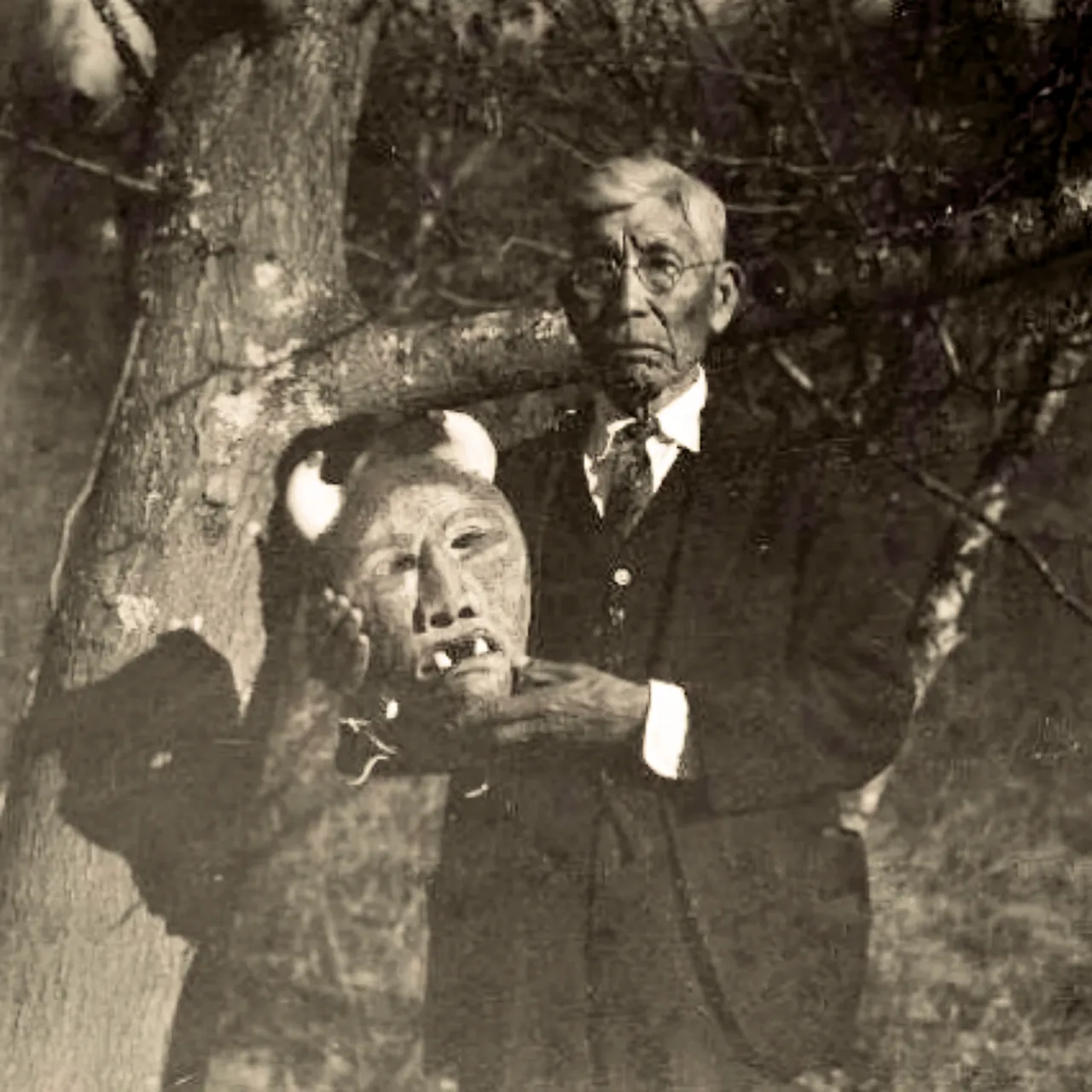
    Will West LongCherokee tribal council member, historian and ethnographer Will West Long holds a traditional Cherokee mask, which he often recreated. He was an active chronicler of Cherokee custom, heritage and tradition and died in 1947 on the Qualla Reservation in Swain County, North Carolina. WikiCommons

    As plans gel for massive new developments, has the Eastern Band lost its ancient way?

    SEVIERVILLE — The Tennessee Department of Transportation is eyeing a second interchange for exit 407 at Highway 66 along Interstate I-40 in Sevier County. 

    Exit 407, already one of the most congested interchanges in Southern Appalachia, accesses the main highway to Great Smoky Mountains National Park, the most visited national park in the nation. The park reported a record 14 million visitors in 2021.

    The exit also serves crowds flocking to Pigeon Forge and Gatlinburg.

    But the new interchange would primarily serve a 200-acre development to be called Exit 407: The Gateway to Adventure.   

    Scheduled to open spring 2023, and fully operational in 2024, it’s expected to attract 6.7 million people annually. The first phase includes a theme park and a 74,000-square-foot convenience store with 120 gas pumps, making it the world’s largest such store.

  • Torrential rains in Smokies destroy trails, roads and other infrastructure
    in News

    7.13.22 Porters Creek Road washoutA washout is seen along Porters Creek Road in Great Smoky Mountains National Park following torrential rain on July 12. National Park Service

    Flooding causes Smokies damage, prompts water advisory for Sevierville 

    SEVIERVILLE — Extremely heavy rain on July 12 in the Smoky Mountains caused a cascade of problems now just coming to light.

    Sevierville and Sevier County issued a boil-water advisory early Thursday after debris flushed by Tuesday’s floodwaters clogged the city water utility’s main intake on the French Broad River, leading to pressure decreases that opened up lines to possible outside contamination.

    In Great Smoky Mountains National Park, Greenbrier campground was closed indefinitely after the swollen Middle Prong of the Little Pigeon River wiped out roads, trails and bridges in the area.

  • Clean sweep: Volunteers remove tons of trash from Smokies in largest one-day cleanup
    in News

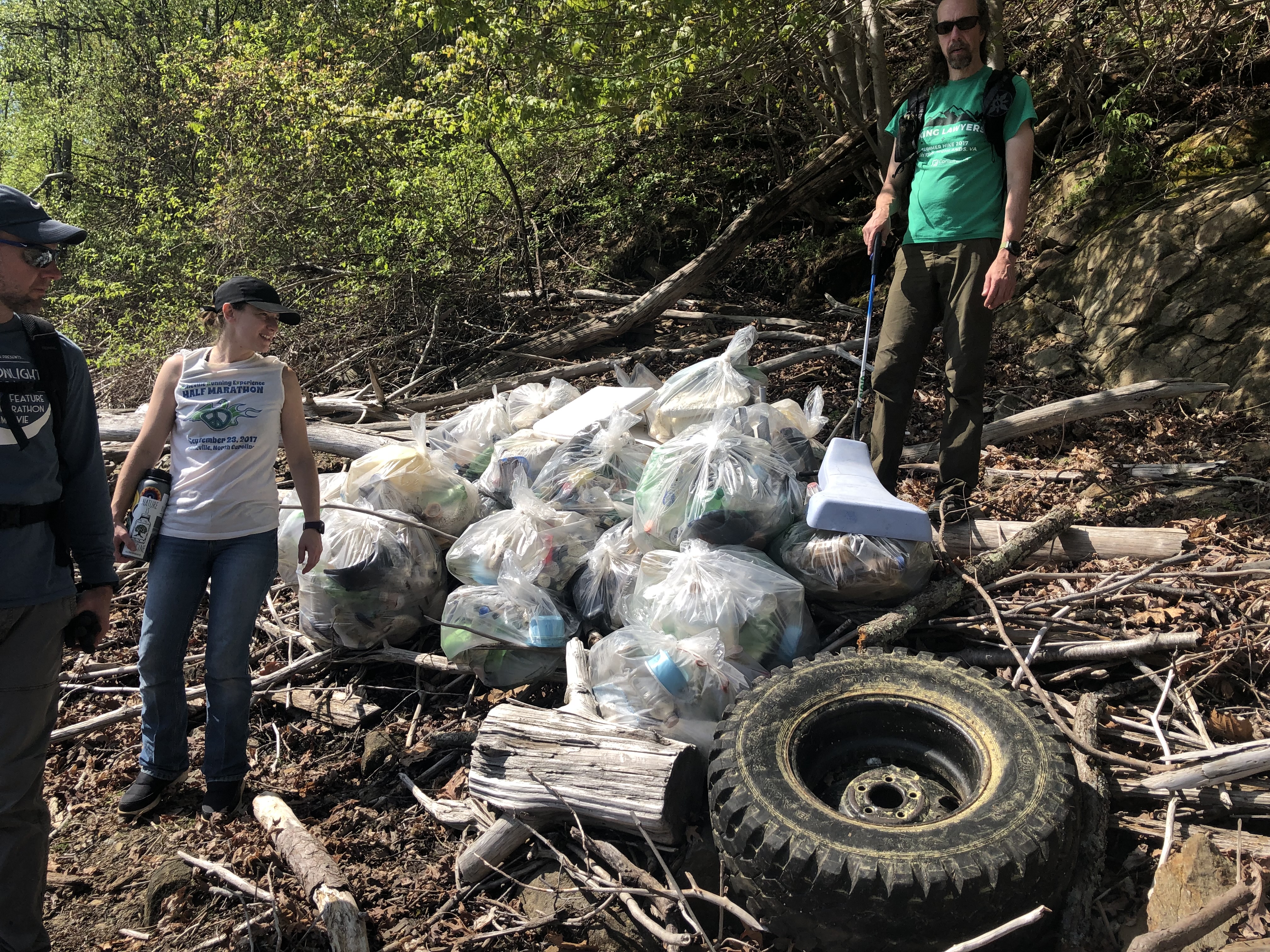
    Clean Up PileVolunteers who helped with the Save our Smokies cleanup on April 23 are shown here among their booty. Anna Lawrence/Hellbender Press

    Amid the booze bottles and toilet paper, it’s ‘incredible what we found here’

    Cleanup crews cleared garbage Earth Day weekend across Great Smoky Mountains National Park from mountain crests to the shores of Fontana Lake.

    Save Our Smokies, which organized the April 23 event, called it the largest single cleanup ever attempted in the park. Volunteers wrangled some 5,000 pounds of garbage.

    Save our Smokies Vice President Benny Braden said the organization removed 10,133 pounds of trash in all of 2021.

    “Litter is a big problem. We can clean up a location and two months later we have to be back there because it’s worse than when we started,” Braden said in an interview Saturday morning at the Tremont section of the national park. “What gives us hope is our volunteers showing up,” he said, citing their tireless dedication.

  • Blount County Commission committee rallies against Smokies parking fees ahead of superintendent Q&A
    in News

    GATLINBURG — Great Smoky Mountains National Park Superintendent Cassius Cash hosted a dgital meeting April 14 urging the implementation of a $5 daily parking fee for Smokies visitors to raise money for park maintenance, law enforcement and visitor services.

    The meeting included an overview presentation introducing the rate changes and a question and answer session. 

  • New digital maps outline precious pockets of remaining U.S. biodiversity and the threats they face
    in News

    Indiana batThe endangered Indiana bat is among threatened and endangered species in Great Smoky Mountains National Park.  U.S. Fish and Wildlife Service

    Southern Appalachians show red as a warning on new detailed biodiversity maps 

    This story was originally published by the Sylva Herald.

    SYLVA — Great Smoky Mountains National Park has long been known for its abundance of different species of flora and fauna.

    Credit old mountains in a warm, sunny and wet region with varying types of climate, soil and stone for that large number.

    “The park is almost certainly the most biodiverse national park in North America,” said Paul Super, national park science coordinator. “And certainly the most studied of any national park.”

    A group of environmental organizations recently put together a series of maps illustrating the regions with the biggest threats to their biodiversity, and the area around Jackson County and the national park showed up in the red, showing risk. One such map, based on NatureServe data, is among the most detailed maps of endangered and threatened species ever produced.