The Environmental Journal of Southern Appalachia

Southeast electric vehicle sales increased 49 percent last year. Overall U.S. auto sales increased only 3 percent.

Written by

car driving toward sunlightIllustration courtesy of Southern Alliance for Clean Energy

Annual SACE, Atlas Public Policy data indicates rapidly escalating and enduring demand for electric vehicles in Southern U.S.

Stan Cross leads Knoxville-based Southern Alliance for Clean Energy's electric transportation policy and utility reform efforts across the Southeast.

When will the electrification of America’s cars, trucks, and buses really take off?

Imminently, if not already. Look to the Southeast, which is experiencing impressive EV market growth despite a lack of state-level EV-supportive policies, incentives and regulations.

The Southern Alliance for Clean Energy and partner, Atlas Public Policy, updated key year-end indicator data from the annual “Transportation Electrification in the Southeast” report to capture regional and state-specific growth in Alabama, Florida, Georgia, North Carolina, South Carolina and Tennessee.

This is a critical time for the expanding EV market. The pandemic has exposed global supply chain weaknesses related to auto manufacturing and battery production that can only be solved by increasing domestic production of critical materials and components.

The Russian invasion of Ukraine is once again exposing the entanglement of America’s commitment to global democracy and dependency on oil for transportation, and highlighting the national security benefits of rapidly transitioning to electric mobility powered by domestic electricity. 

The bipartisan Infrastructure Investment and Jobs Act (IIJA) will invest upwards of $7.5 billion in EV charging infrastructure to spur the build-out of a network of 500,000 EV chargers across the country. The $7.5 billion investment is larger than all the money invested nationally in EV charging deployment to date. Southeast states will receive at least $679 million in federal funding over the next five years to invest in public EV charging along highway corridors.

Automakers have committed to making desirable and affordable electric cars, trucks, and buses available to consumers and fleet operators. Collectively, automakers in the U.S. are investing nearly $55 billion in EV research and development and over $67 billion in EV manufacturing facilities. Many automakers have joined the growing list of countries and American states pledging to end fossil gas and diesel vehicle production by 2035. 

The Southeast closed out 2021 far ahead of the rest of the country on electric car, truck, and bus manufacturing investment and jobs, with 18 percent of the nation’s population, but 43 percent of announced EV-related investment and 33 percent of announced jobs. In the past six months alone, the region added 15,784 manufacturing jobs and secured $12.1 billion in new investments highlighted by Rivian selecting GeorgiaToyota choosing North Carolina, and Ford expanding in Tennessee.

It is notable is that these jobs and investments are across the EV supply chain, including mineral mining, battery production, EV charging station fabrication, electronics assembly, software development, and vehicle manufacturing. Businesses are relocating and expanding in our region because of its pro-business political environment, large coastal and inland ports, lower-cost electric and water utility rates, and non-unionized labor.

Florida is leading the Southeast in EV sales per capita, while Georgia leads the per capita EV charger deployment race. Florida and Georgia represent the first time Southeast states are selling EVs and deploying chargers in line with national averages. North Carolina is beginning to make strides, reaching the national average for states (excluding California) for charger deployment and honing in on EV sales (the strength of the CA market skews national averages). While #1 in the region in EV-related manufacturing investment, Tennessee lags in sales and charger deployment, along with South Carolina and Alabama.

The most eye-popping growth statistic is utility investment, up 416% in 2021. In 2020, Southeast utility EV-related investment represented less than 1% of utility EV-related investments nationwide. In 2021, the region jumped to 10% of national investments. 

This growth was primarily driven by Florida Public Service Commission approving Duke Energy Florida’s and Florida Power & Light’s rate case settlements, which included over $260 million in EV program investments. Also, North Carolina regulators recently approved Duke Energy’s Make Ready Credit program, and the utility has filed a $56 million proposed EV Pilot program that awaits regulator approval.

The adoption of electric cars, school and transit buses is likely to surge along with charging station deployment, and we can expect continued manufacturing expansion across the region.

There are now 61 passenger light-duty EV models currently available and 31 more on the way including pickup trucks and more SUVs. New EVs provide drivers with a 302-mile range on average and are approaching sticker-price parity with fossil gas cars, likely resulting in the EV sales curve getting even steeper.

Electric school and transit buses are deploying in every state in the region, demonstrating better performance and lower operating costs than diesel buses. The added challenge for school districts and transit agencies of purchasing and installing EV chargers is starting to lift with support from federal, state, and utility funding, but it will remain a barrier.

State Departments of Transportation are organizing to receive federal IIJA funds to close charging gaps and enable EV drivers to confidently traverse the region’s highways. This build-out will begin in fall 2022 and continue through 2026. Along with providing more charging stations, installing the chargers will create ongoing work for electrical contractors.

As car, truck, and bus electrification and charging station deployment scales, states have work to do to ensure no communities are left behind and that all consumers have equal access to the public health, environmental, and economic benefits EVs deliver.

There is no reason to think that the EV-related economic development boom the region is experiencing will subside. But competition among Southeastern states is sure to heat up. Manufacturers and supply chain companies are going to invest where they can produce products cost-effectively and where consumers are eager and able to purchase. State policymakers and regulators would be wise to enable the most robust EV market possible because whichever states do will be in the strongest position to land the next big deal.

Rate this item
(1 Vote)
Published in News

Related items

  • Activists urge TVA to take advantage of historic US climate bill for energy-efficiency improvements
    in News

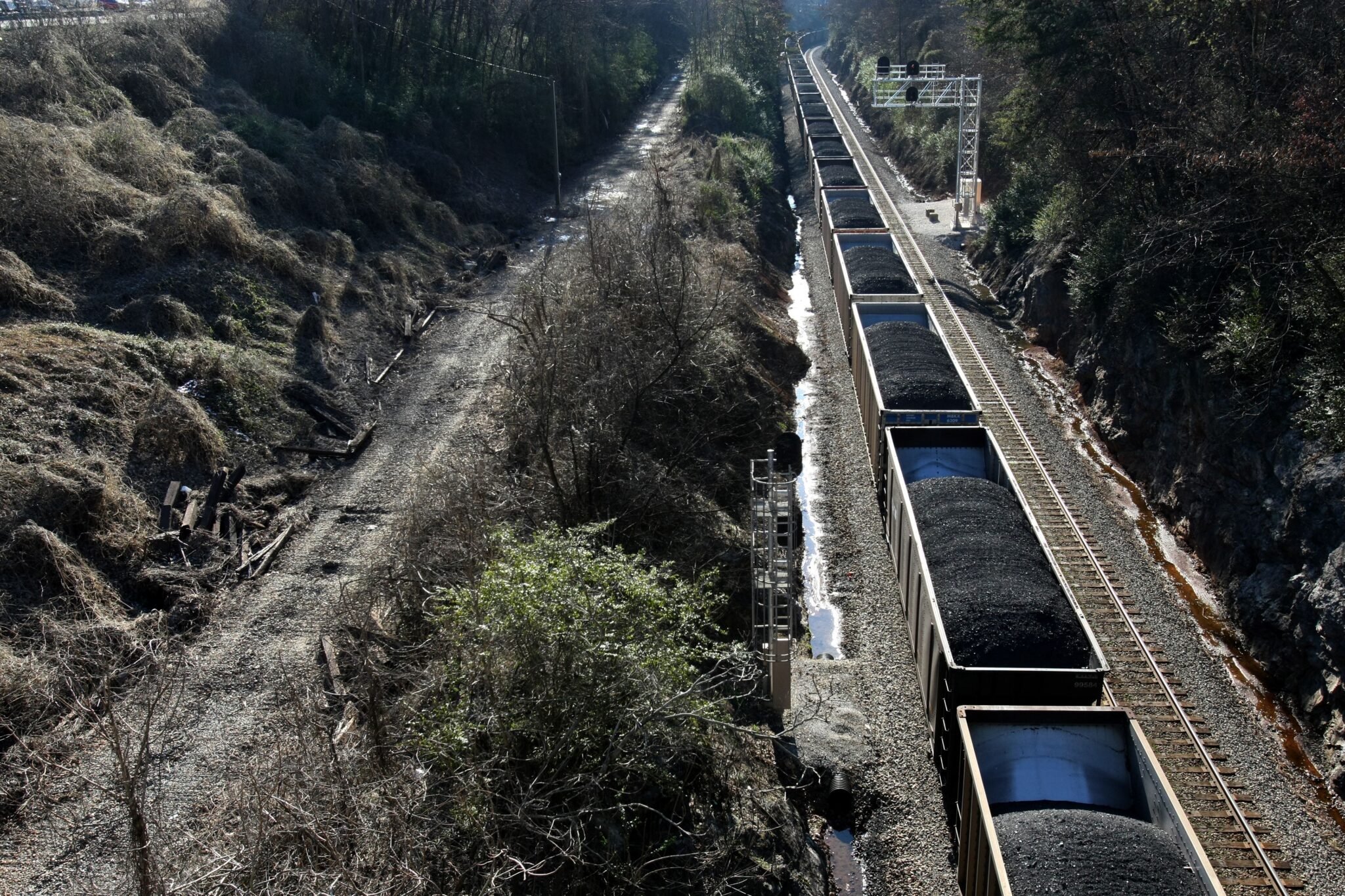
    TVA 1 2048x1365A hopper car on a train filled with coal to be delivered to a TVA coal-fired plant. John Partipilo/Tennessee Lookout

    Climate bill designates TVA as a potential recipient of clean energy investments and loans

    This story was originally published by Tennessee Lookout.

    KNOXVILLE  Clean-energy advocates are urging the Tennessee Valley Authority to use funds provided through the Inflation Reduction Act to deliver environmentally friendly energy to Tennessee customers. 

    The massive bill Congress passed Friday includes $370 billion for clean energy investments and listed TVA as an entity that is eligible to take advantage of clean energy credits and loans to significantly reduce the cost of energy-efficient infrastructure. 

    On Aug. 12, the Clean Up TVA Coalition, including the Sierra Club, the Southern Alliance for Clean Energy and Appalachian Voices, urged TVA to take advantage of the legislation and make funds available to its affiliated local power companies, which can then offer energy-efficient options for customers.

  • SACE sees many silver linings in Senate climate bill; House passage expected
    in News

    UN Climate ChangeA rainbow pierces gray skies during the 2021 United Nations Climate Change Conference in Glasgow. United Nations

    Climate activists stress positives of Senate climate bill despite its shortcomings 

    Amy Rawe is communications director for Knoxville-based Southern Alliance for Clean Energy.

    KNOXVILLE — The U.S. Senate passed the Inflation Reduction Act (IRA), an estimated $430 billion bill, of which approximately $370 billion will be allocated to investments in clean energy and to address climate change.

    It’s the single largest climate investment in U.S. history, and if it passes the House, will put the country on a path to be able to achieve roughly 40 percent emissions reduction from 2005 levels by 2030, reestablishing our influence in meeting the Paris Agreement goal of limiting global warming to 1.5 degrees Celsius. 

  • SACE released its annual utility decarbonization tracking report, and it’s not pretty
    in News

    methane leaksBloomberg reports that methane leaks from the natural gas sector may be far worse than estimated by the EPA. While replacing coal-fired power plants with natural gas ones reduces air pollution it may not help at all with climate change because methane is 30 times more effective as a greenhouse gas than CO2.  Image source: Kayrros SAS

    Report: Many utilities are not reducing carbon emissions despite public assurances to the contrary

    KNOXVILLE — Global greenhouse gas emissions must peak by 2025 and experience rapid and deep reductions to avoid a potentially catastrophic future, according to a new analysis by air-quality and climate advocates. Emissions must reach net zero by the early 2050s to limit warming to 1.5 degrees (C) in order to avoid the worst impacts of the climate crisis.

    Many utilities and municipalities have acknowledged this dynamic, but the Southern Alliance for Clean Energy s fourth annual “Tracking Decarbonization in the Southeast" report highlights that current utility resource plans are not in line with this overarching target. Obstacles to getting utilities on track that are discussed in our report include: increasing reliance on fossil gas, underutilizing energy efficiency, and placing limitations on popular technologies such as rooftop solar. There’s still a lot of work to do before any Southeast utility is on track to decarbonize.

  • Seal it up: Inefficiency increases energy costs across the board

    Editors note: SACE executive director Stephen Smith is on the board of Foundation for Global Sustainability. Hellbender Press operates under the FGS nonprofit umbrella.

    The Southern Alliance for Clean Energy (SACE) released its fourth annual “Energy Efficiency in the Southeast” report, which tracks recent policy developments and performance trends in electric utility efficiency from 2020.

    It continues to highlight that despite being a proven low-cost clean energy resource with enormous potential to reduce carbon emissions and customers’ energy burden, Southeastern utilities continue to underinvest in energy efficiency.

    As a result, households in many Southeastern states have some of the highest electricity usage and monthly energy bills in the nation. Some states and utilities are making progress, and it’s not too late for local policymakers to take advantage of untapped efficiency savings to help reach crucial decarbonization goals.

  • Is TVA providing the best prices for energy consumers? Congress wants to know.
    kingstonThe Tennessee Valley Authority's fossil plant at Kingston. TVA
     

    Southern Alliance for Clean Energy: TVA is not coming clean in Congressional inquiries

    KNOXVILLE — On Jan. 13, the U.S. House of Representatives Committee on Energy and Commerce sent a letter to the Tennessee Valley Authority (TVA) requesting information regarding business practices that appear inconsistent with TVA’s statutory requirement to provide low-cost power to residents of the Tennessee Valley.
    TVA’s response to the committee’s 16 questions dodges some of the committee members’ key concerns and provides misleading information on several issues, including:
  • Knoxville Area Transit navigates length, depth and breadth
    in News

    270741409 285060456987101 7670318144827675720 n

    Shut up and get on the bus

    KNOXVILLE Everyone needs to be everywhere at once: School, work, the grocery story, the mall and back home.

    Locked into a society run by time, we tend to prefer methods of transportation that make for the quickest journey from place to place.

    The modern car, usually powered by gasoline, provides individuals with quick transportation, which saves time. Private transportation embodies convenience.

  • Lawsuit alleges TVA paid dues to industry trade groups that undermine environmental protections
    in News

    kingstonThe Kingston Fossil Plant in Kingston, Tennessee is shown in this file image from the Tennessee Valley Authority.

    TVA denies lobbying or cronyism, cites need for “expertise and analysis”

    Editor's Note: This report is a collaboration between Hellbender Press and Hard Knox Wire.

    A coalition of environmental groups who joined forces to stop the Tennessee Valley Authority from using ratepayer money to fund trade groups who lobby against the Clean Air Act and other environmental protections filed a federal lawsuit against the utility.

    The environmentalists claim the practice potentially raises conflicts of interest and throws into doubt TVA’s willingness to comply with clean air laws even as the utility retires its coal plants in order to transition to a mix of fossil gas and nuclear power.

    The 20-page lawsuit was filed Sept. 9 in federal court in Knoxville by a half-dozen groups, including the Knoxville-based Southern Alliance for Clean Energy and the Center for Biological Diversity (CBD). The groups aren’t seeking monetary damages other than court costs and legal fees.

    TVA has invested millions of dollars in measurable air quality improvements as it prepares to divest from coal as a main electricity source. Nevertheless, TVA paid membership dues to interest groups such as Edison Electric Institute (which is headquartered five blocks from the U.S. Capitol) and Energy and Wildlife Action Coalition, according to the plaintiff’s suit.

    “TVA has not been officially served with the lawsuit, so it would be inappropriate to comment on its specifics,” TVA spokesman Jim Hopson said early Thursday.

    “As the nation’s largest public power provider and a federal agency, the Tennessee Valley Authority needs to demonstrate leadership by halting the financing of groups propping up the fossil fuel economy,” said Howard Crystal, legal director at CBD’s Energy Justice program. “Instead it funds these groups to do its dirty work while it moves forward with building new fossil gas plants. TVA can and must do better.” 

    TVA contends it merely wants to get input from multiple stakeholders with multiple perspectives.

    “As a federal agency, TVA is prohibited from participating in lobbying activities, and the TVA Board has directed that any dues, membership fees, or financial contributions paid to external organizations not be used for purposes inconsistent with TVA’s statutory mission or legal obligations.   
    “Like other major utilities, TVA’s membership in a diverse array of external organizations allows TVA access to specialized expertise and analysis that directly benefits all of our customers at a cost significantly lower than if TVA were to undertake such work alone.”

    Maggie Shober, director of utility reform at the Southern Alliance for Clean Energy, said TVA has a special responsibility to support environmental protections.

    “TVA is unique in the power industry in that environmental stewardship and economic development are codified in the agency’s founding mission,” she said. “It is imperative that the largest public power utility operate with accountability and transparency, stop funding anti-environment and anti-green jobs work, and invest in clean energy that will support the health of the Valley and the people who depend on it.”

    Daniel Tait, chief operating officer of plaintiff Energy Alabama, said: “TVA has forced its customers to make political speech by taking money from their utility bills and using it for anti-clean energy advocacy. We have repeatedly called on the TVA inspector general to investigate this misuse of customer funds but after hearing and seeing nothing, we felt compelled to act.”

    The path to the lawsuit began when the groups used the Freedom of Information Act to discover that TVA paid $200,000 in 2018 to the Utility Water Act Group, which lobbies against parts of the Clean Water Act. They also learned the utility was paying $500,000 a year to join the Edison Electric Institute, a group that represents all private, investor-owned utility companies in the country.

  • Report: Electric vehicles could add $47 billion annually to Southeast economy
    in News

    transportation electrification in the SE 2021 email banner

    Because most electricity is generated locally, shifting to electric transportation might save consumers money at the plug.

    (This story was reported and written by the Southern Alliance for Clean Energy).

    Electrifying transportation could provide an economic boon for Alabama, Georgia, Florida, North and South Carolina, and Tennessee. That’s what the Southern Alliance for Clean Energy (SACE) reveals in a new analysis, “Retained Transportation Fuel Spending in the Southeast: Electric vs. Internal Combustion Vehicles.”


    SACE analyzed how much consumers spend on gas and diesel and how much of that transportation fuel spending remains in a given Southeast state and how much leaves. The analysis then looked at what happens if all on-road gas and diesel-powered cars, trucks, and buses are replaced with vehicles that drive entirely on electricity.


    WATCH THE REPORT WEBINAR

    What We Found: $47 Billion on the Table

    FUELING TRANSPORTATION IS EXPENSIVE

    Southeast consumers spend approximately $94 billion on gas and diesel fuels annually. And because the region has nearly no oil production or refining operations, only about one-third of that amount — approximately $30 billion — is retained in our region’s economy, and the rest leaves to pay for the imported fuels. That adds up to $64 billion leaking out of our region’s economy every year. 

  • Knoxville electric bus fleet expands; furthers city efforts to reduce its carbon footprint
    in News

    kat electricbus1

    Grant to expand electric fleet will help city advance its emissions-reduction goals

    The federal government kicked down a $4.8 million grant to Knoxville for additional electric transit buses. It will expand the current Knoxville Area Transit electric fleet by six vehicles, the city announced July 12. That means KAT could have a total of 18 electric buses operating on routes across the city by the end of next year.

    The funds were disbursed from the federal Low and No Emission Vehicle Grant Program, which helps municipal transit agencies acquire low- or zero-emission buses and other transit vehicles, according to the city. Sen. Bill Hagerty and Rep. Tim Burchett supported the grant application. 

    KAT wants to electrify its entire 71-bus fleet within eight years. 

    “This will go a long way in helping KAT transition to an all-electric fleet,” Mayor Indya Kincannon said in the news release. “With each new electric bus, we are reducing our carbon footprint. We are moving closer toward our goal of cutting greenhouse gas emissions associated with City operations by 50 percent by 2030 — and a communitywide reduction of 80 percent by 2050.”  

    The grant furthers a city goal of replacing aging KAT diesel buses “with state-of-the-art electric buses that are about three times more fuel-efficient than a standard diesel bus (13 MPGDE vs. 4.4 MPG),” according to the city. 

    “Knoxville Area Transit provides an important service for folks in Knoxville, which is why earlier this year I asked the Federal Transit Administration to give KAT’s Low-No application grant full consideration,” Burchett said in the city release. “I’m glad this grant was awarded to our community so KAT can modernize its fleet to be more efficient and environmentally friendly.” 

  • Tennessee is a national leader in electric-car production and parts. Celebrate at this summer’s Get Off the Grid Fest in Chattanooga
    in News

    151694666 3601977996537551 5217723614434192164 n

    Not just for preppers anymore: Chattanooga energy-independence event promises three days of music, learning and fun “powered by the sun.” 

    A decade ago, the cost of the equipment needed to live off the grid limited the experience to the wealthy few. Presently, and in the near future, the technology is far more widely available to even modest income homesteaders. These days, you can’t afford NOT to get off the grid.” - Bill Fleming

    The Chattanooga and Middle Tennessee areas are among the top producers of electric cars in the nation. What better place to facilitate and celebrate the growing use of alternative fuels? 

    This summer’s Get off the Grid Fest near Chattanooga is a phenomenon with roots in the alternative energy movement of past decades. Today, it offers a strong vision for attaining energy independence and building sustainable communities for the present and future.

    The latest installment of the festival is set for the weekend of Aug. 20-22 at Camp Jordan in East Ridge. 

    Bill Fleming and Ed Witkin are bringing the traveling, biennial festival to East Tennessee this year. They are musicians and festival organizers and have been promoting and installing alternative energy technology for decades. The events are billed as ways “to explore and present practical methods of protecting and preserving our natural resources,” according to organizers, with a focus on harnessing alternative energy sources.

    The celebration of energy independence — and ways to achieve it — will include three music stages; a curated art exhibit; an electric vehicle exposition; a sustainability fair with workshops such as homesteading demonstrations; and a health and wellness tent. 

    The East Tennessee Clean Fuels Coalition and Drive Electric Tennessee are partnering with Stephen McCord to offer the Electric Vehicle Expo (EVX). 

    “EVX is Tennessee’s first multi-day music festival/exposition showcasing the latest in electric vehicle products, components, and services,” said McCord, the owner/operator of B Presents, a Nashville-based company that provides concert and event promotion, entertainment marketing, and promotional services.

    The Electric Vehicle Expo will include vendors across the entire EV spectrum, including OEMs, dealers, and suppliers for a full weekend of  presentations, test drives, workshops and guest speakers.