The Environmental Journal of Southern Appalachia

In throwback to early naturalist techniques, Big Camera! helps us picture plants under the sun

Written by

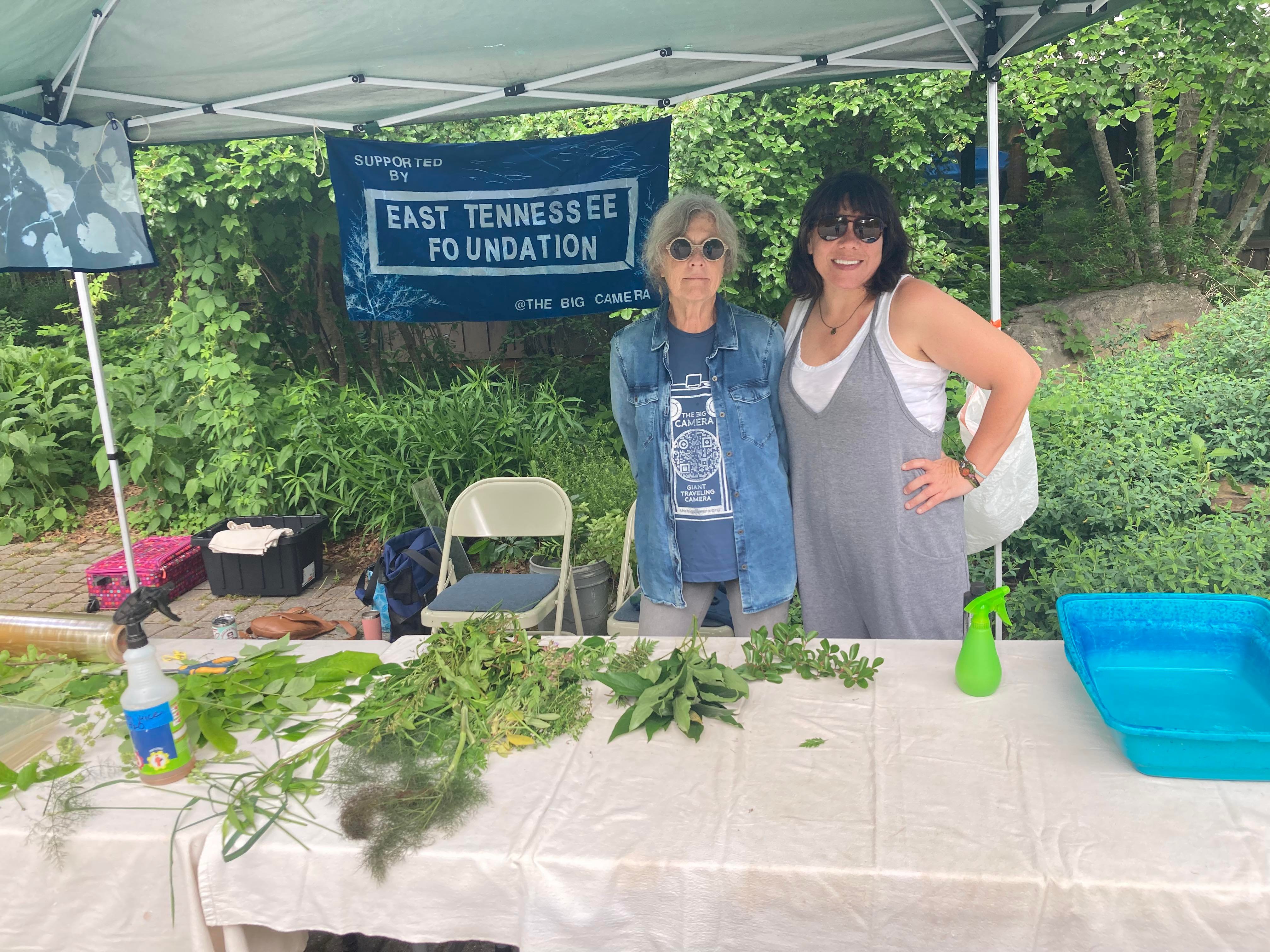
big cameraDonna Moore and Anna Lawrence are pictured at a Big Camera! event in May at Ijams Nature Center in South Knoxville. Ben Pounds/Hellbender PressLessons in early and enduring photo techniques are an organic way to spread the arts and cultivate love of nature

KNOXVILLE — Donna Moore and Anna Lawrence showed people how to take photos with the sun.

The method, demonstrated this spring at Ijams Nature Center, involved putting one or more leaves on photo paper and spraying it with two sprays. One spray contained lemon and water. The other contained water with vinegar.

Children then placed these leaves on wet photo paper in the sun. The sun’s light gives a permanent impression of the leaf on the paper.

“Art is really accessible to anyone,” Lawrence said about the lesson the cyanotype printing project teaches both children and adults. The images came off as bluish purple on a gray background.

Lawrence and Moore said the activity also teaches appreciation of the natural world. Moore said similar techniques at the time of photography’s birth mainly allowed for people to identify plants.

She gave the example of English botanist Anna Atkins, who lived from 1799 to 1871. Atkins made the first photos to be published in a book. She used early photographic methods with sunlight and chemicals to make images of algae for identification. Atkins was friends with early photography pioneers. Her book, “Photographs of British Algae: Cyanotype Impressions,” was first published in 1842, although it came out in different volumes, according to an article in New Scientist.

“Back in the day a plant stood still longer than a person,” Moore said, explaining why plants were such an early focus of photography. The cyanotype process allowed for Atkins to get direct images of plants for identification rather than making drawings.

At Ijams during the demonstration, a variety of leaves and plants lay on the table for participants to use, from wild plants like maple to spices like rosemary.

The Big Camera! is a nonprofit funded by the East Tennessee Foundation and leads other types of activities, too. Although it was not part of this workshop, The project also has a 10-x-6-foot camera obscura, which is another early device for capturing images, and a portable dark room.

“The Big Camera! is intended to share the magic of photography though making its principles hands-on, allowing photography to come alive in a new way for many who encounter it,” according to the group’s official website.

“There is no better way, perhaps, to understand a subject than by becoming fully immersed in it, and in this case that means, literally entering into a life sized camera!”

For more information on The Big Camera! and its upcoming events, go to its Facebook or Instagram pages.

(Editor's note: Because of an editing error, this post corrects the name of Donna Moore).
Rate this item
(2 votes)

Related items

  • Wither wisteria: ‘People care about our land’
    in News

    IMG 4106Anne Child removes invasive exotic plants during a recent Tennessee Citizens for Wilderness Planning event to mark National Public Lands Day at TVA’s Worthington Cemetery in Oak Ridge. Ben Pounds/Hellbender Press

    Citizens pay it back on Public Lands Day in Oak Ridge, Smokies and beyond

    OAK RIDGE — Rain drizzled as volunteers dug and clipped plants in woods around an old cemetery turned science lab.

    It was a Public Lands Day event at Tennessee Valley Authority Worthington Cemetery Ecological Study area in Oak Ridge near Melton Hill Lake. Tennessee Citizens for Wilderness Planning, an environmental organization based in Oak Ridge, led the Sept. 24 work party in support of American public lands.

    Other events were held throughout the country to mark the date (including Great Smoky Mountains National Park), which has proven itself to be the most productive day of the year for citizen sweat equity in public lands.

  • Foreign freshwater jellyfish have been swimming among us since the 1930s
    in News

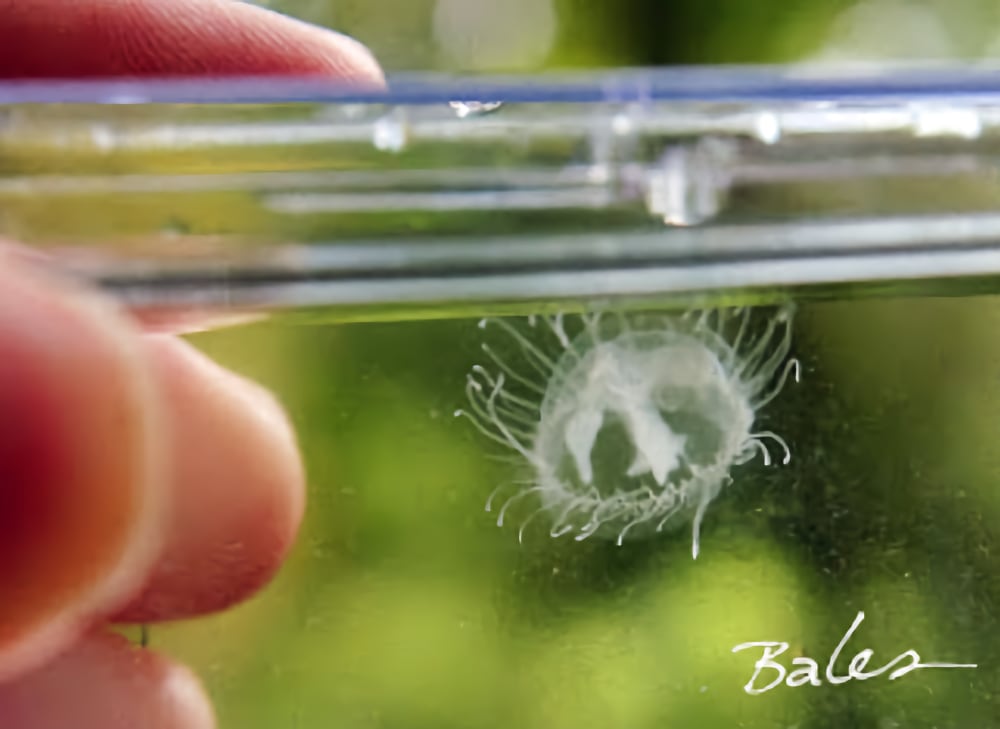
    Bales Freshwater jellyfish

    Freshwater jellyfish: Here one year, gone the next.

    KNOXVILLE — Paddling along the still water of Mead’s Quarry Lake you notice the air bubbles created by your oars. They are all around your canoe near the surface.

    It’s a hot early September afternoon and the nearly transparent bubbles seem to take on a life of their own. You slow to watch and yes, they undulate, rising and falling in the pristine water of the abandoned marble quarry.

    Air bubbles do not undulate!

    Taking a clear plastic cup, you lean over the gunwale and scoop up one of the penny-sized bubbles to get a closer look.

    Tentacles? Air bubbles do not have tentacles. What you are looking at is a freshwater jellyfish and the heat of late summer is its mating season. It’s a blossom of jellyfish as hundreds gather together near the water’s surface. They are commonly known as peach blossom jellyfish

  • Monarch butterflies, an ephemeral but regular glimpse of beauty, are fluttering toward extinction
    in News

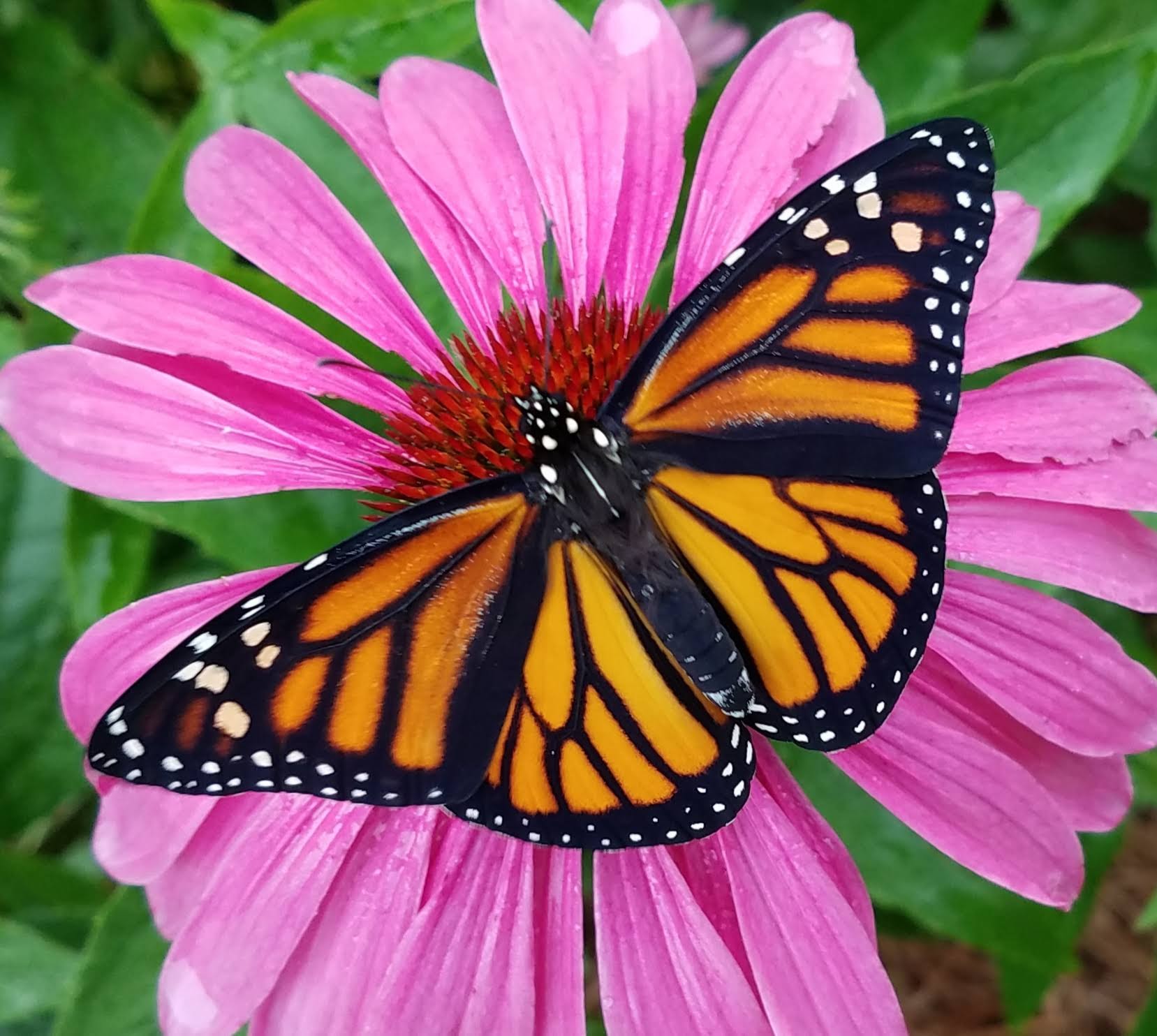
     Bales Monarch on coneflowerA monarch butterfly, recently declared endangered despite decades of conservation, is seen atop a coneflower. Stephen Lyn Bales

    Dramatic monarch declines mean the bell tolls for we

    KNOXVILLE — Monarch butterflies are ephemeral by nature. The orange and black dalliances that flitter through our lives, our yards, and our countryside like motes of dust are here one minute and gone the next. We pause for a few seconds to watch the “flutter-bys” and then move on.

    For about all of the Lepidopteran family, where they come from, where they go, their raison d'être, we don’t ask. They are winged wisps that pass through our busy lives. But that is not true with this orange and black butterfly, named to honor King William III of England, the Prince of Orange. But two people did ask.

    Norah and Fred Urquhart lived in Southern Canada and in the late 1930s they noticed that the monarch butterflies seemed to all be fluttering south this time of the year. Could they possibly be migrating and if so, where did they go? The notion that a butterfly might migrate south for the winter seemed hard to fathom. Yes, broad-winged hawks migrate. But a flimsy butterfly?

  • Knoxville kids go beast mode at new natural playscape

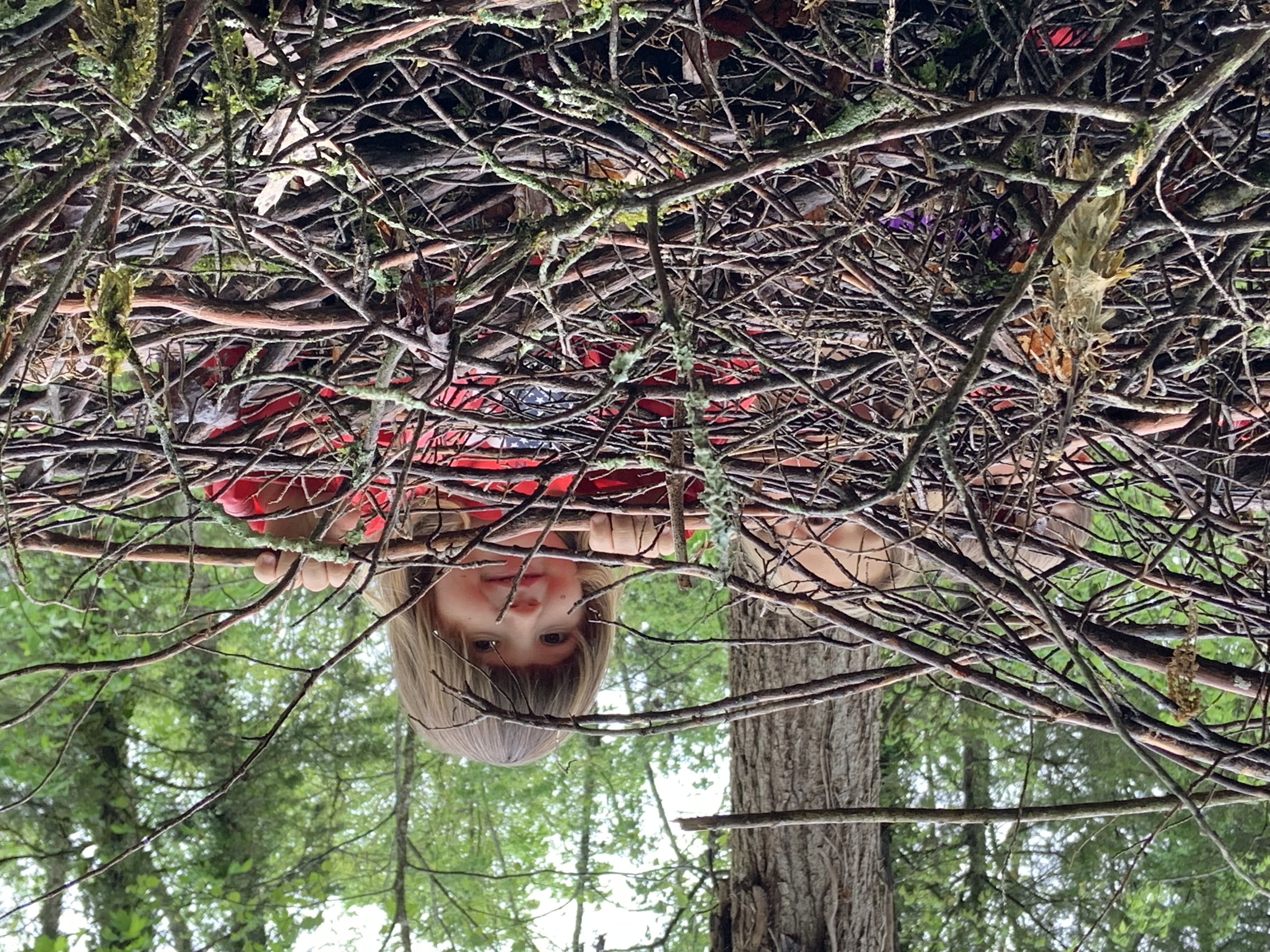
    ijams kid playscapeA child defends an elaborate stick fort at Ijams Natural Playscape, which opened this week at the South Knoxville nature center.  Ijams Nature Center

    New Ijams playground reconnects kids with neighborhood woods, forts and creeks of yore

    KNOXVILLE — Ijams Nature Center officially opened a portal into pure childhood beast mode this week.

    The Ijams Nature Playscape at Grayson Subaru Preserve is specifically designed for young children to play in a creek, climb hills, dig, build, crawl and engage with nature in an organic, unstructured way. The new space features a large nest, tunnels, log steps and different rooms to play in.

    “For generations, many of us had the opportunity to roam and play in the woods, empty lots and fields that surrounded our homes and neighborhoods,” Ijams Executive Director Amber Parker said. “We remember the freedom we had to use our imagination, test ourselves and become a part of the natural landscape, at least until we were called home for dinner.”

  • Ijams Nature Center honors deep roots with expansion dedication
    in News

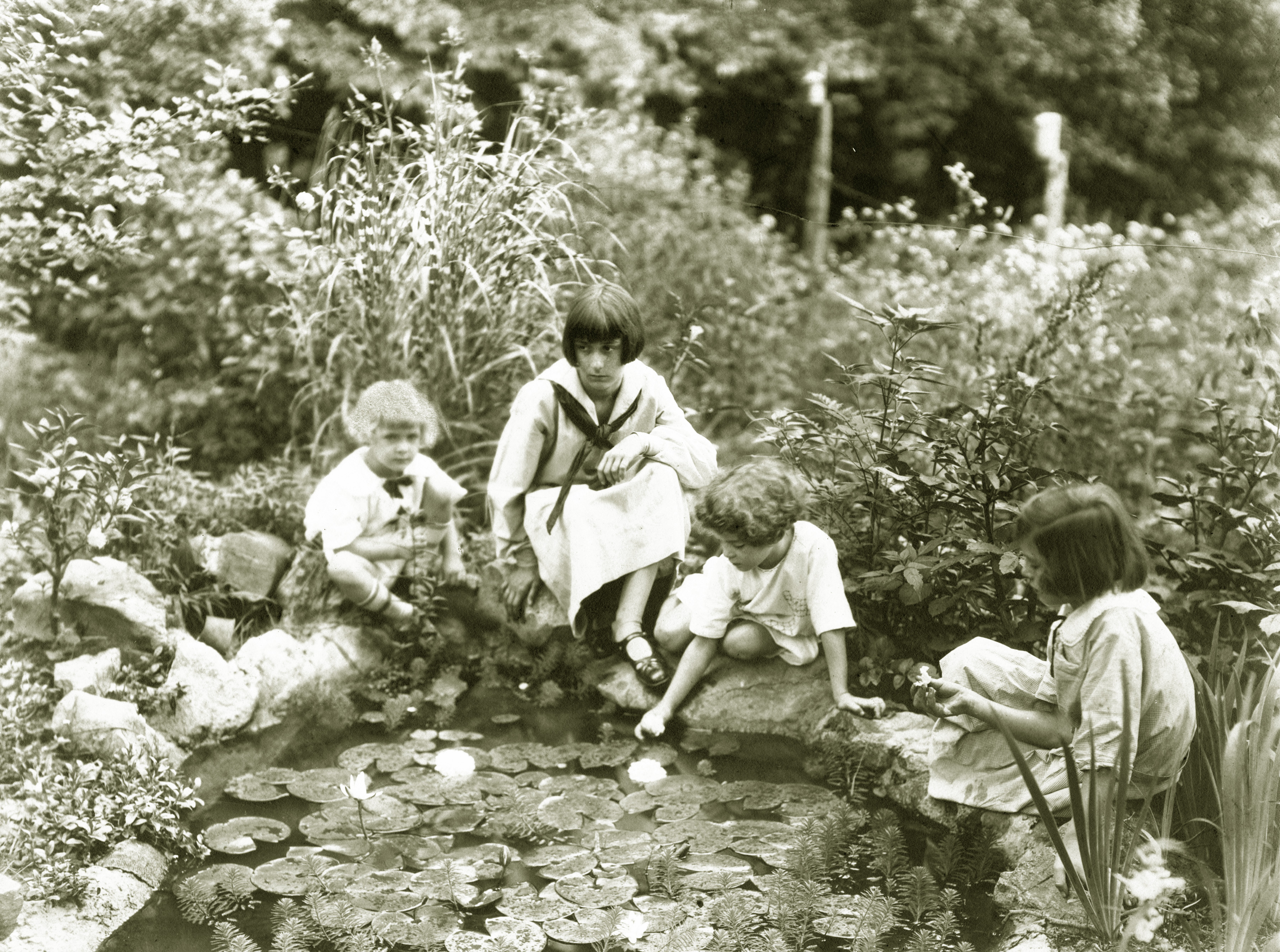
    Ijams Girls 1923 Martha Elizabeth Mary JosephineMartha, Elizabeth, Mary, and Josephine Ijams (from left) are seen in this 1923 photo. The girls were active in scouting and became accomplished naturalists early in life. Ijams Nature Center

    Help give thanks across history to founders of the South Knoxville nature center and celebrate the addition of 3 acres

    Cindy Hassil is a writer for Ijams Nature Center.

    KNOXVILLE When H.P. and Alice Ijams purchased 20 acres of land along the Tennessee River in 1910, they couldn’t have known their family would still be contributing to the legacy that would become the 318-acre nonprofit Ijams Nature Center more than a century later. 

    Ijams Nature Center will celebrate the contributions of the Ijams family and dedicate three acres of land recently donated to the nature center by H.P. and Alice’s granddaughter, Martha Kern, at 10 a.m. Thursday, April 28. The public is invited. 

  • Get put together well: Ijams Nature Center hosts sustainable fashion show
    in News

    Brittany Fleurish Vertical 9The Fleurish fashion show will feature sustainable and stylish clothes to reduce your big old footprint on Earth.  Courtesy Fleurish/Ijams Nature Center

    Help rock the catwalk at Ijams’ display of sustainable clothing

    Cindy Hassil is a writer for Ijams Nature Center.

    KNOXVILLE — Clothes can be a burden to both bear and wear. Ijams Nature Center offers fashionable alternatives with sustainability cred this month.

    Ijams and Natural Alternatives Salon and Spa will present Fleurish: A Sustainable Fashion Event, from 6 to 9 p.m. Sunday, April 24.

    “Fleurish is a runway show focused on how sustainability, conservation and beauty intertwine and affect our lives … and our future,” Fleurish Creative Director Ben Prager said. “This event engages the audience in ways that will help the average consumer make changes in their day-to-day lives to better impact the planet while never losing sight of the beauty of nature and the human experience.”

    Twelve local designers, along with hair stylists and makeup artists, are coming together to create looks using both recycled and natural materials.

  • Zigging and zagging to find the Zigzag
    in News

    Zigzag salamander UT doctoral student Bryce Wade examines a Southern zigzag salamander he found at Ijams Nature Center in South Knoxville. Keenan Thomas/Hellbender Press

    On the happy herping trail: Bryce Wade searches for salamanders

    KNOXVILLE — Bryce Wade scours the nature trail, turning over rocks and logs. On this overcast day at Ijams Nature Center, he searches beneath the leaves on the ground for one creature: salamanders.

    Underneath the rocks, logs and leaves, salamanders populate the cool, moist earth, avoiding the sun whenever they can. Wade is looking for a particular type: a winter species informally called the Southern zigzag salamander (Plethodon ventralis). 

  • Requiem for the Lord God Bird
    in News
    Movie footage from Louisiana, 1935 by Arthur Allen. Courtesy of Macaulay Library at the Cornell Lab of Ornithology. The library also has ivory-billed woodpecker calls recorded by Allen.
     

    The ivory-billed woodpecker is officially extinct, and it strikes a chord in Knoxville

    Clinging to a maple in the bayou, Jim Tanner finally had the rare nestling in his grasp. 

    He fitted it with a numbered leg band and placed the bird back in its hole high off the ground. 

    But true to its seldom-seen self, the juvenile ivory-billed woodpecker squirmed free and fluttered to the base of a giant maple tree in a southern Louisiana swamp owned at the time by the Singer Sewing Machine Co.

    The year was 1936, and Jim Tanner was in the midst of doctorate research at Cornell University funded by the Audubon Society as part of a push to prevent the pending extinctions of multiple bird species, including the California condor, roseate spoonbill, whooping crane and ivory-billed woodpecker. Eighty-five years later, the regal woodpecker would be the only one grounded for eternity.

    In the heat and rain of mucky, gassy bayous, Tanner compiled data on the range, population, habitat and prevalence of ivory-billed woodpeckers. He camped for weeks at a time in the swamps of the birds’ original range.

    On this day, his only goal was to band the bird but he rushed down the tree and picked up the agitated but uninjured woodpecker.

    He also wanted photographs.

    Tanner took advantage of the moment.

    He placed the bird upon the shoulder of an accompanying and accommodating game warden for 14 shots from his Leica.

    They were probably the first, and perhaps the last, photographs of a juvenile ivory-billed woodpecker photographed by Tanner in its natural habitat. He named the bird Sonny, and he was the only known member of the species to be banded with a number.

    The regal, smart, athletic bird, which peaceably flew over its small slice of Earth for some 10,000 years, was declared extinct last month by the Fish and Wildlife Service. Twenty-two other species also qualified for removal from the Endangered Species List — in the worst possible way.

    The ivory bill inhabited the swamps of the Deep South, far removed from Rocky Top, but old visages of the departed were found in Little Switzerland in South Knoxville. The work of Tanner, who would go on to complete a rich ecological research career at the University of Tennessee, has been memorialized by a talented East Tennessee science writer.

    And the Southern Appalachian region has other long-gone kinships with species that vanished from the Earth a long time ago. 

  • Ijams gets down to Earth with our winged friends
    in News

    IMG 0280 3
    Certified master bander Mark Armstrong tends gently to a tufted titmouse shortly before turning his attention to a hummingbird. Thomas Fraser/Hellbender Press

    Ijams Nature Center offers a celebration of winged creatures that can bring us all to new heights

    The hummingbird buzzed to freedom from a loving human hand into the early midsummer morning.

    It was the latest bird to be tagged after collection from a harmless mist net as volunteer naturalists introduced the uninitiated and curious to the simple wonder of birds and the more complicated collections of data needed to ensure their wellbeing.

    The hummingbird, along with at least one tufted titmouse, was just one of many feathered friends captured in the pleasantly cool air at Ijams and described in detail by naturalists and friends Saturday morning (Aug. 28) during Ijams Nature Center’s biggest annual educational showcase: the Hummingbird Festival: Celebration of Wings, presented by Ergon Terminaling Inc. and Trust Company of Tennessee.

    But it was also a celebration of connections between earth and air as attendees passed from conservation displays to food and natural products and crafts stands. Animals on display ranged from an owl and groundhog to an apple-chewing opossum. 

  • Fly, flit, buzz, flutter or soar over to Ijams Nature Center this weekend for its Hummingbird Festival and Celebration of Wings

    Children by Pond 300dpi

    Bats, birds and all winged creatures are the guests of honor at Ijams Nature Center in Knoxville this weekend.

    The center plans a celebration of science and our flighty friends from 7 a.m. to 2 p.m. on Saturday.

    The educational event is open to all ages and will feature bird-banding demonstrations/projects; food trucks; guided walks; expert speakers; arts and crafts; and a chance to meet a number of raptors and animals native to East Tennessee. Citizen science demonstrations will show how anyone can contribute to the study and conservation of our natural world. 

    You can get tickets online for the Hummingbird Festival and Celebration of Wings.

    The 2021 Ijams Hummingbird Festival: Celebration of Wings is sponsored by Ergon Terminaling Inc.The Trust Company of TennesseeWBIR-TV Channel 10HomeTrust BankStanley's Greenhouse, and Tennessee Wildlife Federation.