The Environmental Journal of Southern Appalachia

Wither wisteria: ‘People care about our land’

Written by

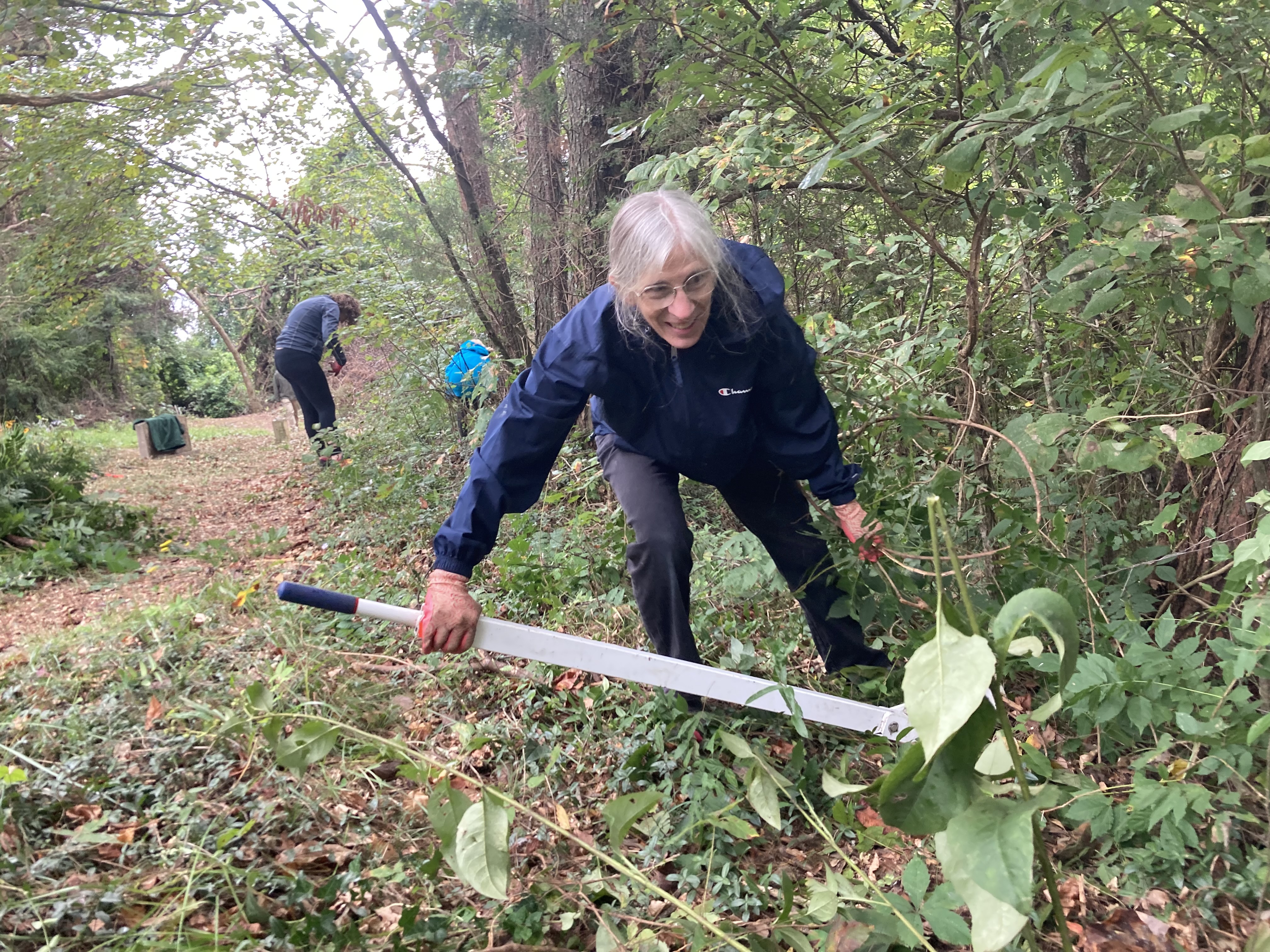
IMG 4106Anne Child removes invasive exotic plants during a recent Tennessee Citizens for Wilderness Planning event to mark National Public Lands Day at TVA’s Worthington Cemetery in Oak Ridge. Ben Pounds/Hellbender Press

Citizens pay it back on Public Lands Day in Oak Ridge, Smokies and beyond

OAK RIDGE — Rain drizzled as volunteers dug and clipped plants in woods around an old cemetery turned science lab.

It was a Public Lands Day event at Tennessee Valley Authority Worthington Cemetery Ecological Study area in Oak Ridge near Melton Hill Lake. Tennessee Citizens for Wilderness Planning, an environmental organization based in Oak Ridge, led the Sept. 24 work party in support of American public lands.

Other events were held throughout the country to mark the date (including Great Smoky Mountains National Park), which has proven itself to be the most productive day of the year for citizen sweat equity in public lands.

In Oak Ridge, the volunteers were decapitating wisteria vines, which alone could one day take over the cemetery. Volunteers also ripped out privet, autumn olive and other invasive plants nearby to give space for native plants to grow.

“When those exotic plants come here and they have no enemies, they will begin to take over all plants, and our native plants will be lost. We need our native plants because they have supported our ecosystem for millennia. And we need our ecosystem to stay alive so that we have pure water to drink and food to eat,” TCWP executive director Sandra Goss said.

“It’s always a pleasure,” to host such events, she said. “People care about our lands and keeping trails open and getting rid of exotic plants, and it’s wonderful how they help out and help our public lands,” she said.

James Groton, a TCWP board member, said wisteria was one of the worst such invasive and exotic plants.

“It climbs and then it also sends runners out,” he said. The cemetery is an important historical resource, especially given the connection to a nearby slice of “nice prairie,” a rare type of biome in East Tennessee.

Larry Pounds (the author’s father), another TCWP board member, said he didn’t know the origin of the exotic wisteria that grew near the cemetery.

“Native wisteria never gets as aggressive as this kind of stuff does,” he said.

“We’re not going to eliminate it obviously, but we can keep it from overwhelming the cemetery, having the vines grow over the top of the stones,” he said. He said the nearby prairie was an “ecological effort,” not just to remove exotics but to keep it open as prairie.

Groton, pulling up plants with an uprooter as he spoke, advised against planting what he called “aggressive” exotic plants like privet, mimosa, climbing bittersweet, bush honeysuckle and autumn olive, all of which were plants he’d seen that day.

Watching the event was Ann Worthington, whose family members are buried nearby. Her family left what is now Oak Ridge at the end of 1942. The federal government forced them and others to move to create a fenced-in city for the workers who enriched uranium for atomic bombs used on Japan at the end of WWII.

“It’s wonderful to be out here with so many volunteers who help maintain this cemetery and also keep the invasive plants pushed back and removed,” she said.  

She ponders the native plants that grew here when the Worthingtons arrived around 1795. 

To the east, in the Smokies, volunteers were rallied by Cherokee leaders and local and federal interior and public health officials, including National Park Service Director Chuck Sams.

“National Parks have long been recognized as spaces for people to develop life-long connections to healthy, outdoor activities,” Sams said in remarks provided by Smokies public information officials. “I am honored to be here on the ancestral lands of the Cherokee people, in Great Smoky Mountains National Park, to thank people for their stewardship and care for one of our amazing parks.” 

The connection between the health of our public lands and the health of the public has been recognized since 1918, when the director of the National Park Service and the U.S. Surgeon General signed an interagency agreement that created one of the oldest agreements between government agencies, according to the park service. Through this agreement, the agencies have been working together for more than 100 years to promote health and prevent disease by sharing public health expertise. 

“We know that physical activity has ‎many health benefits,“ said Rear Admiral Denise Hinton, U.S. Deputy Surgeon General. “Getting outdoors, connecting to nature and volunteering can help reduce stress and improve your emotional well-being and your physical health. I am proud to be here from the Office of the Surgeon General, in partnership with the National Park Service, to promote our parks as one of the greatest health resources available to our nation.”

Rate this item
(3 votes)

Related items

  • Celebrate the wild ties that bind Americans on Public Lands Day 2022 — Saturday, Sept. 24

    fontana

    GATLINBURG — The director of the National Park Service is expected in Great Smoky Mountains National Park on Saturday to celebrate National Public Lands Day.

    Director Chuck Sams plans to make some remarks in appreciation for the volunteers who help backstop national park maintenance costs before citizens fan out for various tasks across the park. Sams is the first Native American to head the park service, and he will be joined by Eastern Band of Cherokee Indians Chief Richard G. Sneed.

  • Citizen scientists are taking stock in Smokies, and the inventory keeps increasing
    in News

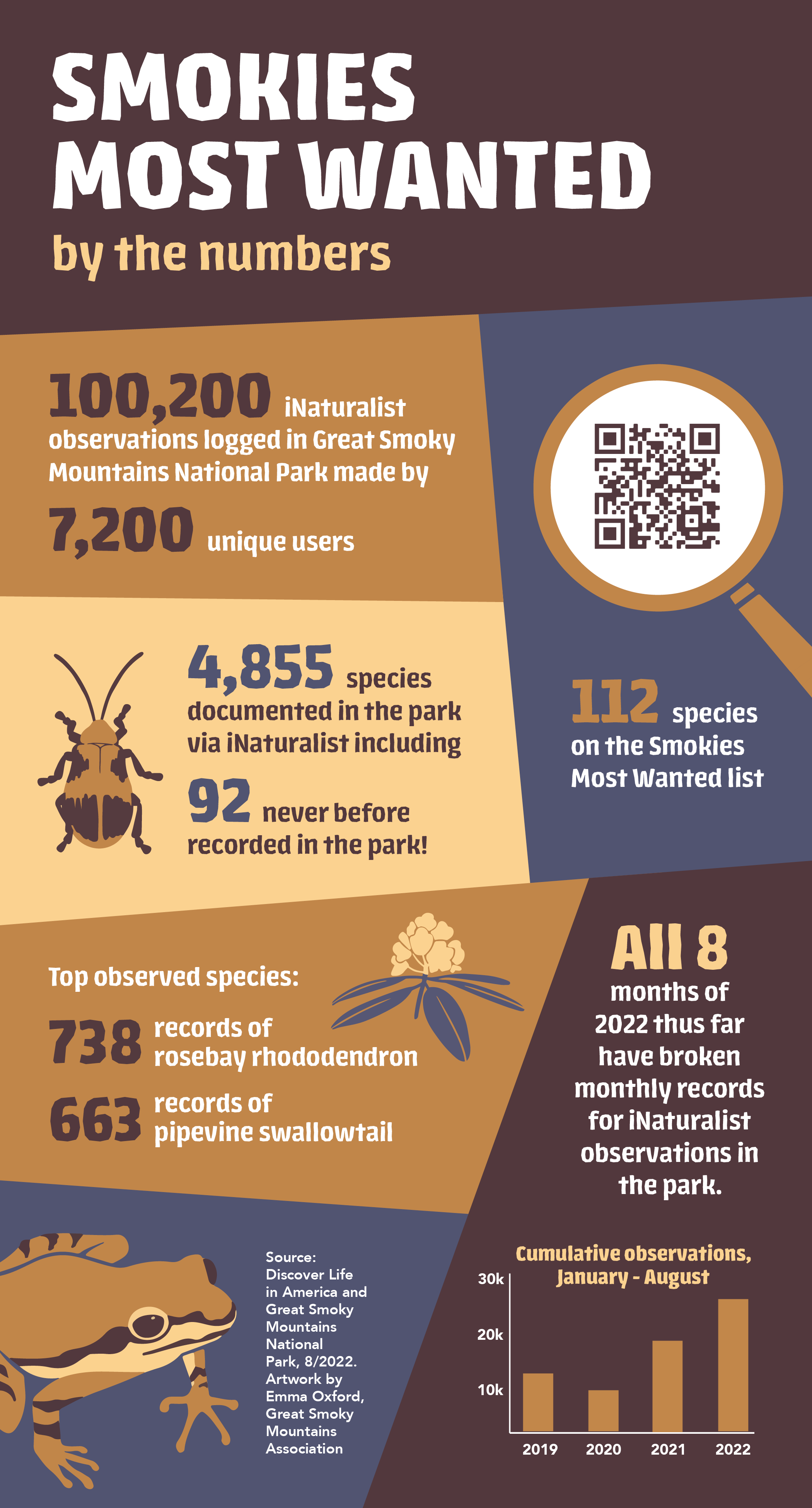
    1 smokies most wanted infographic credit Emma Oxford GSMA

    This story was provided by Great Smoky Mountains National Park.

    Next demonstration on Thursday, Oct. 20

    GATLINBURG — Great Smoky Mountains National Park is celebrating the success of a community science project led by nonprofit partner Discover Life in America (DLiA) called Smokies Most Wanted. The initiative encourages visitors to record life they find in the park through the iNaturalist nature app. DLiA and the park use these data points to map species range, track exotic species, and even discover new kinds of life in the park. 

    “iNaturalist usage in the Smokies has skyrocketed from just four users in 2011, to 3,800 in 2020, to now more than 7,100 users,” said Will Kuhn, DLIA’s director of science and research. 

    In August, the project reached a milestone, surpassing 100,000 records of insects, plants, fungi, and other Smokies life submitted through the app. Among them are 92 new species not previously seen in the park.

  • SACE released its annual utility decarbonization tracking report, and it’s not pretty
    in News

    methane leaksBloomberg reports that methane leaks from the natural gas sector may be far worse than estimated by the EPA. While replacing coal-fired power plants with natural gas ones reduces air pollution it may not help at all with climate change because methane is 30 times more effective as a greenhouse gas than CO2.  Image source: Kayrros SAS

    Report: Many utilities are not reducing carbon emissions despite public assurances to the contrary

    KNOXVILLE — Global greenhouse gas emissions must peak by 2025 and experience rapid and deep reductions to avoid a potentially catastrophic future, according to a new analysis by air-quality and climate advocates. Emissions must reach net zero by the early 2050s to limit warming to 1.5 degrees (C) in order to avoid the worst impacts of the climate crisis.

    Many utilities and municipalities have acknowledged this dynamic, but the Southern Alliance for Clean Energy s fourth annual “Tracking Decarbonization in the Southeast" report highlights that current utility resource plans are not in line with this overarching target. Obstacles to getting utilities on track that are discussed in our report include: increasing reliance on fossil gas, underutilizing energy efficiency, and placing limitations on popular technologies such as rooftop solar. There’s still a lot of work to do before any Southeast utility is on track to decarbonize.

  • In throwback to early naturalist techniques, Big Camera! helps us picture plants under the sun
    in News

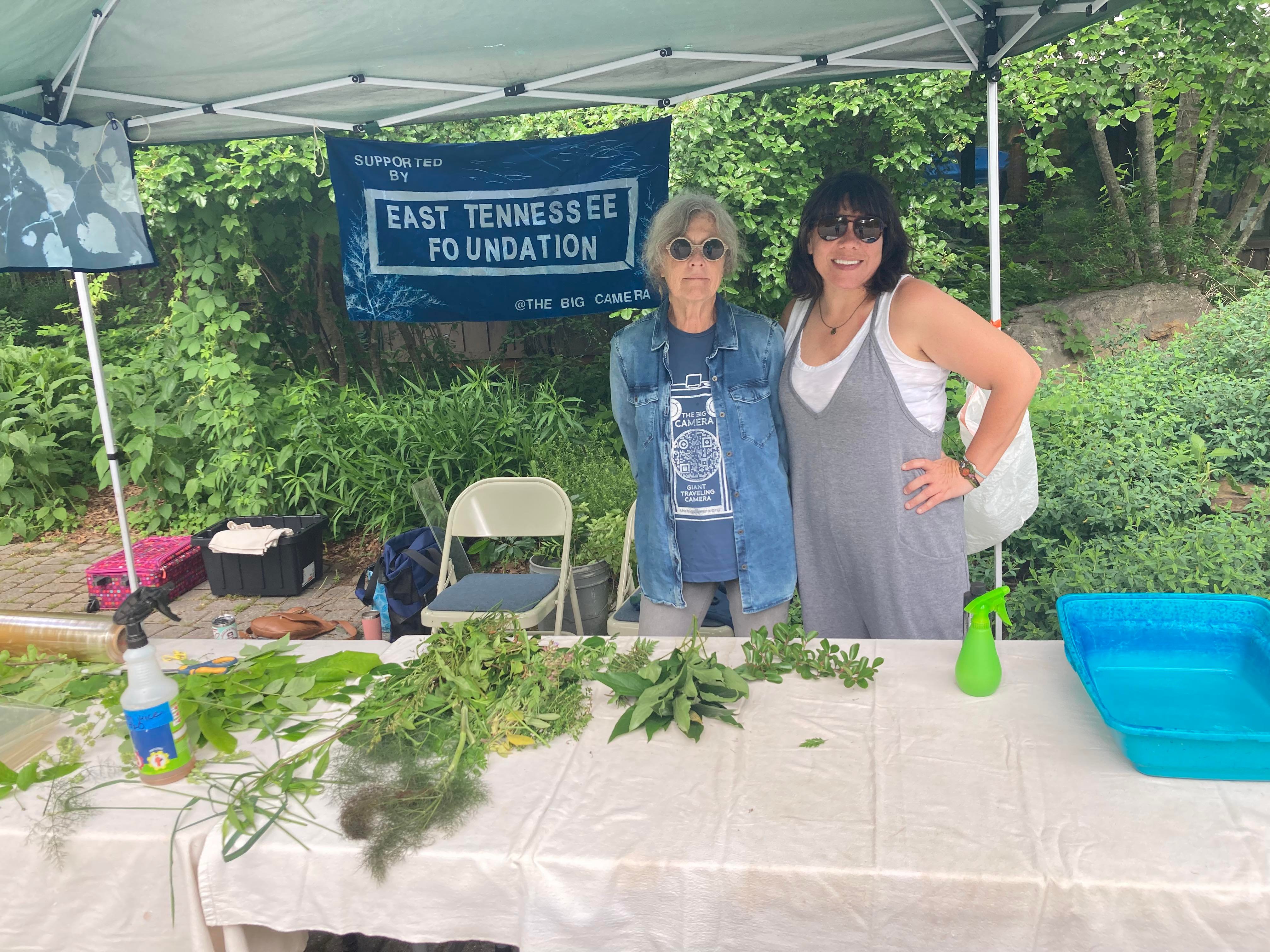
    big cameraDonna Moore and Anna Lawrence are pictured at a Big Camera! event in May at Ijams Nature Center in South Knoxville. Ben Pounds/Hellbender PressLessons in early and enduring photo techniques are an organic way to spread the arts and cultivate love of nature

    KNOXVILLE — Donna Moore and Anna Lawrence showed people how to take photos with the sun.

    The method, demonstrated this spring at Ijams Nature Center, involved putting one or more leaves on photo paper and spraying it with two sprays. One spray contained lemon and water. The other contained water with vinegar.

    Children then placed these leaves on wet photo paper in the sun. The sun’s light gives a permanent impression of the leaf on the paper.

  • Court finds TVA contractor potentially liable for Kingston coal-ash cleanup injuries and deaths

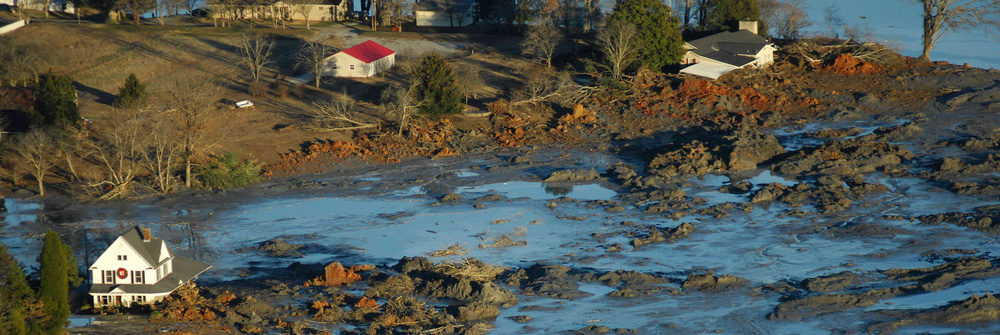
    coalash tvaspill dotgriffithOn Dec. 23, 2008, a massive dam at the Kingston coal-fired power plant in Harriman, Tenn., ruptured and spilled 1.1 billion gallons of coal ash into the Clinch and Emory rivers. Appalachian Voices teamed up with Southwings to take pictures from the air and launched two separate missions by water to test the river and fish for pollutants as a result of the spill.  Appalachian Voices

    Contractor that cleaned up infamous TVA ash spill not immune from responsibility for alleged unsafe worksite

    This story was originally published by Tennessee Lookout.

    CINCINNATI — A federal appellate court last week struck down a last-ditch appeal by a Tennessee Valley Authority contractor accused in the mass poisoning by radioactive coal ash waste of the utility’s Kingston disaster workforce.

    The 6th Circuit U.S. Court of Appeals ruled Jacobs Engineering Inc. cannot ride the coattails of TVA governmental immunity because TVA itself would not have been immune from liability had sickened workers chosen to sue the utility.

  • SACE works to keep us all warm this winter

    This is a submission from the Southern Alliance for Clean Energy.

    After public advocacy from Knoxville community members, the KUB board passed a resolution that will deliver $5 million for emergency bill assistance to benefit those most in need, and an additional $1 million for weatherization to improve the comfort of people’s homes while lowering their bills by increasing energy efficiency. These funds are part of a pandemic relief credit from TVA.

    KUB staff proposed a resolution in October that would have allocated $1.3 million of the total $7.3 million TVA pandemic recovery credit toward payment of debt owed by KUB customers, and the remaining $6 million would be distributed as a monthly bill credit for all residential and small business KUB customers. This would have resulted in an average savings of $17 over 12 months, or about $1.40 per month for all KUB customers, regardless of their level of need for pandemic relief. 

    Knoxville Water and Energy for All (KWEA), a coalition which SACE is a part of, circulated a petition asking that KUB instead forgive all debt owed by KUB customers, and then use the remaining funds to assist households who were struggling to pay their KUB bills. KWEA delivered nearly 200 petition signatures, and the KUB board asked that the resolution be amended. 

    As a result of our coalition’s advocacy, the KUB board allocated not only the originally proposed $1.3 million for debt relief, but also the remaining $6 million for customers in need. 

    While KUB did not pledge to forgive all debt, this is certainly a major win for the community.

    The KUB Board’s decision to reallocate funds demonstrates the power of our community speaking up to advocate for ourselves and our neighbors. 

  • Lunker sturgeon are out there again

    WBIR: Holston River sturgeon surging

    The population of lake sturgeon, a survivor since the Cretaceous Era that barely escaped the ravages of modern dams and reservoirs, is on the upswing in the Holston River and other branches and tributaries of the Tennessee River system. The last record of the fish in the valley before restoration efforts began is about 1960, according to WBIR.

    Significantly older fish were identified during a recent inventory of sturgeon, giving hope that some fish were closing in on reproductive maturity. The gradual recovery is largely the result of Tennessee Wildlife Resources Agency and Tennessee Valley Authority restoration efforts, WBIR reports.

    “It makes our valley richer; that fish is supposed to be here,” one researcher told WBIR about the significance of the so-far successful restoration of native sturgeon habitats.

  • Get involved: Protestors lock arms to demand TVA swear off fossil fuels for good
    in Air

    3D2A2F6C B919 4295 B244 36D48A4BF9BD 1 105 cProtestors chant and wave signs urging TVA to commit to a fossil fuel-free future during a protest in downtown Knoxville this summer. Courtesy Amy Rawe/Southern Alliance for Clean Energy

    Activists will demand TVA allow public comments during a protest planned for Wednesday morning outside TVA HQ in downtown Knoxville

    Knoxville clean-air activists plan another protest  Wednesday outside of Tennessee Valley Authority headquarters to demand a return to public-comment periods and a commitment the huge utility won’t rely on fossil-fuel energy sources in the future.

    “Public input is critical right now, while TVA is considering building new, large fossil gas power plants and pipelines, even though they would be contrary to our need to cut greenhouse gas emissions in half by 2030,” said protest organizer Brady Watson of Southern Alliance for Clean EnergyStatewide Organizing for Community Empowerment is also coordinating the protest.

  • TVA project manager pleads guilty to falsifying reports


    Hard Knox Wire: Failure to disclose financial conflicts could put TVA manager in prison

    A former senior project manager at the Tennessee Valley Authority could spend up to five years in federal prison after he admitted to falsifying financial disclosure reports over several years.

    TVA is the largest public electricity provider in the nation and is in the midst of a fraught effort to lessen its dependence on fossil fuels and reduce its carbon output.

    James Christopher “Chris” Jenkins, 60, of Chattanooga, entered a guilty plea on Friday to one count of making a false official statement, according to a spokesperson from the U.S. Attorney’s Office, Hard Knox Wire reported.

    He was accused of failing to disclose personal financial information during a conflict of interest probe, among other charges. 

     He faces a maximum prison sentence of five years plus up to three years of supervised release and $250,000 in fines when he’s sentenced in March by U.S. District Court Judge Travis R. McDonough. 

    FBI Special Agent in Charge Joe Carrico said the case was an example of the bureau’s commitment to fighting corruption. 

    “There is zero tolerance for those who exploit their official position for personal gain. It erodes public confidence and undermines the Rule of Law,” Carrico said. “We want the people we serve to know the FBI along with our law enforcement partners will hold those accountable who betray the public's trust.”

  • Clean-energy advocates take demands to base of TVA towers and power
    in Air

    IMG 4207Alex Pulsipher holds a sign demanding that TVA transition to 100 percent renewable energy at a rally Wednesday in Market Square in Knoxville. Courtesy Amy Rawe/Southern Alliance for Clean Energy

    Varied environmental groups offer unified plea for clean energy, coal ash management and accountability from TVA

    It was people power generating energy at Market Square in downtown Knoxville on Wednesday.

    A coalition of civic and environmental groups and their representatives met at the bottom of the two Tennessee Valley Authority towers urging the public utility to reopen meetings to public comment; swear off all fossil fuels by 2030; and carefully tend to the needs of those affected by coal ash and devise a plan to contain it for the safety of current and future generations.