The Environmental Journal of Southern Appalachia

KUB commits to solar power — and a controversial long-term relationship with TVA

Written by

solar on a hillsidea7ed9a9435304bf48f15e8223272129a 

Last year, Knoxville Utilities Board committed to supplying 20 percent of its electricity through solar generation by 2023, through Tennessee Valley Authority’s (TVA) Green Invest program. By 2023, KUB will provide 502 megawatts annually of new-to-the-grid solar power to its customers. This represents the equivalent of enough energy to power 83,000 homes. The $1.63 million cost will be paid by a credit provided by TVA as part of its 20-year partnership agreement with KUB.

The announcement was celebrated by solar energy advocates, including the Tennessee Solar Energy Industries Association, but some environmental watchdogs maintain there are issues with the contracts that local power companies had to enter into with TVA to participate in Green Invest.

For the past few years, TVA sought 20-year rolling contracts with local power companies. KUB’s previous contract with TVA was for five years. In August 2019, TVA presented the Knoxville Utilities Board with a 20-year contract that would provide a credit of 3.1 percent on wholesale base rates and flexibility to allow up to 5 percent of KUB power to come from local sources.

Stephen Smith, who holds a doctorate in veterinary medicine from the University of Tennessee, has served as the executive director of the Southern Alliance for Clean Energy (SACE) since 1993. Founded in 1985, SACE promotes responsible energy choices in the Southeast.

(Smith is on the board of directors of the Foundation for Global Sustainability. Hellbender Press is an independent project of FGS).

“Any time solar is being built, that’s a positive thing,” Smith said. But, he added, “It’s important to put it into context. What has [KUB] given up by entering into what we consider a Draconian contract?”

Smith addressed KUB’s board of commissioners at its October 2019 meeting, recommending KUB not approve the contract. He told the board it would give TVA no incentive to respond to KUB’s concerns and could limit the amount of locally owned and generated power.

He was also interested in seeing whether Memphis Light, Gas and Water would agree to a TVA long-term contract, which is under discussion there. A public advocacy group, $450M for Memphis, has cited several studies that show savings of $250 million to $450 million for Memphis energy consumers if MLGW switches from TVA-supplied power to other sources. A more conservative estimate, $122 million, comes from energy advisors at Siemens, the consulting firm selected by MLGW and the Memphis City Council to make recommendations.

Smith said the potential amount of energy from renewables for MLGW is “orders of magnitude over what they have with TVA.”

In March 2020, KUB president and CEO Gabriel Bolas recommended that KUB commissioners sign the long-term TVA contract. Bolas advised that the opportunity to be part of Green Invest was not available with a five-year contract. After the board’s approval of the contract, KUB directed TVA to use part of its partnership credit to immediately commit to 212 megawatts of solar power on the KUB grid.

Bolas stated that the agreement “provides ample opportunity for KUB to support efforts by the City and others to reduce emissions from power generation.”

Smith disagreed.  “We think it wasn’t properly vetted,” he said of the contract. “KUB has hitched their wagon to the future of TVA. I believe that decision will come back to haunt customers of KUB.”

At the time of the announcement, Smith tweeted, “A 20-year evergreen contract in this dynamic electric market is a fool’s errand.”

Last summer, Amanda Garcia, director of Southern Environmental Law Center’s Tennessee office, filed a lawsuit against TVA in federal court in Memphis on behalf of several environmental groups over what the organization calls the “never-ending contract.”

Solar futures

Bryan Jacob is solar program director for SACE and produces its “Solar in the Southeast” annual report. The report ranks solar usage among various Southeastern utilities on a watts per customer basis. Utilities doing a good job are recognized as “Sunrisers,” while those trailing behind are “Sunblockers.” For three years in a row, TVA has made the Sunblocker list. Jacob said that as he assembles data for the 2021 report, to be released in June, KUB “will be in the hunt for one of those prestigious Sunriser designations.”

What remains to be seen, Jacob said, is whether, after KUB reaches the 20 percent solar supply in 2023, that’s the maximum amount that TVA will allow KUB or whether it is a path to a bigger number.

He said that many of the utilities SACE tracks have transparent action plans, but TVA tends to be vaguer about quantifiable steps toward goals. For example, Florida Power & Light has an integrated resource plan (IRP) that lays out a clear path to produce more than 10,000 megawatts of solar by 2029, with benchmarks noted. In contrast, the IRP that TVA approved in 2019 outlines a 20-year plan for “up to” 14 GW of solar capacity but is vague on how it would get to that number.

Much of the increase in demand for solar has come from corporations that have their own sustainability goals and from consumers interested in renewable energy. But change should be utility-led, not corporate-led, Smith said. As the nation’s largest public utility, TVA “should be on the cutting-edge of renewables.”

A climate-committed city

One issue on which everyone agrees is that the city of Knoxville is committed to being a leader in the reduction of greenhouse gas emissions.

In 2019, under former Mayor Madeline Rogero, the city committed to a 50 percent reduction in greenhouse gases by 2030 for municipal operations and an 80 percent reduction in greenhouse gases by 2050 for the entire community (both relative to a 2005 baseline).

Current Mayor Indya Kincannon, who took over in January 2020, has assembled a Climate Council to help map the path to the 80 percent reduction. Smith is one of 12 council members, as is KUB president Bolas.

In a statement, Kincannon said KUB’s commitment to 20 percent solar is “a major step that advances the objectives of our Climate Council to reduce community greenhouse gas emissions. KUB is a leader in the valley for their sustainability efforts.”

Smith wishes that the solar energy that KUB is using would be created here. Instead, the energy will be produced at solar farms in Lowndes County, Mississippi, and Lake County, Tennessee. 

“We’re buying the bragging rights to say that some small portion of solar is on the grid,” Smith said. He noted that that’s not the same as having the jobs or economic development that would come with having a solar industry in and around east Tennessee. “We believe that TVA should be building future solar here.”

Corrected on 2/24/21: The sentence,
“Jacob said ... KUB ‘will be in the hunt for one of those prestigious Sunriser designations.’”
It mistakenly included the TVA abbreviation.

Rate this item
(1 Vote)
Published in Air

Related items

  • APIEL, the 13th Appalachian Public Interest and Environmental Law conference is set for Saturday, October 1
    in News

    ELOlogoELO is a student-run organization at the University of Tennessee College of Law. It is not directly affiliated with the University of Tennesse or any particular non-profit organization. It is dedicated to providing students and attorneys with learning opportunities and leadership experiences.

    Networking environmental leaders across Appalachia and the State of Tennessee

    Knoxville — APIEL is a relative newcomer to the small circle of inclusive U.S. public interest environmental law conferences. Because it is organized by law school student volunteers, APIEL is affordable to attend for students as well as citizens from all walks of life.

    APIEL is much loved and considered essential by regional nonprofit leaders and activists. It is also highly acclaimed by seasoned environmental lawyers. With just 12 conferences under its belt, APIEL has risen to rank among leading peer conferences with a much longer track record, such as the  Public Interest Environmental Law Conference (PIELC) at the University of Oregon School of Law (39 events), the Red Clay Conference at the University of Georgia School of Law (34) and the Public Interest Environmental Conference (PIEC) at the University of Florida’s Levin College of Law (28).

  • Enviros to TVA: Retire the fossil-fuel pacifier
    in News

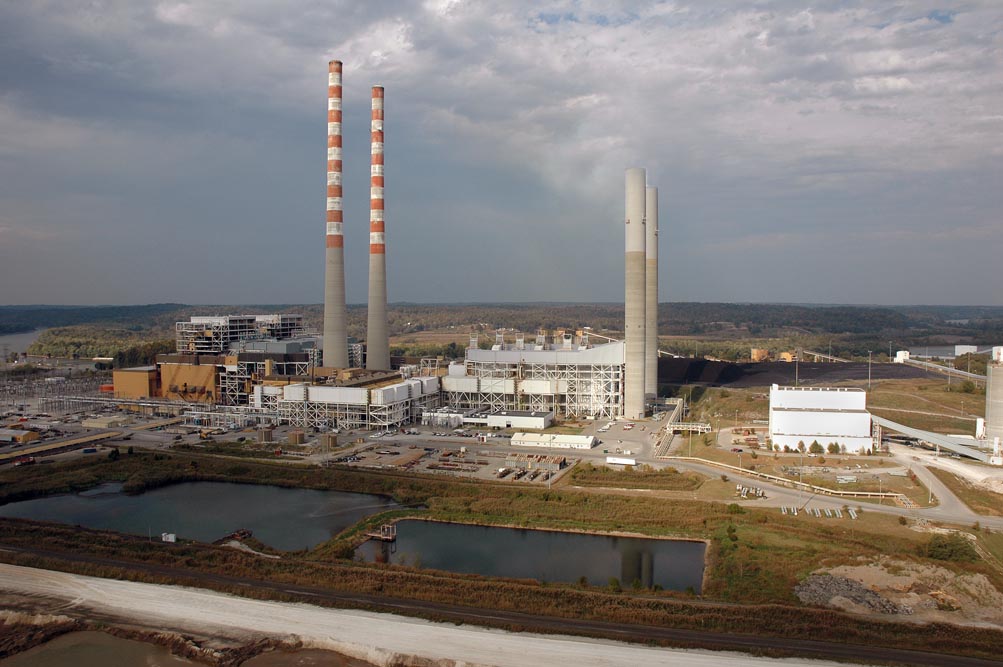
    Cumberland FPTVA’s Cumberland Fossil Plant near Clarksville is the subject of a suit filed by environmental groups, including Appalachian Voices and Southern Environmental Law Center.  Tennessee Valley Authority

    SELC, others file suit in hopes of dissuading TVA from future fossil options

    This story was originally published by Tennessee Lookout.

    CLARKSVILLE — On behalf of the Tennessee Chapter of the Sierra Club and Appalachian Voices, the Southern Environmental Law Center asked TVA to prepare a supplemental environmental statement to address concerns with TVA’s draft environmental impact statement, which details the agency’s plans to retire the Cumberland Fossil Plant.

    The Cumberland Fossil Plant, about 22 miles southwest of Clarksville, is TVA’s largest coal-fired power station and was built between 1968 and 1973. TVA plans to retire each unit of the two-unit, coal-fired steam-generation plant separately: one unit no later than 2030, and the second unit no later than 2033. But the plant will need to be replaced, and TVA is currently considering three alternatives to fossil fuel, including natural gas and solar energy, according to its draft EIS.

    (Tennessee Valley Authority already plans to close down the Knoxville-area Bull Run fossil plant in Claxton next year).

  • SACE belays solar power on Global Climbing Day
    in Air

    MEMPHIS Area residents were invited to a film screening of “Keep the Lights On” and a panel discussion at the Memphis Rox climbing gym with community members, local advocates and policy experts. The event, which ran from 10 a.m. to 4 p.m. Saturday, Aug. 20, coincided with Global Climbing Day, and professional rock climbers Nina Williams, Manoah Ainuu (who recently summited Everest), Olympic Silver Medalist Nathaniel Coleman, and Fred Campbell hosted and participated in community and climbing-oriented events prior to the film screening and conversation. 

    The film follows Memphis Rox staff member and leader Jarmond Johnson, recounting his experiences with intermittent energy access growing up in South Memphis, his growth into a gang activist and mentorship role at Rox, and, ultimately, working with professional rock climber and environmental activist Alex Honnold (best known for the academy award-winning film, Free Solo) to bring solar energy to the gym. Following the screening, Jarmond and a panel of experts discussed takeaways from the film, and how equitable access to solar energy could help all Memphians keep their lights on. 

    — Southern Alliance for Clean Energy

  • Activists urge TVA to take advantage of historic US climate bill for energy-efficiency improvements
    in News

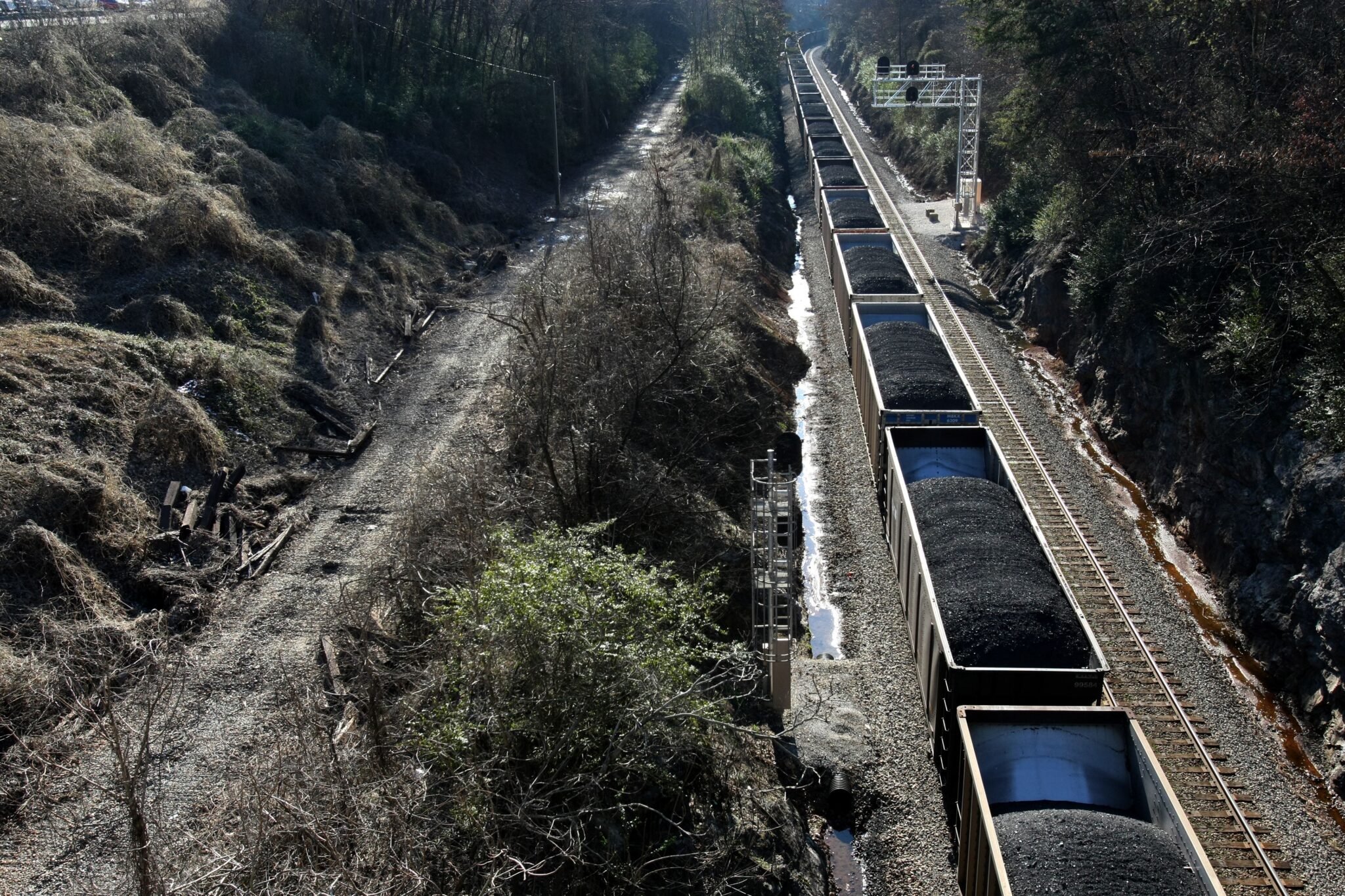
    TVA 1 2048x1365A hopper car on a train filled with coal to be delivered to a TVA coal-fired plant. John Partipilo/Tennessee Lookout

    Climate bill designates TVA as a potential recipient of clean energy investments and loans

    This story was originally published by Tennessee Lookout.

    KNOXVILLE  Clean-energy advocates are urging the Tennessee Valley Authority to use funds provided through the Inflation Reduction Act to deliver environmentally friendly energy to Tennessee customers. 

    The massive bill Congress passed Friday includes $370 billion for clean energy investments and listed TVA as an entity that is eligible to take advantage of clean energy credits and loans to significantly reduce the cost of energy-efficient infrastructure. 

    On Aug. 12, the Clean Up TVA Coalition, including the Sierra Club, the Southern Alliance for Clean Energy and Appalachian Voices, urged TVA to take advantage of the legislation and make funds available to its affiliated local power companies, which can then offer energy-efficient options for customers.

  • SACE sees many silver linings in Senate climate bill; House passage expected
    in News

    UN Climate ChangeA rainbow pierces gray skies during the 2021 United Nations Climate Change Conference in Glasgow. United Nations

    Climate activists stress positives of Senate climate bill despite its shortcomings 

    Amy Rawe is communications director for Knoxville-based Southern Alliance for Clean Energy.

    KNOXVILLE — The U.S. Senate passed the Inflation Reduction Act (IRA), an estimated $430 billion bill, of which approximately $370 billion will be allocated to investments in clean energy and to address climate change.

    It’s the single largest climate investment in U.S. history, and if it passes the House, will put the country on a path to be able to achieve roughly 40 percent emissions reduction from 2005 levels by 2030, reestablishing our influence in meeting the Paris Agreement goal of limiting global warming to 1.5 degrees Celsius. 

  • U.S. Supreme Court’s recent clean-air ruling renews spotlight on fossil-energy producers like TVA
    in News

    TVA 4 Cumberland FP

    Supreme Court air-pollution ruling calls into stark context all that must be done

    This story was originally published by Tennessee Lookout.

    KNOXVILLE — The U.S. Supreme Court’s ruling limiting the power of the Environmental Protection Agency to regulate carbon emissions that cause climate change has renewed the spotlight on the Tennessee Valley Authority, the nation’s largest public utility and Tennessee’s primary source of electricity.

    The case involved EPA efforts to implement a key provision of the Clean Air Act in a challenge brought by 15 Republican-led states. That provision, which never went into effect, would have required existing power plants to shift from dirty sources of energy — such as coal — to cleaner sources, including solar and wind, as part of an urgent effort to reduce global warming.

  • SACE released its annual utility decarbonization tracking report, and it’s not pretty
    in News

    methane leaksBloomberg reports that methane leaks from the natural gas sector may be far worse than estimated by the EPA. While replacing coal-fired power plants with natural gas ones reduces air pollution it may not help at all with climate change because methane is 30 times more effective as a greenhouse gas than CO2.  Image source: Kayrros SAS

    Report: Many utilities are not reducing carbon emissions despite public assurances to the contrary

    KNOXVILLE — Global greenhouse gas emissions must peak by 2025 and experience rapid and deep reductions to avoid a potentially catastrophic future, according to a new analysis by air-quality and climate advocates. Emissions must reach net zero by the early 2050s to limit warming to 1.5 degrees (C) in order to avoid the worst impacts of the climate crisis.

    Many utilities and municipalities have acknowledged this dynamic, but the Southern Alliance for Clean Energy s fourth annual “Tracking Decarbonization in the Southeast" report highlights that current utility resource plans are not in line with this overarching target. Obstacles to getting utilities on track that are discussed in our report include: increasing reliance on fossil gas, underutilizing energy efficiency, and placing limitations on popular technologies such as rooftop solar. There’s still a lot of work to do before any Southeast utility is on track to decarbonize.

  • New SACE report documents shortfalls and headwinds against utility decarbonization
    in Air

    Southern Alliance for Clean Energy's fourth annual “Tracking Decarbonization in the Southeast: Generation and Carbon Emissions” report will be released Wednesday, June 22

    Amy Rawe is communications director for Knoxville-based Southern Alliance for Clean Energy.

    KNOXVILLE — The report examines power-sector generation and emissions throughout the Southeast, which is home to some of the biggest utility systems in the nation, including Duke Energy, Southern Company, NextEra Energy, and the Tennessee Valley Authority.

    Many of these Southeastern utilities have been in the national spotlight for their professed commitment to decarbonization, but there are often inconsistencies between stated goals and resource plans.

  • Hot weather doesn’t always equal evidence of climate change, but the puzzle is almost complete
    in News

    heat photoThomas Fraser/Hellbender Press

    TVA sets record power day for June as region swelters and common sense degrades

    This story was originally published by Hard Knox Wire.

    KNOXVILLE — City residents this week joined scores of others around the world — from the Southwest United States to the Indian subcontinent — sweltering through late spring with eyes toward a summer that portends to be very hot.

    Whether directly attributed to climate change or not, the heat waves are causing untold misery in locations across the Northern Hemisphere, straining power grids to the brink and causing a sharp rise in heat-related illnesses. 

    Knoxville Utilities Board asked this week that consumers curtail their electricity use by setting their thermostats a little higher and holding off until night on energy-sucking tasks like doing laundry or running the dishwasher. That request was met in many cases with derision and unsubstantiated claims that charging electric vehicles had overburdened energy infrastructure.

    So exactly how hot is it in East Tennessee and how bad is it going to get?

  • Seal it up: Inefficiency increases energy costs across the board

    Editors note: SACE executive director Stephen Smith is on the board of Foundation for Global Sustainability. Hellbender Press operates under the FGS nonprofit umbrella.

    The Southern Alliance for Clean Energy (SACE) released its fourth annual “Energy Efficiency in the Southeast” report, which tracks recent policy developments and performance trends in electric utility efficiency from 2020.

    It continues to highlight that despite being a proven low-cost clean energy resource with enormous potential to reduce carbon emissions and customers’ energy burden, Southeastern utilities continue to underinvest in energy efficiency.

    As a result, households in many Southeastern states have some of the highest electricity usage and monthly energy bills in the nation. Some states and utilities are making progress, and it’s not too late for local policymakers to take advantage of untapped efficiency savings to help reach crucial decarbonization goals.