The Environmental Journal of Southern Appalachia

Dems pass huge climate bill assailed by some as another fossil energy sop

Written by Airiana Figueroa and Jacob Fischler

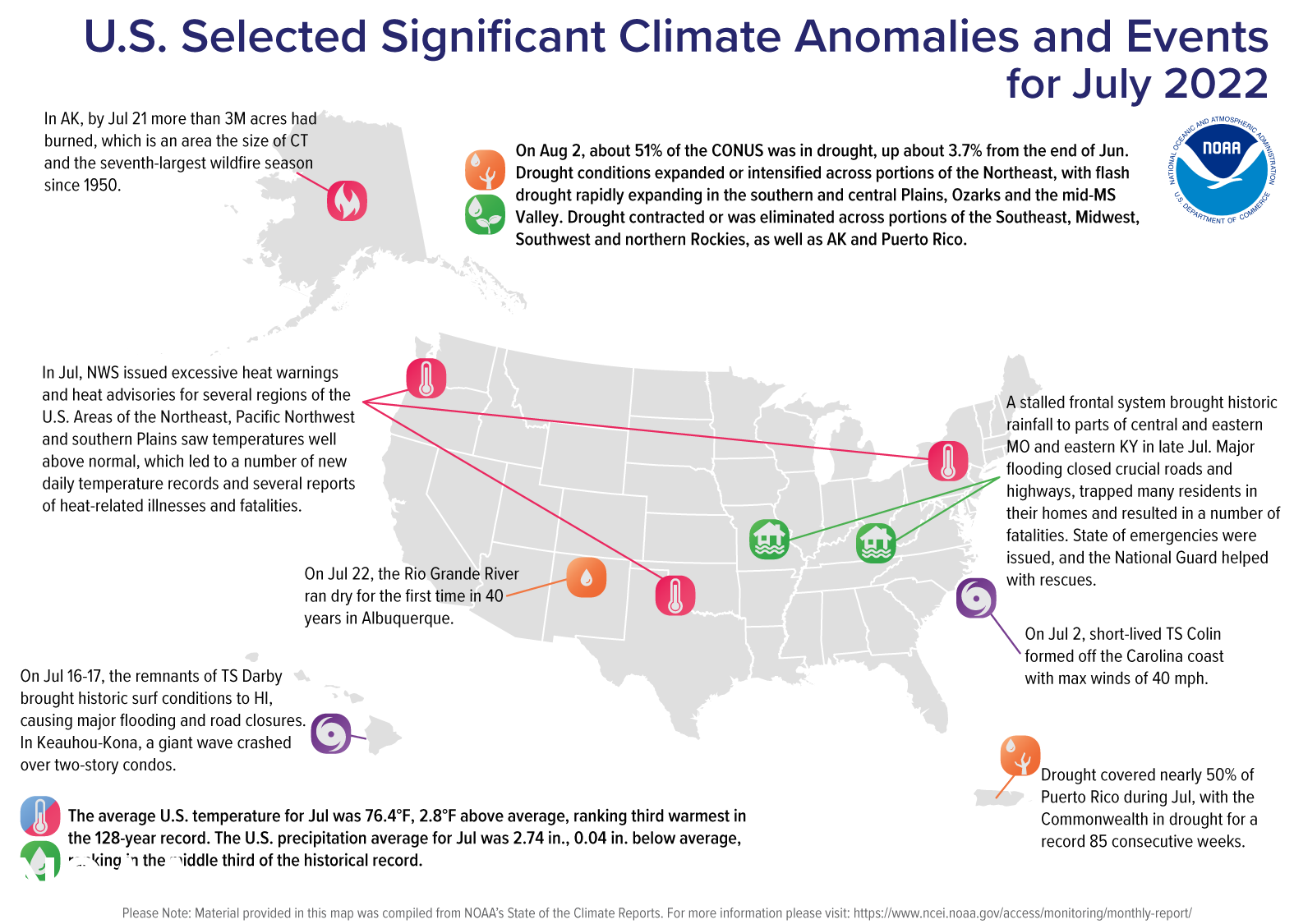
5 July 2022 US Significant Climate Events Map

Record-setting bill will fund extensive efforts to address climate change, but the sausage-making deal is decried by some as a ‘suicide pact’

This story was originally published by Tennessee Lookout.

WASHINGTON — The U.S. Senate, along party lines, passed a sweeping energy, health care, climate and tax package Sunday afternoon, following an overnight marathon of votes that resulted in just a handful of notable changes to the legislation.

The 755-page bill was passed after Vice President Kamala Harris broke a 50-50 tie in the evenly divided Senate. It now heads to the House, where Democratic leaders have announced they will take it up on Friday.

At last, we have arrived,” Senate Majority Leader Chuck Schumer said.  Democratic senators broke out into applause as Harris announced passage of the bill, expected to total more than $700 billion.

Schumer, a New York Democrat, said he dedicated the measure to young Americans who have pushed and protested for the Senate to take action on climate change. 

“This bill will kick-start the era of affordable clean energy in America,” Schumer said. “It’s a game changer.”

Senate passage marks a major recovery for President Joe Biden’s domestic agenda, after a larger package the White House largely wrote and pushed for the better part of a year could not win the support of centrist Democratic Sens. Joe Manchin III of West Virginia and Kyrsten Sinema of Arizona, dimming the prospects of enacting health and tax policy changes and major climate spending.

“Today, Senate Democrats sided with American families over special interests, voting to lower the cost of prescription drugs, health insurance, and everyday energy costs and reduce the deficit, while making the wealthiest corporations finally pay their fair share,” Biden said in a statement.

“This bill also makes the largest investment ever in combating the existential crisis of climate change.” 

He also urged the House to pass the bill and send it to his desk to sign into law. 

The bill would spend nearly $370 billion on clean energy programs, allow the Medicare health insurance program to negotiate some drug prices beginning in 2026, impose stiffer corporate taxes and bolster Internal Revenue Service enforcement to bring in more than $400 billion in new revenue over 10 years.

Independent Sen. Bernie Sanders of Vermont pushed an expansion of the child tax care credit and other progressive changes to the legislation, but was defeated repeatedly as Democratic leaders argued the bill needed to remain intact in order to secure those two votes from Manchin and Sinema. 

Sanders also inveighed against the bill’s provisions to expand oil and gas development, despite its billions for cleaner energy sources like wind and solar that Schumer called “the boldest climate package in U.S. history.” 

“The bad news is this bill, as currently written, includes a huge giveaway to the fossil fuel industry,” Sanders said on the Senate floor.

He proposed an amendment that he said would lift the sections of the bill related to oil and gas leasing, but it failed 1-99.

Sanders’ criticisms of the bill’s climate sections echoed those of the most aggressive environmental advocacy groups, who see the deal between Manchin and Schumer as not strong enough.

The Manchin-Schumer agreement, which formed the basis of the budget package, would require the Interior Department to make 2 million acres of federal land and 60 million acres of federal waters available for oil and gas leasing for the next decade as a condition of leasing other federal lands and waters for solar or wind development. 

It’s a move that Brett Hartl, the government affairs director at the Center for Biological Diversity, called “a climate suicide pact.”

Legal and policy debates about furthering oil and gas development in the midst of global climate change have raged since Biden took office and partially stymied an ambitious agenda that began with Biden promising to ban new oil and gas leases on federal lands and waters.

A Louisiana federal judge in a June 2021 decision reversed Biden’s January 2021 executive order to pause new oil and lease sales, saying federal law required periodic sales.

But in January 2022, a federal judge blocked drilling in 80 million acres of waters in the Gulf of Mexico, ruling the Biden administration did not take into consideration the effect that the warming greenhouse gas emissions from the lease would have on the planet.

Rate this item
(2 votes)
Published in News, 13 Climate Action

Related items

  • 5 big threats to the world’s rivers
    in News

    fresh water Conservation FisheriesA biologist with Conservation Fisheries surveys a stretch of Little River near Walland, Tennessee to determine fish viability and identify rare species for transplantation. Thomas Fraser/Hellbender Press

    Human activities have imperiled our waterways — along with a third of freshwater fish and other aquatic species

    This story was originally published by The Revelator.

    If we needed more motivation to save our ailing rivers, it could come with the findings of a recent study that determined the biodiversity crisis is most acute in freshwater ecosystems, which thread the Southern landscape like crucial veins and arteries.

    Rivers, lakes and inland wetlands cover 1 percent of the Earth but provide homes for 10 percent of all its species, including one-third of all vertebrates. And many of those species are imperiled — some 27 percent of the nearly 30,000 freshwater species so far assessed by the IUCN Red List. This includes nearly one-third of all freshwater fish.

    How did things get so bad? For some species it’s a single action — like building a dam. But for most, it’s a confluence of factors — an accumulation of harm — that builds for years or decades.

  • Austria to sue the European Union if it labels nuclear and gas power plants as “green infrastructure”

    VIENNA — Leonore Gewessler, Austria’s energy and climate minister announced that she would take the case to the European Court of Justice if the union’s executive proceeds with plans to include nuclear and natural gas in the EU taxonomy of sustainable finance.

    About gas, Gewessler said that it releases unconscionable amounts of greenhouse gases. “Just because something is less bad than coal doesn’t make it good or sustainable.”

    Regarding nuclear energy she said it has unpredictably high risks, referring to Chernobyl and Fukushima. She also mentioned as great concerns, the safe disposal of spent nuclear fuel and lack of a global solution for its final storage.

    Since the COP26 climate summit in Glasgow, Austria is aligned with Germany, Luxembourg, Denmark and Portugal in opposing further investments in nuclear power.

    However, France, Finland and ten other EU countries have been pushing for nuclear expansion. They still claim it is a low-carbon technology and trust that the radioactive waste problem can be solved.

    Luxemburg, Germany and Spain stated they will join Austria before the court, if necessary. Svenja Schulze, Gewesser’s German counterpart said of nuclear power, “it is too risky, it is too slow, it is too expensive!"

  • Brutal Hurricane Ian was just one of budding global weather emergencies at the time
    in News

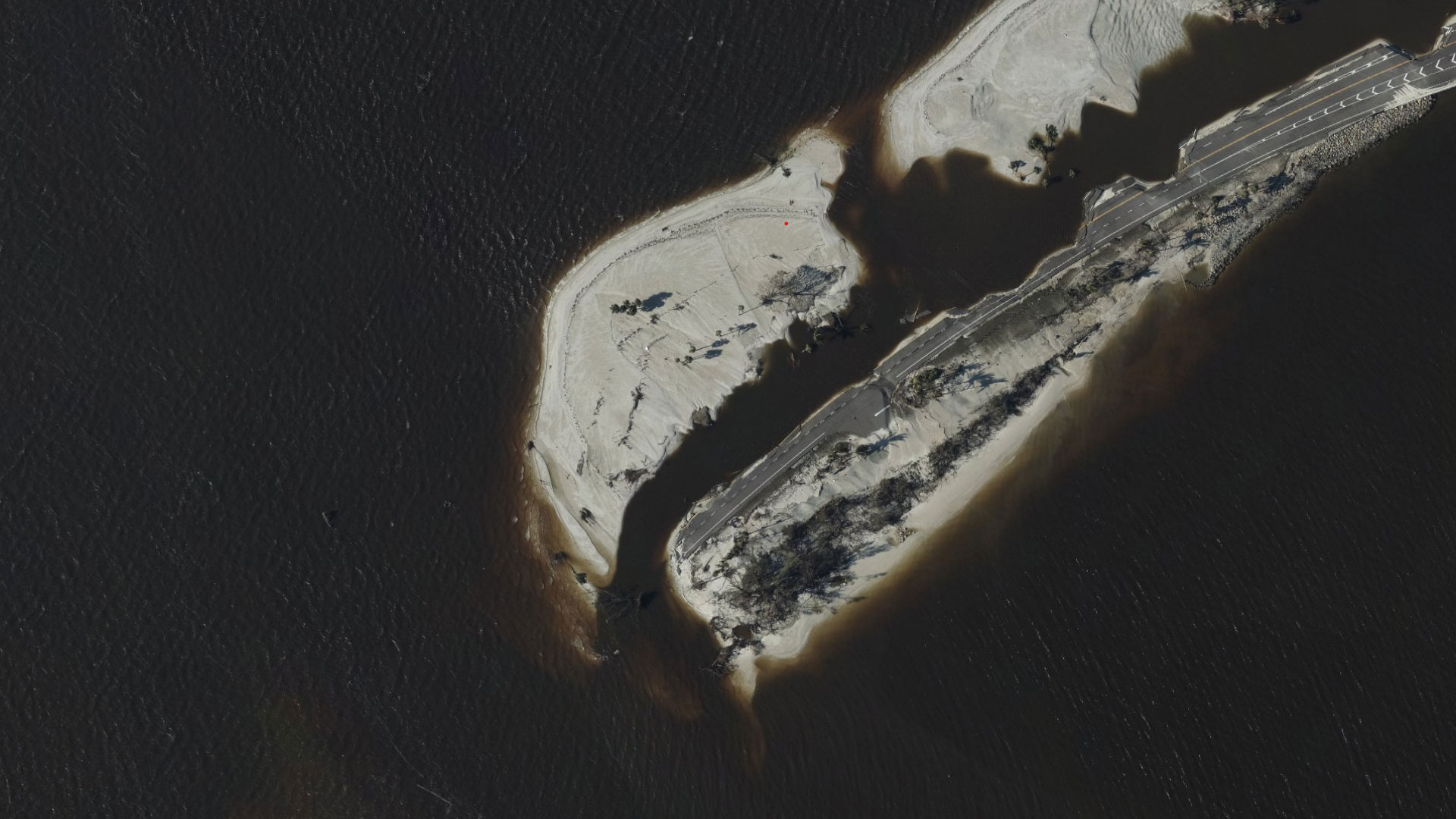
    overflight storm ianCatastrophic damage to the Sanibel Island Causeway is shown in this NOAA overflight after Hurricane Ian absolutely demolished most of Fort Myers Beach, Florida.

    Evidence mounts that climate change is creating monster storms as death toll climbs in Ian’s wake

    This story was originally published by The Conversation.

    FORT MYERS BEACH — When Hurricane Ian hit Florida and killed at least 100 people, it was one of the United States’s most powerful hurricanes on record, and it followed a two-week string of massive, devastating storms around the world.

    A few days earlier in the Philippines, Typhoon Noru gave new meaning to rapid intensification when it blew up from a tropical storm with 50 mph winds to a Category 5 monster with 155 mph winds the next day. Hurricane Fiona flooded Puerto Rico, then became Canada’s most intense storm on record. Typhoon Merbok gained strength over a warm Pacific Ocean and tore up over 1,000 miles of the Alaska coast.

  • APIEL, the 13th Appalachian Public Interest and Environmental Law conference is set for Saturday, October 1
    in News

    ELOlogoELO is a student-run organization at the University of Tennessee College of Law. It is not directly affiliated with the University of Tennesse or any particular non-profit organization. It is dedicated to providing students and attorneys with learning opportunities and leadership experiences.

    Networking environmental leaders across Appalachia and the State of Tennessee

    Knoxville — APIEL is a relative newcomer to the small circle of inclusive U.S. public interest environmental law conferences. Because it is organized by law school student volunteers, APIEL is affordable to attend for students as well as citizens from all walks of life.

    APIEL is much loved and considered essential by regional nonprofit leaders and activists. It is also highly acclaimed by seasoned environmental lawyers. With just 12 conferences under its belt, APIEL has risen to rank among leading peer conferences with a much longer track record, such as the  Public Interest Environmental Law Conference (PIELC) at the University of Oregon School of Law (39 events), the Red Clay Conference at the University of Georgia School of Law (34) and the Public Interest Environmental Conference (PIEC) at the University of Florida’s Levin College of Law (28).

  • Enviros to TVA: Retire the fossil-fuel pacifier
    in News

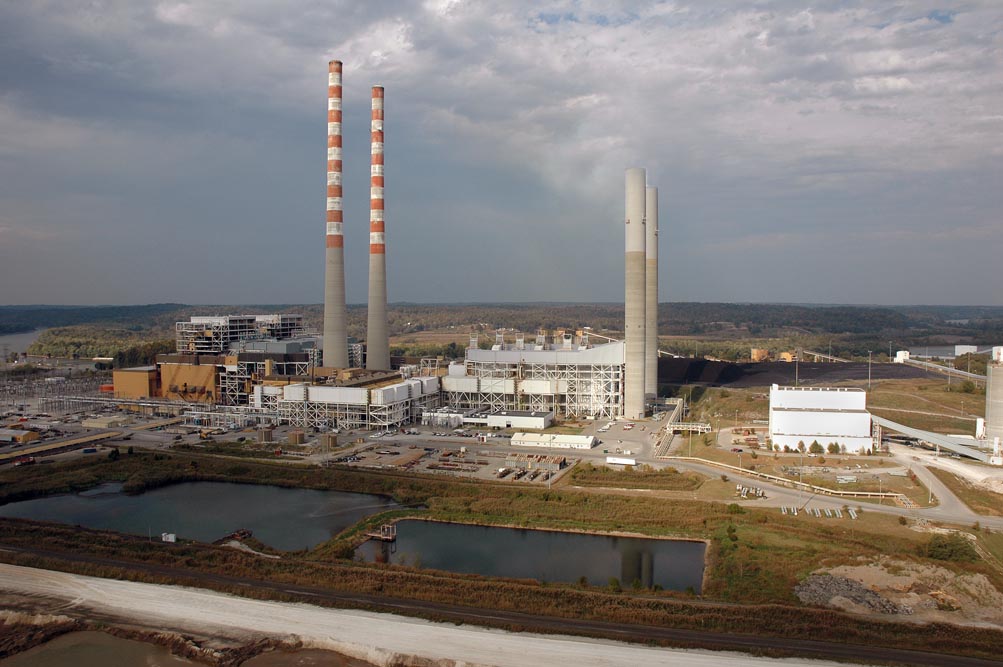
    Cumberland FPTVA’s Cumberland Fossil Plant near Clarksville is the subject of a suit filed by environmental groups, including Appalachian Voices and Southern Environmental Law Center.  Tennessee Valley Authority

    SELC, others file suit in hopes of dissuading TVA from future fossil options

    This story was originally published by Tennessee Lookout.

    CLARKSVILLE — On behalf of the Tennessee Chapter of the Sierra Club and Appalachian Voices, the Southern Environmental Law Center asked TVA to prepare a supplemental environmental statement to address concerns with TVA’s draft environmental impact statement, which details the agency’s plans to retire the Cumberland Fossil Plant.

    The Cumberland Fossil Plant, about 22 miles southwest of Clarksville, is TVA’s largest coal-fired power station and was built between 1968 and 1973. TVA plans to retire each unit of the two-unit, coal-fired steam-generation plant separately: one unit no later than 2030, and the second unit no later than 2033. But the plant will need to be replaced, and TVA is currently considering three alternatives to fossil fuel, including natural gas and solar energy, according to its draft EIS.

    (Tennessee Valley Authority already plans to close down the Knoxville-area Bull Run fossil plant in Claxton next year).

  • Public comment: Environmental group leaders say TVA makes input difficult
    in News

    Handout from TVA Listening Session Aug. 30 2022Scott Banbury with the Tennessee Chapter of the Sierra Club said a handout provided at TVA’s Aug. 30 listening session stated recordings of the meeting were not allowed; a TVA spokesperson said recordings are, in fact, allowed. Flyer provided by Scott Banbury

    Is TVA trying to gag its critics?

    This story was originally published by Tennessee Lookout.

    KNOXVILLE — While the Tennessee Valley Authority, a utility company that provides power to millions in Tennessee and other states, allows for public input into decisions, the process isn’t simple or transparent, say some regular attendees.

    Take, for instance, a recent public listening session: representatives of the Tennessee Chapter of the Sierra Club say they were told they could not record the session despite a spokesman for TVA saying the opposite.

    According to TVA spokesperson Scott Brooks, attendees are always allowed to record public meetings, provided they don’t cause a disturbance, but minutes before the session, members of the Tennessee chapter of the Sierra Club were prohibited from doing so.

  • There’s a whole world in the dirt beneath your feet
    in News
    Dust bowl soilThe Dust Bowl of the 1930s resulted in the displacement of tons of soil in the midst of a drought similar to the one that grips the Southwest today. Library of Congress
     

    Dirt is far from just dirt. It’s a foundation for life.

    This story was originally published by The Revelator.

    Look down. You may not see the soil beneath your feet as teeming with life, but it is.

    Better scientific tools are helping us understand that dirt isn’t just dirt. Life in the soil includes microbes like bacteria and fungi; invertebrates such as earthworms and nematodes; plant roots; and even mammals like gophers and badgers who spend part of their time below ground.

    It’s commonly said that a quarter of all the planet’s biodiversity lives in the soil, but that’s likely a vast understatement. Many species that reside there, particularly microorganisms such as viruses, bacteria, fungi and protists, aren’t yet known to science.

  • Activists urge TVA to take advantage of historic US climate bill for energy-efficiency improvements
    in News

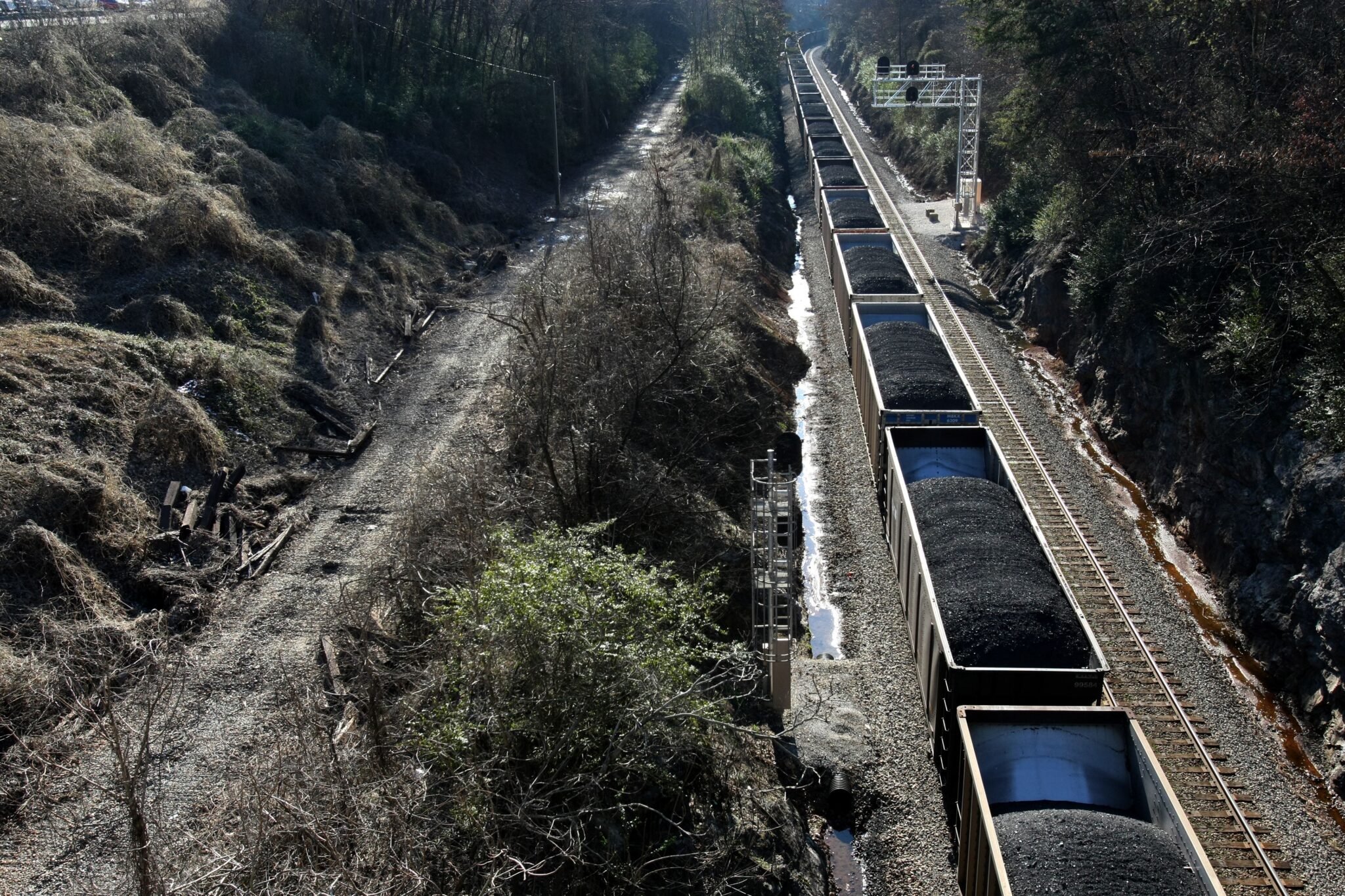
    TVA 1 2048x1365A hopper car on a train filled with coal to be delivered to a TVA coal-fired plant. John Partipilo/Tennessee Lookout

    Climate bill designates TVA as a potential recipient of clean energy investments and loans

    This story was originally published by Tennessee Lookout.

    KNOXVILLE  Clean-energy advocates are urging the Tennessee Valley Authority to use funds provided through the Inflation Reduction Act to deliver environmentally friendly energy to Tennessee customers. 

    The massive bill Congress passed Friday includes $370 billion for clean energy investments and listed TVA as an entity that is eligible to take advantage of clean energy credits and loans to significantly reduce the cost of energy-efficient infrastructure. 

    On Aug. 12, the Clean Up TVA Coalition, including the Sierra Club, the Southern Alliance for Clean Energy and Appalachian Voices, urged TVA to take advantage of the legislation and make funds available to its affiliated local power companies, which can then offer energy-efficient options for customers.

  • Monarch butterflies, an ephemeral but regular glimpse of beauty, are fluttering toward extinction
    in News

     Bales Monarch on coneflowerA monarch butterfly, recently declared endangered despite decades of conservation, is seen atop a coneflower. Stephen Lyn Bales

    Dramatic monarch declines mean the bell tolls for we

    KNOXVILLE — Monarch butterflies are ephemeral by nature. The orange and black dalliances that flitter through our lives, our yards, and our countryside like motes of dust are here one minute and gone the next. We pause for a few seconds to watch the “flutter-bys” and then move on.

    For about all of the Lepidopteran family, where they come from, where they go, their raison d'être, we don’t ask. They are winged wisps that pass through our busy lives. But that is not true with this orange and black butterfly, named to honor King William III of England, the Prince of Orange. But two people did ask.

    Norah and Fred Urquhart lived in Southern Canada and in the late 1930s they noticed that the monarch butterflies seemed to all be fluttering south this time of the year. Could they possibly be migrating and if so, where did they go? The notion that a butterfly might migrate south for the winter seemed hard to fathom. Yes, broad-winged hawks migrate. But a flimsy butterfly?

  • SACE sees many silver linings in Senate climate bill; House passage expected
    in News

    UN Climate ChangeA rainbow pierces gray skies during the 2021 United Nations Climate Change Conference in Glasgow. United Nations

    Climate activists stress positives of Senate climate bill despite its shortcomings 

    Amy Rawe is communications director for Knoxville-based Southern Alliance for Clean Energy.

    KNOXVILLE — The U.S. Senate passed the Inflation Reduction Act (IRA), an estimated $430 billion bill, of which approximately $370 billion will be allocated to investments in clean energy and to address climate change.

    It’s the single largest climate investment in U.S. history, and if it passes the House, will put the country on a path to be able to achieve roughly 40 percent emissions reduction from 2005 levels by 2030, reestablishing our influence in meeting the Paris Agreement goal of limiting global warming to 1.5 degrees Celsius.