
Displaying items by tag: stephen lyn bales
Monarch butterflies, an ephemeral but regular glimpse of beauty, are fluttering toward extinction
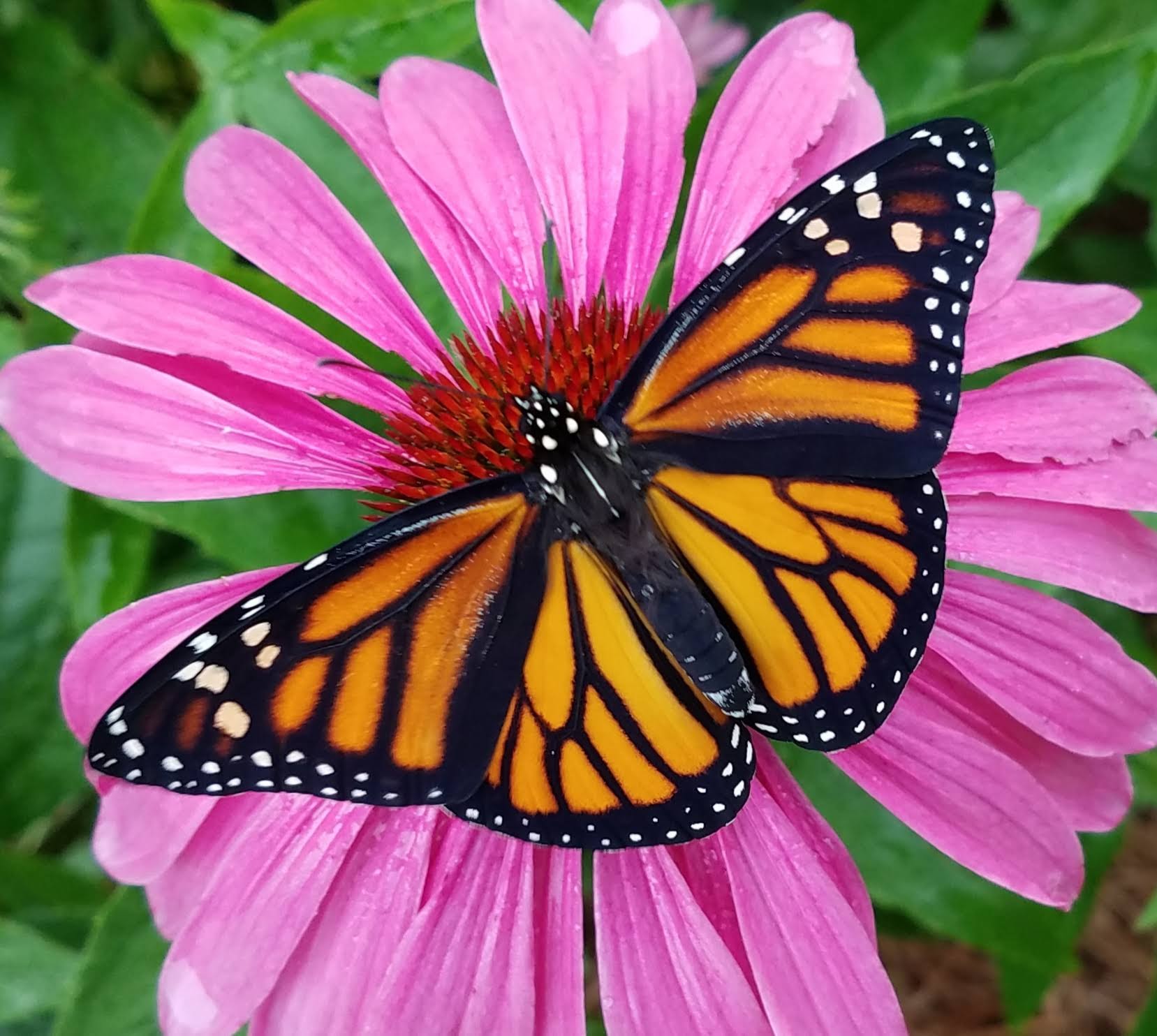 A monarch butterfly, recently declared endangered despite decades of conservation, is seen atop a coneflower. Stephen Lyn Bales
Dramatic monarch declines mean the bell tolls for we
KNOXVILLE — Monarch butterflies are ephemeral by nature. The orange and black dalliances that flitter through our lives, our yards, and our countryside like motes of dust are here one minute and gone the next. We pause for a few seconds to watch the “flutter-bys” and then move on.
For about all of the Lepidopteran family, where they come from, where they go, their raison d'être, we don’t ask. They are winged wisps that pass through our busy lives. But that is not true with this orange and black butterfly, named to honor King William III of England, the Prince of Orange. But two people did ask.
Norah and Fred Urquhart lived in Southern Canada and in the late 1930s they noticed that the monarch butterflies seemed to all be fluttering south this time of the year. Could they possibly be migrating and if so, where did they go? The notion that a butterfly might migrate south for the winter seemed hard to fathom. Yes, broad-winged hawks migrate. But a flimsy butterfly?
- monarch butterfly
- monarch
- are monarchs endangered?
- stephen lyn bales
- stephen bales
- ijams nature center
- lepidoptera
- catalina aguado
- norah and fred urquhart
- flight of the butterflies
- xerces society
- great smoky mountains institute at tremont
- danaus plexippus ssp plexippus
- endangered species
- international union for conservation of nature
- pesticide
- pollinator
- habitat loss
- climate change
- herbicide
- mexico
Hellbender Press nets two top awards from Society of Professional Journalists
KNOXVILLE — Hellbender Press took home two awards from the 2021 Golden Press Card contest sponsored by the East Tennessee Society of Professional Journalists.
Hellbender Press was recognized with two first-place awards for East Tennessee digital journalism: The Hal DeSelm Papers and Requiem for the Lord God Bird.
The Hal DeSelm story chronicled his decades-long effort to document terrestrial biomes in all but one Tennessee county, and subsequent work by the University of Tennessee to craft his datasets into an accessible database.
The other award was for reporting on the extinction of the ivory-billed woodpecker relying heavily on the work of Ijams Nature Center naturalist Stephen Lyn Bales.
Judging was conducted by the SPJ chapter in Cincinnati.
“We are incredibly grateful to our editorial board, readers and others who helped with this great win,” said Hellbender Press editor Thomas Fraser. “Our stories are only as good as the sources.”
(Part 2) Flight to safety: Life finds a way like a great blue heron
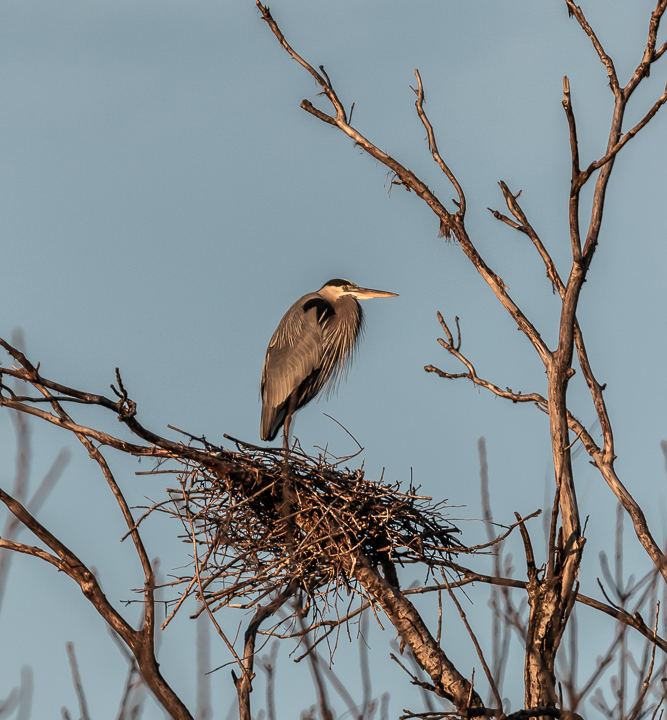 A great blue heron is seen above a nest in the Tennessee River Valley. Herons moved northward to the valley from tiny remaining Florida rookeries after the birds were annihilated in the early 20th century for hat decorations. Betty Thompson
After their kind almost vanished, great blue herons took a minute to take to the Tennessee Valley. Now they are here in a big way.
"Life breaks free, it expands to new territories, and crashes through barriers painfully, maybe even dangerously, but, uh, well, there it is," said Jeff Goldblum's Malcolm in 'Jurassic Park.' "Life finds a way."
In the early 20th century, after it became illegal to hunt for feathers, as referenced in this previous Hellbender Press story, herons began to recover.
But it took a while. The curious thing with great blue herons, which perhaps attests to the tenacity of nature itself, is that for years they really had little presence in the Tennessee Valley, even after the principal dams and reservoirs were completed. There were plenty of shallow waters for fish eaters.
(Part 1) Flight to safety: Herons barely survived a bloody fashion trend
 Great blue herons and other heron species were reduced to a handful of rookeries after numbers plummeted because of high demand for their plumage. Courtesy Betty Thompson
Herons were almost a victim of their own beauty
plume. noun. a long, soft feather, or arrangement of feathers used by a bird for display
During our Gilded Age of opulence and corruption, members of polite society wore alligator shoes, top hats made from beaver pelts, ivory buttons, whalebone corsets and dead foxes draped around their shoulders. After all, status had its price and the surrounding wild lands were bountiful.
In the late 1800s and early 1900s, most fashion-conscious women would not be seen in public without a hat adorned with feathers. In 1915, at the height of this fashion craze, an ounce of plumes sold for $32, the same going rate as an ounce of gold. The most highly coveted feathers were “aigrettes,” which are the long, silky white nuptial plumes of egrets and great blue herons. Plume hunters could make a sizable sum of money for a day’s work with a gun.
(News alert: Katy did it!) Seventeen-year cicadas were just an opening act. Now the woods are rolling with the rhythm of our annual insects.
 A true katydid is shown here. It’s one of the main insects that provides a permanent soundtrack to your summer life in the Knoxville area. Stephen Lyn Bales/Hellbender Press
What’s that buzz? We thought Brood X was over.
In case you haven’t noticed: It’s hot!
The “dog days of summer,” are so called because the season coincides with the period of time when the brightest star Sirius, aka the Dog Star, rises and sets with the Sun: early July through August into September.
The ancients believed that when Sirius and the Sun were in the sky together, the days were hotter. I think they got it right.
August has never been that thrilling to me, more of a month to endure. The birds have finished raising their families and are going through their late-season molt. Some of the migratory birds have already started to move south. But that doesn’t mean that our backyards are totally silent because late summer is cacophonous with insects.
During the day, the trees are filled with large, green cicadas that generally spend three years underground in their larval stage, but they are not all in sync like Brood X was, so each summer we have plenty that mature to collect en masse in our neighborhoods.
To attract females, the male cicadas do the chainsaw buzzing, but the songs are not made with vocal chords but rather special organs on the sides of their abdomens called “tymbals.” In effect, their sides vibrate loudly.
Locally in the Knoxville region we have five species of these annual cicadas. Early in the morning and into the afternoon, swamp cicadas (Neotibicen tibicen) are calling. They are also known as morning cicadas because they usually crank up by 10 a.m. with a long uninterrupted rattle that builds in intensity.