
Displaying items by tag: wildfire
ORNL researcher models fire’s growing footprint in a changing climate
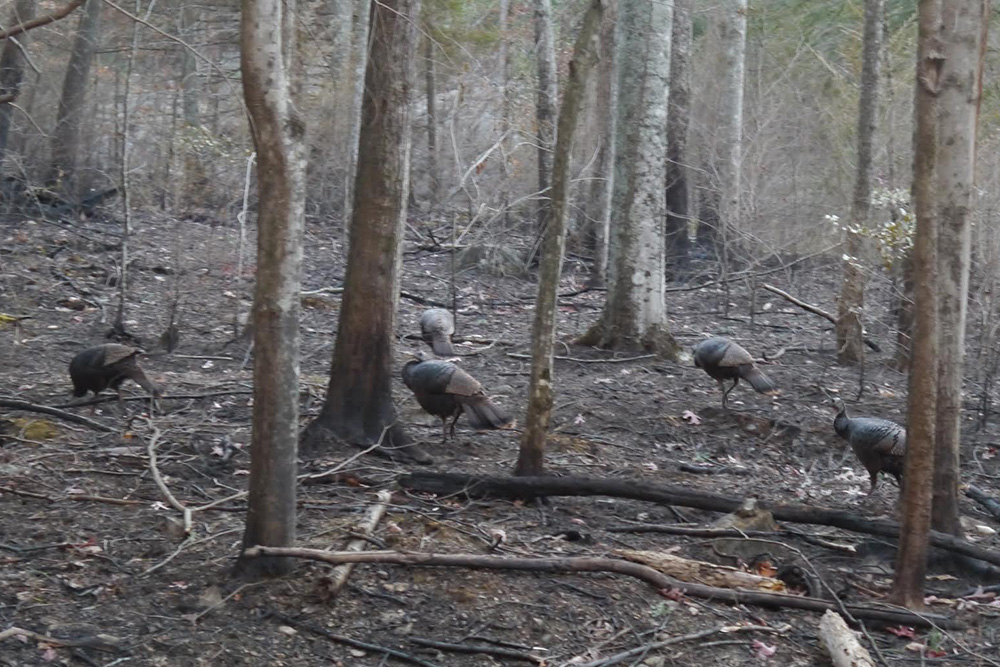 Wild turkeys forage in charred hardwood forest soon after the 2016 Gatlinburg fires, which moved from the Smokies to developed areas in Sevier County. An ORNL model predicts wildfire threats will increase in the Southern Appalachians because of climate change. Thomas Fraser/Hellbender Press via Knoxville Mercury
ORNL report: Local wildfire danger will likely loom larger because of climate change
OAK RIDGE — This cruel summer, the Southern Appalachian region is already baking in above-normal temperatures and basking in poor air quality.
Air temperatures in Knoxville flirted with 100 degrees on July 6, which were well above average and prompted the National Weather Service to issue a heat advisory for much of the metropolitan area.
It’s hard to definitively link a heat wave to global warming, but one oft-cited consequence of climate change is the growing intensity of wildfires, even in the traditionally moisture-rich Appalachians. The range of climate change effects is difficult to pin down, but one constant in the study of climate change is an expected increase in overall temperatures, which can power wildfires via both fuel increases and volatility.
- oak ridge national laboratory
- wildfire
- wildfire risk
- climate change wildfire
- jaifu mao
- thanksgiving fire of 2016
- sevier county wildfire
- wears valley wildfire
- brush clearing for wildfire
- smokies wildfire mitigation
- smokies fire
- computational earth model system
- peter thornton
- southern appalachian bioregion
- southern appalachian climate change
- southeast wildfire risk
- heat wave
- global warming
- earth system model
- wildfire carbon emission
- ornl
From fungi to trees, Smokies life gets back on track five years after conflagration
News Sentinel: Forest life blossoms five years after devastating Smokies wildfires
Researchers are tallying recovering species and noting some surprises five years after deadly wildfires tore through Great Smoky Mountains National Park and adjacent communities, according to News Sentinel science writer Vincent Gabrielle.
Fire-dependent species such as the table mountain pine are seizing new land as a result of the wildfires, and some scientists have been surprised by the proliferation of chestnut saplings. Those saplings are the progeny of remaining chestnut root systems, though few if any survive to maturity. The chestnut was largely eliminated from the American landscape more than 100 years ago by a blight that eliminated one of the most productive mast species in the Southern Appalachians.
Scientists are also intrigued by the reappearance of certain fungi decimated by the 2016 fires, which originated near the Chimneys and ultimately spread up Bullhead and then down into Twin Creeks and the surrounding developed communities. Fifteen people were killed and thousands of structures destroyed.
A lot of Smokies habitat is fire dependent, but few wildfires have been allowed to burn in the backcountry over the history of the park. The fire and its aftermath provide researchers a unique opportunity to determine the effects the fire had on the natural landscape and accompanying plants, fungi, trees and animals.