
Displaying items by tag: ornl
ORNL researcher models fire’s growing footprint in a changing climate
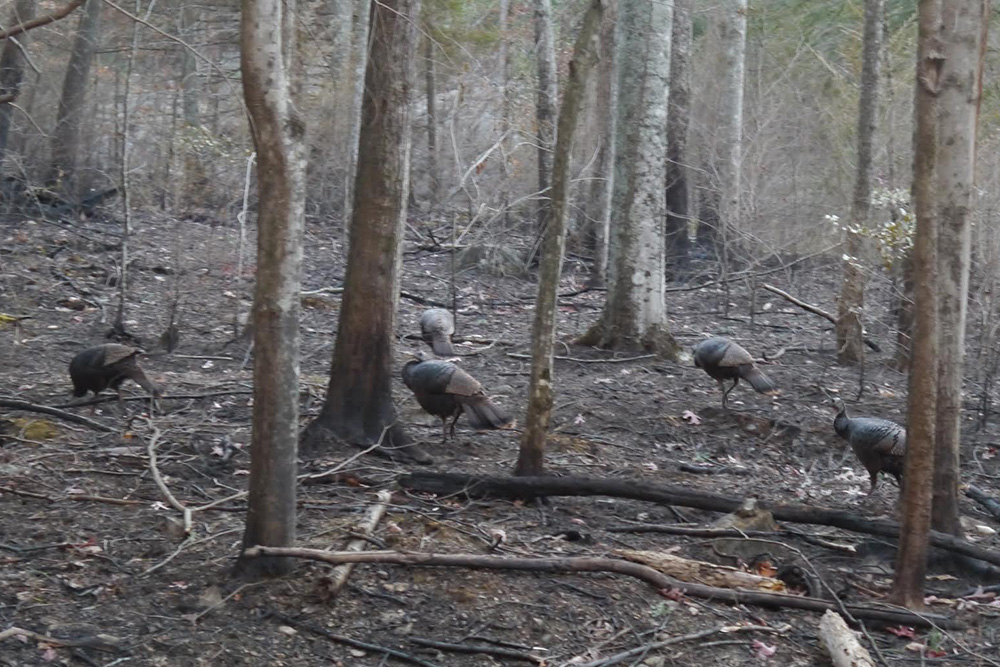 Wild turkeys forage in charred hardwood forest soon after the 2016 Gatlinburg fires, which moved from the Smokies to developed areas in Sevier County. An ORNL model predicts wildfire threats will increase in the Southern Appalachians because of climate change. Thomas Fraser/Hellbender Press via Knoxville Mercury
ORNL report: Local wildfire danger will likely loom larger because of climate change
OAK RIDGE — This cruel summer, the Southern Appalachian region is already baking in above-normal temperatures and basking in poor air quality.
Air temperatures in Knoxville flirted with 100 degrees on July 6, which were well above average and prompted the National Weather Service to issue a heat advisory for much of the metropolitan area.
It’s hard to definitively link a heat wave to global warming, but one oft-cited consequence of climate change is the growing intensity of wildfires, even in the traditionally moisture-rich Appalachians. The range of climate change effects is difficult to pin down, but one constant in the study of climate change is an expected increase in overall temperatures, which can power wildfires via both fuel increases and volatility.
- oak ridge national laboratory
- wildfire
- wildfire risk
- climate change wildfire
- jaifu mao
- thanksgiving fire of 2016
- sevier county wildfire
- wears valley wildfire
- brush clearing for wildfire
- smokies wildfire mitigation
- smokies fire
- computational earth model system
- peter thornton
- southern appalachian bioregion
- southern appalachian climate change
- southeast wildfire risk
- heat wave
- global warming
- earth system model
- wildfire carbon emission
- ornl
Marie Kurz: Helping science on watersheds flow across disciplines
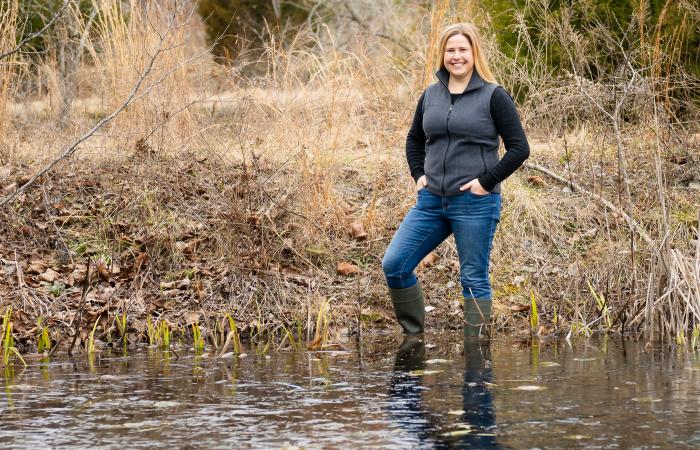 Marie Kurz is seen at a pond on the campus of Oak Ridge National Laboratory. Carlos Jones/ORNL
From California canyons to German creeks: Science is personal and practical for ORNL scientist Marie Kurz
Kristen Coyne is a writer for Oak Ridge National Laboratory.
OAK RIDGE — Spanning no less than three disciplines, Marie Kurz’s title — hydrogeochemist — already gives you a sense of the collaborative, interdisciplinary nature of her research at the Department of Energy’s Oak Ridge National Laboratory. Still, those six syllables only hint at the vast web of relationships encompassed in her work.
Kurz studies how rivers flow through landscapes; what kinds of nutrients, contaminants and other material sail through them; and how they transform along the way. As an experimentalist, her favorite part of the job is getting into the field. Depending on the season, Kurz can be found clad in tights, gloves reaching her shoulders, a neon vest and a ponytail-taming cap as she sloshes in olive hip waders through the particular stream under her scrutiny. The getup, she said, always makes her feel a bit like the Michelin Man.
- ornl
- kristen kurz
- watershed research
- ornl scientist
- oak ridge national laboratory
- east fork poplar creek oak ridge
- water pollution
- oak ridge scientist
- critical interface science
- water flow
- eddy
- swirl
- vortex
- stream ecology
- hydrology
- transient storage zone
- sediment
- biogeochemistry
- microbiology
- watershed modeling
- polyfluoroalkyl substance
- pfas
ORNL’s comprehensive mapping of built environments aids disaster response
Compass: ORNL mapping effort will aid rescue, risk assessment
Oak Ridge National Laboratory scientists spent five years mapping virtually every structure in the U.S. and the data is bearing early fruit as it is used for response to disasters such as hurricanes and severe floods.
Mark Tuttle and Melanie Lavardiere, the team leaders of the project, have mapped “virtually every single structure in the United States and its territories,” Compass reports.
The information is used by disaster responders from the FEMA level and down. During a hurricane, for example, authorities can focus response efforts on the most vulnerable areas using the building-mapping database.
The database can also be used by insurers to charge rates more according to risk, and for structures covered under the National Flood Insurance Program, as is already happening.
But the data is most valuable for saving lives and determining the most likely location those lives will have to be saved.
“After disaster strikes, the data can give a rapid indication of the scope of the damage and point responders in the right direction to assist in the recovery. Using the powerful computers available at ORNL, the team can process data quickly — producing in a matter of hours work that used to take months — and get it into FEMA’s hands for analysis,” Compass reports.
Oak Ridge National Laboratory land is an international treasure of biodiversity
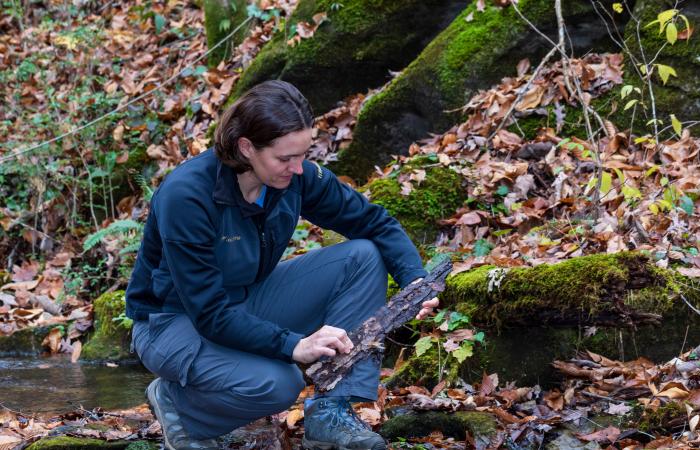 Aquatic ecologist Natalie Griffiths studies nutrients and contaminants in the Weber Branch watershed, which is in the Oak Ridge Environmental Research Park. Courtesy Carlos Jones/ORNL
ORNL research lands are an international ecological benchmark and diverse wonderland of trees, plants, mammals, reptiles and amphibians
Abby Bower is a science writer for Oak Ridge National Laboratory.
The Department of Energy’s Oak Ridge National Laboratory (ORNL) is a hub for world-class science. The nearly 33,000-acre space surrounding the lab is less known, but also unique. The Oak Ridge Reservation (ORR) is a key hotspot for biodiversity in the Southeast and is home to more than 1,500 species of plants and animals.
At the intersection of Anderson and Roane counties is an important subset of the reservation — the Oak Ridge National Environmental Research Park, or NERP — a 20,000-acre ORNL research facility that has been internationally recognized by UNESCO as an official biosphere reserve unit.
“The National Environmental Research Park is a living laboratory and a major resource for conducting ecological studies,” said Evin Carter, an ORNL wildlife ecologist and director of the Southern Appalachian Man and the Biosphere Program, or SAMAB. The NERP has been a core part of SAMAB, which has focused on sustainable economic development and conserving biodiversity in Southern Appalachia since 1989.
With ORNL researchers and scientists from government agencies and academia using the NERP for diverse experiments each year, the park lives up to its status as a living laboratory.
It also lives up to its reputation as a biodiversity hotspot. As one of seven DOE-established environmental research parks reflecting North America’s major ecoregions, it represents the Eastern Deciduous Forest. The NERP comprises parts of this ecoregion that have been identified repeatedly as priorities for global biodiversity conservation, Carter said.
This designation means more than ever as climate change alters ecosystems and biodiversity declines worldwide. According to a landmark international report, on Biodiversity and Ecosystem Services, around one million plant and animal species are currently threatened with extinction.
- oak ridge national laboratory
- ornl
- ecological benchmark
- oak ridge national environmental research park
- nerp
- biosphere reserve
- southern appalachian man and the biosphere
- samab
- biodiversity
- unesco
- oak ridge reservation
- orr
- ecoregion
- culturally significant plant species initiative
- cspsi
- evin carter
- kitty mccracken
- eastern band of cherokee indians
- neon
- national ecological observatory network
- northern longeared bat
- indiana bat
- grey bat
- endangered species
- threatened species
- purple gallinule
ORNL scientists fan out to local schools and bring their research home during National Environmental Education Week
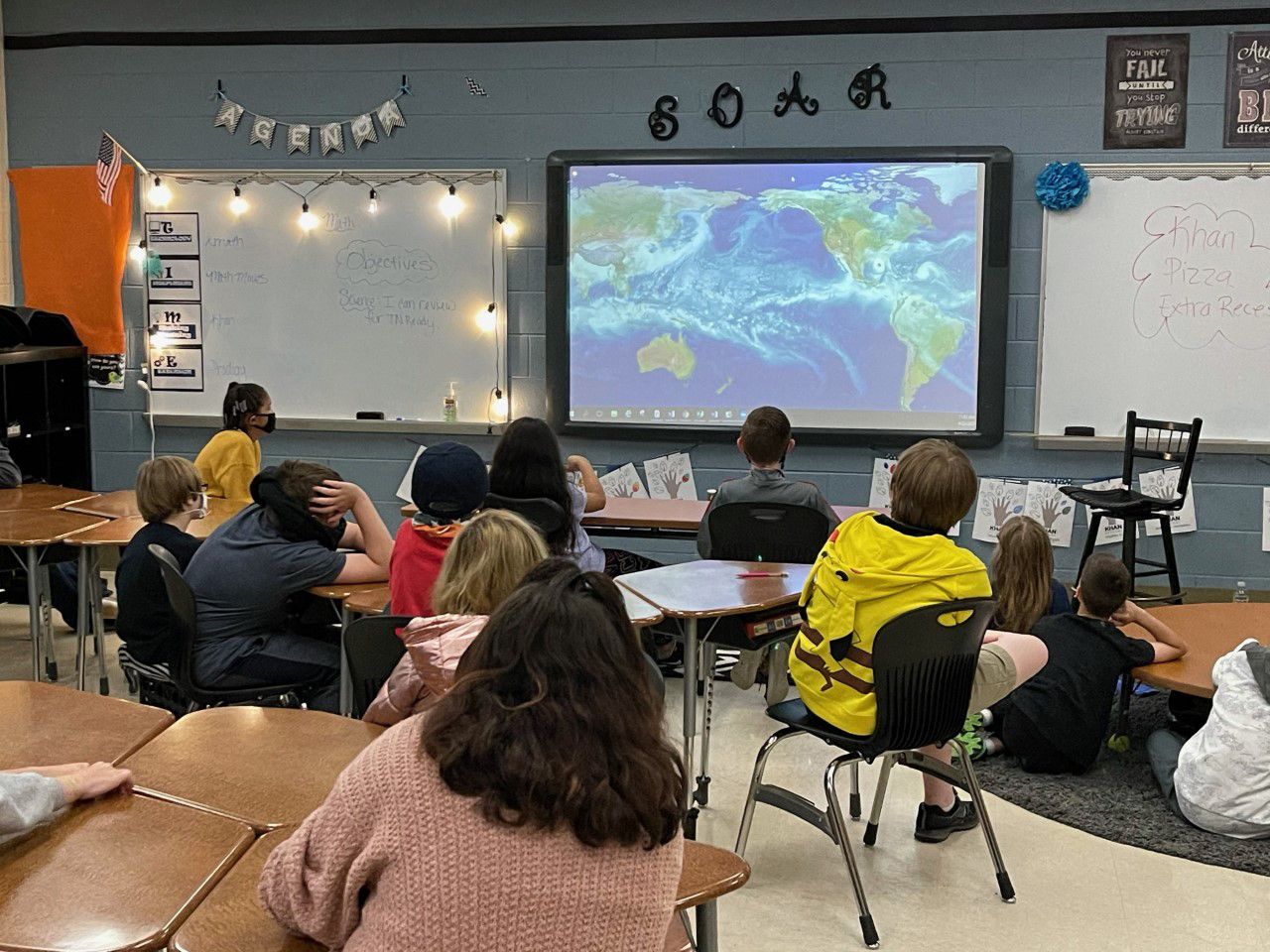 Students listen to a presentation from an Oak Ridge National Laboratory researcher during National Environmental Education Week. Courtesy Oak Ridge National Laboratory
Scientists link research to students’ lives and communities
(Editor’s note: Karen Dunlap is a public information officer at Oak Ridge National Laboratory).
Esther Parish is one of eight Oak Ridge National Laboratory scientists talking to students in nine schools across East Tennessee as part of National Environmental Education Week.
On Monday, she spoke to Cathy Kimball’s fifth-grade class at Lenoir City Middle School.
The discussion covered renewable energy resources, science career paths and how climate change may affect East Tennessee.
Other ORNL scientists, including Debjani Singh, Liz Agee, Shelaine Curd, Spencer Washburn, Colleen Iversen, Keith Kline and Matthew Langholtz are participating in classroom events through April 30.
The national event is organized by the National Environmental Education Foundation (NEEF), which celebrates environmental education.
“I think it is important to reach out to young people about environmental science because the choices that our society makes regarding renewable energy resource development and climate-change mitigation will have long-term effects on their environment, health and future quality of life,” Parish said. She is a member of ORNL’s Environmental Science Division and specializes in geography and landscape ecology.
Ecological Society of America honors Oak Ridge National Laboratory scientists for sustainability research
ORNL researchers receive 2021 Sustainability Science Award for mapping human influence on U.S. river and stream changes
Researchers from Oak Ridge National Laboratory mapped and quantified hydrological changes throughout the country due to urban development, energy production and other human factors and won a prestigious award for their efforts.
The team’s analysis was published in the Proceedings of the National Academy of Sciences and received the 2021 Sustainability Science Award from the Ecological Society of America.
“The Sustainability Science Award recognizes the authors of a scholarly work that make a substantial contribution to the emerging science of ecosystem and regional sustainability through the integration of ecological and social sciences. The researchers will be recognized during the society’s annual meeting in August,” according to an ORNL release announcing the award.
The research coupled U.S. Geological Survey stream-flow records with geospatial modeling to quantify human impact on national water resources and concluded the 7 percent of affected aquatic systems hold 60 percent of North American freshwater fish, mussels and other species.
“This work exemplifies how ORNL’s interdisciplinary research in environmental and geospatial science helps equip decision makers with the tools needed to move our nation toward a more sustainable future,” Stan Wullschleger, associate laboratory director for ORNL’s Biological and Environmental Systems Science Directorate, said in the release.
Lead author Ryan McManamay, an aquatic ecologist and faculty member at Baylor University, was with ORNL’s Environmental Sciences Division at the time of publication. Co-authors include ORNL’s Sujithkumar Surendran Nair, Christopher DeRolph, the late April Morton, Robert Stewart, Matthew Troia and Budhendra Bhaduri; Northern Arizona University’s Benjamin Ruddell; and the University of Tennessee’s Liem Tran and Hyun Kim.
“It was a privilege to work with this team that spanned across multiple disciplines and institutions,” said Bhaduri, an ORNL Corporate Research Fellow and director of ORNL’s Geospatial Science and Human Security Division. “Given the impacts of climate change, there has never been a more pressing opportunity to address environmental sustainability. It’s a tremendous honor to make this scientific contribution and to be recognized for it.”
- oak ridge national laboratory
- sustainability
- ecological society of america
- sustainability research
- ornl
- hydrology change
- human impact
- aquatic environment
- sustainability science award
- streamflow
- ecology
- mapping
- urban development
- sociology
- us geological survey
- geospatial modeling
- geospatial science
- research
- interdisciplinary