TWRA has designated the Bridgestone Firestone property as a “Quail Focal Area” — a linchpin in a comprehensive five-year strategic plan to repopulate Northern Bobwhites in Tennessee. Quail habitat requires at minimum of 1,500 acres in each Quail Focal Area to sustain the species, the strategic plans says.
“We can’t commit to X number of acres, but we would love to expand existing fields by 1,000 acres,” Deck said.
A population in ‘dire straits’
Deck said plans to reestablish quail in Tennessee have been in the making for 20 years. Quail and other, non-game species have been in the decline for the past 40-50 years, and TWRA cites estimates that 80% of the Northern Bobwhite population has disappeared recent decades. Quail are game birds, and part of TWRA’s long-term quail goals are geared toward readying public lands for sport hunting.
“The population is in such dire straits,” he said. “We are providing ecosystems in danger and restoring habitat. Quail is also a game bird, and that’s part of what we do at TWRA.”
Restoring the property to a quail-friendly and quail-hunting-friendly savanna — a grassy plain with few trees – would benefit other species, too: among them prairies warblers, field sparrows, blue grosbeak, and numerous endangered plants, according to TWRA. Grassland vegetation also provides food sources for deer antler growth and nesting opportunities for wild turkeys.
Deck said he didn’t expect the pushback on the plan.
“Anytime you’re cutting trees, there’s a whole host of folks that don’t agree,” he said. “The level of attention has been a surprise to me. We are in no danger of having a shortage of closed-canopy forests.”
The property itself was a gift from Bridgestone, the first parcel in a series of three land donations totaling 16,000 acres in White County given to Tennessee by the tire manufacturing giant to manage as a wilderness since 1998. The gift came with strings attached: they are spelled out in the deed. Among them: “no cutting of timber or removal or destruction of trees shall be permitted.” That provision has limited exceptions, including to preserve and protect the property from damage caused by fire, insect infestation, disease or other forces of nature.
Bridgestone officials were alerted about discussion regarding the proposed cutting and immediately contacted the Tennessee Wildlife Federation, which serves as a third party caretaker overseeing the property and enforcing the covenants in the deed, said Sara Stanton, a company spokeswoman.
The company, which is otherwise uninvolved in management of the property, has asked the Tennessee Wildlife Federation “to confirm they were thoroughly reviewing TRWA’s proposal and fulfilling their obligation to uphold the covenants put in place at the time of the donation,” Stanton said. “As of today, we have not received a final determination from TWF, but understand a conclusion should be coming in a timely manner."
Nate West, director of communications for the Tennessee Wildlife Federation, said it was in talks with TWRA “to fully understand their current plan so we can do that alongside legal counsel.”
“Speaking broadly as a conservation nonprofit, we have supported throughout our 75-year history the science-based, proactive management of lands to maintain or restore diverse habitats and diverse wildlife,” West said in an email. “Regardless of the outcome of this proposed project, the fact is savannas are an endangered habitat in the Southeast that were once common and provided essential habitat to many species across Tennessee.”
‘We’re not against quail; we’re against the location’
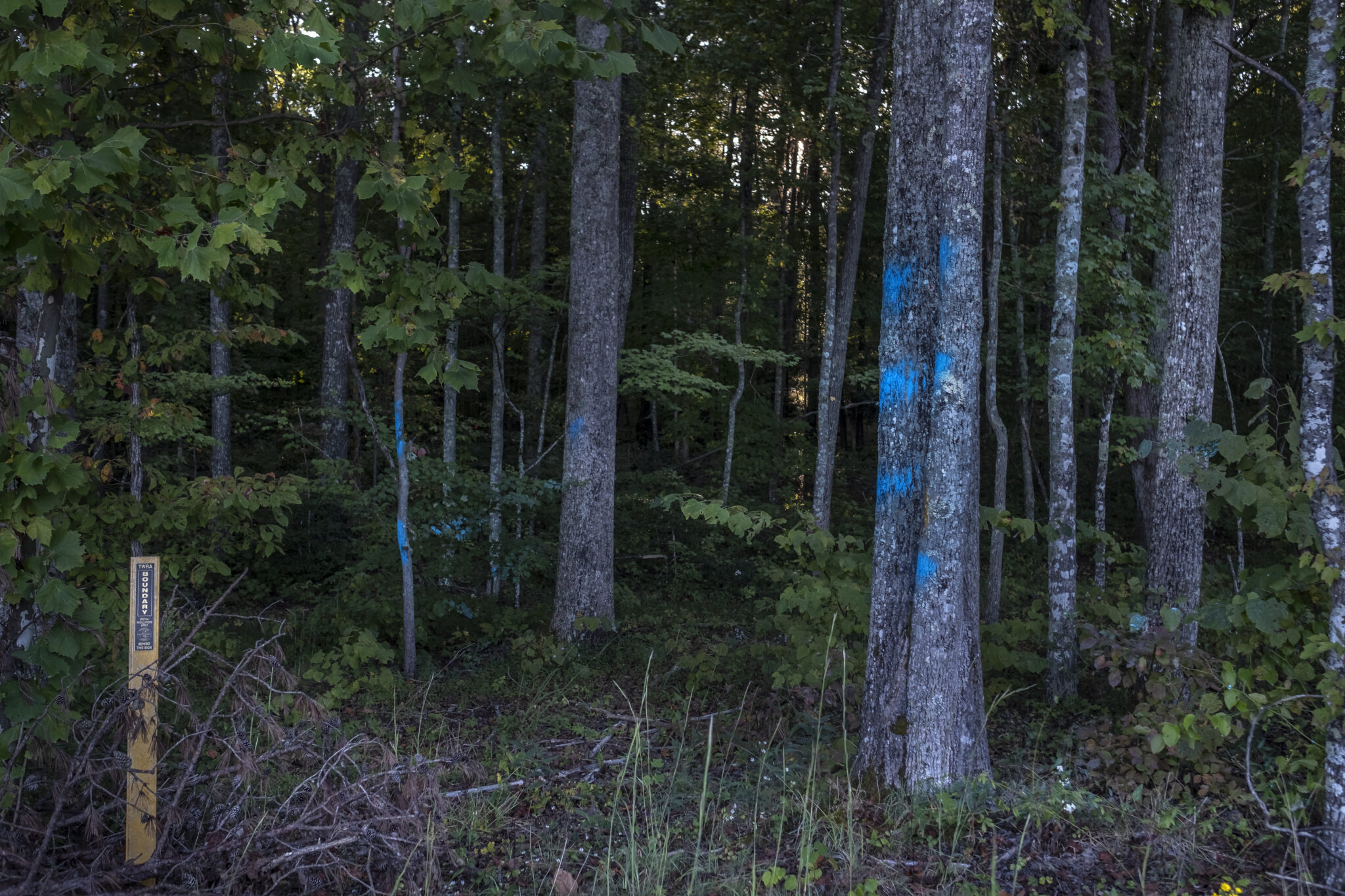
In late September, in the early hours of the opening Saturday of hunting season, Mike O’Neal steered his truck past trail entrances handing out fliers to hunters in camouflage and hikers sporting daypacks along the a single road that winds through the wilderness area. At points along the road, blue paint on trees marked planned cut lines.
O’Neal is a longtime hunter, among the first to get ahold of the leaked map, which was printed on the fliers he handed out from his vehicle. The fliers also urged people to contact TWRA and their state representatives to oppose any plans to clear timber in the forest.
“We’re not against the quail,” O’Neal said. “We’re against the location. They’re wanting to cut the same parts used by hunters. A lot of people who hunt out here, they can’t afford a hunting lease, and some of these guys aren’t as young as they used to be. They’d have to hike too far if this thing goes through.”
O’Neal said he was especially perplexed by the plans to clear-cut old growth forrest when the Bridgestone Firestone property also contains several thousand acres of non-native pine trees, a fast growing tree that can repopulate in a short period of time.
“It seems like this is a big experiment for TWRA to get the quail back,” he said. “But if it doesn’t work out, what have you lost? Thousands of acres of hardwoods you’ll never seen again in your lifetime.”