The Environmental Journal of Southern Appalachia

Part IV: Clear-cut controversy. Thoughts and prayers

Written by

service pnp pga 09600 09690vLibrary of Congress

Citizens and scientists weigh in on controversial TWRA logging plan

For months, Tennessee Lookout has bird-dogged a Tennessee Wildlife Resources Agency proposal to clear at least 1,000 acres of hardwood forest in the Bridgestone Centennial Wildlife Reserve in White County to create habitat for dwindling bobwhite quail

Hellbender Press has published most of the stories, with much appreciation to Tennessee Lookout. Most recently, the online news outlet reported that legal hurdles had been cleared to allow TWRA to proceed, at least for now, with its game-bird reintroduction plans at the expense of acres of approximately 65-year-old hardwood forest. 

Though it was not Hellbender’s original reporting, on our end the social media response to the articles has been thoughtful and reasoned — with, of course, occasional disagreements among commenters. With permission from the posters, I’ve compiled an edited and abridged recitation of some comments, which were too good to languish in the social media ether.

Their musings, expertise and ideas and visions are encapsulated below, and Hellbender Press thanks them all for contributing to important public discourse.

But first, for the sake of professional opinion, Hellbender Press reached out to a Southeastern forestry expert who agreed to speak off the record about the proposal.

The source stressed citizens have every right to speak out on the management of public land, and suggested some key points to consider:

— TWRA is statutorily required to improve or restore habitat of game and non-game species.

— Is the hardwood forest home to high-quality rare or threatened trees such as butternut or swamp oak, and/or related habitats?

— Are there other viable, more open properties available within the management area?

— The cleared, managed areas could also become home to numerous other species that will pioneer edge habitat and openings cleared for quail restoration.

— If the land in question is already a productive hunting ground for multiple species, why eliminate the forest in favor of one sole species? 

That being said, let’s dive into a great Facebook discussion among Hellbender Press readers initiated by Tennessee Lookout reporting on the original TWRA proposal.

These ideas could help us prepare for other natural-resource conflicts bound to occur in the future.

Tanner Jessel

We’re in an extinction crisis, so I appreciate the urgency here in creating bobwhite habitat. I wonder, however, after reading the state’s recent conservation plan, if the agency is not moving a bit faster than what its conservation plans call for. 
 
Stephen Killeffer
 
I did not attend the Oct 4 presentation about this project, nor have I seen any planning documents about this specific project, and I don’t think I’ve ever been to the specific sites where this action is being proposed. So, grain of salt.
But I’m reasonably familiar with the specific management vision being proposed here, and I feel confident to the point of near certainty that there are no plans, none at all, to cut any “old growth” forest.
There isn’t any old growth closed canopy forest in this area, at least not on the upland, non-ravine tableland. The existing forested condition is the result of many decades of fire-exclusion, but historically it was much, much more open, with very extensive area of grasses and herbaceous plants, relatively few shrubs, scattered trees, particularly fire-adapted oaks and pines, and an overall sunny, park-like aspect.
Savannas and open woodlands, not deep, dense mature old-growth forests. This is a generally accepted consensus by the conservation botany and plant ecology community in Tennessee and the Southeast.
 
That being said, I’m not unsympathetic at all toward the local community. Again, without any familiarity at all with this specific project, it seems like TWRA kinda dropped the ball, and didn’t do nearly the outreach that was needed to bring in the community as a partner well earlier in the planning process. But boy, that’s tricky.
 
 
Hellbender Press
 
There is no shortage of efforts to restore the original “barrens” of the Cumberland Plateau and its escarpments. The question is: Is this the appropriate place to do it?
 
Stephen Killeffer
 
The natural savanna/woodland/grassland landscape of the upland Cumberland Plateau has been nearly *entirely* wiped out. It’s essentially ALL gone. What you say are no shortage of efforts at restoration, I see promising but very small baby steps toward what hopefully will be a generations-long project to allow a large regional landscape to return to what it wants to be instead of what it currently is — an artifact of modern industrial land management.
 
Hellbender Press
 
That’s some potentially valuable timber so a mite curious about that. (The forestry expert noted above said the timber would likely be of middling value.)
 
Tanner Jessel
 
If you look at reporting by the Nashville Scene you will notice a compromise solution floated is to clear non-native pine, also in the WMA.
 
The issue may be cutting the hardwoods generates profits that cover the cost of the actual work, while cutting the softwoods (pine) would not.
 
I hate to see TWRA (and grassland / quail conservationists) struggling with what appears to be a public relations blunder. If clearing the pines is not an economically viable option, TWRA should be clear about that. Perhaps people would be willing to crowd-fund clearing of the softwoods, to preserve the hardwoods?
Ultimately the hardwood forests do need some type of disturbance to promote recruitment/long-term stand survival; I think most folks are aware humans have suppressed natural disturbances such as fire for a long time, and we killed the larger herbivores (woodland bison, eastern elk) that otherwise would have done much of the forest clearing work now presently proposed.
We also killed off native peoples and their culture, one that actively cleared forests with fire. The question of “what is natural” is a difficult one, which centers on values more so than nature itself. More time, more attention to values up front might have helped TWRA out here.
Worried this blunder will damage how the public regards not just TWRA, but grasslands conservation and forestry at large.

Betsy Kauffman Humphrey
 
 
I will happily say that I felt just about every environmental and conservation agency, including the NPS, was full of bureaucrats, many of them corrupt. Except TWRA. Looking at the map and knowing the area in question, a very small portion can be considered old growth. Much of it is loblolly pine, which isn’t even native.
While TWRA is expected to consider recreational use in their management plans, should the preferences of hikers, campers, etc. outweigh the needs of wildlife?
 
Grasslands are needed by dozens of species. And while it’s true TWRA manages millions of acres in Tennessee, much of that land isn’t appropriate for this habitat restoration.
 
Because TWRA doesn’t receive state monies, relying on income from hunting and fishing licenses instead, people tend to focus on the agency as being a representative for hunters. I suppose it is, but they do a remarkable conservation job as well. Thousands of acres of land in East Tennessee, despoiled by coal mining, have been reclaimed thanks to TWRA.
 
As the follow-up story says, the map so many people have gotten upset about doesn’t represent any firm plan. TWRA should have said so from the outset.
I approach this from the viewpoint of a former wildlife biologist who became an investigative environment reporter.
I wish I could say I’m surprised that people who consider themselves conservationists and nature lovers are willing to toss the needs of wildlife aside because they don’t want a view ruined and who pay lip service to the changes needed to combat climate change. TWRA (does not have) a bias toward revenue-generating management, in 35 years I have never come across that. Not once.
 
John Johnson
 
I actually agree that more wild to semiwild grassland ecosystems are needed, but I am disappointed that TWRA would choose to do a project like this on top of popular hiking trails and hunting areas. They are one of the biggest landholders in the state, they have plenty of land to implement these kinds of projects.
 
I hope they take the public input into account and do the grassland/savannah restoration in a different location. Doing it on the pine plantations is an excellent idea.
Public opinion should be respected. Also, as stated in the article, many hunters, the agency’s main constituency, are against this plan.
 
Some of the strip-mined property would make excellent grasslands and savannahs. I’ve been to the restored savannah at the Catoosa WMA. I’m all for that kind of restoration. Although, as any ecologist will admit (and TWRA folks did when I asked while visiting the Catoosa site years ago) grasslands and savannahs shifted in space over time. They are not necessarily permanent features. Fire, indigenous peoples, grazing animals and drought all impacted where such areas were and how long they lasted.
 
Hopefully they will respect public sentiment on this and shift their grassland and savannah plans to pine plantations, former strip mines and other areas of low biodiversity and recreational value. I agree the agency overall does good work. But getting into natural resource management from an environmental perspective has led me to the conclusion that entire field has biases towards management that generates revenue.
I don’t think anybody is wanting to toss aside the needs of wildlife. There are wildlife in this designated wilderness area that have needs too. I’ve been all over the Cumberland Plateau and there are plenty of places, especially old strip mines and pine plantations much more suitable for conversion to grassland habitat. 
 
I think grassland and savannah restoration is super important. I don’t think its appropriate on part of this designated wilderness area. Especially not in canyons. Its appropriate up on top, where it occurred historically.
 
Hellbender Press
 
 
But wait: What qualifies as old growth? To me, a 50-year-old secondary forest is a valuable commodity, but might not meet the “old-growth” criteria.  
 
Tanner Jessel
 
 
(QUOTE) ”In 1989, the Forest Service chief Dale Robertson at that time, issued a national position statement on old-growth forests (USDA FS 1989). He provided a generic definition stating, “Old-growth forests are ecosystems distinguished by old trees and related structural attributes. Old growth encompasses the later stages of stand development that typically differ from earlier stages in a variety of characteristics which may include tree size, accumulation of large wood material, number of canopy layers, species composition, and ecosystem function.
The age at which old growth develops and the specific structural attributes that characterize old growth will vary widely according to forest type, climate, site conditions, and disturbance regime. Old growth in fire-dependent forest types may not differ from younger forests in the number of canopy layers or accumulation of down woody material. However, old growth is typically distinguished from younger growth by several of the following attributes:
1. Large trees for the species and site.
2. Wide variation in tree sizes and spacing.
3. Accumulations of large-sized dead standing and fallen trees that
are high relative to earlier stages.
4. Decadence in the form of broken or deformed tops or boles and root decay.
5. Multiple canopy layers.
6. Canopy gaps and understory patchiness.”
 
 
Hellbender Press
 
 
The most common perceptions of “old-growth” forest, at least locally, are, por ejemplo, the giant hemlocks and poplars that graced places like Albright Grove near Cosby. Those gigantic hemlocks are all dead and falling down now because of an exotic bug. Poplars remain; I reckon maple is occupying the hemlock territory.
 
Tanner Jessel
 
 
One other comment to add as a visual reference for understanding the appearance of “old growth” varying by species — this was posted recently in the “Nurturing Nature” Facebook group by someone who works at an arboretum in Virginia. The finder is showing us an old growth Virginia creeper vine
Rate this item
(1 Vote)
Published in News

Related items

  • Public comment: Environmental group leaders say TVA makes input difficult
    in News

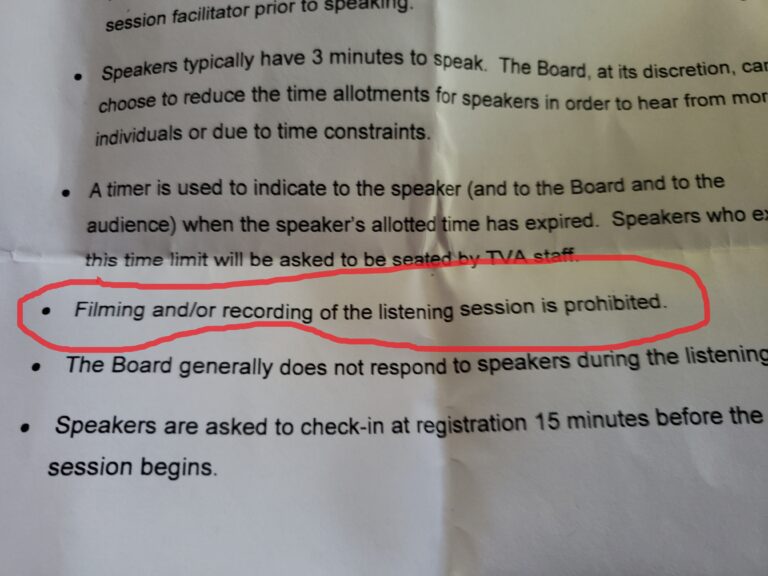
    Handout from TVA Listening Session Aug. 30 2022Scott Banbury with the Tennessee Chapter of the Sierra Club said a handout provided at TVA’s Aug. 30 listening session stated recordings of the meeting were not allowed; a TVA spokesperson said recordings are, in fact, allowed. Flyer provided by Scott Banbury

    Is TVA trying to gag its critics?

    This story was originally published by Tennessee Lookout.

    KNOXVILLE — While the Tennessee Valley Authority, a utility company that provides power to millions in Tennessee and other states, allows for public input into decisions, the process isn’t simple or transparent, say some regular attendees.

    Take, for instance, a recent public listening session: representatives of the Tennessee Chapter of the Sierra Club say they were told they could not record the session despite a spokesman for TVA saying the opposite.

    According to TVA spokesperson Scott Brooks, attendees are always allowed to record public meetings, provided they don’t cause a disturbance, but minutes before the session, members of the Tennessee chapter of the Sierra Club were prohibited from doing so.

  • Activists urge TVA to take advantage of historic US climate bill for energy-efficiency improvements
    in News

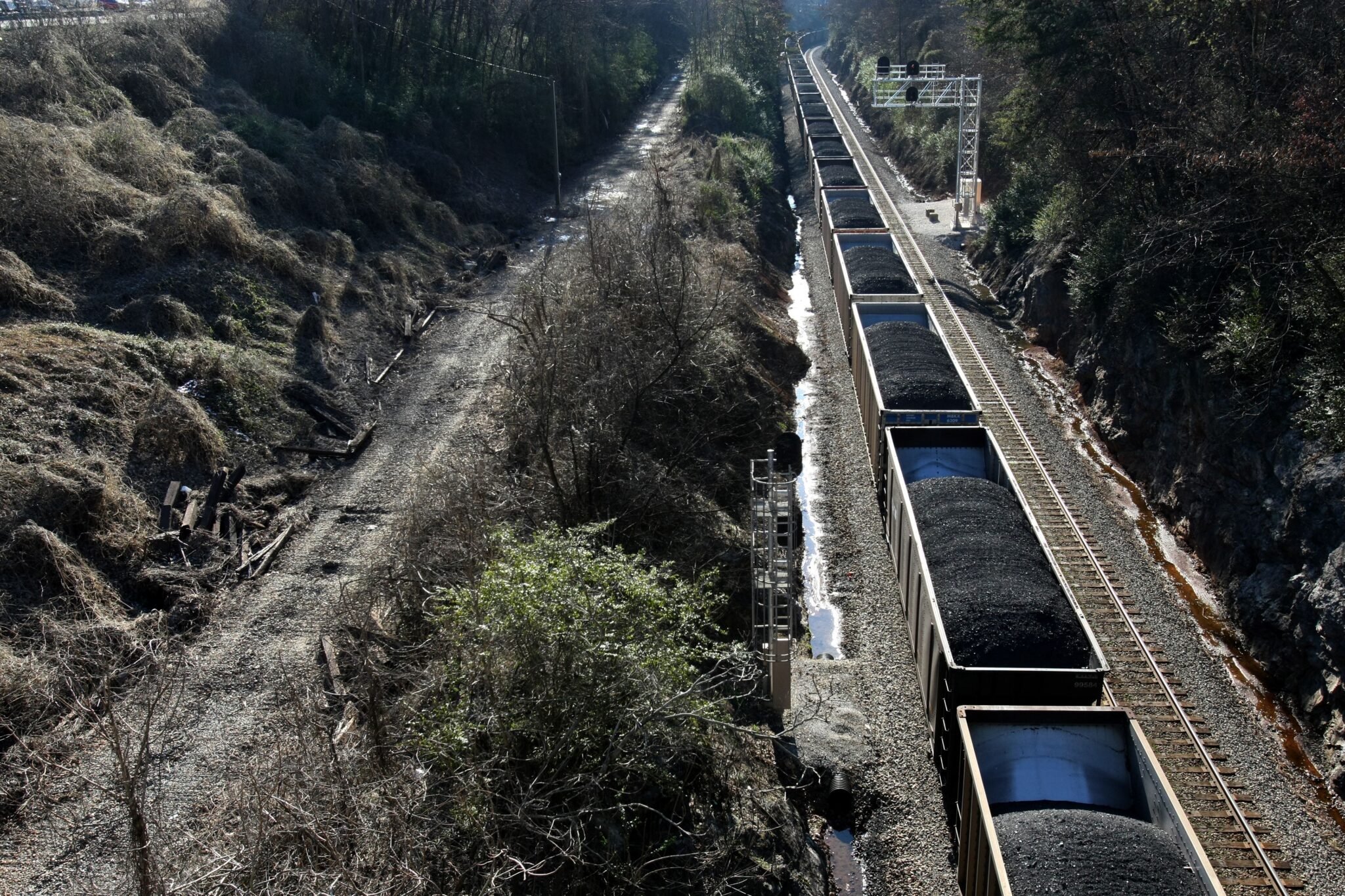
    TVA 1 2048x1365A hopper car on a train filled with coal to be delivered to a TVA coal-fired plant. John Partipilo/Tennessee Lookout

    Climate bill designates TVA as a potential recipient of clean energy investments and loans

    This story was originally published by Tennessee Lookout.

    KNOXVILLE  Clean-energy advocates are urging the Tennessee Valley Authority to use funds provided through the Inflation Reduction Act to deliver environmentally friendly energy to Tennessee customers. 

    The massive bill Congress passed Friday includes $370 billion for clean energy investments and listed TVA as an entity that is eligible to take advantage of clean energy credits and loans to significantly reduce the cost of energy-efficient infrastructure. 

    On Aug. 12, the Clean Up TVA Coalition, including the Sierra Club, the Southern Alliance for Clean Energy and Appalachian Voices, urged TVA to take advantage of the legislation and make funds available to its affiliated local power companies, which can then offer energy-efficient options for customers.

  • Dems pass huge climate bill assailed by some as another fossil energy sop
    in News

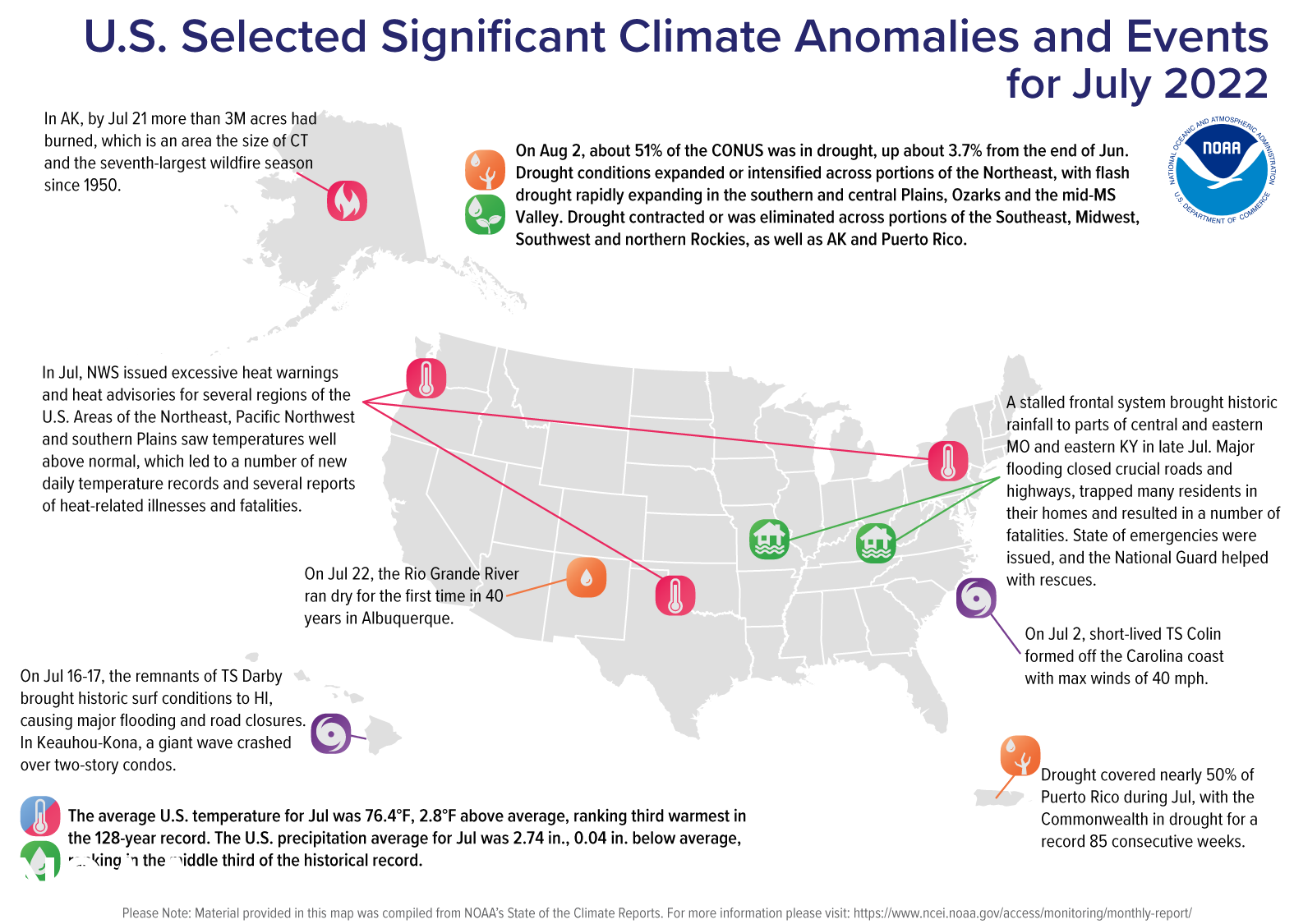
    5 July 2022 US Significant Climate Events Map

    Record-setting bill will fund extensive efforts to address climate change, but the sausage-making deal is decried by some as a ‘suicide pact’

    This story was originally published by Tennessee Lookout.

    WASHINGTON — The U.S. Senate, along party lines, passed a sweeping energy, health care, climate and tax package Sunday afternoon, following an overnight marathon of votes that resulted in just a handful of notable changes to the legislation.

    The 755-page bill was passed after Vice President Kamala Harris broke a 50-50 tie in the evenly divided Senate. It now heads to the House, where Democratic leaders have announced they will take it up on Friday.

    At last, we have arrived,” Senate Majority Leader Chuck Schumer said.  Democratic senators broke out into applause as Harris announced passage of the bill, expected to total more than $700 billion.

    Schumer, a New York Democrat, said he dedicated the measure to young Americans who have pushed and protested for the Senate to take action on climate change. 

  • Fossil-fuel pipeline in your front yard, anyone? Senate passes bill blocking local power over pipeline placement
    in News

    pipelineThis pumping station in Dickson County was the site of a 1992 gas line rupture. John Partipilo/Tennessee Lookout

    Bill eliminating local oversight of fossil-fuel infrastructure passes state Senate at behest of fuel companies, now on to House

    This story was originally published by Tennessee Lookout.

    UPDATE: The state House approved the bill March 29 with moderating amendments sought by local governments and environmental and social justice advocates.

    NASHVILLE — The Tennessee Senate passed a controversial pipeline preemption bill on Thursday in spite of concerns about the effect oil and gas pipelines could have on personal property and drinking water.

    Before passage, Sen. Ken Yager, R-Kingston, sponsor of SB2077, amended the bill to allow for wellhead protections and to align with its House counterpart. Critics still contended that with local governments lacking the ability to regulate fossil fuel infrastructure, communities could do little to protect themselves from unwanted pipelines. 

  • Tennessee Lookout: GOP legislators move to usurp even more local control with pro-pipeline bill
    in News

    GOP-led Legislature aims to ban local decisions on fossil-fuel infrastructure

    This story was originally published by Tennessee Lookout.

    Per updated TL reporting, this bill was deferred to March 15 for committee consideration.

    Memphis activist Justin Pearson spent years trying to pass legislation to protect his city’s natural drinking water, but a bill being fast tracked through the state Legislature is threatening his efforts.  

    Last week, environmental activists learned that Rep. Kevin Vaughan, R-Collierville, and Sen. Ken Yager, R-Kingston, are seeking to pass a bill aimed at removing local government control over land use zoning for fossil fuel infrastructure. 

    Both the Tennessee State House and Senate Commerce Committees will vote on HB2246 and SB2077 on Tuesday, and if the bill passes, it could be on the Legislature floor by Thursday. 

  • Tennessee Lookout: TWRA delays clearcut in Cumberlands as tourism official files suit
    in News

    DSCF8531 scaledMarvin Bullock, president of the Sparta-White County Chamber of Commerce, opposes deforestation efforts in the Bridgestone-Firestone Centennial Wilderness Area to create quail habitat. John Partipillo/Courtesy of Tennessee Lookout

    Oak Ridge Rep. John Ragan joins bipartisan pushback against state plans to raze forest for quail habitat

    This story was originally published by Tennessee Lookout.

    SPARTA For decades, the Tennessee Wildlife Resources Agency has kept the profits from the sale of timber and other natural resources on publicly owned lands, folding the payments from logging companies into the agency’s annual operating budget.

    bipartisan bill introduced in the Tennessee Legislature this week seeks to bring that practice to an end. The measure, introduced by Rep. John Ragan, R-Oak Ridge, and Sen. Heidi Campbell, D-Nashville, would require TWRA officials to transfer all proceeds from the sale of the state’s natural resources into Tennessee’s general fund — the process typically followed by other Tennessee agencies that generate income.

  • Outgoing Smokies forester Kristine Johnson leaves behind a legacy of science and communication

                                   Appalachian Voices

    Citizen Times: Smokies forester bids adieu to her arboreal home

    Good read here from the Asheville newspaper about the retirement of Great Smoky Mountains National Park Supervisory Forester Kristine Johnson.

    In her three decades at the Smokies, she has tackled issues ranging from exotic and invasive plants to the slow and disastrous demise of the park’s hemlocks due to the hemlock wooly adelgid.

    “‘The work we do includes forest health in all aspects,’ said Johnson, who is retiring this month after more than 30 years in the Smokies,” Frances Ligart reported. “Her career has been devoted to reducing the introduction into the park of exotic plants, insects, and diseases.”

  • Part III: Clear-cut controversy in the Cumberlands
    in News

    Bridgestone Main 2048x1365

    Legal opinion cuts path for TWRA forest clearing in White County’s Bridgestone wilderness area despite local opposition

    This story was originally published by Tennessee Lookout.

    A controversial plan by the Tennessee Wildlife Resources Agency officials to clearcut forest in a popular hunting, hiking and recreation area in order to create habitat for Northern bobwhite quail has gotten a legal go-ahead, despite opposition from residents and local leaders in White County, a bipartisan group of lawmakers and environmental groups.

    The 16,000-acre Bridgestone Firestone Centennial Wilderness Area, a forested area adjacent to Fall Creek Falls State Park and Virgin Falls State Natural Area, was a late 1990’s gift to the state from the tire company that came with certain strings attached, including that state officials “preserve the property predominantly in its present condition as a wilderness area.”

    The Tennessee Wildlife Federation was charged with ensuring the state honors those conditions.

    On Friday, a spokeswoman for the Tennessee Wildlife Federation confirmed that outside legal counsel hired to review the state’s clearcutting plan found it “meets the requirements” of the gift.

    “Speaking broadly as a conservation nonprofit, we have supported throughout our 75-year history the science-based, proactive management of lands to maintain or restore diverse habitats and diverse wildlife,” Kate Hill, a Tennessee Wildlife Federation spokeswoman, said via email. “The fact is savannas are an endangered habitat in the Southeast that were once common and provided essential habitat to many species across Tennessee.”

    Neither the Tennessee Wildlife Federation nor the Tennessee Wildlife Resources Agency has communicated the outcome of the legal review to local residents, who have complained for months that they have been kept in the dark and offered no meaningful opportunity to weigh in on plans to radically alter a landscape that is both beloved and central to the local economy.

  • Memphis takes a stand against convenience stores that feed health disparities
    in News
    By

    IMG 0447

    Citing a dearth of grocery stores and healthy food options, Memphis officials mull action 

    This story was originally published by Tennessee Lookout.

    “In the poorest Memphis neighborhoods, gas stations serve as the nearest and sometimes the only store with groceries for nearby communities, albeit ones offering unhealthy fast and convenience foods. The University of Memphis noted that the city’s overall poverty rate is 21.7 percent, and rates are even higher among communities of color and among children, with a child poverty rate of 35 percent.”

    In some areas of Memphis, there are more gas stations than grocery stores. While a citywide moratorium placed a hold on new gas stations, businesses are still seeking permission from City Council to open against the wishes of local communities.

    In March, City Council voted in favor of halting permitting of any new gas stations. Businesses now need to go through the Land Use Control Board of Memphis and Shelby County for permission, and their request would need final approval from City Council. 

    “It seemed like every week we were passing an ordinance to allow two or three more service stations and we didn’t  feel like we had a handle on it. We felt like that needed to calm down,” said Councilman Jeff Warren.

    At an October meeting, council members debated whether Broad Avenue needed another gas station (and convenience store). Hundreds of residents in the nearby neighborhoods signed a petition urging council members to vote against allowing another gas station in their community. 

    “We do not want nor need a gas station at this site. That would make four gas stations within a mile radius. . .I fully expect you to listen to the money, rather than the neighbors,” said one resident.

    Council members concluded the meeting without making a decision, opting to delay the vote for a month, but the response from local residents was clear: there were more than enough gas stations in communities needing other types of stores. 

    “Who in their right mind would add a fourth gas station on a street that’s a mile long?” said another resident.

    Over the span of 20 to 30 years, Memphis officials permitted gas station after gas station to open throughout the city to the point that “there’s 10 times more per population than Nashville has,” said Warren. 

    Gas service stations are a lucrative business. According to Forbes, the market relies on minimizing the distance that consumers have to travel, and competition means that at any given intersection, gas stations are often located on each corner. 

  • Tennessee Lookout: (Part II) Thick covey of opposition to TWRA quail management at expense of mature hardwood forest
    in News

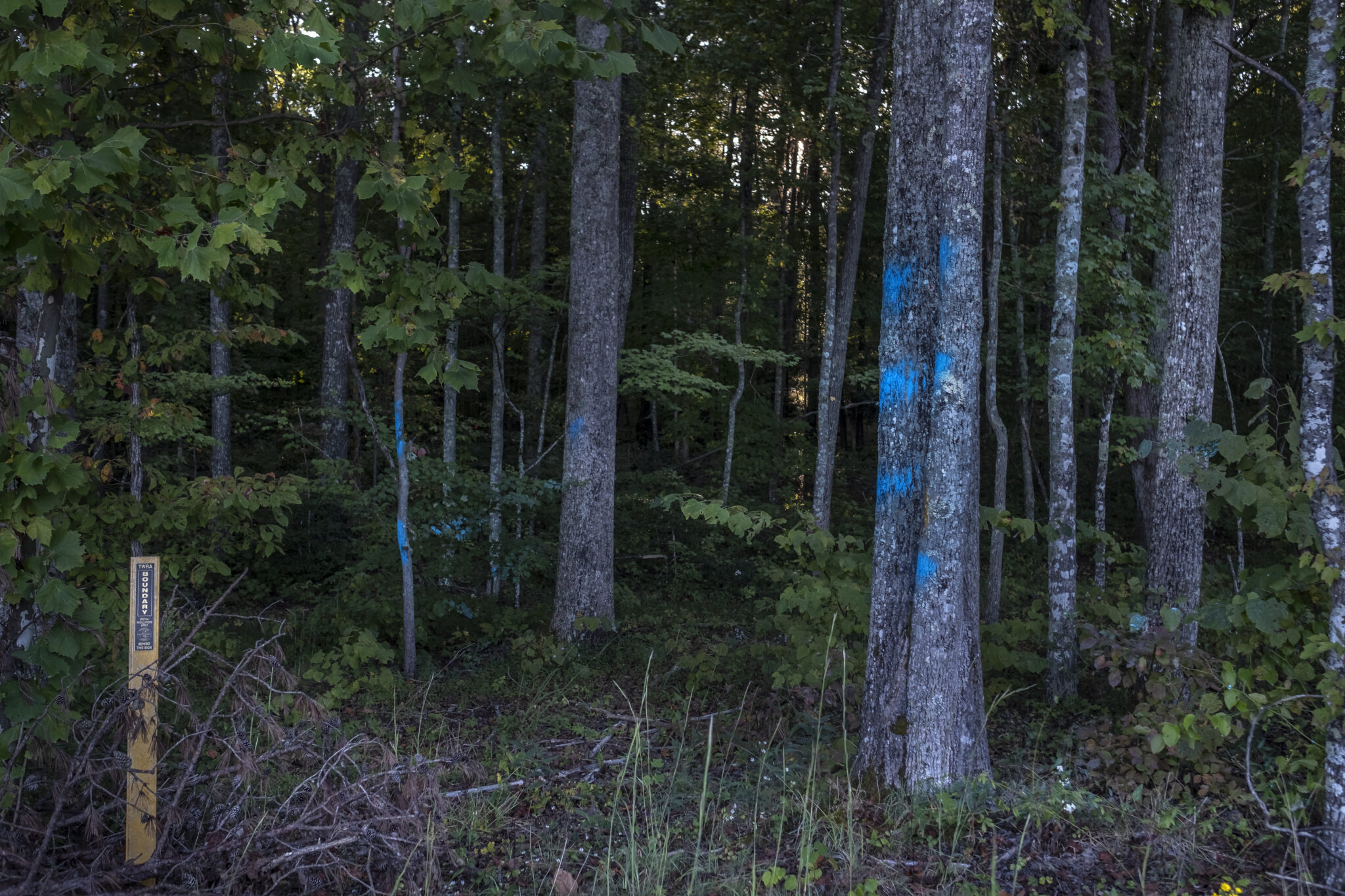
    DSCF8232 1 2048x1365 Tree trunks in the Bridgestone Firestone Centennial Wilderness Area in Sparta marked for clearcutting, despite local opposition.  John Partipilo/Courtesy Tennessee Lookout

    Hundreds of citizens publicly reject TWRA Middle Tennessee deforestation plans

    This story was originally published by the nonprofit Tennessee Lookout and is shared (with much appreciation) with Hellbender Press via Creative Commons License. 

    Officials with the Tennessee Wildlife Resources Agency faced considerable pushback Monday night (Oct. 4) at a public meeting in Sparta over plans to raze old growth forest in a popular hunting and recreation area located about halfway between Nashville and Knoxville.

    A standing room-only crowd of more than 200 people filled the town’s small civic center to hear directly from state officials about what had been — until now — an unpublicized internal agency plan to clear forest on public lands in the Bridgestone Firestone Centennial Wilderness Area to create grassland habitat for northern bobwhite quail, a game bird whose populations have plummeted in Tennessee.

    “Bridgestone Firestone is one of the gems of White County,” said Elizabeth McDonald, one of two dozen people who spoke against the plan until the meeting grew too late to get through the long line of residents who signed up to address the TWRA.

    “It’s a place that is so beautiful, so intact, and it can never be replaced. I appreciate caring about quails, but you have people in this room who, for generations, have called this home. You have to understand you are attacking our homes.”

    The meeting was organized by Rep. Paul Sherrell, a Republican who represents the area, after an internal TWRA map leaked to a local resident revealed plans to cut 2,000 acres of hardwood trees on the property bequeathed to the state by the Bridgestone Corporation in 1998.

    The map quickly circulated among residents, and so did the outrage. The old-growth timber slated for demolition lines the path heading to Virgin Falls State Natural Area, where the tree canopy also shades hiking trails through a series of scenic waterfalls. The forested area slated for removal forms part of a popular deer and turkey hunting area, too.

    Sen. Paul Bailey, R-Sparta, and Sen. Heidi Campbell, D-Nashville — who said she has heard complaints from her Nashville constituents and others across the state who routinely visit the wilderness area — also attended the meeting.

    In a series of powerpoint presentations, TWRA officials outlined the urgent need to establish grassland habitats in Tennessee, not only for the Northern Bobwhite, but for native plants and birds for whom savannas — sparsely treed grassland — are critical to survival.

    Clearing forest would benefit at least 70 species with the greatest conservation needs, said Wally Akins, TWRA’s wildlife and forestry assistant chief.

    “Closed-canopy forests have limited value to many species,” he said.

    Hundreds of native plant species remain essentially dormant underneath the forest canopy, waiting to emerge, said Dwayne Estes, executive director of the Southeastern Grasslands Initiative. Savannas are “the forgotten landscape of the South,” he said.