
Water (31)
5 big threats to the world’s rivers
Written by Tara Lohan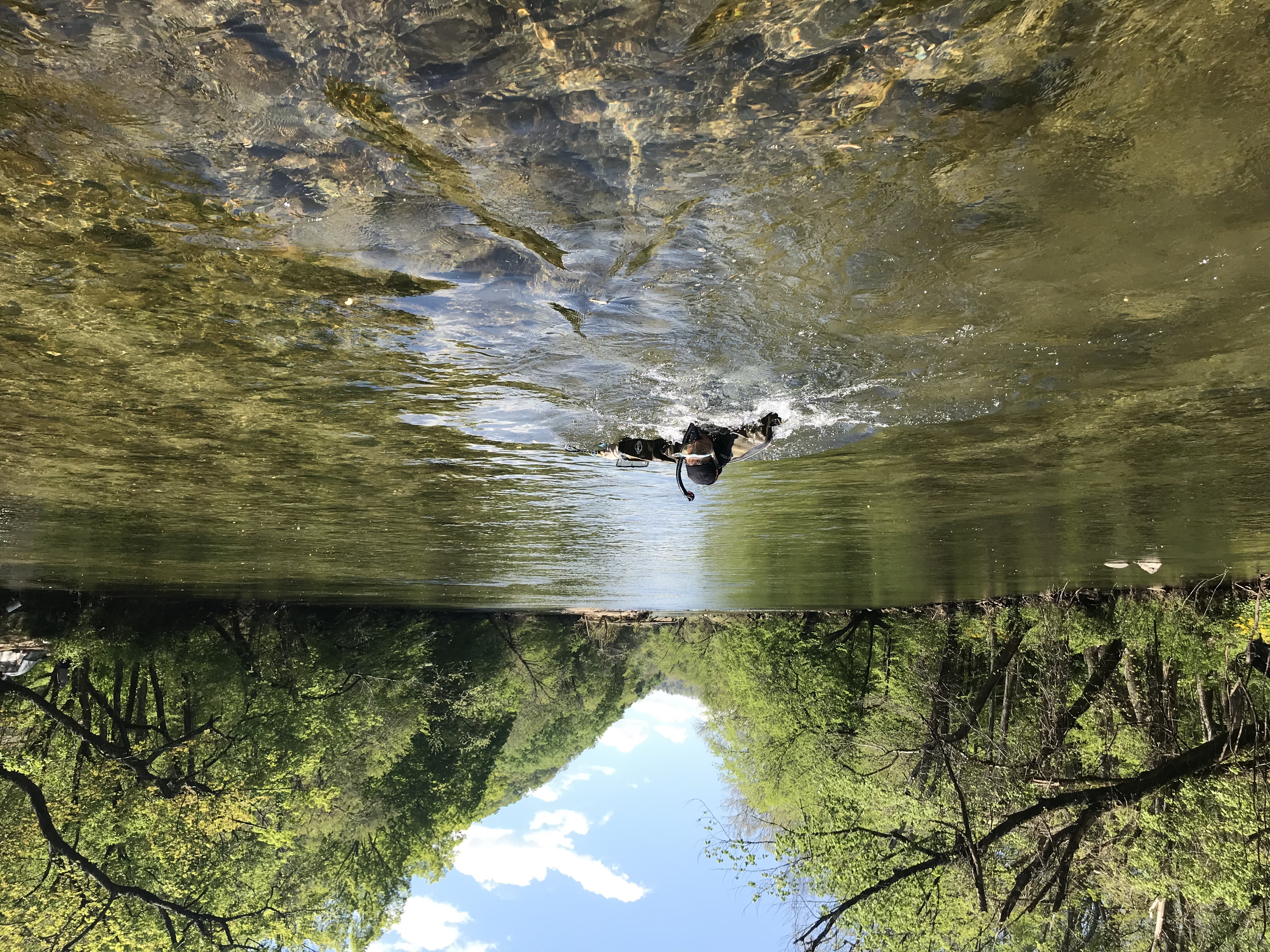 A biologist with Conservation Fisheries surveys a stretch of Little River near Walland, Tennessee to determine fish viability and identify rare species for transplantation. Thomas Fraser/Hellbender Press
Human activities have imperiled our waterways — along with a third of freshwater fish and other aquatic species
This story was originally published by The Revelator.
If we needed more motivation to save our ailing rivers, it could come with the findings of a recent study that determined the biodiversity crisis is most acute in freshwater ecosystems, which thread the Southern landscape like crucial veins and arteries.
Rivers, lakes and inland wetlands cover 1 percent of the Earth but provide homes for 10 percent of all its species, including one-third of all vertebrates. And many of those species are imperiled — some 27 percent of the nearly 30,000 freshwater species so far assessed by the IUCN Red List. This includes nearly one-third of all freshwater fish.
How did things get so bad? For some species it’s a single action — like building a dam. But for most, it’s a confluence of factors — an accumulation of harm — that builds for years or decades.
- freshwater science
- threats to rivers
- the conversation
- biodiversity
- freshwater biodiversity
- what are biggest threats to rivers and water
- are dams bad
- climate change in appalachia
- threats to clean water
- tara lohan
- dam obstructions
- grazing impacts on waterways
- river democracy act
- climate change
- dams
- water pollution
- freshwater pollution
- pollution prevention
- conservation fisheries
For the win: The storied snail darter swims back from the brink
Written by Southern Environmental Law Center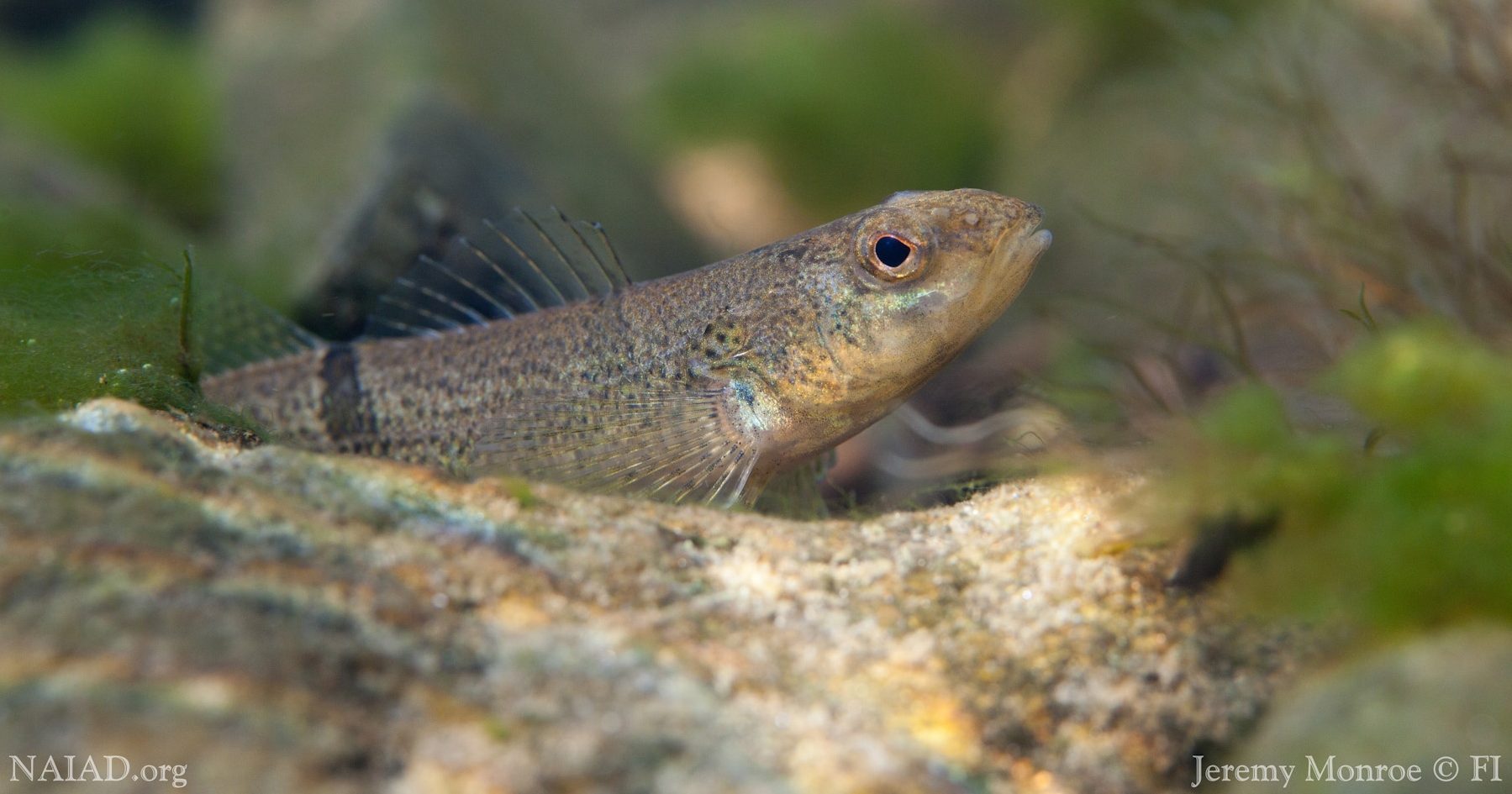 The snail darter, which caused an epic battle around TVA plans to dam the Tellico River in the 1970s, was recently removed from the Endangered Species List. Jeremy Monroe/Tennessee Aquarium
The little fish that caused a maelstrom over a TVA dam project gets the last laugh
TELLICO — In a win for endangered species protected by federal law, the U.S. Fish and Wildlife Service announced this week the fabled snail darter’s recovery and removal from the Federal List of Threatened and Endangered Wildlife.
Native to the Tennessee River watershed in Alabama, Georgia, Mississippi and Tennessee, the fish has long been an Endangered Species Act icon thanks to conservation efforts to save its habitat starting in the 1970s, when the Tennessee Valley Authority proposed construction of a dam on the Little Tennessee River. The snail darter (Percina tanasi) was central in the 1978 U.S. Supreme Court case Tennessee Valley Authority v. Hill, which solidified the scope of the then recently passed ESA.
- snail darter
- endangered species
- endangered species act
- tellico dam
- southern environmental law center
- snail darter removed from endangered species list
- tva vs hill
- little tennessee river
- eastern band of cherokee indians
- ramona mcgee
- george nolan
- tennessee valley authority v hill
- habitat conservation
- us supreme court
- percina tanasi
- threatened species
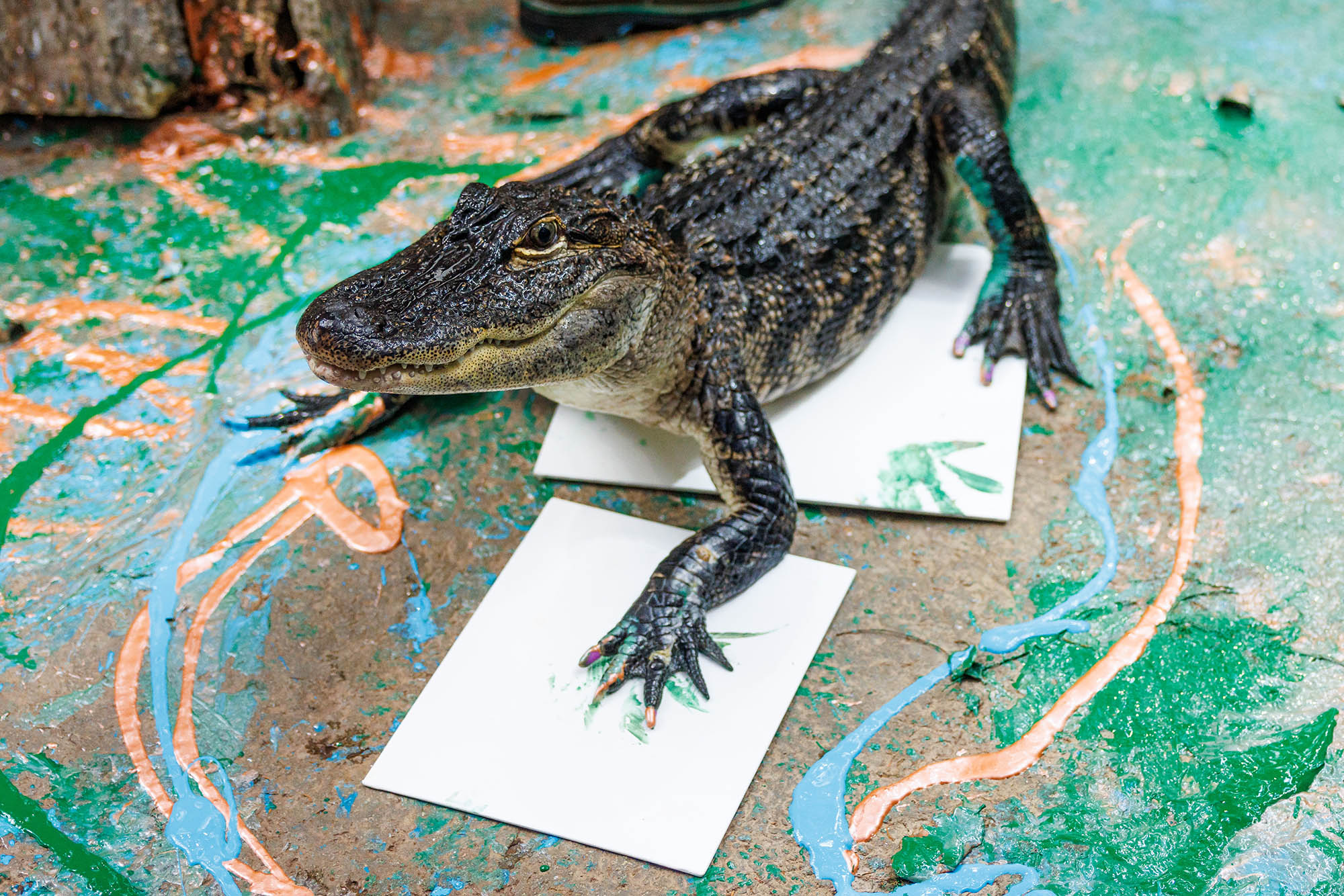 An American alligator (Alligator mississippiensis) paints art for the fall fundraising auction for the Tennessee Aquarium. The auction runs through Sept. 26. Tennessee Aquarium
Wildlife masterpieces mark an artistic autumnal fundraiser for the Tennessee Aquarium
CHATTANOOGA — While getting ready to tackle his next artistic masterpiece at the Tennessee Aquarium, Avior the red-ruffed lemur likes to take a few steps to center himself: languid naps in the sunshine, delicate nibbles of romaine lettuce, a resounding howl to focus his energy.
Only after these rituals are complete can this master of composition — a true “Lemur-nardo” da Vinci — begin putting paw and tail to canvas to create his next opus.
Avior’s latest triumph — made using non-toxic, animal-friendly tempura paint, naturally — is a 16-by-20-inch piece created in collaboration with his fellow lemurs and social media star Atlanta-based artist Andrea Nelson (TikTok video). Avior and Nelson’s masterwork is one of more than two dozen pieces of art made by aquarium animals now up for bid during the Tennessee Aquarium’s online fall fundraising auction. The auction will conclude at noon on Monday, Sept. 26.
Foreign freshwater jellyfish have been swimming among us since the 1930s
Written by Stephen Lyn Bales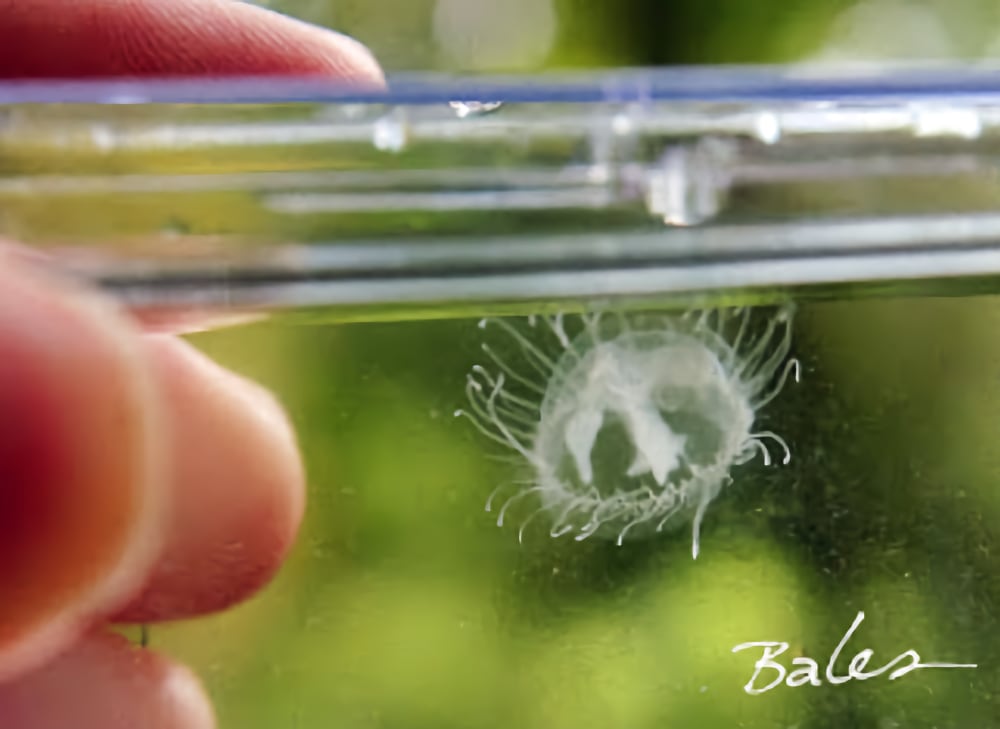
Freshwater jellyfish: Here one year, gone the next.
KNOXVILLE — Paddling along the still water of Mead’s Quarry Lake you notice the air bubbles created by your oars. They are all around your canoe near the surface.
It’s a hot early September afternoon and the nearly transparent bubbles seem to take on a life of their own. You slow to watch and yes, they undulate, rising and falling in the pristine water of the abandoned marble quarry.
Air bubbles do not undulate!
Taking a clear plastic cup, you lean over the gunwale and scoop up one of the penny-sized bubbles to get a closer look.
Tentacles? Air bubbles do not have tentacles. What you are looking at is a freshwater jellyfish and the heat of late summer is its mating season. It’s a blossom of jellyfish as hundreds gather together near the water’s surface. They are commonly known as peach blossom jellyfish.
Southeast Tennessee ridges and rivers will benefit from $10m infusion of federal natural resource funding
Written by Casey Phillips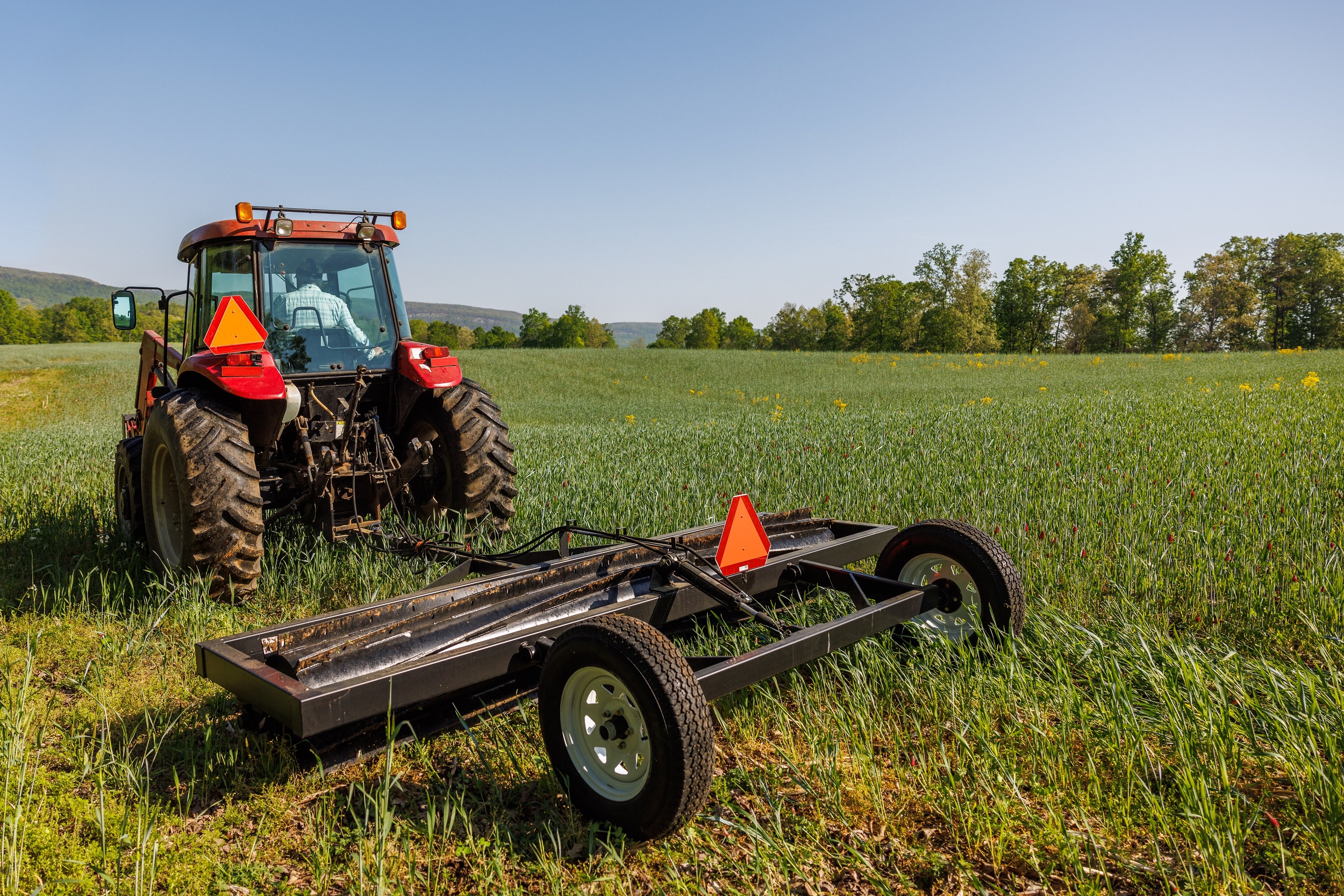 A crimper is attached to the back of a tractor on a farm in the Sequatchie River Valley. A relatively recent agricultural technique, crimping has been shown to reduce farmers’ input costs and improve soil quality. Recently, USDA approved funneling $10 million into a six-county region of Southeast Tennessee. This money will fuel conservation-minded improvements for landowners, including lowering the cost to rent equipment like crimpers and subsidize the planting of cover crops to improve soil health and reduce sedimentation in nearby streams. Tennessee Aquarium
Targeted collaborative conservation will help local agricultural operations improve soil and water quality and protect aquatic life
CHATTANOOGA — Tennessee is as much a patchwork quilt of farms as it is an intricately woven lacework of streams and rivers. Soon, farmers and the aquatic life living alongside them will reap the benefits of $10 million in federal funds to support water-friendly agricultural improvements in the rolling uplands of the state’s southeastern corner.
The U.S. Department of Agriculture (USDA) approved the allocation of more than $197 million to support Regional Conservation Partnership Programs (RCPP) throughout the nation. These initiatives promote coordination between USDA’s Natural Resources Conservation Service (NRCS) and partnering organizations that are already engaged in conservation efforts.
- tennessee aquarium conservation institute
- tennessee aquarium
- tennessee department of environment and conservation
- farmland preservation
- land water preservation in se tennessee
- usda
- regional conservation partnership program
- ridge to river
- walden ridge
- sequatchie valley
- laurel dace
- natural resources conservation service
- chattanooga environment
- southeast tennessee environment
- tennessee endangered fish
- rcpp
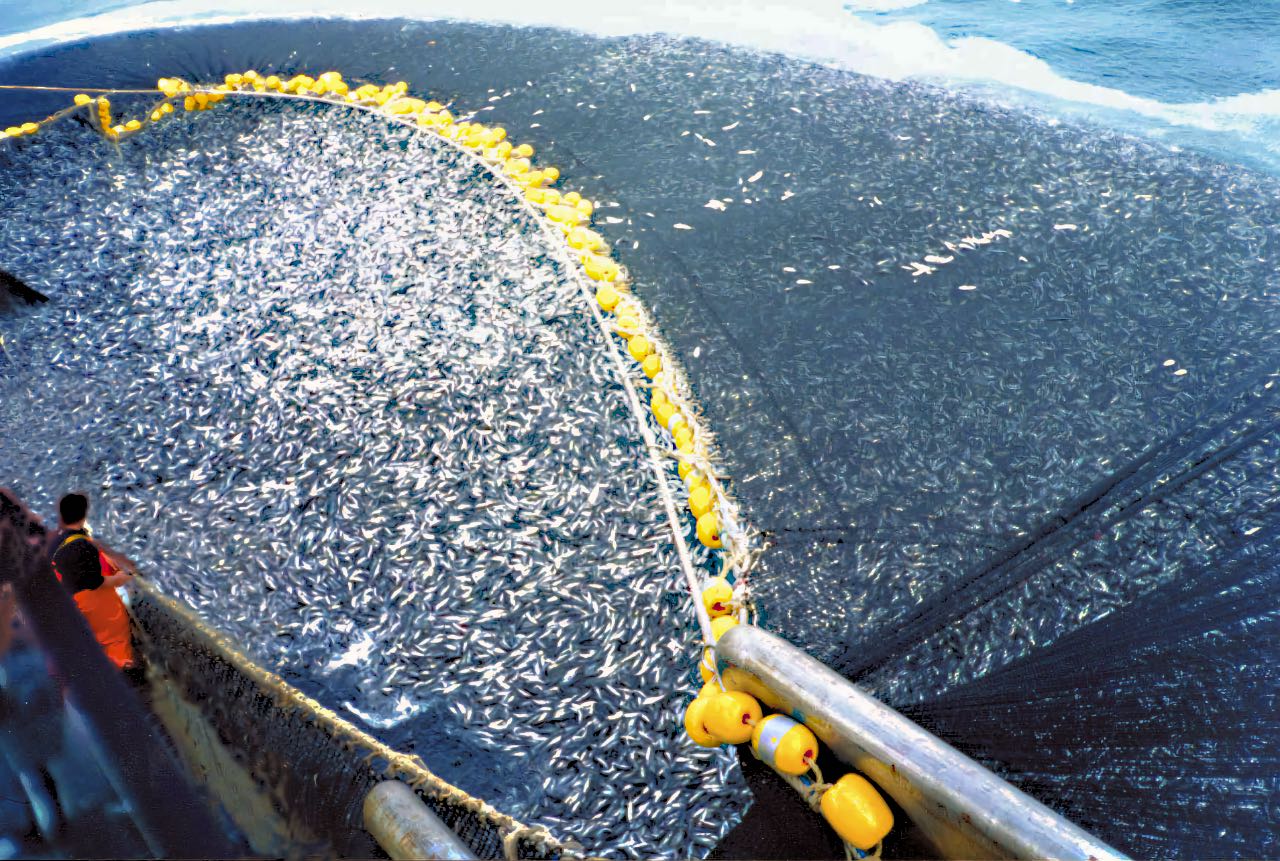 A purse seine on a Chilean fishing vessel captures tons of mackerel. NOAA
We need to navigate to where fish sticks in your mind
You can read Coty Perry’s full report on overfishing at YourBassGuy.com.
When you hear about sustainability, one thing that often flies under the finder is the topic of overfishing. Many will say that overfishing is a natural response to the need for more fish, but it runs much deeper than that.
The goal of this article is not to shame any specific industry, country or company. The goal is to shine light on an issue I believe is highly under-reported by mainstream media.
Coral, waste, water and weeds: Environmental vignettes from a UT journalism class
Written by Kaylee Walper, Mallory DeVore, Grace Ellison, Kathryn Kavanagh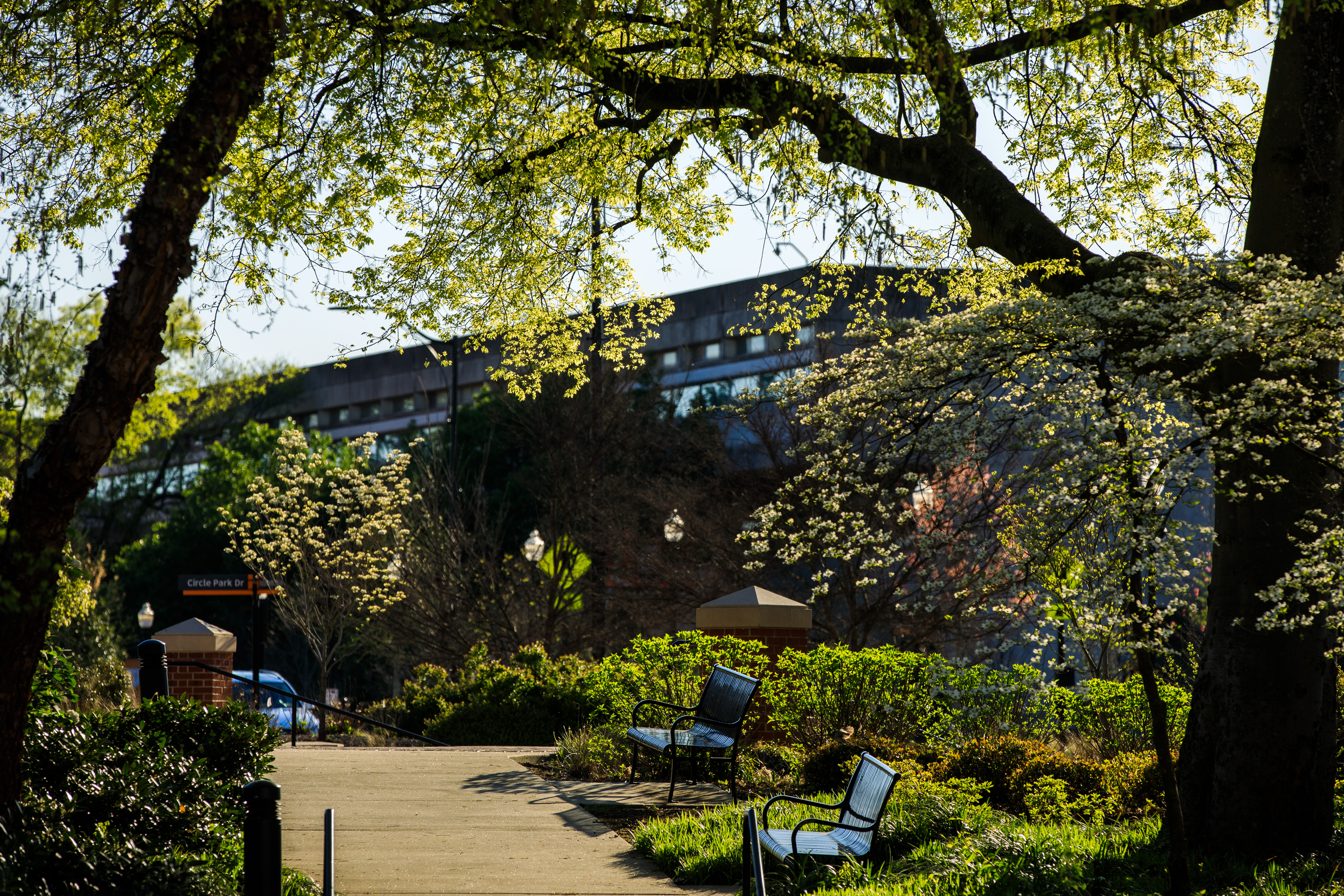 An empty Circle Park is seen in April. The park is adjacent to the UT School of Journalism and Electronic Media. Steven Bridges/University of Tennessee
Everybody has a story about the natural environment. Look around, and into yourself.
University of Tennessee journalism professor Mark Littmann asks students in his environmental writing class every semester to write short sketches about environmental issues they may observe during any given day. Such an assignment requires an almost poetical approach. Here's a sampling from spring semester.
A reef of bones
Huge schools of rainbow-colored fish weave through the brightly colored corals as Sir David Attenborough describes a day in the life of a fish on the television screen. A little girl is mesmerized; this is no Disney fantasy but real life. The nature shows on Animal Planet capture her imagination and soon mornings and afternoons are spent watching big cats and meerkats navigate the wild spaces they call home. She finds an instant favorite in the book “The Rainbow Fish” and celebrates turning four with a sparkly rainbow fish cake, hand decorated with sprees for rainbow scales. She insists someday she will swim among the fish in their magical undersea world.
Updated: Summer of weather anomalies continues as deadly floods ravage SE Kentucky
Written by Thomas Fraser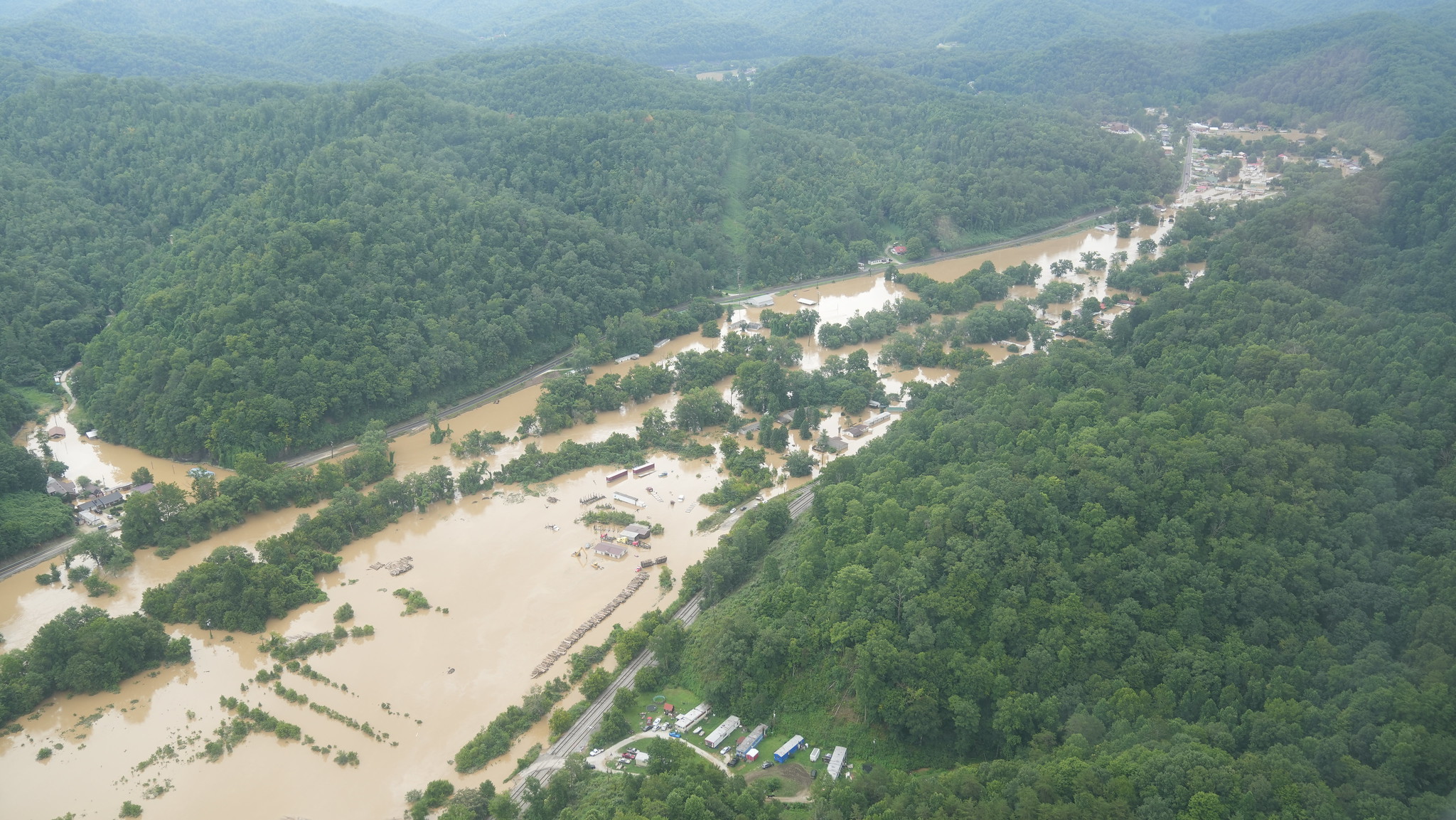 Heavy flooding is seen in eastern Kentucky this weekend. State of Kentucky/Office of Gov. Andy Beshear
Another round of severe flooding hits the Southern Appalachian region
UPDATED: The death toll from last week’s unprecedented flooding in Kentucky reached at least 29, as some areas contended with additional flooding over the weekend. Fifteen of those, including four children, died in Knott County, which is about 100 miles north of Kingsport.
Water service to nearly 67,000 connections has been affected, as well as 17 wastewater-treatment systems in eastern Kentucky, according to Gov. Andy Beshear’s office.
“We are currently experiencing one of the worst, most devastating flooding events in Kentucky’s history. The situation is dynamic and ongoing,” Beshear said in a statement.
“What we are going to see coming out of this is massive property damage and we expect loss of life. Hundreds will lose their homes. And this will be yet another event that will take not months, but years, for our families to rebuild and recover from.”
 Tennessee Aquarium
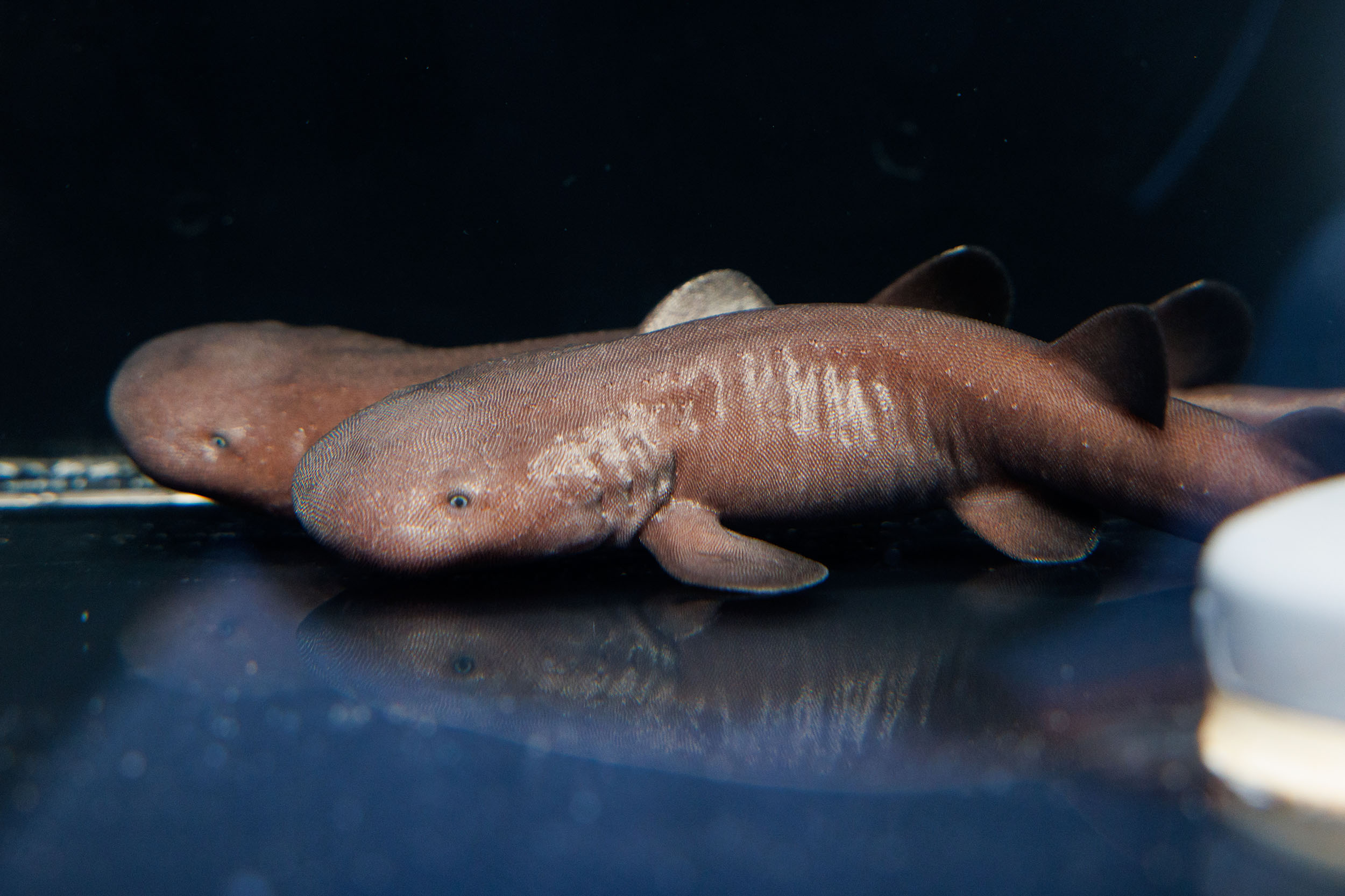
Tennessee Aquarium hatches endangered shark species
CHATTANOOGA — The Tennessee Aquarium reached a significant milestone just in time for Shark Week with the recent hatching of three critically endangered short-tail nurse shark pups.
The diminutive youngsters, which hatched July 7, are the product of three adult short-tail nurse sharks — one male and two females — which arrived at the aquarium along with eight juveniles and eight fertilized eggs from a facility in Canada last year.
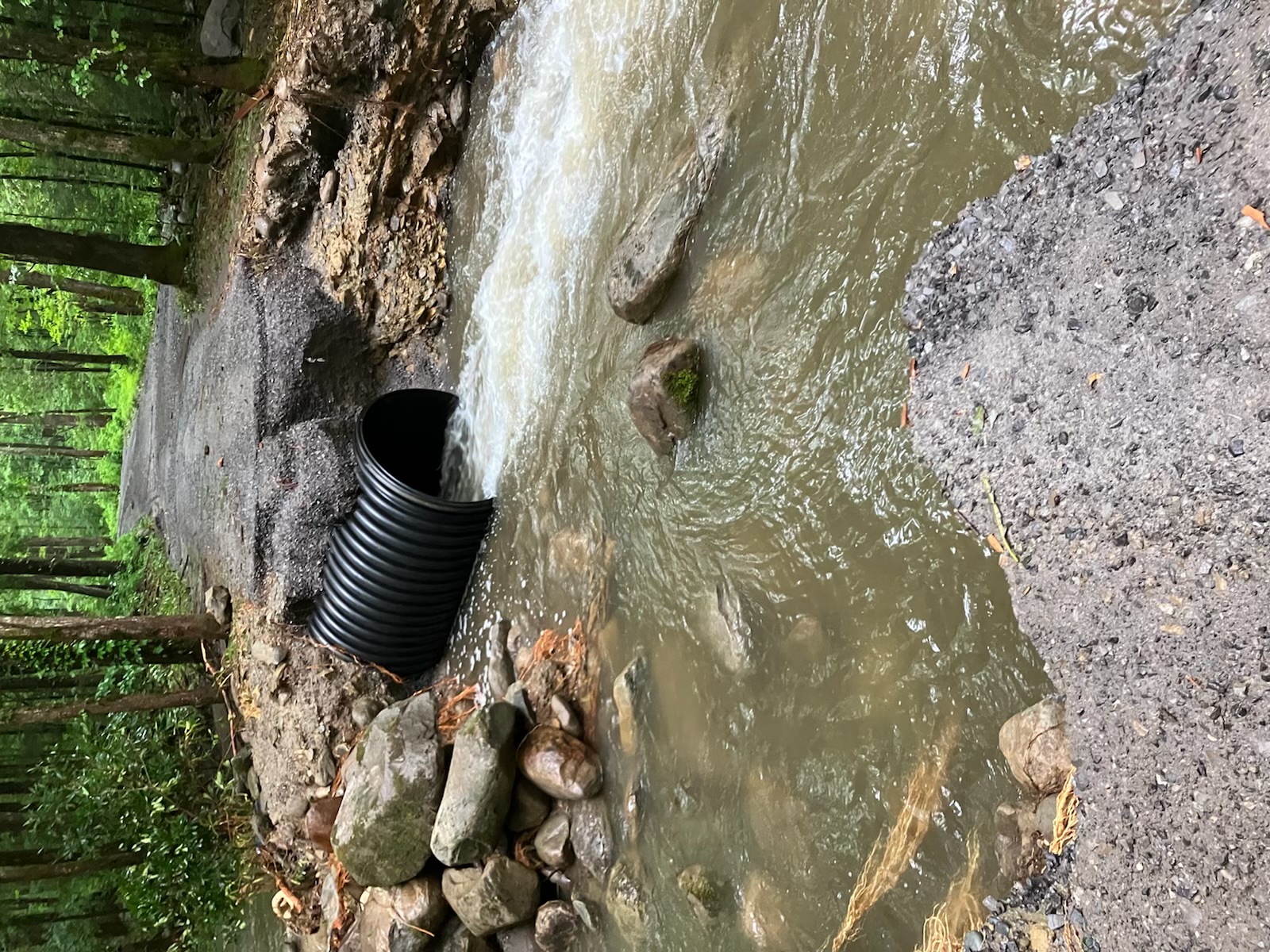 A washout is seen along Porters Creek Road in Great Smoky Mountains National Park following torrential rain on July 12. National Park Service
Flooding causes Smokies damage, prompts water advisory for Sevierville
SEVIERVILLE — Extremely heavy rain on July 12 in the Smoky Mountains caused a cascade of problems now just coming to light.
Sevierville and Sevier County issued a boil-water advisory early Thursday after debris flushed by Tuesday’s floodwaters clogged the city water utility’s main intake on the French Broad River, leading to pressure decreases that opened up lines to possible outside contamination.
In Great Smoky Mountains National Park, Greenbrier campground was closed indefinitely after the swollen Middle Prong of the Little Pigeon River wiped out roads, trails and bridges in the area.
More...
Georgia’s Ocmulgee River is a case study in the decline of Southern river fisheries, and their revival
Ethan Hatchett is a writer for the Georgia Department of Natural Resources.
MACON — The Ocmulgee River has changed. The cloudy water once ran clear. The sandy bottom was once rocky. Fish swam upriver to breed from places as distant as the Altamaha River, which the Ocmulgee and Oconee rivers join to form near Lumber City and the Atlantic Ocean.
European settlement changed the river. Centuries of agriculture and development stripped away much of the land’s vegetation that filtered the flow, causing the Ocmulgee to fill with sediment. The soil particles gradually moved through the waterway, covering gravel that fish spawned in, smothering fishes’ eggs, mucking up the water and even building up on the banks, saturating the ground with sediment.
It is impossible to know how many freshwater fish the Ocmulgee lost since the first Europeans arrived. Many species disappeared without being discovered. Yet on a clear afternoon in May, DNR aquatics biologist Paula Marcinek led a team on the upper Ocmulgee in search of robust redhorse, a “lost” fish found in 1991.
Read DNR’s blog post about efforts to restore the robust redhorse, plus news of a new grant that will expand the work and rare video of these fish spawning.
Tennessee Aquarium marks a milestone in its effort to bring native brook trout back to mountain streams
Written by Casey Phillips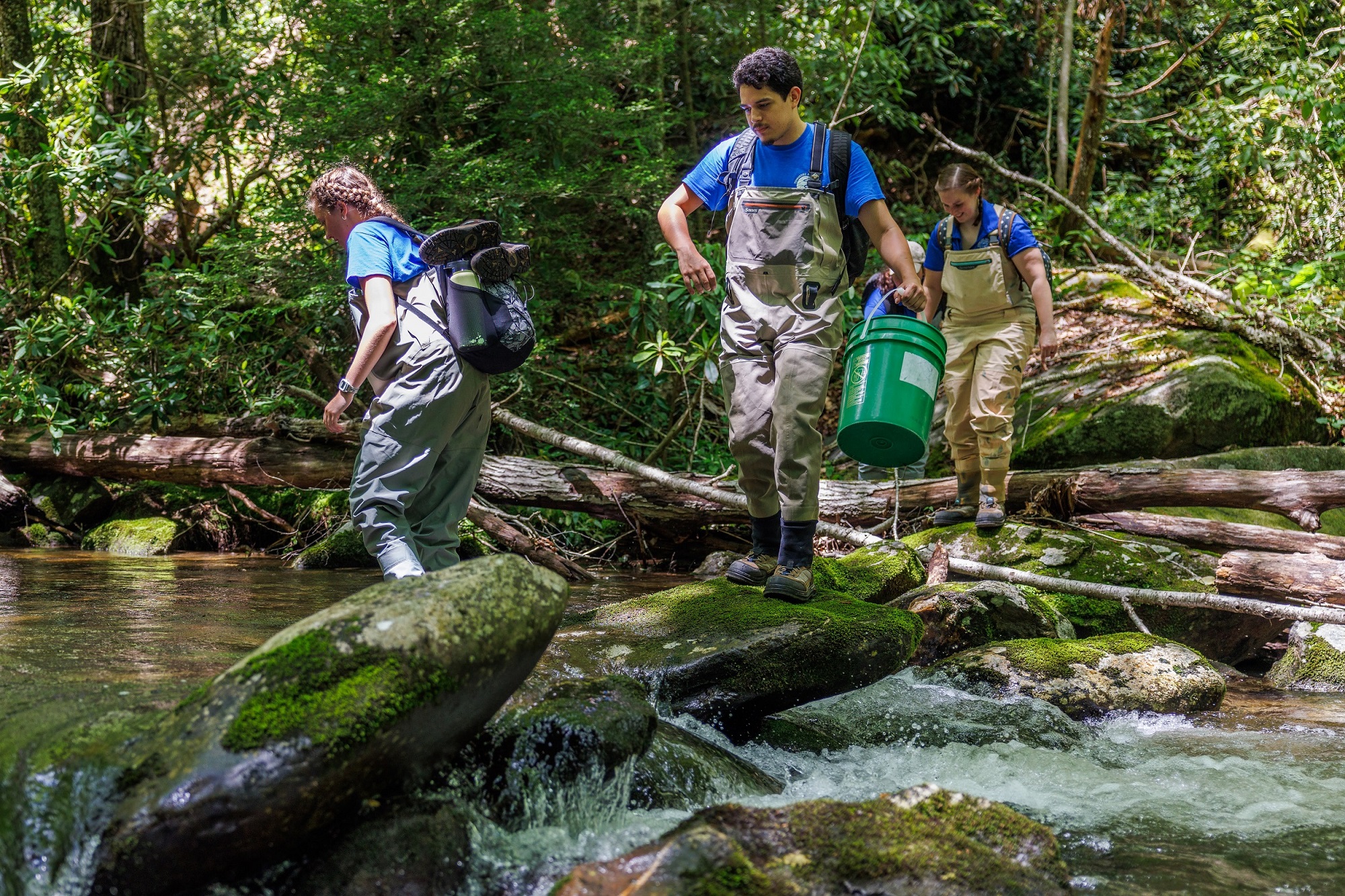 Reintroduction Assistant Kaylee Clayton, left, Jim Hill Fellow for Conservation Anthony Hernandez, center, and Reintroduction Biologist Teresa Israel cross a stream during a Southern Appalachian brook trout release. Tennessee Aquarium
Emblematic brook trout get a second chance at home in Southern Appalachian streams
Casey Phillips is a writer for the Tennessee Aquarium.
CHATTANOOGA — A team from the Tennessee Aquarium, Tennessee Wildlife Resources Agency and Trout Unlimited hiked along — and occasionally waded through — a pristine tributary of South Fork Citico Creek in Cherokee National Forest.
Navigating an obstacle course of tangled mountain laurel branches and moss-slickened boulders in late May, the team followed the stream as it gently descended through the Appalachian uplands. When a calm pool or shaded rocky overhang presented itself, they paused to dip their nets into five-gallon buckets filled with wriggling juvenile Southern Appalachian brook trout.
These little fish, raised to about two inches over six months, were the focus of more than six months of work at the Tennessee Aquarium Conservation Institute and the impetus for the hours-long trek into the East Tennessee woods.
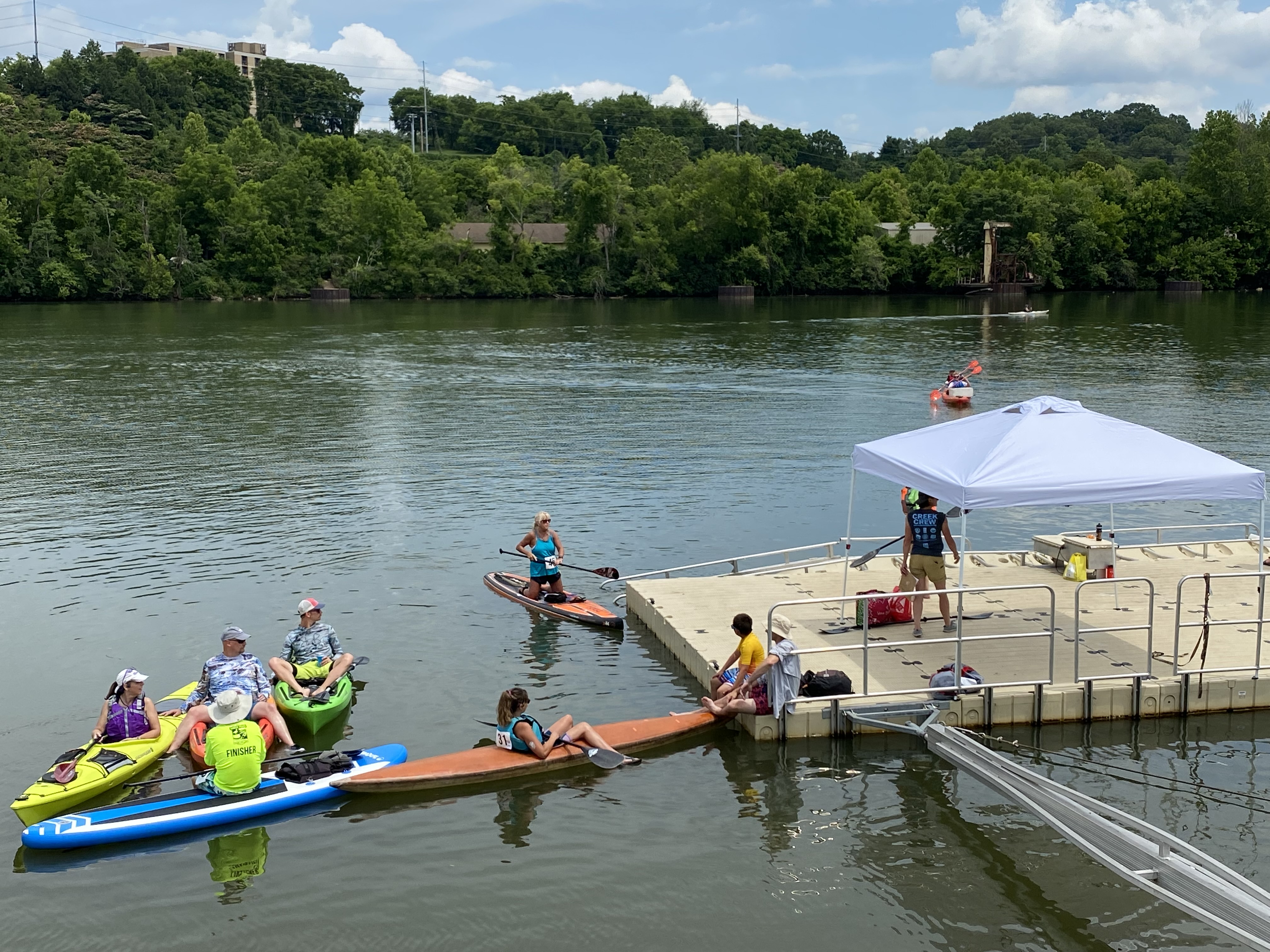 Racers of all stripes assembled Saturday for Cheers to Clean Water boat races on the Tennessee River. Keenan Thomas/Hellbender Press
Cheers to Clean Water celebrants race, learn and scrub the river at Suttree Landing Park
KNOXVILLE — Beneath the sound of a beckoning banjo, partiers and athletes alike paddled the shores of Suttree Landing Park, picking up trash as they floated down the Tennessee River.
The fifth Cheers to Clean Water Celebration on Saturday (June 11) featured 4k- and 8k-kayak races, a cleanup in and around the Tennessee River, and a central gathering area punctuated by booths for land- and water-based advocacy organizations.
“It’s both on water and on land, cleaning up this section of the Tennessee River,” AmeriCorps member Madison Moore said on Saturday from the park. “After the boating is over, they’ll come down here for the celebration, where we have a whole bunch of other vendors that are helping us make this day a possibility.”
The celebration promotes the importance of maintaining and cleaning major waterways like the Tennessee River.
- water quality forum
- knoxville river
- knoxville tennessee river shoals
- keenan thomas
- suttree landing park
- kayaking downtown knoxville
- cheer to clean water celebration
- Tennessee River
- tennessee river paddle trail
- kayaking suttree park
- hellbender press kayaking
- knoxville kayak race
- kayak race knoxville june 11
KNOXVILLE — Knox County and the Water Quality Forum will host the fifth-annual Cheers to Clean Water Celebration and Clean-Up on Saturday (June 11) at Suttree Landing Park across the river from downtown.
The event, which includes a water race for kayaks and paddle boarders, kicks off at 11:30 a.m. and registration is open until 10:30 a.m. the day of the event. Following the race there will be a celebration that includes local vendors and booths, kids’ activities, kayaks for rental, blue grass music, food trucks, rain barrels, and prizes. The celebration and cleanup are free and open to the public. The race costs $15. Local breweries have donated beer for purchase.
“This event is a fun way to promote the importance of keeping our rivers and streams clean,” said Knox County Mayor Glenn Jacobs.
For a full list of prices and to register for the event click here.
The Water Quality Forum is a coalition of diverse partners including local governments, non-profits, utility companies and businesses that work together to keep East Tennessee waters clean. The Knox County stormwater office is working with the forum to host the event.
— Knox County government