
The Environmental Journal of Southern Appalachia

Empty halls, full hearts: Farragut students and teachers adapted with aplomb to pandemic challenge

Written by Ivy Zhang

IMG 7482An empty corridor at Farragut High School.  Ivy Zhang/Hellbender Press

Despite COVID restrictions, Farragut High students still sought their shine

Hellbender Press intern Ivy Zhang is a junior at Farragut High School. She plans a career in journalism and digital media.

KNOXVILLE — For the 2020-2021 school year, Knox County Schools provided two choices for families: virtual learning or in-person schooling. Many students chose to do virtual school and participated in less extracurricular activities.

Students felt isolated. School clubs halted for the entire school year. The disruption caused by the novel coronavirus (COVID-19) affected the whole world, as well as local communities. 

Farragut High School, No. 2 in Knox County rankings, is a great example of how the COVID-19 pandemic affected students. 

Farragut is a suburban town in East Tennessee, with a population of over 22,500 that loves the small-town atmosphere and is deeply involved with its schools.

During the pandemic, a significant amount of economic and social activities at school and across the community were reduced or canceled, including group gatherings, school activities, sports games, and volunteering. Classes were shifted online, with mixed results.

“Virtual classes allowed students to be invisible because many students wouldn’t be on camera. It was hard to build the teacher and student relationship,” said Laura Smithey, an AP language and speech teacher at FHS.

“As classes ended up to be virtual, we struggled to do class discussions. Virtual classes prevented interaction among peers and talking. Some students couldn’t participate or be fully involved,” said FHS AP U.S. history teacher Clare Brimer.

Some classes applied the hybrid format. Teachers displayed the virtual students’ cameras onto the projector to connect with the in-person class.

Communication was limited in the virtual classroom. Students found it difficult to ask teachers questions directly, while it also remained challenging for teachers to involve every student in class conversations or group assignments. 

“Group work and collaborations were different than they were before, and I had to put students into groups based on how they were sitting,” said Carrie Hastings, an AP research and economics teacher. She said schools did contact tracing to prevent the spread of COVID-19.

Math classes were a special challenge. “Last year, we had one in-person and one virtual class going on at the same time. Unit tests for both classes simultaneously were tough,” said Jakob Gulledge, honors pre-calculus and AP calculus teacher.

“The calculus course could be confusing. It requires students to frequently ask questions to construct a better understanding. The biggest change when classes had to be taught virtually was that there weren’t as many opportunities for students to talk with each other or communicate with me,” Gulledge said.

Communication was limited in the virtual classroom. Students found it difficult to ask teachers questions directly, while it also remained challenging for teachers to involve every student in class conversations or group assignments. 

The coronavirus also restricted extracurricular activities in schools. 

Student leaders and representatives from Farragut High School indicate many school clubs took off the whole school year, memberships were cut, participation dropped, fundraisers and cultural events were eliminated, and competitions and meetings all moved online, making it difficult to organize. 

Many clubs tried to plan activities that members could do apart from one another.

“With Key Club, we actually had to stop a lot of the things we previously loved. Our conventions were online and many of the fun field trips, like Dollywood, did not happen,” said FHS Key Club President Cathleen Horwege. 

“However, we adapted by moving to a lot of outdoor volunteering, which has now become a part of our identity. 

“The officers before me planned a lot of nature-related things in order to maintain social distance, and we just continued that theme because we loved it so much,” Horwege said. Key Club now has a committee designed just for planting and another for cleanup.

Although the coronavirus and social distancing set limits on lots of activities, students were able to learn how to adapt to the new changes. They are continuing to shine in the fields they love.

“In 2021, we worked to hold online JSA conventions, but attendance dropped. Our chapter debates were entirely online. Many Farragut students, however, adapted to virtual conventions and were able to win speaking awards and make friends through them,” said Rena Liu, president of FHS Junior State of America (JSA).

“We have mostly succeeded in bringing back in-person events. Farragut JSA attended Winter Congress in person in Columbus, Ohio last month and is planning on going to Chicago for Spring State. However, we are still using virtual organizing to our advantage.

“We have continued our Instagram Black History Month Story Initiative, a voter registration drive that is publicized online,” Liu said.

With the help from passionate student leaders, activities were eventually brought back to school and the community, and many gained more experiences and leadership skills as a result of the pandemic restrictions. 

“Chess Club stopped for a year, and we restarted this year. I found more connections during the time reviving the club than ever before,” said FHS Chess Club President Justin Li.

Rate this item
(3 votes)

Related items

  • Red tape and busy schedules limit use of outdoor classroom at Farragut High School
    in News

    IMG 5406The town of Farragut owns the outdoor classroom property on Campbell Station Road at Farragut High School. It’s difficult for students and teachers to use the outdoor classroom as much as they’d like. Ivy Zhang/Hellbender Press

    An educational outing to a living laboratory by the high school is considered a field trip

    Hellbender Press intern Ivy Zhang is a junior at Farragut High School. She plans a career in journalism and digital media. 

    KNOXVILLE  — The best place to learn about the natural environment is not in a classroom. It’s outside.

    Teachers and students at Farragut High School said the school’s outdoor classroom improves academic performance and there is a schoolwide desire to utilize it even more as an educational resource.

    Students show more interest in learning when they are outside in a calming, natural environment, teachers said. And for those studying the biological sciences, outdoor classrooms serve as a living laboratory for the study of soils, trees, plants, animals, insects and other natural resources.

  • Deadly natural disasters have ravaged hardscrabble Knoxville for generations. Covid-19 takes the cake.

    default

    Hard Knox Wire: A brief history of Ktown's worst natural disasters

    The Covid-19 pandemic currently could go down in history as Knoxville's worst hard time (to borrow a phrase from Timothy Egan), but a litany of natural disasters preceded the international outbreak of respiratory disease that killed 629 people in Knox County as of Sept. 8, according to the Knox County Health Department. Only half of the county's residents have been vaccinated, according to a New York Times database, and more than 10 percent of the population has been infected with Covid-19, which can carry life-long health implications.

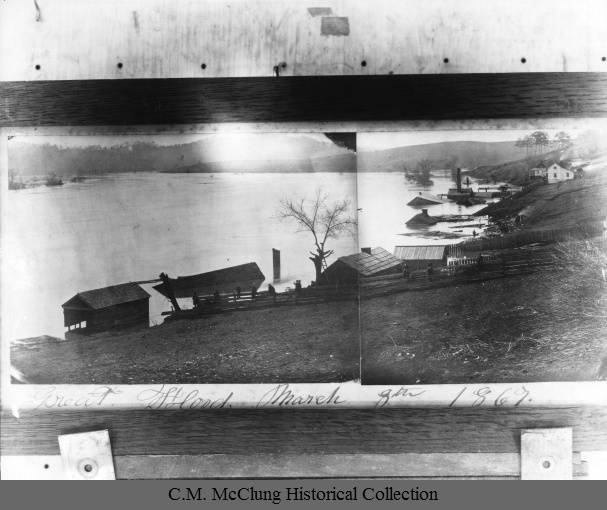
    Hard Knox Wire has a great rundown of the Covid crisis and other natural disasters that the city and region have faced in its ongoing Knoxville history series. They include the far-flung effects of the New Madrid earthquake; periodic flooding that devastated downtown and outlying areas before TVA dammed the Tennessee River; a Cocke County plane crash that killed all aboard, including noteworthy Knoxvillians; and, perhaps, appropo, the smallpox and cholera breakouts that struck the city in the 1800s.

    History is a great teacher, and thanks to JJ Stambaugh of Hard Knox Wire and Jack Neely of the Knoxville History Project for keeping us on our toes in regard to the past. 


  • Tennessee Theatre latest major venue to require vax proof or test result for entry

    The Tennessee Theatre announced Monday it will require proof of inoculation against Covid-19 or a recent negative test for the virus before entry into the historic, storied theater on Gay Street in Knoxville. The theater will also require that all audience members be masked. The new rules are effective immediately.

    The theater said in an email that increasing rates of infection in the Knoxville area and elsewhere in the country — predominantly in the Southeast — prompted the public-safety decision.

    ”Because of this, the Tennessee Theatre is enacting some new (Covid) protocols to allow us to continue presenting events while doing our best to keep our audiences safer and healthier.“ The rules will be in place at least through Halloween, according to the theater.

    ”While we take these necessary steps to remain open and serving the community while providing a safer environment for all, we ask for patience and understanding as we continue to navigate a challenging period in the Tennessee Theatre’s 93-year history.”

    The negative test must have been administered within the preceding 72 hours.

    Some upcoming shows and events at the Tennessee Theatre into October include this week’s screening of the Goonies; three Knoxville Symphony Orchestra Masterworks Series performances; the Righteous Brothers; and an Alton Brown appearance.