The Environmental Journal of Southern Appalachia

Keeping energy inside: Grant to install 3-D printed walls at Knoxville’s oldest public housing complex

Written by

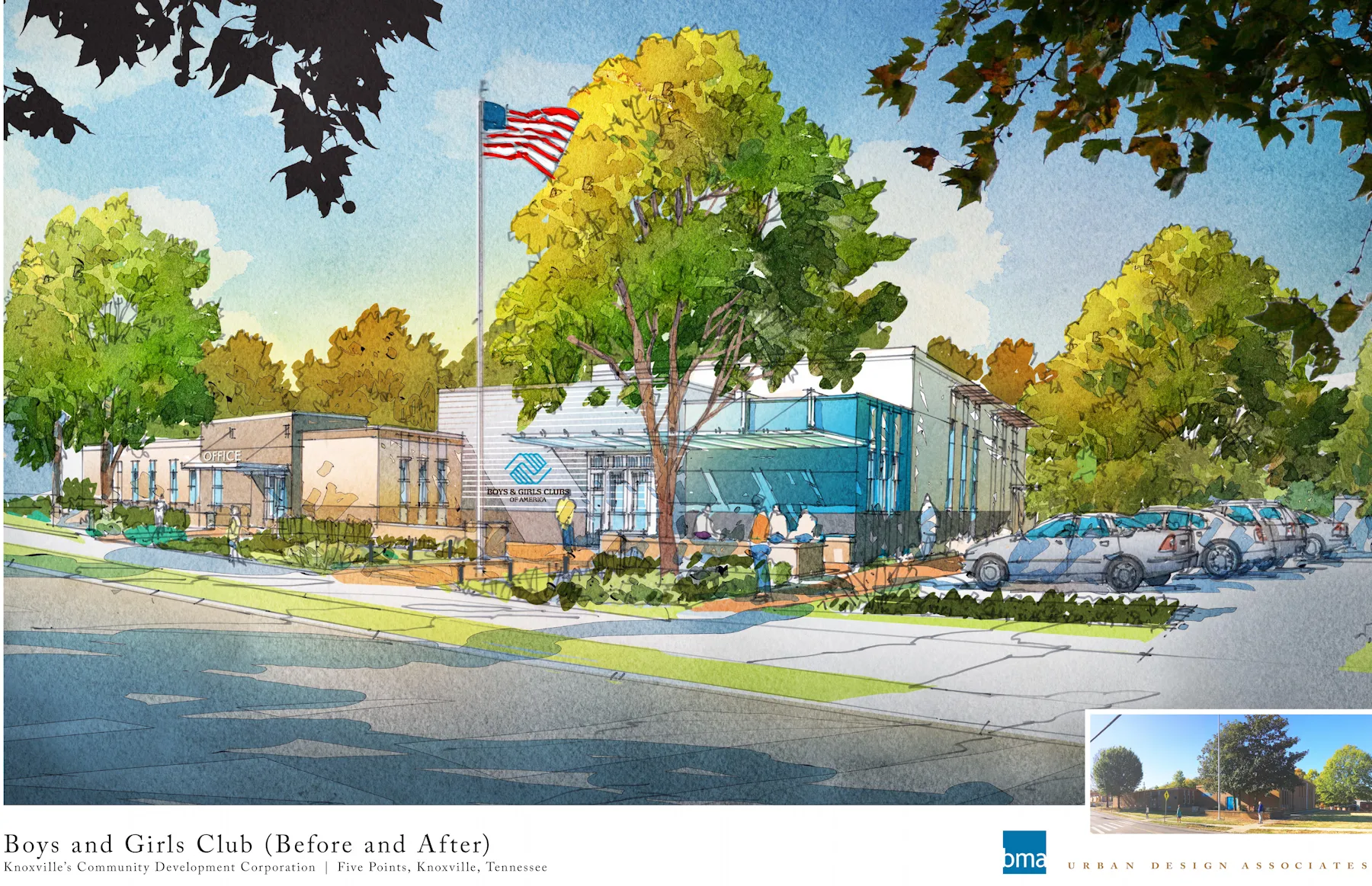
boys and girls club before and afterThis is a possible result of ORNL/KCDC energy efficiency improvements set for Knoxville public housing funded by a Department of Energy grant. The project will include the Boys & Girls Club.  © 2016 urban design association

Energy-efficiency upgrades based on ORNL walls set for Knoxville public housing

KNOXVILLE — A city public housing project almost a century old is going to receive 3-D printed energy efficiency upgrades thanks to a grant from the U.S. Department of Energy.

Scientists at Oak Ridge National Laboratory will partner with Knoxville’s Community Development Corporation to retrofit eight to 12 buildings at Western Heights using 3-D printed exterior “overclad” panels equipped with heat pumps and heat recovery systems. The Boys & Girls Club building at Five Points in Morningside will receive the same treatment.

The effort will be one of seven demonstration projects nationally funded by a $32 million Department of Energy grant. The renovation techniques reduce disruption to tenants, since residents won’t have to move out during installation, while also saving energy and costs. 

The $5 million local grant will cover ORNL manufacturing, installing and monitoring the energy-efficient panels and heating/air conditioning system. “KCDC has collaborated with ORNL for over a year to identify an opportunity to partner on an initiative focused on energy efficiency and environmental justice,” Ben Bentley, CEO of KCDC, said in an email.

The high-tech upgrades to the residential buildings in Western Heights are slated for completion in 2023, Bentley said. The new technology will be applied to eight to ten single-story duplexes (about 16 to 24 apartments) out of the 63 total buildings undergoing renovation during KCDC’s larger “Transforming Western” project. 

The interiors of the oldest buildings in the complex, which date to the 1930s, were already renovated in recent years. (Additional 1950’s-era Western Heights buildings are being replaced.)

The Five Points Boys & Girls Club retrofit will finish in 2024-25, Bentley said. 

The administration of U.S. President Joe Biden has set a goal of net zero carbon emissions by 2050.

According to the Department of Energy, U.S. buildings use 40 percent of the nation’s energy and 75 percent of its electricity. Altogether, the building sector is responsible for 35 percent of American carbon emissions. The innovative technologies being tried in these projects are projected to cut thermal energy use in buildings by three-quarters. ORNL will monitor the actual energy savings at the KCDC buildings. 

Residents typically pay for utilities using an allowance that comes with their federal housing subsidy. The allowance will drop along with energy consumption, so individual residents won’t save money. But the reduced costs will provide KCDC with more cash flow and borrowing capacity at the complex, “which will directly improve the quality of housing units through reinvestment,” Bentley said.

This is not the first time KCDC has sought to improve the energy efficiency of its units. In 2006, it entered an energy performance contract with Ameresco that included energy-efficient plumbing, lighting, appliances, windows, HVAC, roofing and other measures installed at all KCDC properties. The $9.2 million cost led to $17.7 million in savings since 2008, Bentley said.

Bentley noted that historically, low-income communities have been disproportionately affected by environmental issues, and new technology is critical to improving problems like air quality.

“In many cases, affordable housing developments with limited budgets will be the last to be able to incorporate these new technologies,” Bentley said. “That’s one reason we’re so excited about the partnership with ORNL, as it will allow us to test a model that can potentially be replicated at other affordable housing properties across the country.”

Bentley noted that in some cases, energy efficiency can make the development of new affordable housing more financially viable.

Knoxville, like the rest of the nation, is facing an affordable housing shortage, which the city and its partners are scrambling to address. Almost half of city renters are considered cost-burdened because they pay more than 30 percent of their income for housing. The city has committed more than $16 million to an Affordable Housing Rental Development Fund to incentivize the construction of affordable rental housing. In September, Knoxville area agencies received a record high of 244 requests for assistance with rent and utilities.

Bentley said if the new ORNL technologies live up to their promise, KCDC might pursue using them more widely even after the grant ends. 

“If these technologies prove to create significant energy efficiency and can be acquired at an affordable price point, then yes, we would absolutely look to use this type of technology in the future,” he said.
Rate this item
(1 Vote)

Related items

  • DOE energy justice official: New power paradigms must protect the poor
    in News

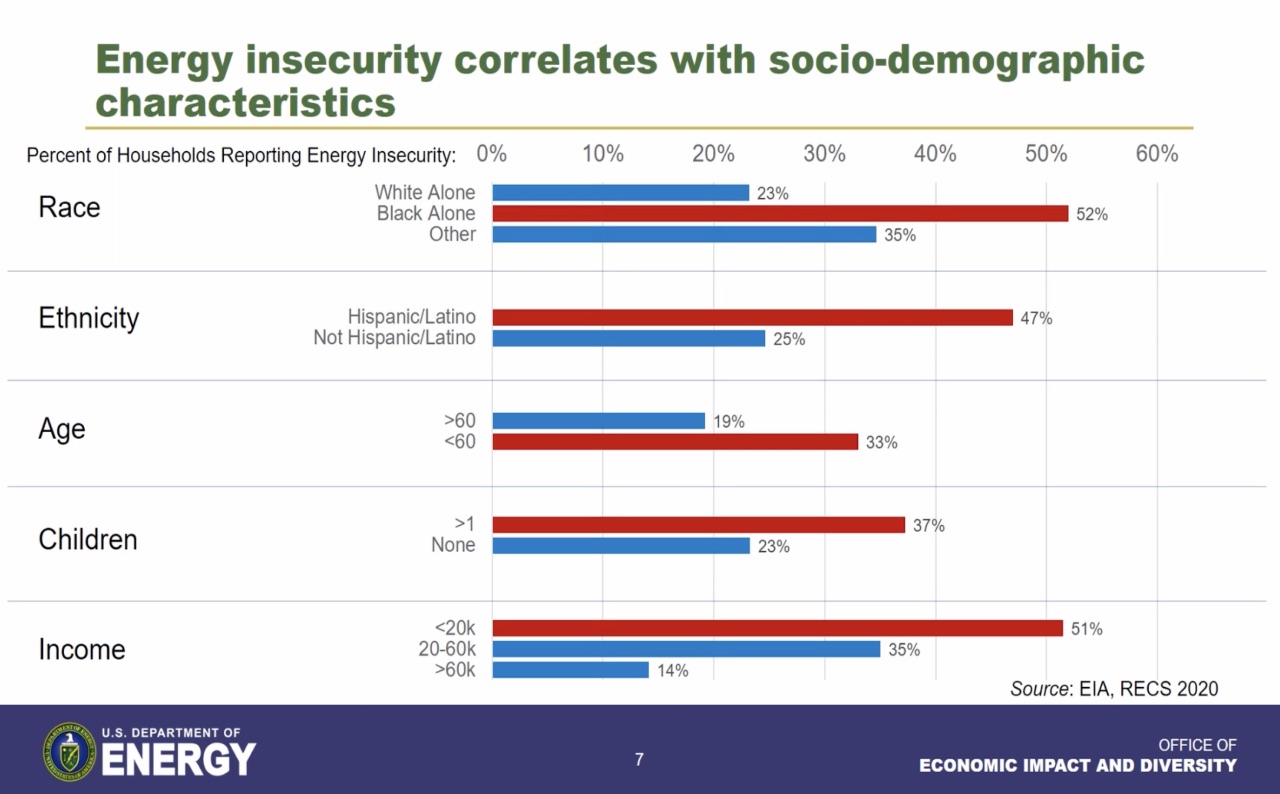
    reames1The inordinate burden of energy costs is shown in this slide presented by Tony Reames during a discussion of energy injustice at the University of Tennessee Howard Baker Center.  U.S. Department of Energy

    Department of Energy official pushes goals for energy equity in midst of power turmoil

    KNOXVILLE — Energy injustice seems abstract until you run extension cords to your neighbor’s house and store their food in your fridge because their power got cut off.

    What else are you supposed to do? Maybe start raising hell about the utility inequities faced by poor people that are clearer every day in an energy marketplace scarred by war and inflation and manipulated by global petroleum cartels?

    “We’re at a critical moment in our society. Across the globe, we are hearing about energy insecurity, energy, affordability issues, a lack of resources,” said Tony Reames, Department of Energy deputy director of energy justice, a newly created position at DOE.

  • ORNL researcher models fire’s growing footprint in a changing climate
    in News

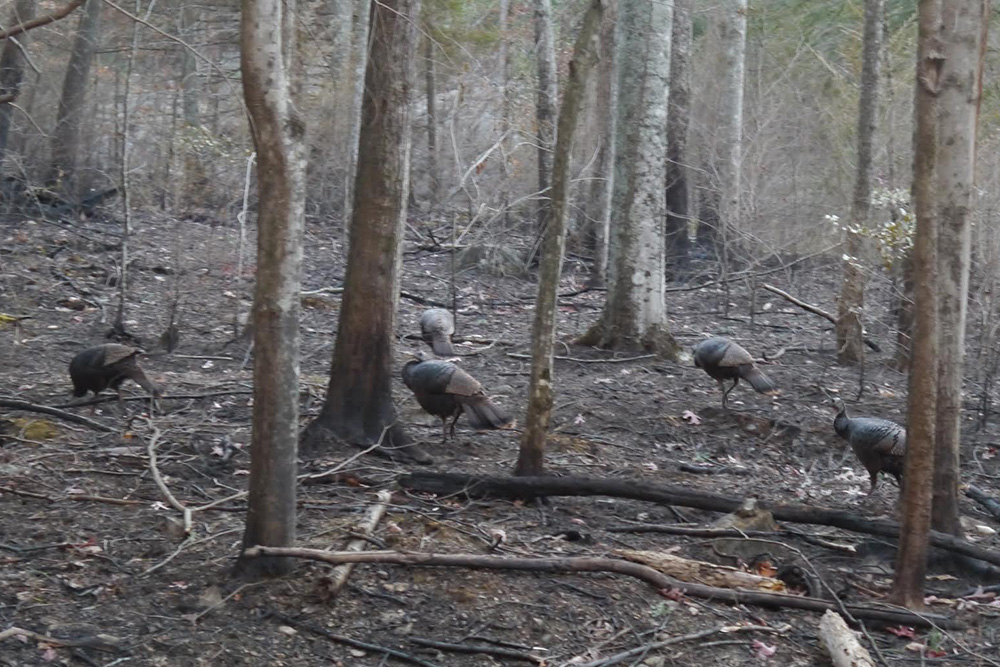
    COVER 1208 GatlinburgsInferno3Wild turkeys forage in charred hardwood forest soon after the 2016 Gatlinburg fires, which moved from the Smokies to developed areas in Sevier County. An ORNL model predicts wildfire threats will increase in the Southern Appalachians because of climate change. Thomas Fraser/Hellbender Press via Knoxville Mercury

    ORNL report: Local wildfire danger will likely loom larger because of climate change

    OAK RIDGE — This cruel summer, the Southern Appalachian region is already baking in above-normal temperatures and basking in poor air quality. 

    Air temperatures in Knoxville flirted with 100 degrees on July 6, which were well above average and prompted the National Weather Service to issue a heat advisory for much of the metropolitan area.

    It’s hard to definitively link a heat wave to global warming, but one oft-cited consequence of climate change is the growing intensity of wildfires, even in the traditionally moisture-rich Appalachians. The range of climate change effects is difficult to pin down, but one constant in the study of climate change is an expected increase in overall temperatures, which can power wildfires via both fuel increases and volatility.

  • Marie Kurz: Helping science on watersheds flow across disciplines
    in News

    Kurz1Marie Kurz is seen at a pond on the campus of Oak Ridge National Laboratory.  Carlos Jones/ORNL

    From California canyons to German creeks: Science is personal and practical for ORNL scientist Marie Kurz

    Kristen Coyne is a writer for Oak Ridge National Laboratory.

    OAK RIDGE — Spanning no less than three disciplines, Marie Kurz’s title — hydrogeochemist — already gives you a sense of the collaborative, interdisciplinary nature of her research at the Department of Energy’s Oak Ridge National Laboratory. Still, those six syllables only hint at the vast web of relationships encompassed in her work.  

    Kurz studies how rivers flow through landscapes; what kinds of nutrients, contaminants and other material sail through them; and how they transform along the way. As an experimentalist, her favorite part of the job is getting into the field. Depending on the season, Kurz can be found clad in tights, gloves reaching her shoulders, a neon vest and a ponytail-taming cap as she sloshes in olive hip waders through the particular stream under her scrutiny. The getup, she said, always makes her feel a bit like the Michelin Man.

  • Zigging and zagging to find the Zigzag
    in News

    Zigzag salamander UT doctoral student Bryce Wade examines a Southern zigzag salamander he found at Ijams Nature Center in South Knoxville. Keenan Thomas/Hellbender Press

    On the happy herping trail: Bryce Wade searches for salamanders

    KNOXVILLE — Bryce Wade scours the nature trail, turning over rocks and logs. On this overcast day at Ijams Nature Center, he searches beneath the leaves on the ground for one creature: salamanders.

    Underneath the rocks, logs and leaves, salamanders populate the cool, moist earth, avoiding the sun whenever they can. Wade is looking for a particular type: a winter species informally called the Southern zigzag salamander (Plethodon ventralis). 

  • Seal it up: Inefficiency increases energy costs across the board

    Editors note: SACE executive director Stephen Smith is on the board of Foundation for Global Sustainability. Hellbender Press operates under the FGS nonprofit umbrella.

    The Southern Alliance for Clean Energy (SACE) released its fourth annual “Energy Efficiency in the Southeast” report, which tracks recent policy developments and performance trends in electric utility efficiency from 2020.

    It continues to highlight that despite being a proven low-cost clean energy resource with enormous potential to reduce carbon emissions and customers’ energy burden, Southeastern utilities continue to underinvest in energy efficiency.

    As a result, households in many Southeastern states have some of the highest electricity usage and monthly energy bills in the nation. Some states and utilities are making progress, and it’s not too late for local policymakers to take advantage of untapped efficiency savings to help reach crucial decarbonization goals.

  • SACE works to keep us all warm this winter

    This is a submission from the Southern Alliance for Clean Energy.

    After public advocacy from Knoxville community members, the KUB board passed a resolution that will deliver $5 million for emergency bill assistance to benefit those most in need, and an additional $1 million for weatherization to improve the comfort of people’s homes while lowering their bills by increasing energy efficiency. These funds are part of a pandemic relief credit from TVA.

    KUB staff proposed a resolution in October that would have allocated $1.3 million of the total $7.3 million TVA pandemic recovery credit toward payment of debt owed by KUB customers, and the remaining $6 million would be distributed as a monthly bill credit for all residential and small business KUB customers. This would have resulted in an average savings of $17 over 12 months, or about $1.40 per month for all KUB customers, regardless of their level of need for pandemic relief. 

    Knoxville Water and Energy for All (KWEA), a coalition which SACE is a part of, circulated a petition asking that KUB instead forgive all debt owed by KUB customers, and then use the remaining funds to assist households who were struggling to pay their KUB bills. KWEA delivered nearly 200 petition signatures, and the KUB board asked that the resolution be amended. 

    As a result of our coalition’s advocacy, the KUB board allocated not only the originally proposed $1.3 million for debt relief, but also the remaining $6 million for customers in need. 

    While KUB did not pledge to forgive all debt, this is certainly a major win for the community.

    The KUB Board’s decision to reallocate funds demonstrates the power of our community speaking up to advocate for ourselves and our neighbors. 

  • Aerosols and atoms: ORNL supercomputer models airborne spread of Covid-19

    covid virus image

    New York Times: Oak Ridge supercomputer simulates spread of Covid-19 in water droplets

    Scientists studying the spread of the novel coronavirus utilized the world’s second-fastest computer at Oak Ridge National Laboratory to model the movements of millions of individual atoms that make up the virus and aerosols that can transport and transmit it. 

    The virus has killed nearly 1 million Americans and infected more than 50 million since a pandemic was declared in early 2020.

    “The researchers started by creating a model of the coronavirus, known as SARS-CoV-2, from 300 million virtual atoms,” the New York Times reported.

    Researchers then placed the virtual virus model in an intricately detailed and microscopic model of a water droplet such as the type exhaled by those infected with the virus. The supercomputer then calculated how the droplet and its attendant virus could, for example, move within a room where people are in close quarters and exhaling and inhaling the virus.

    To carry out this vast set of calculations, the researchers had to take over the Summit Supercomputer, the second most powerful supercomputer in the world

  • You’ve got the whole world in your hands
    in News

    earth and limb m1199291564l color 2stretch mask 0

    Personal climate-change remedies have a wide cumulative impact and are part of the solution, so don’t give up

    Tom Ptak is assistant professor of Geography and Environmental Studies at Texas State University. This story was originally published by The Conversation.

    The average American’s everyday interactions with energy sources are limited. They range from turning appliances on or off, to commuting, to paying utility bills.

    The connections between those acts and rising global temperatures may seem distant.

    However, individuals hold many keys to unlocking solutions to climate change — the biggest challenge our species currently faces — which is perhaps why the fossil fuel industry spent decades misleading and misinforming the public about it.

    I’m an assistant professor of geography and environmental studies at Texas State University. My research explores how geography affects the complex relationships between societies, energy and contemporary environmental challenges. I’ve found that the human element is critical for developing creative, effective and sustainable solutions to climate challenges.

    There’s a large and growing body of evidence showing that individuals can have a major impact on climate change in a number of ways. Citizen action can compel utilities to increase renewable energy and governments to enact strong climate action laws. When enough individuals make changes that lower daily household energy consumption, huge emissions reductions can result. Consumer demand can compel businesses to pursue climate and environmental sustainability.

    These actions combined could bridge the “emissions gap”: the significant difference between the greenhouse gas emissions expected globally and how much they need to drop in the next few decades to avoid catastrophic climate change.

  • ORNL’s comprehensive mapping of built environments aids disaster response

    Compass: ORNL mapping effort will aid rescue, risk assessment

    Oak Ridge National Laboratory scientists spent five years mapping virtually every structure in the U.S. and the data is bearing early fruit as it is used for response to disasters such as hurricanes and severe floods. 

    Mark Tuttle and Melanie Lavardiere, the team leaders of the project, have mapped “virtually every single structure in the United States and its territories,” Compass reports. 

    The information is used by disaster responders from the FEMA level and down. During a hurricane, for example, authorities can focus response efforts on the most vulnerable areas using the building-mapping database. 

    The database can also be used by insurers to charge rates more according to risk, and for structures covered under the National Flood Insurance Program, as is already happening.

    But the data is most valuable for saving lives and determining the most likely location those lives will have to be saved. 

    “After disaster strikes, the data can give a rapid indication of the scope of the damage and point responders in the right direction to assist in the recovery. Using the powerful computers available at ORNL, the team can process data quickly — producing in a matter of hours work that used to take months — and get it into FEMA’s hands for analysis,” Compass reports.

  • Oak Ridge National Laboratory land is an international treasure of biodiversity
    in News

    res1.jpgAquatic ecologist Natalie Griffiths studies nutrients and contaminants in the Weber Branch watershed, which is in the Oak Ridge Environmental Research Park. Courtesy Carlos Jones/ORNL

    ORNL research lands are an international ecological benchmark and diverse wonderland of trees, plants, mammals, reptiles and amphibians

    Abby Bower is a science writer for Oak Ridge National Laboratory.

    The Department of Energy’s Oak Ridge National Laboratory (ORNL) is a hub for world-class science. The nearly 33,000-acre space surrounding the lab is less known, but also unique. The Oak Ridge Reservation (ORR) is a key hotspot for biodiversity in the Southeast and is home to more than 1,500 species of plants and animals.

    At the intersection of Anderson and Roane counties is an important subset of the reservation — the Oak Ridge National Environmental Research Park, or NERP — a 20,000-acre ORNL research facility that has been internationally recognized by UNESCO as an official biosphere reserve unit.

    “The National Environmental Research Park is a living laboratory and a major resource for conducting ecological studies,” said Evin Carter, an ORNL wildlife ecologist and director of the Southern Appalachian Man and the Biosphere Program, or SAMAB. The NERP has been a core part of SAMAB, which has focused on sustainable economic development and conserving biodiversity in Southern Appalachia since 1989.

    With ORNL researchers and scientists from government agencies and academia using the NERP for diverse experiments each year, the park lives up to its status as a living laboratory.

    It also lives up to its reputation as a biodiversity hotspot. As one of seven DOE-established environmental research parks reflecting North America’s major ecoregions, it represents the Eastern Deciduous Forest. The NERP comprises parts of this ecoregion that have been identified repeatedly as priorities for global biodiversity conservation, Carter said.

    This designation means more than ever as climate change alters ecosystems and biodiversity declines worldwide. According to a landmark international report, on Biodiversity and Ecosystem Services, around one million plant and animal species are currently threatened with extinction.