
3 Good Health and Well-Being (11)
Ensure healthy lives and promote well-being for all at all ages
Food myths hurt Mother Earth
The average American family of four annually spends more than $2,000 on food they never eat!
Nearly one in nine people suffer from hunger worldwide.
Agriculture contributes to global greenhouse gas emissions, deforestation and soil degradation.
Climate change increases crop losses.
One third of all food produced in the world is lost or wasted.
It’s not just the food that’s wasted.
Consider the energy wasted to grow, process and transport it.
That all contributes to climate change, food shortages and to the rising costs of food, energy and health care.
Food waste stresses our environment, humanity and the economy.
— EarthSolidarity™
5 big threats to the world’s rivers
Written by Tara Lohan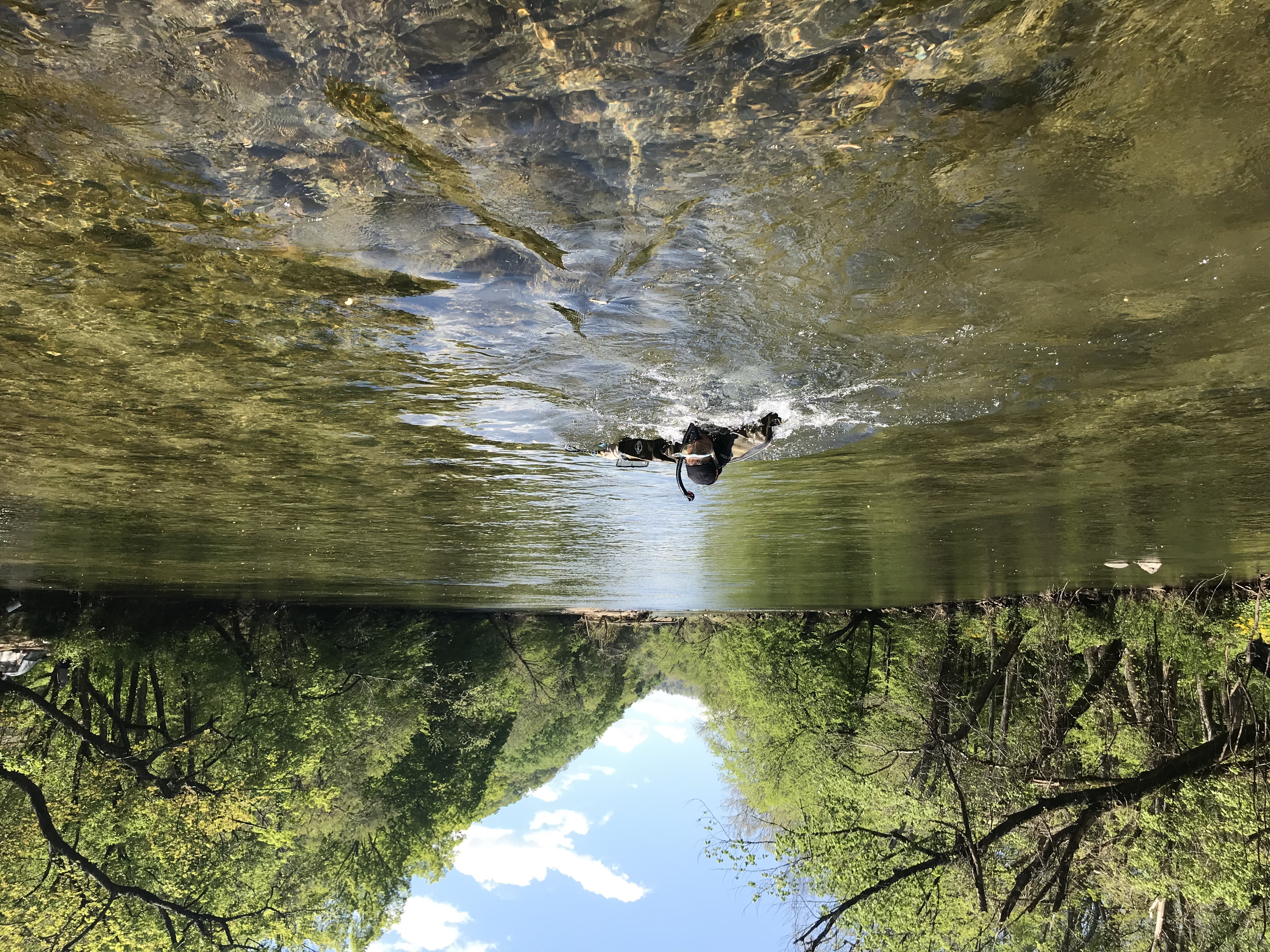 A biologist with Conservation Fisheries surveys a stretch of Little River near Walland, Tennessee to determine fish viability and identify rare species for transplantation. Thomas Fraser/Hellbender Press
Human activities have imperiled our waterways — along with a third of freshwater fish and other aquatic species
This story was originally published by The Revelator.
If we needed more motivation to save our ailing rivers, it could come with the findings of a recent study that determined the biodiversity crisis is most acute in freshwater ecosystems, which thread the Southern landscape like crucial veins and arteries.
Rivers, lakes and inland wetlands cover 1 percent of the Earth but provide homes for 10 percent of all its species, including one-third of all vertebrates. And many of those species are imperiled — some 27 percent of the nearly 30,000 freshwater species so far assessed by the IUCN Red List. This includes nearly one-third of all freshwater fish.
How did things get so bad? For some species it’s a single action — like building a dam. But for most, it’s a confluence of factors — an accumulation of harm — that builds for years or decades.
- freshwater science
- threats to rivers
- the conversation
- biodiversity
- freshwater biodiversity
- what are biggest threats to rivers and water
- are dams bad
- climate change in appalachia
- threats to clean water
- tara lohan
- dam obstructions
- grazing impacts on waterways
- river democracy act
- climate change
- dams
- water pollution
- freshwater pollution
- pollution prevention
- conservation fisheries
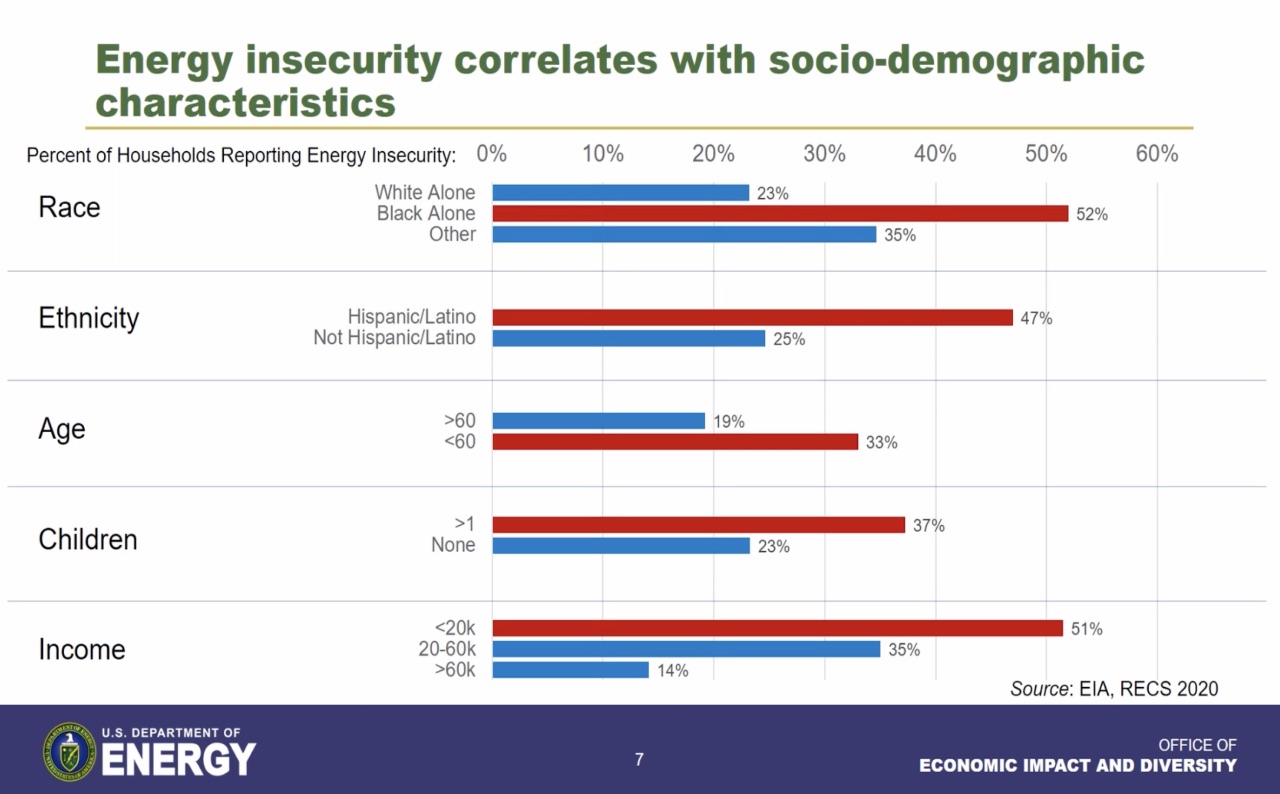 The inordinate burden of energy costs is shown in this slide presented by Tony Reames during a discussion of energy injustice at the University of Tennessee Howard Baker Center. U.S. Department of Energy
Department of Energy official pushes goals for energy equity in midst of power turmoil
KNOXVILLE — Energy injustice seems abstract until you run extension cords to your neighbor’s house and store their food in your fridge because their power got cut off.
What else are you supposed to do? Maybe start raising hell about the utility inequities faced by poor people that are clearer every day in an energy marketplace scarred by war and inflation and manipulated by global petroleum cartels?
“We’re at a critical moment in our society. Across the globe, we are hearing about energy insecurity, energy, affordability issues, a lack of resources,” said Tony Reames, Department of Energy deputy director of energy justice, a newly created position at DOE.
- howard h baker jr center for public policy
- tony reames
- energy injustice
- energy conservation
- minority energy use
- doe energy justice
- inflation reduction act
- inflation reduction act clean energy
- energy injustice black americans
- poverty
- utility disconnection
- energy insecurity
- make home more energy efficient
- social justice
- lowincome household
- minority household
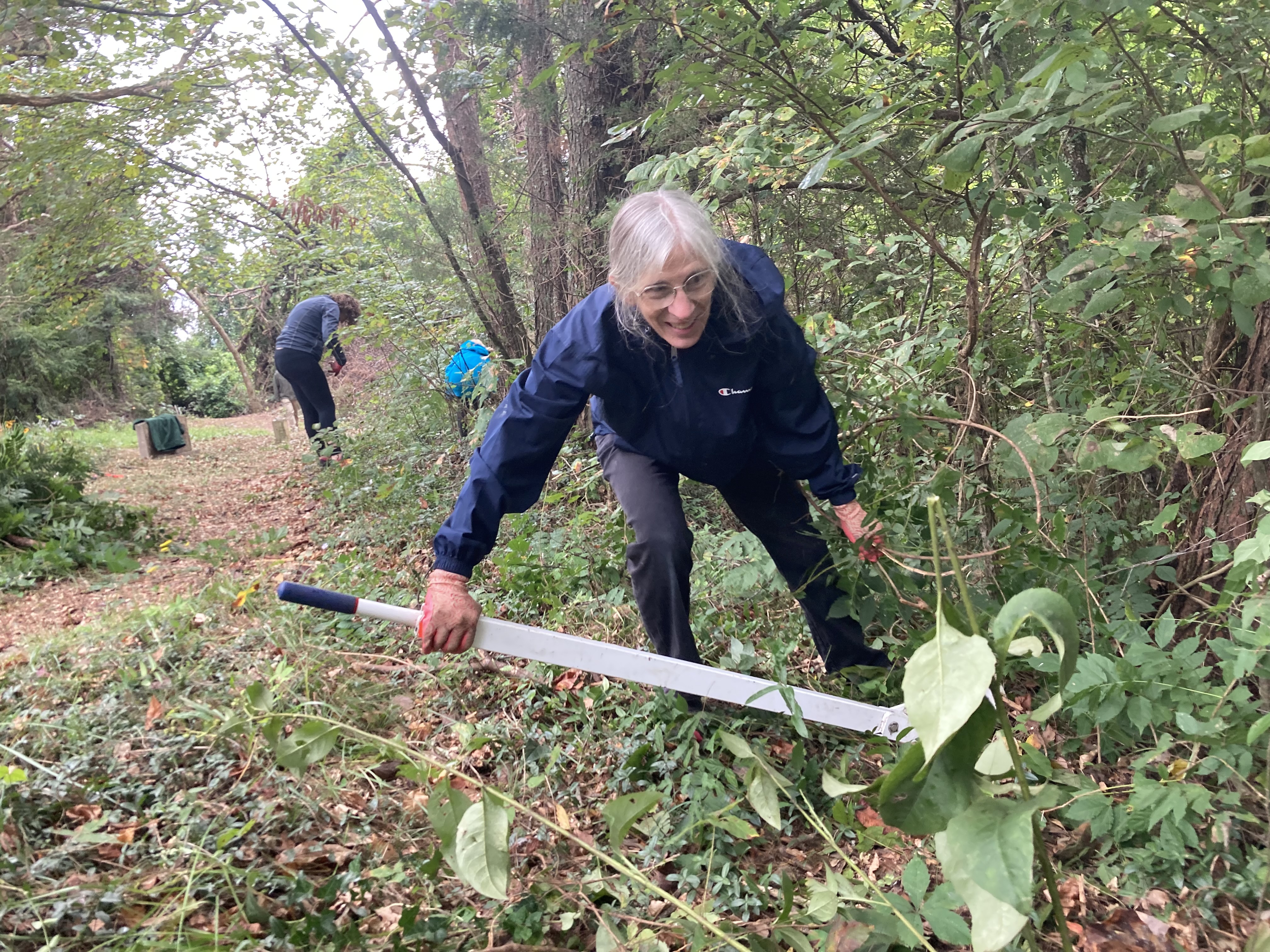 Anne Child removes invasive exotic plants during a recent Tennessee Citizens for Wilderness Planning event to mark National Public Lands Day at TVA’s Worthington Cemetery in Oak Ridge. Ben Pounds/Hellbender Press
Citizens pay it back on Public Lands Day in Oak Ridge, Smokies and beyond
OAK RIDGE — Rain drizzled as volunteers dug and clipped plants in woods around an old cemetery turned science lab.
It was a Public Lands Day event at Tennessee Valley Authority Worthington Cemetery Ecological Study area in Oak Ridge near Melton Hill Lake. Tennessee Citizens for Wilderness Planning, an environmental organization based in Oak Ridge, led the Sept. 24 work party in support of American public lands.
Other events were held throughout the country to mark the date (including Great Smoky Mountains National Park), which has proven itself to be the most productive day of the year for citizen sweat equity in public lands.
Its importance punctuated by the pandemic, Knox Food Policy Council celebrates 40 years
Written by Ben Pounds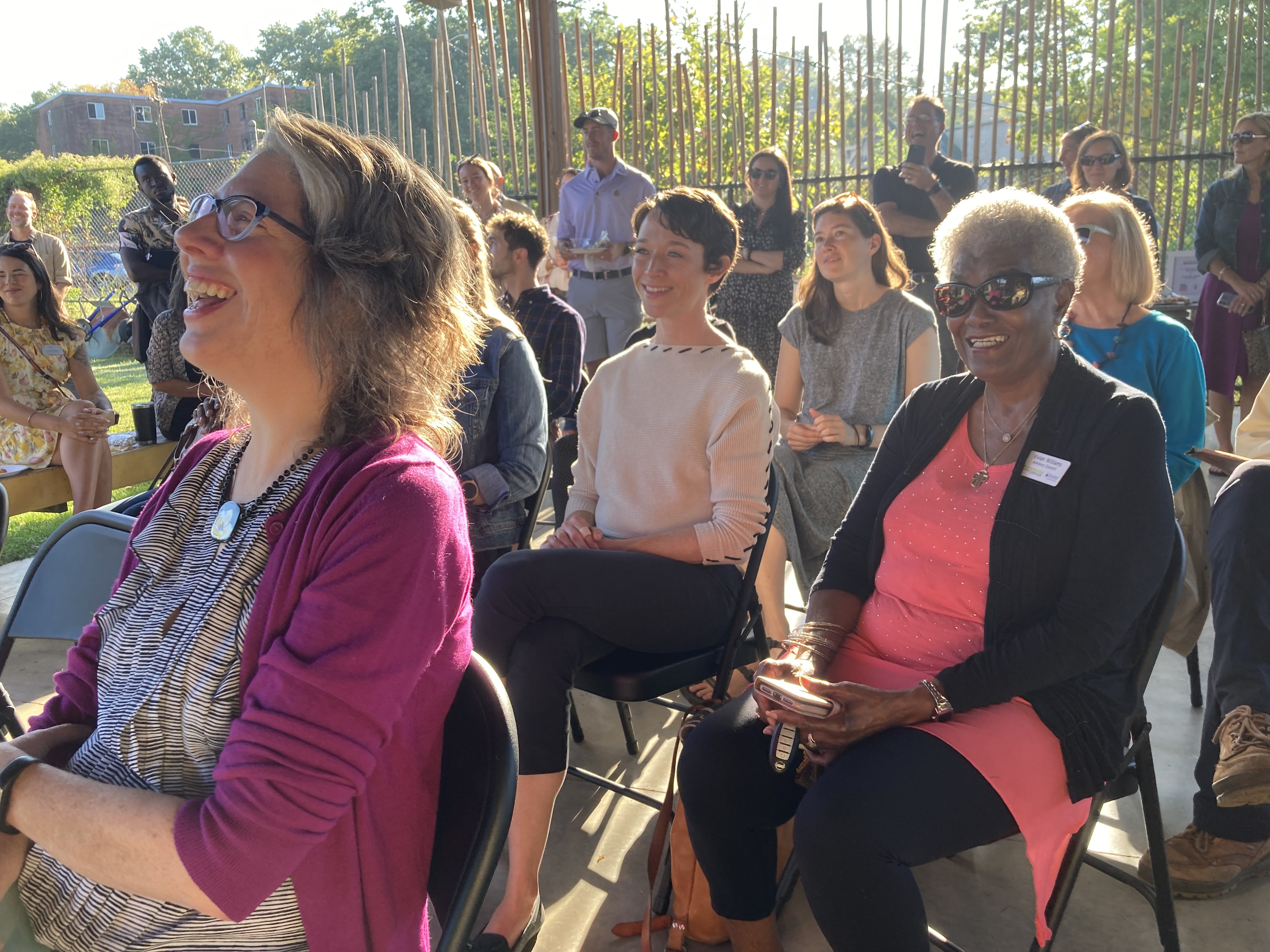 Knoxville city public information specialist Paige Travis; senior Knoxville-Knox County planner Jessie Hillman; Nourish Knoxville Executive Director Charlotte Tolley; and Food Policy Council advisor Vivian Williams (from left) share a laugh during a celebration of the FPC’s 40th anniversary. Ben Pounds/Hellbender Press
Beardsley Farm and others provided vital food essentials during the pandemic and are better prepared for the future
KNOXVILLE — Disparate groups banded together as one during the COVID-19 pandemic to ensure all Knox County citizens had reliable sources of food in the midst of disaster.
They told their stories at the Knoxville-Knox County Food Policy Council 40th Anniversary Celebration on Sept. 21 at the Community Action Committee (CAC) Beardsley Community Farm.
University of Tennessee students formed the Food Policy Advisory Council in 1982.
The oldest municipal food policy council in the United States
The anniversary program included remarks and proclamations from Knoxville Mayor Indya Kincannon, Knox County Mayor Glenn Jacobs, and state officials. Individual achievements on food-related issues were also honored.
- knox food policy council
- beardsley community farm
- glenn jacobs
- indya kincannon
- feeding the hungry
- feeding refugees in knoxville
- centro hispano
- bridge refugee services
- knoxville community development corporation
- kcdc food
- ut graduate school of planning
- kimberly pettigrew
- adam caraco
- robert l williams
- feeding the hungry in knoxville
Southeast Tennessee ridges and rivers will benefit from $10m infusion of federal natural resource funding
Written by Casey Phillips A crimper is attached to the back of a tractor on a farm in the Sequatchie River Valley. A relatively recent agricultural technique, crimping has been shown to reduce farmers’ input costs and improve soil quality. Recently, USDA approved funneling $10 million into a six-county region of Southeast Tennessee. This money will fuel conservation-minded improvements for landowners, including lowering the cost to rent equipment like crimpers and subsidize the planting of cover crops to improve soil health and reduce sedimentation in nearby streams. Tennessee Aquarium
Targeted collaborative conservation will help local agricultural operations improve soil and water quality and protect aquatic life
CHATTANOOGA — Tennessee is as much a patchwork quilt of farms as it is an intricately woven lacework of streams and rivers. Soon, farmers and the aquatic life living alongside them will reap the benefits of $10 million in federal funds to support water-friendly agricultural improvements in the rolling uplands of the state’s southeastern corner.
The U.S. Department of Agriculture (USDA) approved the allocation of more than $197 million to support Regional Conservation Partnership Programs (RCPP) throughout the nation. These initiatives promote coordination between USDA’s Natural Resources Conservation Service (NRCS) and partnering organizations that are already engaged in conservation efforts.
- tennessee aquarium conservation institute
- tennessee aquarium
- tennessee department of environment and conservation
- farmland preservation
- land water preservation in se tennessee
- usda
- regional conservation partnership program
- ridge to river
- walden ridge
- sequatchie valley
- laurel dace
- natural resources conservation service
- chattanooga environment
- southeast tennessee environment
- tennessee endangered fish
- rcpp
Coral, waste, water and weeds: Environmental vignettes from a UT journalism class
Written by Kaylee Walper, Mallory DeVore, Grace Ellison, Kathryn Kavanagh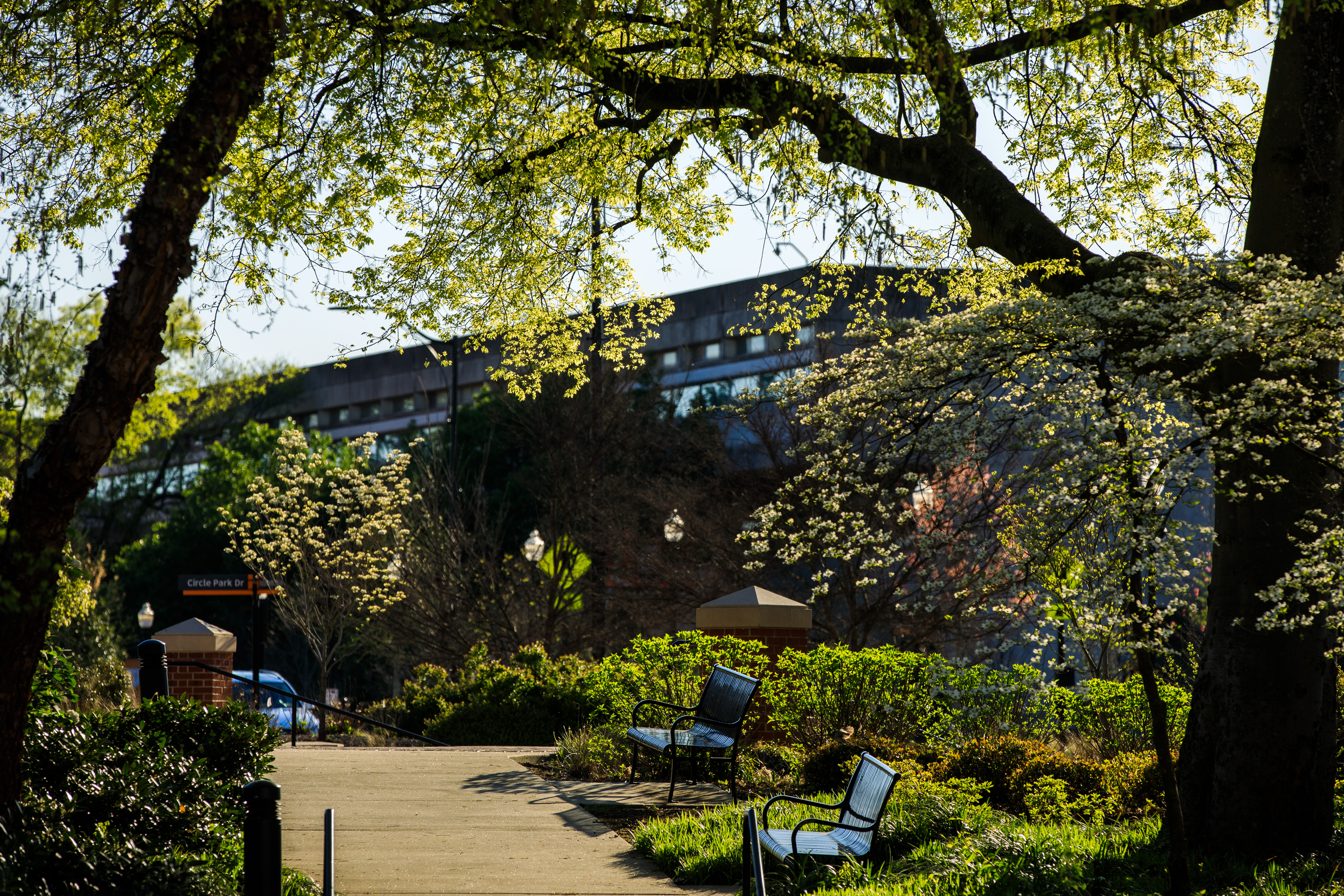 An empty Circle Park is seen in April. The park is adjacent to the UT School of Journalism and Electronic Media. Steven Bridges/University of Tennessee
Everybody has a story about the natural environment. Look around, and into yourself.
University of Tennessee journalism professor Mark Littmann asks students in his environmental writing class every semester to write short sketches about environmental issues they may observe during any given day. Such an assignment requires an almost poetical approach. Here's a sampling from spring semester.
A reef of bones
Huge schools of rainbow-colored fish weave through the brightly colored corals as Sir David Attenborough describes a day in the life of a fish on the television screen. A little girl is mesmerized; this is no Disney fantasy but real life. The nature shows on Animal Planet capture her imagination and soon mornings and afternoons are spent watching big cats and meerkats navigate the wild spaces they call home. She finds an instant favorite in the book “The Rainbow Fish” and celebrates turning four with a sparkly rainbow fish cake, hand decorated with sprees for rainbow scales. She insists someday she will swim among the fish in their magical undersea world.
MOTHER EARTH — Scarcity of food, lack of safety nets and paucity of solidarity lead to famine. 12-minute video raises awareness of how global crises combine with intricate national and international issues to precipitate local predicament.
Opponents of Oak Ridge waste dump, citing comms breakdown, urge extension of public comment period
Written by Thomas Fraser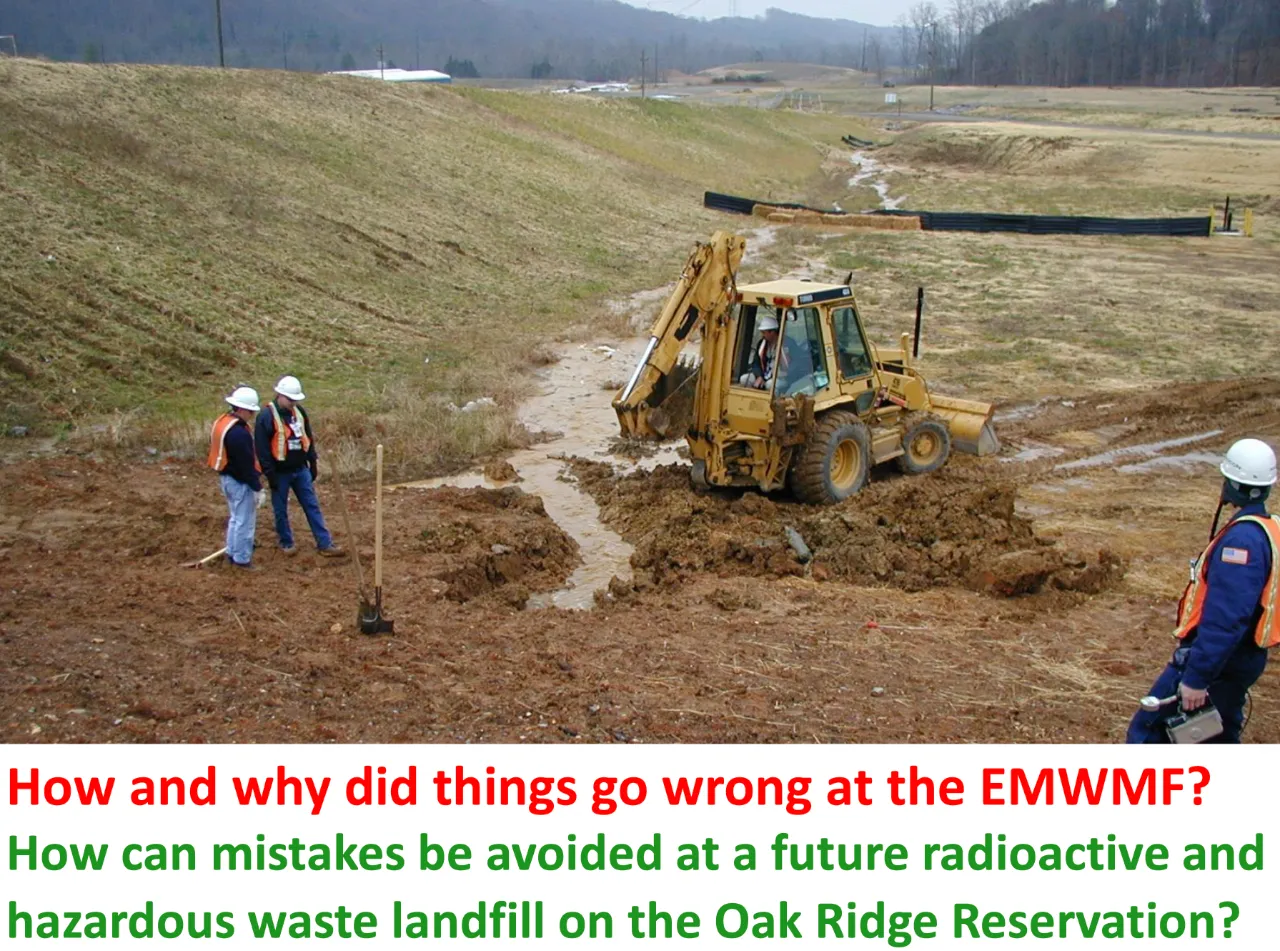 Image from a 2018 memorandum authored by experts including former Department of Energy employees in Oak Ridge. EMWMF is the present landfill that has a history of failures and is reaching capacity. Ecologists say, after a decade DOE still is not adequately addressing waste acceptance criteria and feasible alternatives.
Public can comment in person Tuesday night in Oak Ridge on proposed DOE waste dump
OAK RIDGE — The Southern Environmental Law Center blistered the Department of Energy in a letter ahead of a May 17 hearing on construction of a toxic-waste landfill that opponents said poses contamination threats to portions of the Clinch River watershed and downstream TVA reservoirs.
The hearing is set for 6-8 p.m. Tuesday, May 17 at the Pollard Technology Conference Center, 210 Badger Ave. This email address is being protected from spambots. You need JavaScript enabled to view it. will be accepted through June 7.
The Department of Energy wants to bury contaminated debris from demolition of Manhattan Project-era complexes and associated legacy toxins from the Oak Ridge Reservation. The drawn-out debate about how best to safely store the materials now focuses on the transparency of the decision process and the health of the Bear Creek watershed and downstream pollution threats to the Clinch River.
- doe
- doe waste dump
- does oak ridge have nuclear waste
- oak ridge landfill
- oak ridge
- bear creek valley
- oak ridge reservation
- radioactive waste
- hazardous waste
- advocates for the oak ridge reservation
- southern environmental law center
- selc
- aforr
- clinch river
- tva reservoir
- soggy bottom
- environmental quality advisory board
- eqab
- public participation
- public meeting
- environmental management disposal facility
- emdf
Step up for fresh produce at New Harvest Park
KNOXVILLE — The New Harvest Park Farmers Market kicked off in East Knoxville on April 14 and will be open from 3-6 p.m. every Thursday through Sept. 29.
The market will feature 15 small, locally owned businesses and showcase a wide variety of seasonal produce, meats, eggs, plants, prepared foods, and artisan crafts, and will grow to 20 vendors during peak season, according to a release from Knox County.
A community booth will house the Nourish Moves walking program in which market patrons can track their steps and redeem them for Produce Bucks to be spent at market on fresh fruits and vegetables. New Harvest Farmers’ Market Nourish Moves is a free, weekly walking program for adults and children 2 years or older. To participate, stop by our Community Booth to pick up a pedometer. Each participant receives $3 in Produce Bucks per visit that can be spent on any fruits, vegetables, and food-producing plants at the market.
Nourish Knoxville will continue to offer SNAP & P-EBT processing and doubling at the market through the Double Up Food Bucks Program. SNAP & P-EBT purchases will be doubled, up to $20 per day in Double Up Food Bucks tokens that are redeemable at the market for free fresh fruits and vegetables.
More...
The days the Earth stood still (Part 2): South Knoxville’s Ijams Nature Center weathered Covid with grit, gifts and gratitude. Naturally.
Written by Thomas Fraser Members of a Covid-era outdoor education class at Ijams Nature Center net insects. The South Knoxville nature center weathered the Covid-19 pandemic with donations, federal loan guarantees and common-sense maneuvering, like moving all educational programming outside. Photos courtesy Ijams Nature Center.
Ijams posted record visitation during pandemic even as resources were challenged
(This is the second in an occasional Hellbender Press series about the effects of the Covid-19 pandemic on the natural world. Here's the first installment about air quality improvements in the Smokies.)
Individuals and organizations can learn a lot from a pandemic.
You up your technology game. You innovate and run harder and get leaner. You realize the importance of face time (the real face time).
You learn the power of allies and those who really love you.
And in the case of Ijams Nature Center in South Knoxville, you learn just how much people need and value the natural world and the outdoors, especially in times of acute stress and uncertainty.
Ijams played host to a record number of visitors in 2020; there was no usual winter slowdown. Parking lots were full virtually every day during the height of the pandemic that claimed the lives of at least 600,000 people in the U.S. That visitation trend has continued at Ijams, with the coronavirus somewhat comfortably in the rear-view mirror.
An estimated 160,000 people visit the popular nature center annually, but there’s no exact count. Officials said the 2020 visitation substantially surpassed that number, and they plan a visitation study because a very “porous border” prevents an accurate count.
“The one great thing that has come out of Covid, is that people have recognized the importance of nature in their lives; they’ve recognized it as a place for solace, a place to get out and be safe and feel comfortable,” said Ijams Nature Center Executive Director Amber Parker.
“The sheer mass number of people coming were new to Ijams, or maybe come once or twice coming multiple times a week,” said Ijams Development Director Cindy Hassil.
“We were so excited to be this refuge for everyone,” Parker added.
The two women spoke on a sunny spring afternoon on the fetching expanse of stone terrace behind the visitors center in the shade of tulip poplars, red buds and dogwoods. Cardinals chirped and early 17-year cicadas throbbed behind a natural green curtain.