
Voices (19)
Clean air activists praise TVA’s coal decision; warn it’s not enough to meet climate goals
Written by Thomas Fraser
SACE: TVA must also wean itself off natural gas and nuclear reliance
As previously reported by Hellbender Press, Tennessee Valley Authority plans to shut down its five remaining coal plants by 2050 and pursue a carbon-neutral future.
TVA board members spoke favorably of the decision at its regular meeting on Thursday.
“TVA CEO Jeff Lyash shared a vision of how TVA will continue to support the Valley for years to come with a commitment to sustainability. The board also endorsed a strategic focus on decarbonization and a commitment to providing a reliable, low-cost energy supply as TVA moves into the future,” according to a statement released Thursday by TVA.
“TVA leadership issued a Strategic Intent and Guiding Principles document to provide direction for developing business strategies that provide reliable, resilient, low-cost and clean energy to the region. View the Executive Summary of the document.
“TVA’s new Carbon Report outlines TVA’s commitment and path to reduce carbon in the coming years without compromising the reliability and low rates the Valley has come to expect. The report outlines TVA’s leadership today in carbon reduction, our plan to achieve 70 percent reduction by 2030, our path to 80 percent reduction by 2035 and our aspiration to achieve net-zero carbon by 2050.”
Knoxville-based Southern Alliance for Clean Energy generally lauded TVA’s sustainability mission, but released the following detailed response Thursday afternoon:
“The agency’s intentions fall far short of the Biden Administration’s goal of decarbonizing the nation’s electric grid by 2035, a timeframe recommended by scientists to avoid the worst impacts of climate change.
Saving America’s “Amazon” in Alabama
Written by Tara Lohan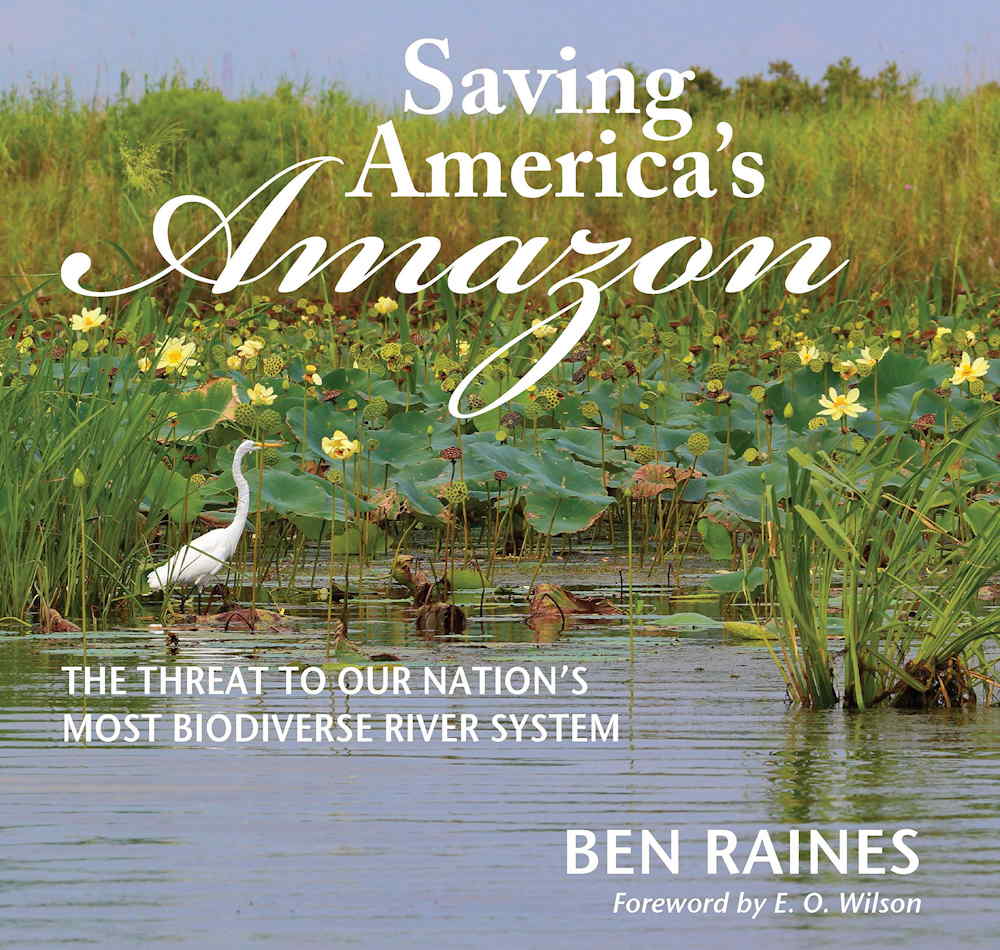
Alabama is home to remarkably diverse ecosystems:
They face dire threats.
This story was originally published by The Revelator.
When longtime environmental journalist Ben Raines started writing a book about the biodiversity in Alabama, the state had 354 fish species known to science. When he finished writing 10 years later, that number had jumped to 450 thanks to a bounty of new discoveries. Crawfish species leaped from 84 to 97 during the same time.
It’s indicative of a larger trend: Alabama is one of the most biodiverse states in the country, but few people know it. And even scientists are still discovering the rich diversity of life that exists there, particularly in the Mobile River basin.
All this newly discovered biodiversity is also gravely at risk from centuries of exploitation, which is what prompted Raines to write his new book, “Saving America’s Amazon.”
The Revelator talked with Raines about why this region is so biodiverse, why it’s been overlooked, and what efforts are being made to protect it.
Question: What makes Alabama, and particularly the Mobile River system, so biodiverse?
Answer: The past kind of defines the present in Alabama.
During the ice ages, when much of the nation was frozen under these giant glaciers, Alabama wasn’t. The glaciers petered out by the time they hit Tennessee. It was much colder but things here didn’t die.
Everything that had evolved in Alabama over successive ice ages is still here. We have a salamander, the Red Hills salamander, that branched off from all other salamander trees 50 million years ago. So this is an ancient salamander, but it’s still here because it never died out.
The other thing you have here, in addition to not freezing, is that it’s really warm. Where I am in Mobile, we’re on the same latitude as Cairo. So the same sun that bakes the Sahara Desert is baking here.
But we also have the rainiest climate in the United States along Alabama’s coast. It actually rains about 70 inches a year here. By comparison, Seattle gets about 55 inches. It makes for a sort of greenhouse effect where we have this intense sun and then plenty of water. Alabama has more miles of rivers and streams than any other state.
Things just grow here.
The pitcher plant bogs of Alabama, for example, are literally among the most diverse places on the planet. In the 1960s a scientist went out and counted every species of flowering plant in an Alabama pitcher plant bog. He came up with 63. That was the highest total found on Earth in a square meter for a decade or more.
For a long time the Great Smoky Mountains National Park was thought to be the center of oak tree diversity in the world because they have about 15 species of oaks in the confines of the park. Well, two years ago scientists working in this area called the Red Hills along the Alabama River found 20 species of oak trees on a single hillside. It’s just staggering.
Why is Alabama’s rich biodiversity not well known or studied?
The state was never known for being a biodiverse place until the early 2000s, when NatureServe came out with this big survey of all the states. It surprised everyone because it showed Alabama leading in aquatic diversity in all the categories — more species of fish, turtles, salamanders, mussels, snails.
This blew everybody away because Alabama in everybody’s mind is the civil rights protests of the 1960s, the KKK, steel mills and cotton fields. But that’s not what’s in Alabama, that’s what we’ve done to Alabama since we’ve been here.
I think part of it also has to do with being a long way from Harvard and Yale and Stanford and the great research institutions that were sending biologists all over the world. Alabama just wasn’t really studied or explored.
Again and again, the story in Alabama is that nobody has ever looked.
That’s one of E.O. Wilson’s big messages about Alabama. He is our most famous living scientist, I would say, or certainly biologist. He grew up here, and now in his twilight years his big mission has become trying to save Alabama. And he describes it as less explored than Borneo and says we have no idea what miracle cures and things we may find in the Mobile River system, which is what I call “America’s Amazon.”
What stories could the lonely Fort Sanders Hellmann’s jar share about its weekend excesses?
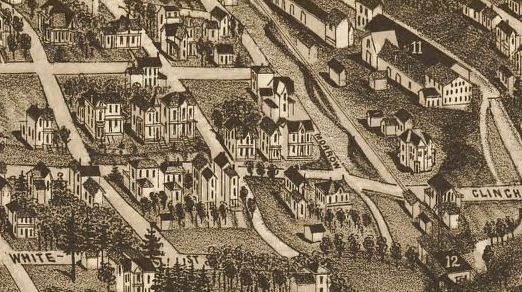 The early Fort Sanders neighborhood is shown here in the late 1800s. Many, but not all, of the architectural period homes have been demolished. Wikipedia
(Note from the author: This piece is about my neighborhood — Fort Sanders in Knoxville near the University of Tennessee. I wrote this for my environmental journalism class with Dr. Mark Littmann. We were tasked with writing a sketch about the world around us. I wanted to paint a picture of what I see outside every day when I walk around Fort Sanders.)
There’s a half-full jar of mayonnaise in the front yard.
Its lid is gone, nowhere to be found. Next to it are a trio of Bud Light Premium glass bottles, lounging in the mud.
Up the street are two smashed cans, three Styrofoam to-go containers, and a smattering of cardboard, all left out in the cold to weather the harsh judgement of Sunday morning.
Every few feet more treasures appear. Cans, bottles, broken glass, clothes, needles, and old furniture. None of it looks out of place here. The green crab grass grows through the pull tabs and gray squirrels play with leftover food on the sidewalk.
Nothing is where it should be, but it all feels right; it’s an extra blanket of junk tucking the earth in for bed.
Except for the mayonnaise jar in the yard.
Collecting these treasures off the street feels hopeless. The moment a piece of garbage makes it into the trash bag, two more pieces appear.
Memories of Saturday night are left out in the gutter, no one to share them with. It happens every week. Stories of a fun night with friends cast aside into the storm drain. A nice meal left out in the rain. Cigarette butts from a moment alone.
What story does the mayonnaise in the yard have to tell?
Ancient civilizations, natural resources and the rise of tree conservation
Written by Scott Schlarbaum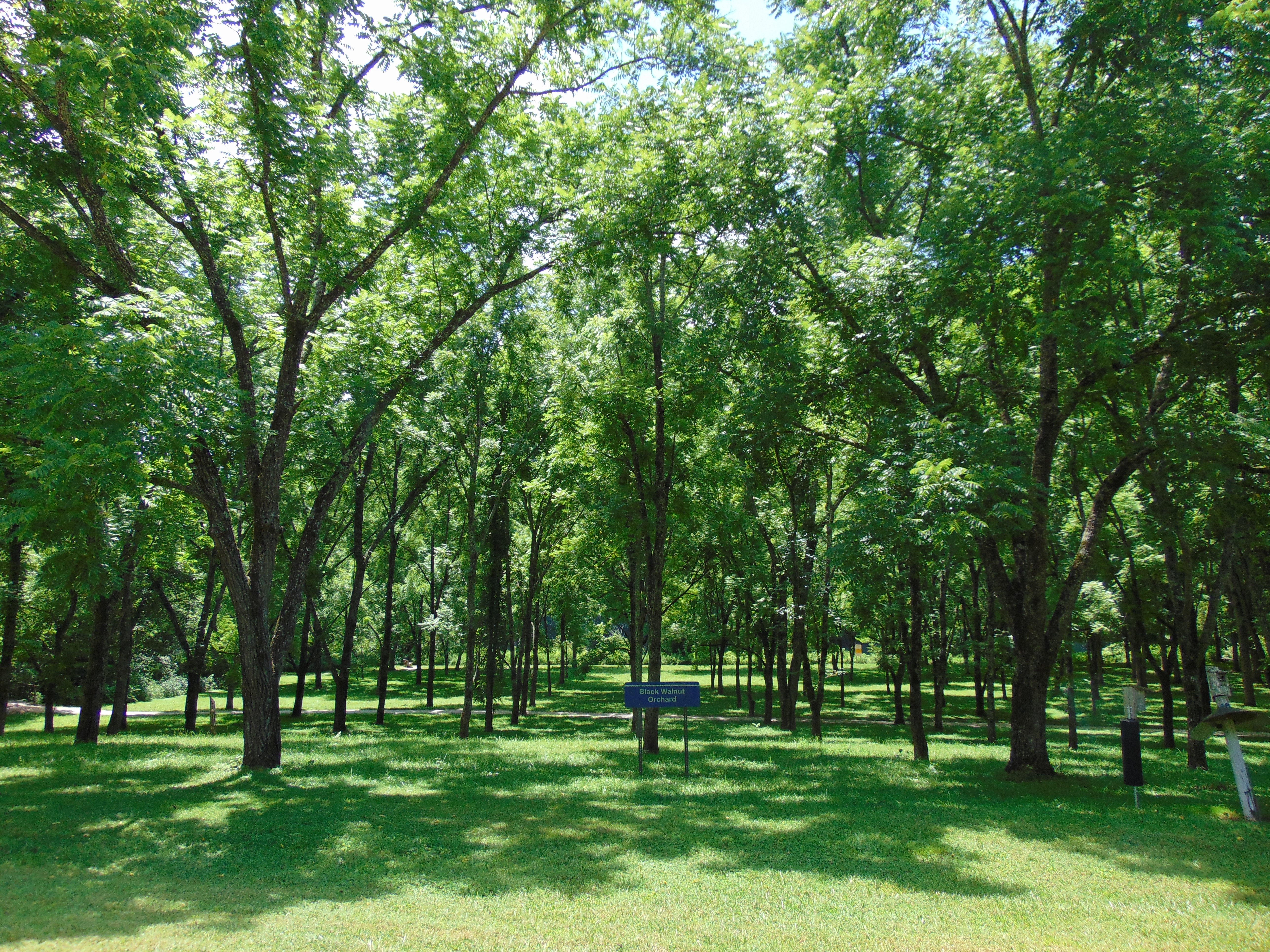 This walnut orchard was planted by the Tennessee Valley Authority as part of its early mission to promote the growth of economically useful trees in the Tennessee Valley. Courtesy UT Tree Improvement Program
Part I of this three-part series examines how the development of civilizations and rapid population growth gave rise to forest tree domestication. Parts II and III will discuss the role that the University of Tennessee’s Tree Improvement Program has played in forest sustainability by contributing to the productivity and health of Tennessee’s present and future forests.
Wood and lumber figured prominently in ancient civilizations, ranging from everyday use for warmth, cooking, and shelter to specialty uses like veneers for furniture and construction with scented woods.
No matter what continent or hemisphere, as human civilizations evolved from collections of nomad hunter-gatherers to the steel, brick, glass, and mortar cities of today, the impact on forested land proportionally increased. As villages became towns and, eventually, cities, forests were harvested in an ever-increasing radius around the population centers. Wild animals and plants were also harvested in the same manner, drastically altering ecosystems and causing massive erosion.
Nations that quickly exhausted the best trees in their limited forested lands, like ancient Egypt and Greece, met wood demands for construction or specialty products by importing wood from other nations. The then-rich forests of Lebanon and Cyprus were harvested to export timber to countries suffering from a timber famine.
- forestry
- ut forestry
- tree improvement program
- history of conservation
- walnut orchard
- wood
- lumber
- veneer
- furniture
- ecosystem
- erosion
- king artaxerxes
- roman empire
- lebanon
- cyprus
- egypt
- ancient greece
- timber harvest
- domestication
- trait
- select
- propagate
- refine
- test
- bred
- agricultural experiment station
- land grant
- university
- tennessee valley authority
- tva
- tree
- tennessee division of forestry
- seed
- budget cut
- research
- eyvind thor
- landowner
- coniferous
- hardwood
- christmas tree
- scott schlarbaum

Four visitors have disappeared without a trace from the Great Smoky Mountains in the last 50 years. Where did they go?
In a lateral move from late-night doom-scrolling, I’ve grown obsessed with reading about people who have gone missing in national parks. The National Park Service website currently lists 28 “cold cases” ranging from unsolved murders and suspected suicides to just ... gone. No body, nary a footprint or broken branch, no lingering scent for search dogs. Just poof. The silhouette of a life vanishing into mist.
I lie awake at 2, 3, 4 o’clock, hypnotized by the white glow of my phone, trawling abandoned blogs and conspiratorial subreddits for clues. I turn their disappearances over and over in my mind like a piece of quartz, glassy yet opaque, a fogged-up window I can’t quite see through.
Eight of these cold cases are from Yosemite, five are from the Grand Canyon, two are from Shenandoah Valley, and there’s one apiece from Mesa Verde, Crater Lake, Hawai’i Volcanoes, Yellowstone, Rocky Mountain and Chiricahua National Monument. Another four are from the Great Smoky Mountains, the wild and tangled backdrop of my east Tennessee home.
I’ve ventured furthest down the rabbit holes of the ones gone missing from the Smokies. Having spent a lot of time in the Park I’m familiar with the trails from which they disappeared. I’ve hiked them myself, one in an oblivious single-file search party of so many other Park visitors. It’s a strange feeling to know that you’ve literally walked along a path which, for someone else, led to … where did it lead?


