
6 Clean Water and Sanitation (3)
Ensure availability and sustainable management of water and sanitation for all
5 big threats to the world’s rivers
Written by Tara Lohan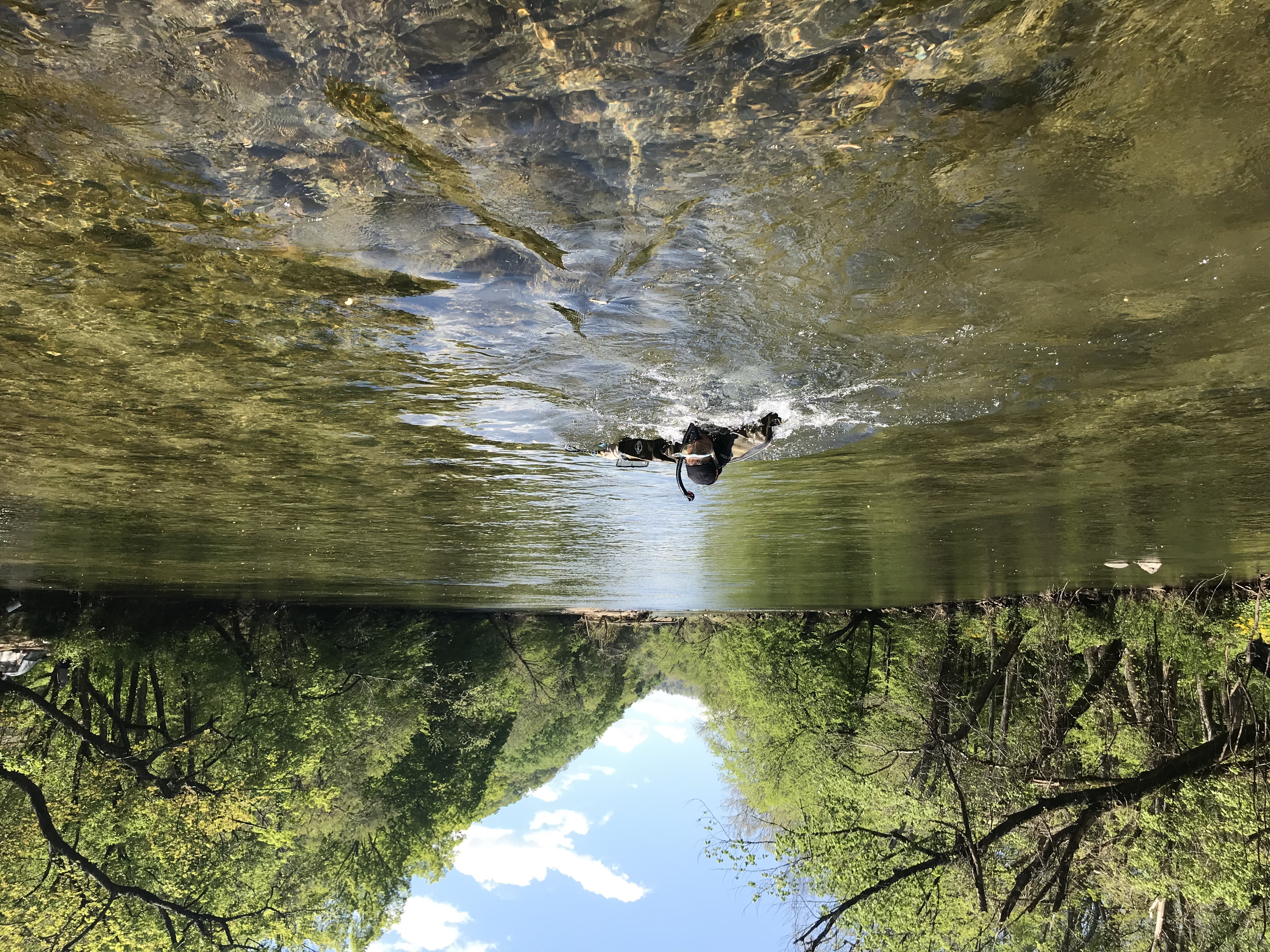 A biologist with Conservation Fisheries surveys a stretch of Little River near Walland, Tennessee to determine fish viability and identify rare species for transplantation. Thomas Fraser/Hellbender Press
Human activities have imperiled our waterways — along with a third of freshwater fish and other aquatic species
This story was originally published by The Revelator.
If we needed more motivation to save our ailing rivers, it could come with the findings of a recent study that determined the biodiversity crisis is most acute in freshwater ecosystems, which thread the Southern landscape like crucial veins and arteries.
Rivers, lakes and inland wetlands cover 1 percent of the Earth but provide homes for 10 percent of all its species, including one-third of all vertebrates. And many of those species are imperiled — some 27 percent of the nearly 30,000 freshwater species so far assessed by the IUCN Red List. This includes nearly one-third of all freshwater fish.
How did things get so bad? For some species it’s a single action — like building a dam. But for most, it’s a confluence of factors — an accumulation of harm — that builds for years or decades.
- freshwater science
- threats to rivers
- the conversation
- biodiversity
- freshwater biodiversity
- what are biggest threats to rivers and water
- are dams bad
- climate change in appalachia
- threats to clean water
- tara lohan
- dam obstructions
- grazing impacts on waterways
- river democracy act
- climate change
- dams
- water pollution
- freshwater pollution
- pollution prevention
- conservation fisheries
Ancient river, new threats: Water quality officials declare 19 miles of French Broad River in NC impaired by pollutants
Written by Jason Sandford Recreational uses of the French Broad River in Asheville, including tubing, kayaking and canoeing, have grown dramatically in recent years. Jason Sandford/Ashevegas Hot Sheet
Booming construction and development, combined with more frequent heavy rains and an aging stormwater system, continue to threaten the age-old Appalachian river
This story was originally published by Jason Sandford of the Ashevegas Hot Sheet.
ASHEVILLE — North Carolina water quality officials declared a 19-mile section of the French Broad River in Buncombe County as officially “impaired” because of fecal coliform levels found during recent testing. It’s a sobering alarm bell (though there have been plenty of warning signs, as you’ll see below.) In Asheville, interest in the river as an economic force and tourist destination has never been higher. (The confluence of the French Broad and Holston rivers forms the Tennessee River above Knoxville.)
The designation will come as no surprise to even casual observers of the wide, northward-flowing river. Often, it runs a chocolate brown color, a clear sign of the sediment and other pollutants running through the waterway.
- french broad river
- ashevegas
- jason sandford
- asheville environment
- is french broad river clean
- tubing in asheville
- fecal coliform french broad
- is french broad part of tennessee river
- what direction does the french broad flow
- kayaking on french broad
- hot springs environment
- french broad sedimentation
- french broad impaired river
- is french broad river polluted?
- what forms the tennessee river
- french broad river asheville
- river health
- threats to french broad river
Clean sweep: Volunteers remove tons of trash from Smokies in largest one-day cleanup
Written by Ben Pounds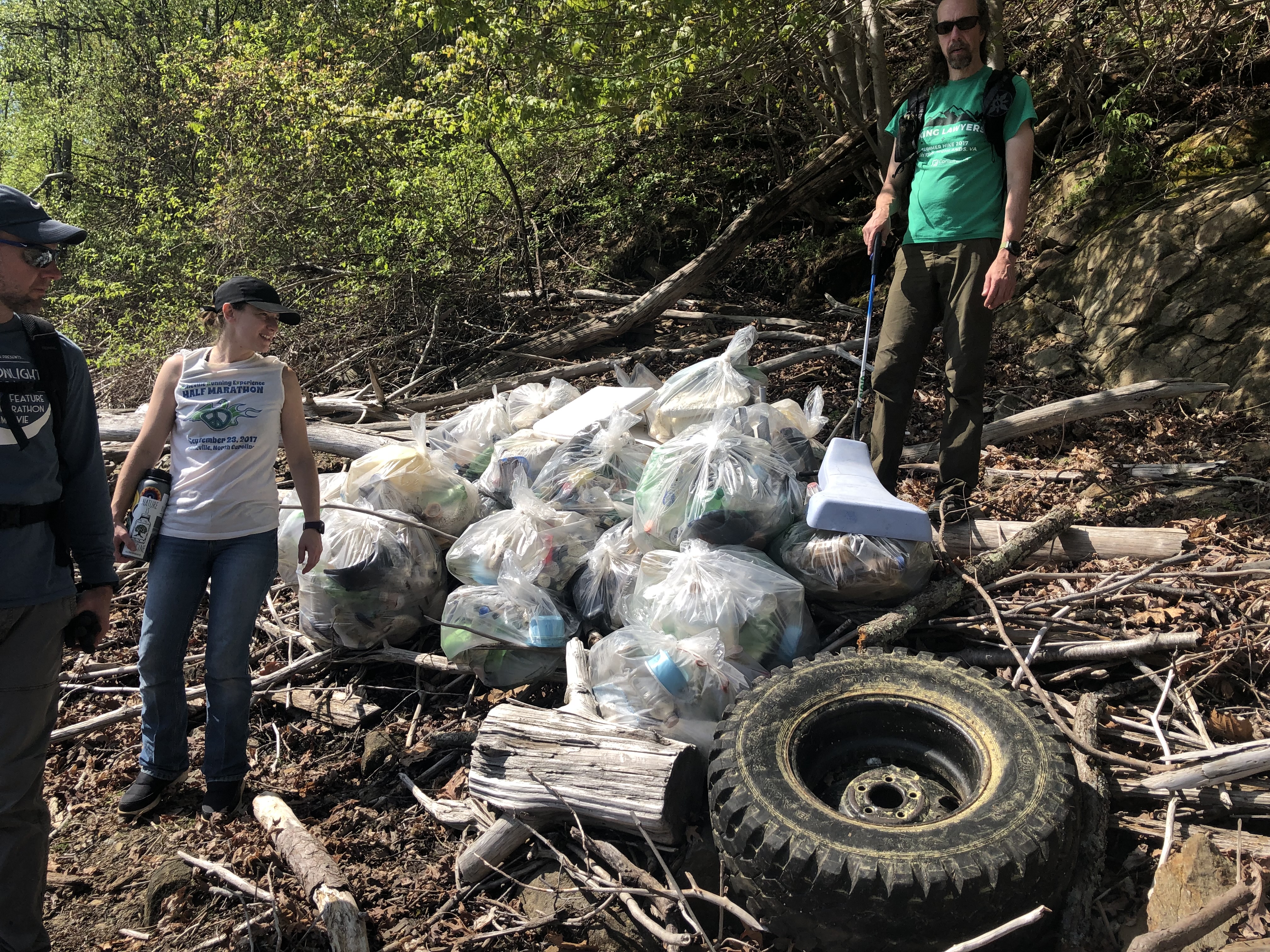 Volunteers who helped with the Save our Smokies cleanup on April 23 are shown here among their booty. Anna Lawrence/Hellbender Press
Amid the booze bottles and toilet paper, it’s ‘incredible what we found here’
Cleanup crews cleared garbage Earth Day weekend across Great Smoky Mountains National Park from mountain crests to the shores of Fontana Lake.
Save Our Smokies, which organized the April 23 event, called it the largest single cleanup ever attempted in the park. Volunteers wrangled some 5,000 pounds of garbage.
Save our Smokies Vice President Benny Braden said the organization removed 10,133 pounds of trash in all of 2021.
“Litter is a big problem. We can clean up a location and two months later we have to be back there because it’s worse than when we started,” Braden said in an interview Saturday morning at the Tremont section of the national park. “What gives us hope is our volunteers showing up,” he said, citing their tireless dedication.