
Displaying items by tag: endangered and threatened species
Rare bipartisan legal effort under way for widespread wildlife protections
NYT: Recovering America’s Wildlife Act a big bipartisan push to preserve animal species
New York Times columnist Margaret Renkl noted recently that a precious opportunity has presented itself to strengthen wildlife-protection laws and add to environmental protections across the nation.
The Nashville-based journalist said the act, known as RAWA, “is poised to become the single most effective tool in combating biodiversity loss since the Endangered Species Act.” The resolution is carried in the House by Michigan Democrat Rep. Debbie Dingell.
“This bill provides funding for (1) the conservation or restoration of wildlife and plant species of greatest conservation need; (2) the wildlife conservation strategies of states, territories, or the District of Columbia; and (3) wildlife conservation education and recreation projects,” according to the U.S. Congress.
“The Department of the Interior must use a portion of the funding for a grant program. The grants must be used for innovative recovery efforts for species of greatest conservation need, species listed as endangered or threatened species, or the habitats of such species.
“In addition, the bill requires certain revenues generated from fees and penalties for violations of environmental requirements to be used as a source for the funding.”
The legislation, which has already passed the House of Representatives, would allocate $1.4 billion each year across the country to protect and restore endangered plant and animal populations, and protect species already tipping toward endangered status. It is up for consideration in the Senate, where it has already garnered the support of at least a dozen Republicans and a majority of Democrats, virtually ensuring its passage, according to Renkl.
“You don’t have to nurse a fondness for spotted owls or snail darters — creatures at the heart of two of the most contentious environmental debates in recent history — to understand that what is best for the ecosystems we share with nonhuman animals is what’s best for us, too,” Renkl wrote.
Dinosaurs released in Chattanooga to honor Earth Day 2022
 Tennessee Aquarium Director of Hospitality and Marketing Meredith Roberts and her daughter Lucy release a juvenile lake sturgeon during an Earth Day event on the Chattanooga riverfront. Tennessee Aquarium
Tennessee Aquarium releases endangered sturgeon on a fin and a prayer
CHATTANOOGA — Lake sturgeon are living fossils.
They are dinosaur fish. They have no scales. They are protected by a tough skin with boney plates, and are unchanged for millennia. They are part of a widespread related group of fish, with 23 species worldwide, and are an endangered species in Tennessee.
Tennessee Aquarium staff released some of these dinosaurs into the Tennessee River here on Earth Day, observed this year on April 22. Aquarium staff were joined by 30 students from Calvin Donaldson Elementary School and the public to release 65 juvenile lake sturgeon into the Tennessee River at Chattanooga’s Coolidge Park.
New digital maps outline precious pockets of remaining U.S. biodiversity and the threats they face
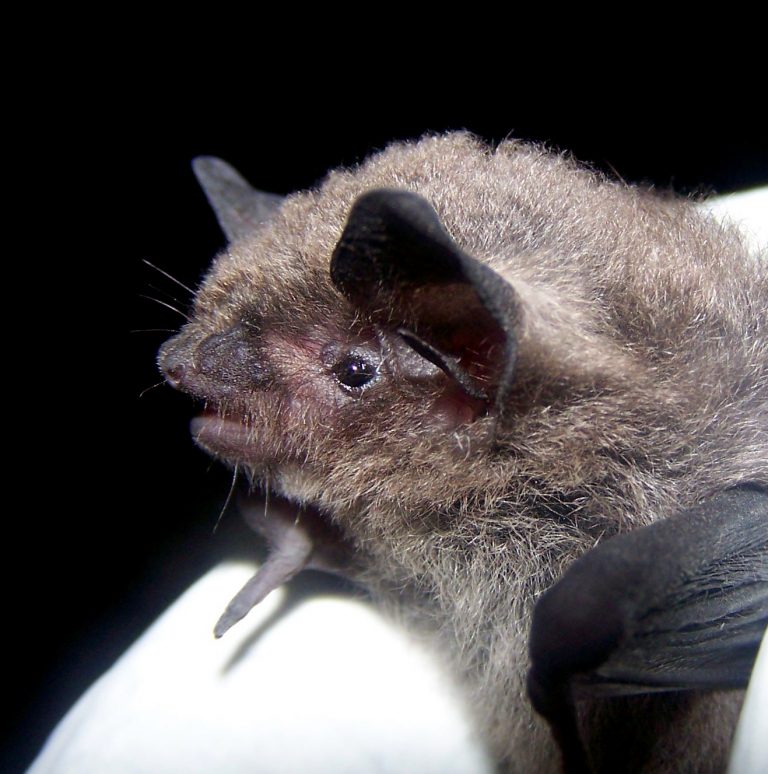 The endangered Indiana bat is among threatened and endangered species in Great Smoky Mountains National Park. U.S. Fish and Wildlife Service
Southern Appalachians show red as a warning on new detailed biodiversity maps
This story was originally published by the Sylva Herald.
SYLVA — Great Smoky Mountains National Park has long been known for its abundance of different species of flora and fauna.
Credit old mountains in a warm, sunny and wet region with varying types of climate, soil and stone for that large number.
“The park is almost certainly the most biodiverse national park in North America,” said Paul Super, national park science coordinator. “And certainly the most studied of any national park.”
A group of environmental organizations recently put together a series of maps illustrating the regions with the biggest threats to their biodiversity, and the area around Jackson County and the national park showed up in the red, showing risk. One such map, based on NatureServe data, is among the most detailed maps of endangered and threatened species ever produced.