
Displaying items by tag: endangered species act
For the win: The storied snail darter swims back from the brink
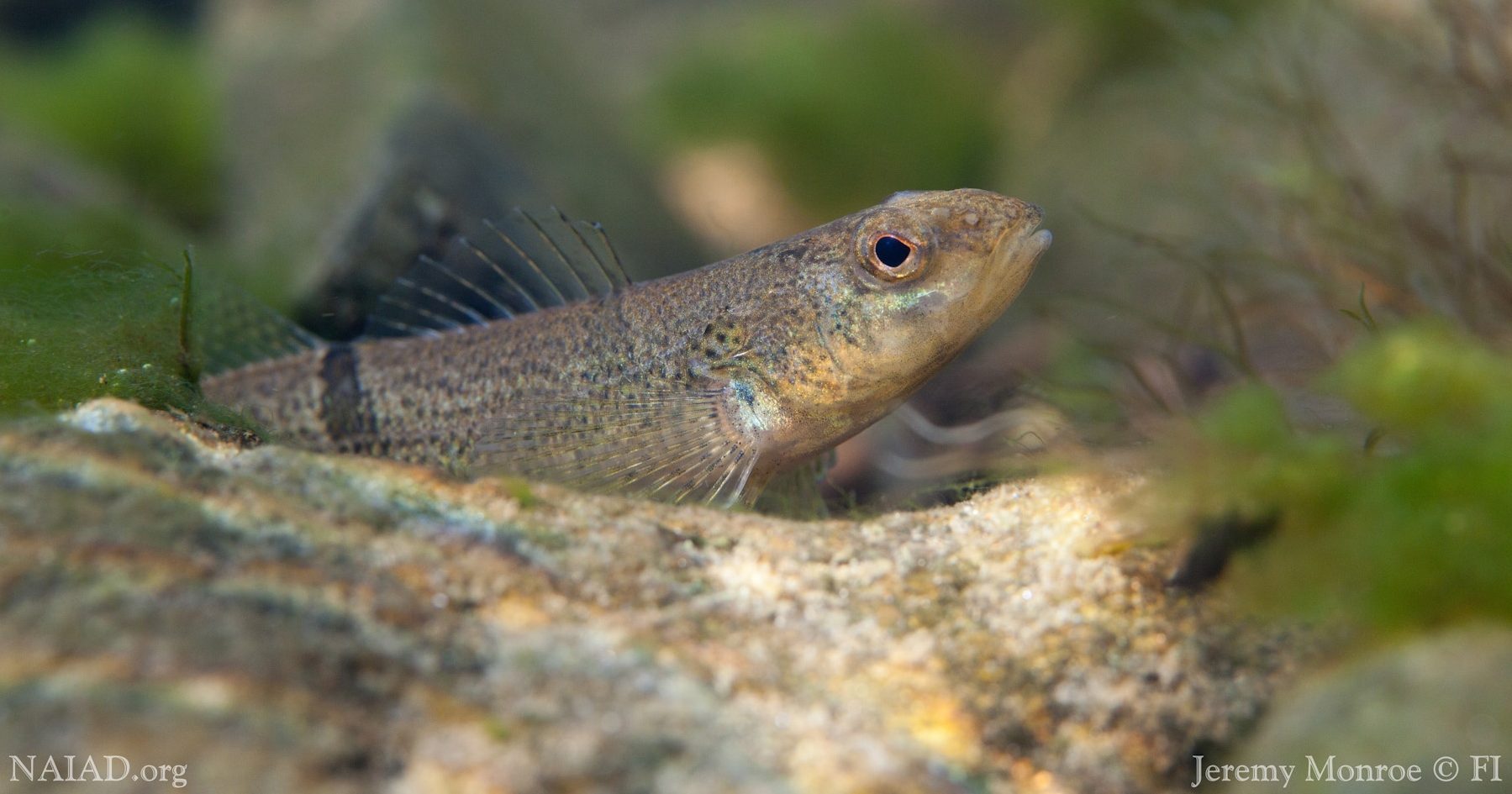 The snail darter, which caused an epic battle around TVA plans to dam the Tellico River in the 1970s, was recently removed from the Endangered Species List. Jeremy Monroe/Tennessee Aquarium
The little fish that caused a maelstrom over a TVA dam project gets the last laugh
TELLICO — In a win for endangered species protected by federal law, the U.S. Fish and Wildlife Service announced this week the fabled snail darter’s recovery and removal from the Federal List of Threatened and Endangered Wildlife.
Native to the Tennessee River watershed in Alabama, Georgia, Mississippi and Tennessee, the fish has long been an Endangered Species Act icon thanks to conservation efforts to save its habitat starting in the 1970s, when the Tennessee Valley Authority proposed construction of a dam on the Little Tennessee River. The snail darter (Percina tanasi) was central in the 1978 U.S. Supreme Court case Tennessee Valley Authority v. Hill, which solidified the scope of the then recently passed ESA.
- snail darter
- endangered species
- endangered species act
- tellico dam
- southern environmental law center
- snail darter removed from endangered species list
- tva vs hill
- little tennessee river
- eastern band of cherokee indians
- ramona mcgee
- george nolan
- tennessee valley authority v hill
- habitat conservation
- us supreme court
- percina tanasi
- threatened species
Rare bipartisan legal effort under way for widespread wildlife protections
NYT: Recovering America’s Wildlife Act a big bipartisan push to preserve animal species
New York Times columnist Margaret Renkl noted recently that a precious opportunity has presented itself to strengthen wildlife-protection laws and add to environmental protections across the nation.
The Nashville-based journalist said the act, known as RAWA, “is poised to become the single most effective tool in combating biodiversity loss since the Endangered Species Act.” The resolution is carried in the House by Michigan Democrat Rep. Debbie Dingell.
“This bill provides funding for (1) the conservation or restoration of wildlife and plant species of greatest conservation need; (2) the wildlife conservation strategies of states, territories, or the District of Columbia; and (3) wildlife conservation education and recreation projects,” according to the U.S. Congress.
“The Department of the Interior must use a portion of the funding for a grant program. The grants must be used for innovative recovery efforts for species of greatest conservation need, species listed as endangered or threatened species, or the habitats of such species.
“In addition, the bill requires certain revenues generated from fees and penalties for violations of environmental requirements to be used as a source for the funding.”
The legislation, which has already passed the House of Representatives, would allocate $1.4 billion each year across the country to protect and restore endangered plant and animal populations, and protect species already tipping toward endangered status. It is up for consideration in the Senate, where it has already garnered the support of at least a dozen Republicans and a majority of Democrats, virtually ensuring its passage, according to Renkl.
“You don’t have to nurse a fondness for spotted owls or snail darters — creatures at the heart of two of the most contentious environmental debates in recent history — to understand that what is best for the ecosystems we share with nonhuman animals is what’s best for us, too,” Renkl wrote.
Zoo researchers raising hell(benders) in Chattanooga
 The Chattanooga Zoo will soon open an exhibit to hellbenders, such as the one seen here in a tank at the zoo. Courtesy Chattanooga Zoo
New hellbender exhibit at Chattanooga Zoo will serve as a hub for cooperative research
Thanks to grants from two generous organizations, some oft-elusive hellbenders have a new home at the Chattanooga Zoo. The Hiwassee Education and Research Facility is nearly complete, and it features hellbender exhibits and a classroom. The exhibit includes juvenile hellbenders hatched from eggs collected from the Duck River in central Tennessee in 2015.
The zoo is also fabricating a stream environment exhibit that will house nine larger sub-adult hellbenders, each about 10 years old and 14.5 inches long. Visitors can observe hellbenders feeding in the completed exhibit, but it will be open only during limited hours. After the project’s completion, the zoo plans to partner with researchers who hope to learn more about hellbenders.
“The Chattanooga Zoo is thrilled at the introduction of its new Hiwassee Hellbender Research Facility,” zoo officials said in a statement to Hellbender Press.
“We believe that this new facility will open rare opportunities for guests to be educated on this otherwise elusive native species, and that the project would lead to important strides made in hellbender research.
“From all of this, our hope is for more conservation efforts made in our local waterways, also known as the eastern hellbender’s home.”
- chattanooga zoo
- hellbender
- threat
- hellbender research
- where to see hellbender
- hiwassee education and research facility
- public land
- zoo
- native species
- conservation
- waterway
- photosensitive
- stream
- habitat fragmentation
- salamander
- biodiversity
- dam
- reservoir
- agriculture
- siltation
- endangered species act
- research
200 wolves killed in Wisconsin after ESA restrictions are lifted
NYT: Gray wolf hunters sued state to move season up; first state wolf hunt since 2014 following delisting
Hunters killed 212 gray wolves during a three-day frenzy in Wisconsin after the gray wolf was removed from the Endangered Species List by the Trump administration.
State wildlife officials had wanted to delay the hunt until November so a science-based and fair game plan could be finalized. Wolf-hunting advocates sued to move the hunt up to last week; biologists and indigenous groups said they hunt occurred during breeding season, so the full effects on gray wolf populations could be far-reaching.
The state estimated there were about 1,200 wolves in Wisconsin prior to the hunt.