
Displaying items by tag: quail reintroduction in tennessee
Part IV: Clear-cut controversy. Thoughts and prayers
 Library of Congress
Citizens and scientists weigh in on controversial TWRA logging plan
For months, Tennessee Lookout has bird-dogged a Tennessee Wildlife Resources Agency proposal to clear at least 1,000 acres of hardwood forest in the Bridgestone Centennial Wildlife Reserve in White County to create habitat for dwindling bobwhite quail.
Hellbender Press has published most of the stories, with much appreciation to Tennessee Lookout. Most recently, the online news outlet reported that legal hurdles had been cleared to allow TWRA to proceed, at least for now, with its game-bird reintroduction plans at the expense of acres of approximately 65-year-old hardwood forest.
Though it was not Hellbender’s original reporting, on our end the social media response to the articles has been thoughtful and reasoned — with, of course, occasional disagreements among commenters. With permission from the posters, I’ve compiled an edited and abridged recitation of some comments, which were too good to languish in the social media ether.
Part III: Clear-cut controversy in the Cumberlands
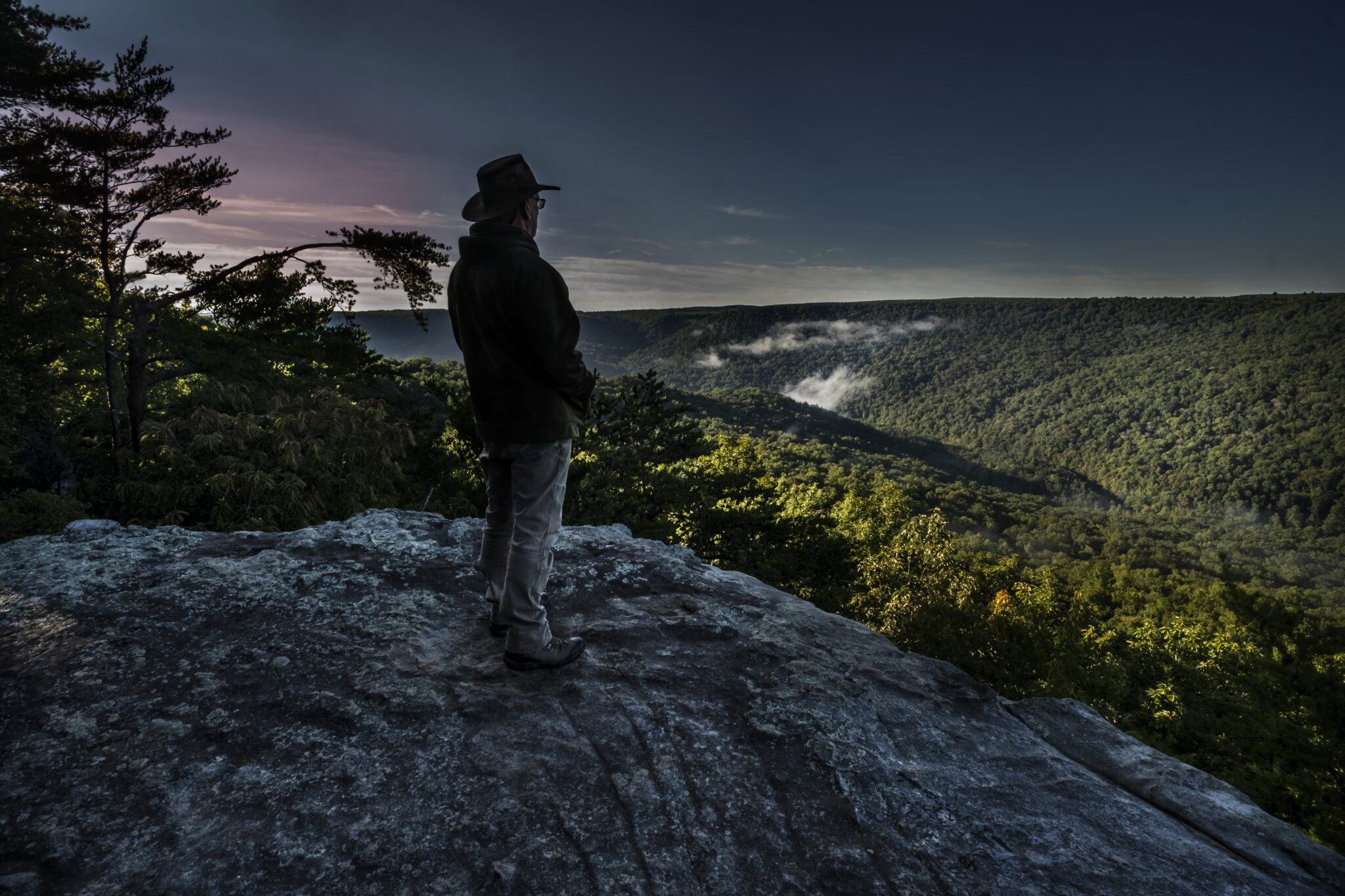
Legal opinion cuts path for TWRA forest clearing in White County’s Bridgestone wilderness area despite local opposition
This story was originally published by Tennessee Lookout.
A controversial plan by the Tennessee Wildlife Resources Agency officials to clearcut forest in a popular hunting, hiking and recreation area in order to create habitat for Northern bobwhite quail has gotten a legal go-ahead, despite opposition from residents and local leaders in White County, a bipartisan group of lawmakers and environmental groups.
The 16,000-acre Bridgestone Firestone Centennial Wilderness Area, a forested area adjacent to Fall Creek Falls State Park and Virgin Falls State Natural Area, was a late 1990’s gift to the state from the tire company that came with certain strings attached, including that state officials “preserve the property predominantly in its present condition as a wilderness area.”
The Tennessee Wildlife Federation was charged with ensuring the state honors those conditions.
On Friday, a spokeswoman for the Tennessee Wildlife Federation confirmed that outside legal counsel hired to review the state’s clearcutting plan found it “meets the requirements” of the gift.
“Speaking broadly as a conservation nonprofit, we have supported throughout our 75-year history the science-based, proactive management of lands to maintain or restore diverse habitats and diverse wildlife,” Kate Hill, a Tennessee Wildlife Federation spokeswoman, said via email. “The fact is savannas are an endangered habitat in the Southeast that were once common and provided essential habitat to many species across Tennessee.”
Neither the Tennessee Wildlife Federation nor the Tennessee Wildlife Resources Agency has communicated the outcome of the legal review to local residents, who have complained for months that they have been kept in the dark and offered no meaningful opportunity to weigh in on plans to radically alter a landscape that is both beloved and central to the local economy.
- tennessee wildlife resources agency
- clearcut in bridgestone wilderness
- hardwood clearcuts tennessee
- quail unlimited
- quail habitat restoration
- quail reintroduction in tennessee
- twra clearcut
- white county clearcut
- opposition to twra clearcut
- hardwood clearcut cumberlands
- tennessee wildlife federation clearcut
Tennessee Lookout: (Part II) Thick covey of opposition to TWRA quail management at expense of mature hardwood forest
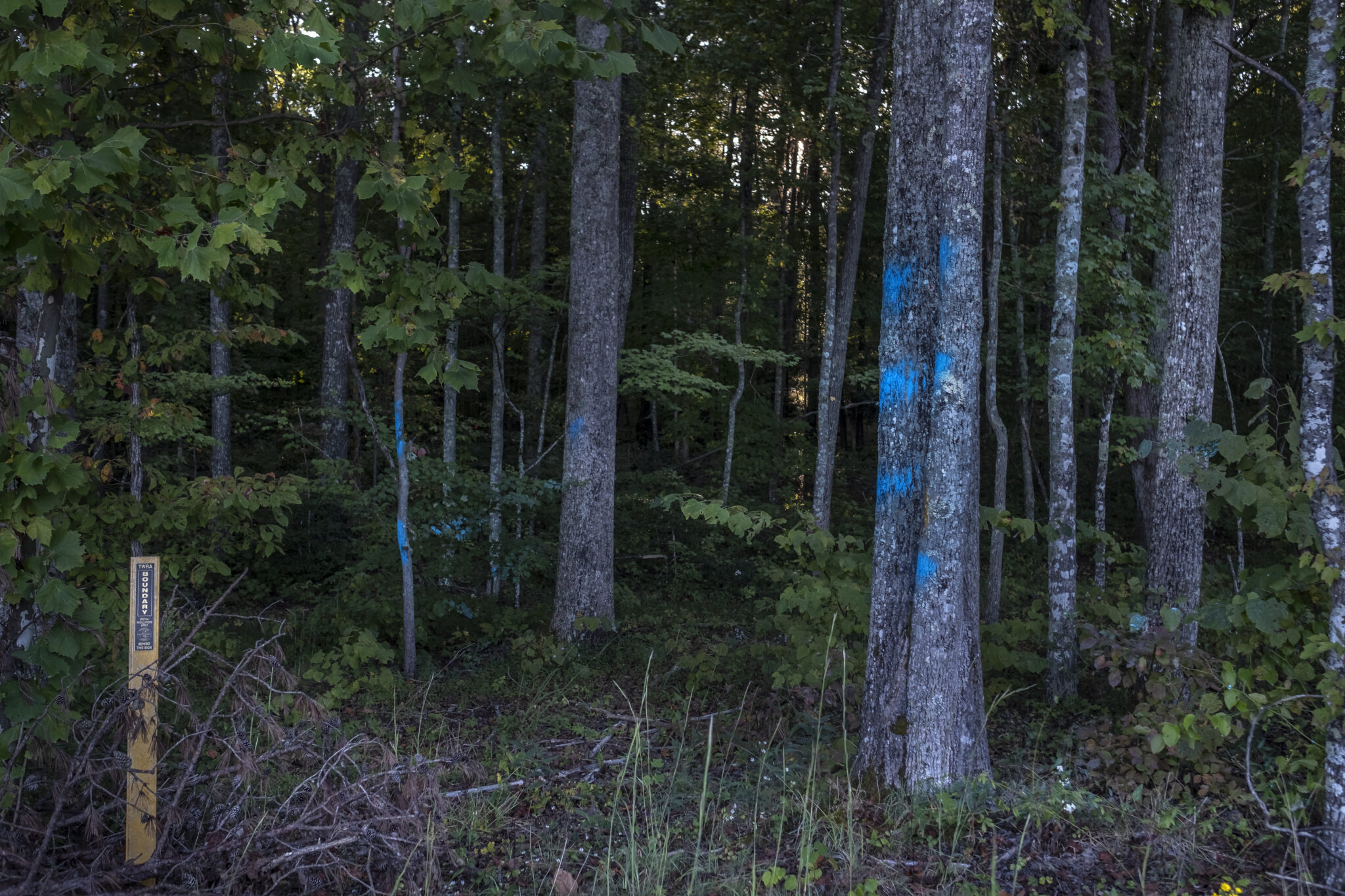 Tree trunks in the Bridgestone Firestone Centennial Wilderness Area in Sparta marked for clearcutting, despite local opposition. John Partipilo/Courtesy Tennessee Lookout
Hundreds of citizens publicly reject TWRA Middle Tennessee deforestation plans
This story was originally published by the nonprofit Tennessee Lookout and is shared (with much appreciation) with Hellbender Press via Creative Commons License.
Officials with the Tennessee Wildlife Resources Agency faced considerable pushback Monday night (Oct. 4) at a public meeting in Sparta over plans to raze old growth forest in a popular hunting and recreation area located about halfway between Nashville and Knoxville.
A standing room-only crowd of more than 200 people filled the town’s small civic center to hear directly from state officials about what had been — until now — an unpublicized internal agency plan to clear forest on public lands in the Bridgestone Firestone Centennial Wilderness Area to create grassland habitat for northern bobwhite quail, a game bird whose populations have plummeted in Tennessee.
“Bridgestone Firestone is one of the gems of White County,” said Elizabeth McDonald, one of two dozen people who spoke against the plan until the meeting grew too late to get through the long line of residents who signed up to address the TWRA.
“It’s a place that is so beautiful, so intact, and it can never be replaced. I appreciate caring about quails, but you have people in this room who, for generations, have called this home. You have to understand you are attacking our homes.”
The meeting was organized by Rep. Paul Sherrell, a Republican who represents the area, after an internal TWRA map leaked to a local resident revealed plans to cut 2,000 acres of hardwood trees on the property bequeathed to the state by the Bridgestone Corporation in 1998.
The map quickly circulated among residents, and so did the outrage. The old-growth timber slated for demolition lines the path heading to Virgin Falls State Natural Area, where the tree canopy also shades hiking trails through a series of scenic waterfalls. The forested area slated for removal forms part of a popular deer and turkey hunting area, too.
Sen. Paul Bailey, R-Sparta, and Sen. Heidi Campbell, D-Nashville — who said she has heard complaints from her Nashville constituents and others across the state who routinely visit the wilderness area — also attended the meeting.
In a series of powerpoint presentations, TWRA officials outlined the urgent need to establish grassland habitats in Tennessee, not only for the Northern Bobwhite, but for native plants and birds for whom savannas — sparsely treed grassland — are critical to survival.
Clearing forest would benefit at least 70 species with the greatest conservation needs, said Wally Akins, TWRA’s wildlife and forestry assistant chief.
“Closed-canopy forests have limited value to many species,” he said.
Hundreds of native plant species remain essentially dormant underneath the forest canopy, waiting to emerge, said Dwayne Estes, executive director of the Southeastern Grasslands Initiative. Savannas are “the forgotten landscape of the South,” he said.