Displaying items by tag: stormwater
Construction trade groups support Tennessee water-protection rollbacks as TDEC staffers push back against reduced sediment controls
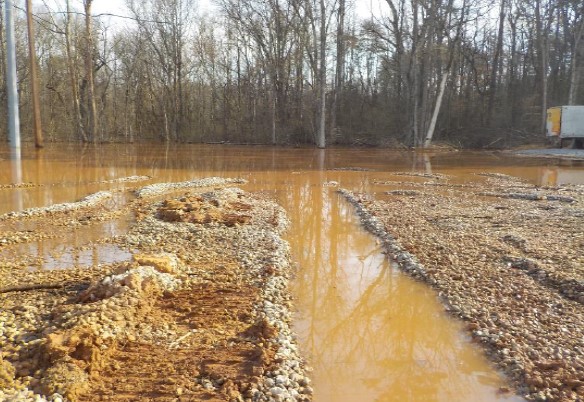 Grading along Maryville Pike in Knoxville pumped sediment into a nearby stream and on to the Tennessee River. The owner of the property was cited for violating state water-quality laws. Courtesy Knoxville Stormwater Management
Tennessee Homebuilders Association and Tennessee Chamber of Commerce support reduced site inspections
This story was originally published by Tennessee Lookout.
Cindy Whitt and Judy Alexander, neighbors in the Westhaven subdivision in Williamson County for nearly 15 years, have watched their development grow from a small new-build subdivision of 500 homes to now more than 2,500.
In that time, on their regular walks together, they’ve also witnessed the results of dwindling green space as construction has surged:
“Almost everything from the construction runs through our storm sewer,” said Alexander. “Even though the developers put up fences (designed to prevent silt from escaping) all you need is a really steady rain — it doesn’t have to be heavy — and it all flows into our the Harpeth and the West Harpeth.”
The pair have contacted the Corps of Engineers, the city of Franklin and the state department of environment and conservation, but despite inspections, overflow ponds and new fencing, the problem persists.
“It blows my mind if we can’t even enforce the rules in wealthy Williamson County,” said Whitt, who worked for the Environmental Protection Agency in the 1970’s.
The women are now among more than 100 Tennessee residents who have voiced their opposition in public meetings and in written comments to proposed revisions to the permitting process for construction companies that Whitt fears will make the problems worse.
The proposed change by the state’s environmental regulators would roll back longstanding regulation for construction site runoff — rainwater that sweeps soil or other particles off site and into nearby waterways, often creating deposits of silt that impact water quality and aquatic life.
Keep your butts out of the Tennessee River

Dollywood joins Tennessee Aquarium effort to limit the introduction of cigarette butts to our shared waterways.
“As all humans need access to clean water, it’s an incredibly important treasure to protect.” — Dr. Anna George, Tennessee Aquarium vice president of conservation science and education.
Cigarette butts are everywhere, and are perhaps so familiar they go unnoticed by the millions of people who pass them on our streets and roads.
Not only are they unsightly, they contaminate our water resources — the puddles after a sudden rainstorm, the streams that flow through our landscapes, and the stormwater drains that ultimately lead to the Tennessee River. The butts quickly break down, polluting water with “tiny plastic fibers and a devil’s cocktail of chemical compounds,” according to the Tennessee Aquarium.
The Chattanooga aquarium has partnered with Keep the Tennessee River Beautiful, an affiliate of Keep America Beautiful, to stem the rising tide of cigarette butts in our waterways.
Dollywood has also embraced the effort, making it the first theme park in the world to recycle all properly disposed cigarette butts.
“One cigarette filter can contain enough toxins to kill aquatic life within two gallons of surrounding water,” said Kathleen Gibi, executive director of Keep the Tennessee River Beautiful.
The action fits the mission of Keep the Tennessee River Beautiful, which is to inspire the public to take action to protect and preserve the Tennessee River and its tributaries across a seven-state region encompassing Virginia, Tennessee, North Carolina, Georgia, Alabama, Mississippi and Kentucky.
Keep the Tennessee River Beautiful and the Tennessee Aquarium have partnered to install cigarette-butt recycling receptacles on the aquarium’s campus. They placed eight of these bins in heavily traveled locations.
“Everybody contributes to the river, whether positively or negatively, so finding stakeholders and inspiring them to take action is what will make the biggest impact,” Gibi said. She also emphasized the importance of the Tennessee Aquarium’s educational programs in protecting water quality.
The aquarium’s eight cigarette-butt bins are among more than 480 such bins that Keep the Tennessee River Beautiful has installed within the river’s watershed. The shared effort will install another 90 during the coming months.
Dollywood is among the 73 sites that have installed bins, making it the first theme park in the world that recycles all the cigarette butts it collects, Gibi says.
Partnering to remove cigarette filters from the river is only part of the aquarium’s ongoing mission to understand the impact on freshwater habitats from microplastics pollution.
Dr. Anna George, the Aquarium’s vice president of conservation science and education, said, “It’s urgent to understand better ways to manufacture and dispose of plastics, so we reduce their impact on the environment.”
The Tennessee Aquarium recently installed a new exhibit in the River Journey Building where visitors can discover the impact of microplastics on freshwater environments. The Tennessee Department of Transportation funded this exhibit as part of their Nobody Trashes Tennessee litter reduction campaign.
In September 2020, the Tennessee Aquarium Conservation Institute and the University of Georgia River Basin Center convened a digital gathering of 50 researchers conducting pioneering studies into the impact of microplastics on freshwater systems.