
Displaying items by tag: Tennessee River
Doing good deeds for the Tennessee River, and enjoying it, too
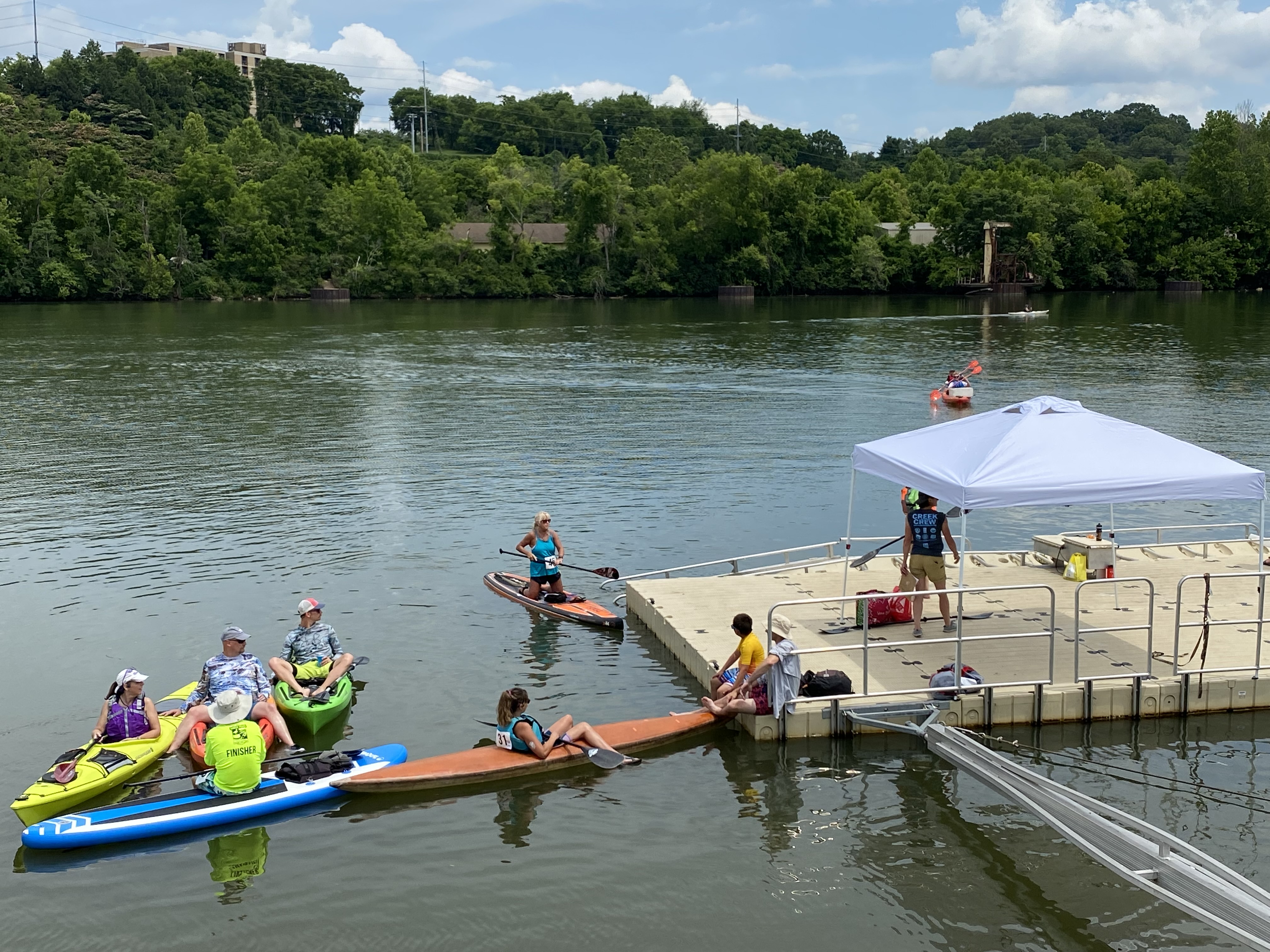 Racers of all stripes assembled Saturday for Cheers to Clean Water boat races on the Tennessee River. Keenan Thomas/Hellbender Press
Cheers to Clean Water celebrants race, learn and scrub the river at Suttree Landing Park
KNOXVILLE — Beneath the sound of a beckoning banjo, partiers and athletes alike paddled the shores of Suttree Landing Park, picking up trash as they floated down the Tennessee River.
The fifth Cheers to Clean Water Celebration on Saturday (June 11) featured 4k- and 8k-kayak races, a cleanup in and around the Tennessee River, and a central gathering area punctuated by booths for land- and water-based advocacy organizations.
“It’s both on water and on land, cleaning up this section of the Tennessee River,” AmeriCorps member Madison Moore said on Saturday from the park. “After the boating is over, they’ll come down here for the celebration, where we have a whole bunch of other vendors that are helping us make this day a possibility.”
The celebration promotes the importance of maintaining and cleaning major waterways like the Tennessee River.
- water quality forum
- knoxville river
- knoxville tennessee river shoals
- keenan thomas
- suttree landing park
- kayaking downtown knoxville
- cheer to clean water celebration
- Tennessee River
- tennessee river paddle trail
- kayaking suttree park
- hellbender press kayaking
- knoxville kayak race
- kayak race knoxville june 11
From climate change to water quality, UT One Health Day examines the challenges of our time
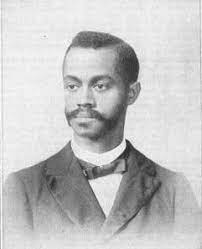 Charles Henry Turner
The University of Tennessee One Health Initiative will host an impressive array of climate-related discussions, presentations and museum tours Wednesday, Nov. 3, at the UT Student Union on Cumberland Avenue in Knoxville. A virtual option is also available for the day-long event, which is affiliated with the 6th Annual World One Health Day.
The day will feature a “One Health and Climate Change” expert panel discussion, which is set for noon and includes perspectives ranging from the UT Institute of Agriculture to Oak Ridge National Laboratory.
A kayak outing and trash cleanup along the Tennessee River and its tributaries are also planned, as is a tour of UT Gardens, and the herbarium. McClung Museum at Circle Park will offer up its freshwater mussel collection for closer inspection and host a tour examining archaeology findings related to the indigenous inhabitants of Tennessee.
Check out University of Tennessee One Health Day for a full schedule and more information.
Tennessee Aquarium floats citizen-scientist app to extend the reach of public research
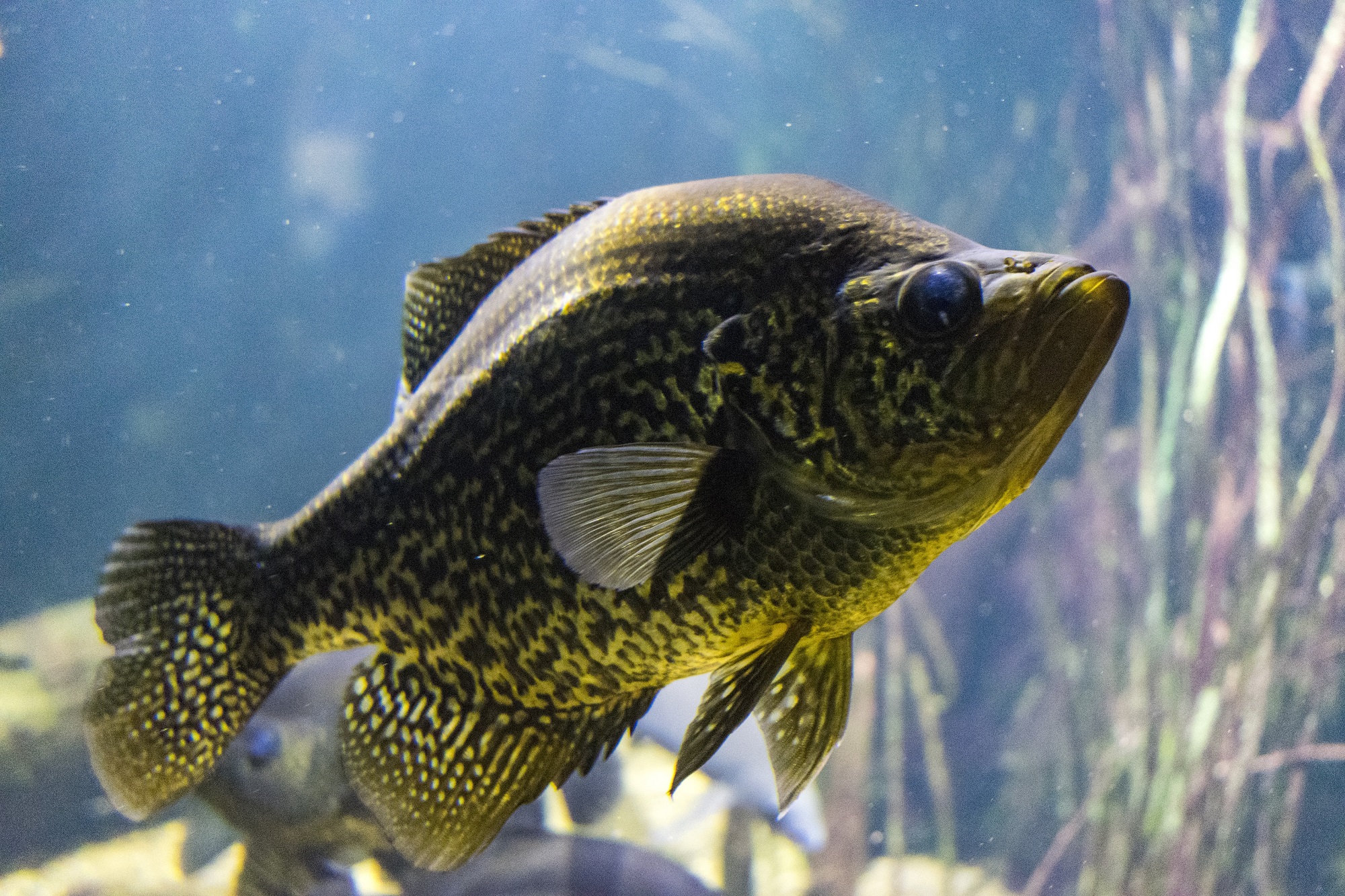 A black crappie is seen in the Tennessee Aquarium. Citizen scientists across the region can now plug their fish findings into a new database. Courtesy Tennessee Aquarium
So you want to be a citizen scientist? There’s a new app for that!
The Tennessee Aquarium Conservation Institute wants to assess the status of various fish populations throughout the Southeast so it released a new app to help outdoor folks and anglers identify the fish they spot, report the sighting, and enter their discoveries into a regional fish database.
The Freshwater Information Network (FIN) accepts and includes data for three major watersheds: The Tennessee and Cumberland rivers, and Mobile Bay.
Tennesseans may be familiar with the two rivers, but may think of Mobile Bay as a distant place with no connection to them, but its headwaters touch Tennessee in the Conasauga River. With its geographic isolation, the Conasauga is home to species of fish found nowhere else in the world.
Our region has more species of fish than any other part of the country, and the open FIN database and application includes information on nearly half the U.S. species of fish. When hikers, boaters or anglers spot a fish, they can participate by first photographing it and then uploading the photograph to the app.
State’s fight against Asian carp scales up
WATE: Commercial fishing pulls out 10 million pounds of exotic carp from Tennessee River system
If you never thought there’d be an Asian carp commercial fishery in Tennessee waters, you were wrong.
Tennessee Wildlife Resources Agency’s Asian Carp Harvest Incentive Program has yielded 10 million pounds of the exotic fish since 2018, the bulk caught downstream on the Tennessee River system at Kentucky and Barkly reservoirs. The fish has been spotted as far upstream as Knox and Anderson counties.
The Tennessee Valley Authority and TWRA are experimenting with acoustic barriers to prevent further upstream spread of the fish, which compete with native fish for food and habitat.
“There are four types of Asian carp: bighead, silver, black and grass,” WATE reported. “Experts say the species threatens to disrupt aquatic ecosystems and starve out native species due to their ability to out-compete native species for food like plankton.”
So what do fishermen do with 10 million pounds of carp?
It can be sold to wholesalers for distribution abroad and also makes for really good fertilizer.
Tracing the historical course of the Tennessee River through Knoxville
 A wharf seen along the Tennessee River in Knoxville in the late 1800s or later. Knoxville History Project via Hard Knox Wire
Q&A with Knoxville historian illustrates the importance of the Tennessee River to nascent Knoxville
Rivers didn't need early American cities, but the cities certainly needed rivers.
Knoxville historian Jack Neely and Hard Knox Wire editor J.J. Stambaugh lay out a fascinating history of the Tennessee River through Knoxville in their latest collaboration. And yes. It has several references to “Suttree” by Cormac McCarthy. Of course.
“Beyond in the dark the river flows in a sluggard ooze toward southern seas…. afreight with the past, dreams dispersed in the water someway, nothing ever lost.” — Cormac McCarthy, “Suttree”.
The Tennessee River doesn’t loom large in the daily lives of most contemporary Knoxville residents, but two centuries ago it was literally why there was a city here in the first place.
In fact, it’s impossible to discuss Knoxville’s history for long without the river cropping up in one way or another. In the earliest days of the community’s existence, settlers drew water from and washed in the creeks that fed the Tennessee; the river itself carried boats laden with goods hundreds of miles before ending up in New Orleans and the Gulf of Mexico.
Since then, the city’s relationship with the river has evolved steadily. It was an economic lifeline for generations, but railroads and automobiles eventually cornered the market when it came to shipping both cargo and passengers. Today, it’s a safe bet that when most people think of the “Riverfront” they’re thinking of restaurants or maybe a fireworks display; for the lucky few who can afford to belong to the yacht club, they’re maybe thinking about Labor Day weekends spent sailing with the Vol Navy.
In the latest edition of Hard Knox Histories, local historian and journalist Jack Neely discusses the ebbs and flows of Knoxville’s connection to the river with HKW’s editor, J.J. Stambaugh.
J.J.: When the first settlers arrived at the site that would be Knoxville, what role did geography — especially the Tennessee River — play in their decision to settle here? How important was the river commercially in the early days? The river, of course, was fed by numerous tributaries and creeks. How important were relatively small waterways like First Creek to the early city’s growth?
JACK: The river was elemental. It was hard to start a city without one. It was transportation, it was water for drinking and cooling, it was waste disposal. And, of course, the Tennessee reached from here into Cherokee territory, beyond into Alabama, then through West Tennessee into Kentucky, and all the way to the Ohio and the Mississippi.
When it came to locating a city, First Creek was probably as important as the Tennessee because it provided mill power. There were several mills up and down First Creek, as well as Second Creek. The two downtown creeks were the eastern and western boundaries of the city for its first 70 years or so.
The river was extremely important commercially, even though it was a mostly one-way thing. In the early days, when Knoxville was a territorial and state capital, there was a demand for liquor here, and folks apparently got so good at producing cheap whisky and brandy that they loaded flatboats with it and floated them downriver, all the way to New Orleans, where it could be sold for several times the cost. I love the fact that riverboat crewmen would bust up their rafts and sell them for hardwood in a city where there wasn’t much of it. A lot of the wooden buildings in the French Quarter, especially in the interiors, show traces of the rope holes and grooves characteristic of flatboats.
Go to Hard Knox Wire for the rest of this fascinating story.
Keep your butts out of the Tennessee River

Dollywood joins Tennessee Aquarium effort to limit the introduction of cigarette butts to our shared waterways.
“As all humans need access to clean water, it’s an incredibly important treasure to protect.” — Dr. Anna George, Tennessee Aquarium vice president of conservation science and education.
Cigarette butts are everywhere, and are perhaps so familiar they go unnoticed by the millions of people who pass them on our streets and roads.
Not only are they unsightly, they contaminate our water resources — the puddles after a sudden rainstorm, the streams that flow through our landscapes, and the stormwater drains that ultimately lead to the Tennessee River. The butts quickly break down, polluting water with “tiny plastic fibers and a devil’s cocktail of chemical compounds,” according to the Tennessee Aquarium.
The Chattanooga aquarium has partnered with Keep the Tennessee River Beautiful, an affiliate of Keep America Beautiful, to stem the rising tide of cigarette butts in our waterways.
Dollywood has also embraced the effort, making it the first theme park in the world to recycle all properly disposed cigarette butts.
“One cigarette filter can contain enough toxins to kill aquatic life within two gallons of surrounding water,” said Kathleen Gibi, executive director of Keep the Tennessee River Beautiful.
The action fits the mission of Keep the Tennessee River Beautiful, which is to inspire the public to take action to protect and preserve the Tennessee River and its tributaries across a seven-state region encompassing Virginia, Tennessee, North Carolina, Georgia, Alabama, Mississippi and Kentucky.
Keep the Tennessee River Beautiful and the Tennessee Aquarium have partnered to install cigarette-butt recycling receptacles on the aquarium’s campus. They placed eight of these bins in heavily traveled locations.
“Everybody contributes to the river, whether positively or negatively, so finding stakeholders and inspiring them to take action is what will make the biggest impact,” Gibi said. She also emphasized the importance of the Tennessee Aquarium’s educational programs in protecting water quality.
The aquarium’s eight cigarette-butt bins are among more than 480 such bins that Keep the Tennessee River Beautiful has installed within the river’s watershed. The shared effort will install another 90 during the coming months.
Dollywood is among the 73 sites that have installed bins, making it the first theme park in the world that recycles all the cigarette butts it collects, Gibi says.
Partnering to remove cigarette filters from the river is only part of the aquarium’s ongoing mission to understand the impact on freshwater habitats from microplastics pollution.
Dr. Anna George, the Aquarium’s vice president of conservation science and education, said, “It’s urgent to understand better ways to manufacture and dispose of plastics, so we reduce their impact on the environment.”
The Tennessee Aquarium recently installed a new exhibit in the River Journey Building where visitors can discover the impact of microplastics on freshwater environments. The Tennessee Department of Transportation funded this exhibit as part of their Nobody Trashes Tennessee litter reduction campaign.
In September 2020, the Tennessee Aquarium Conservation Institute and the University of Georgia River Basin Center convened a digital gathering of 50 researchers conducting pioneering studies into the impact of microplastics on freshwater systems.
Chickamauga Lake cleanup
Mar 6 9 a.m.–1 p.m. EST
Cleanup at Chickamauga Lake of the Tennessee River
Possum's Creek, Harrison Bay State Park
Keep the TN River Beautiful with Chickamauga Fly, Bait, & Casting Club
Hands-on volunteer activity
Keep the TN River Beautiful coordinates with TVA, Keep TN Beautiful, TDOT, Keep America Beautiful, and Yamaha Rightwaters
For more information, call (865) 386-3926 or email This email address is being protected from spambots. You need JavaScript enabled to view it.
Marking points in time: The Hal DeSelm Papers

A life dedicated to the flora of Tennessee
Dr. Hal DeSelm clambered around the crest of Cherokee Bluff in the heat of a late Knoxville summer 22 years ago. The Tennessee River flowed languidly some 500 feet below. Beyond the river stood the campus of the University of Tennessee Agriculture Institute. The towers of the city center rose to the northeast beyond the bridges of the old frontier river town.
DeSelm was not interested in the views of the urban landscape below. He was interested in the native trees, shrubs, herbs and grasses that clung to the ancient cliffside with firm but ultimately ephemeral grips on the craggy soil.
The retired UT professor, a renowned ecologist and botanist who died in 2011, had been sampling the terrestrial flora of Tennessee for decades. The life-long project took on a new urgency in the early 1990s, when he accelerated his data collection in hopes of writing the authoritative guide to the natural vegetation native to the forests, barrens, bogs and prairies of pre-European Tennessee.
Between 1993 and 2002, DeSelm collected 4,184 data points from 3,657 plots across the state. Many of those plots have since been lost to development, highways, and agriculture, or overrun by exotic species, but he assembled an invaluable baseline of the native landscape. Many of the sites he recorded have since been lost to development.
- science
- botany
- botanist
- Tennessee River
- native plant
- native tree
- native herb
- native grass
- native shrub
- Tennessee
- University of Tennessee
- terrestrial flora
- barren
- cedar barren
- ecologist
- Hal DeSelm
- Cherokee Bluff
- University of Tennessee Agricultural Institute
- native landscape
- preEuropean Tennessee
- natural vegetation
- sampling plot
- 1993
- 2002
- exotic species
- invasive species
- Todd Crabtree
- Tennessee State Botanist
- Natural Heritage Program
- conservation
- understory
- canopy
- ground cover
- herbaceous growth
- geology
- bedrock
- soil type
- forest
- conservationist
- database
- collection
- baseline data