
Great Smoky Mountains National Park (17)
Despite Covid slowdowns and shutdowns, Smokies draws $1B in 2020 revenue to neighboring communities
Written by Thomas Fraser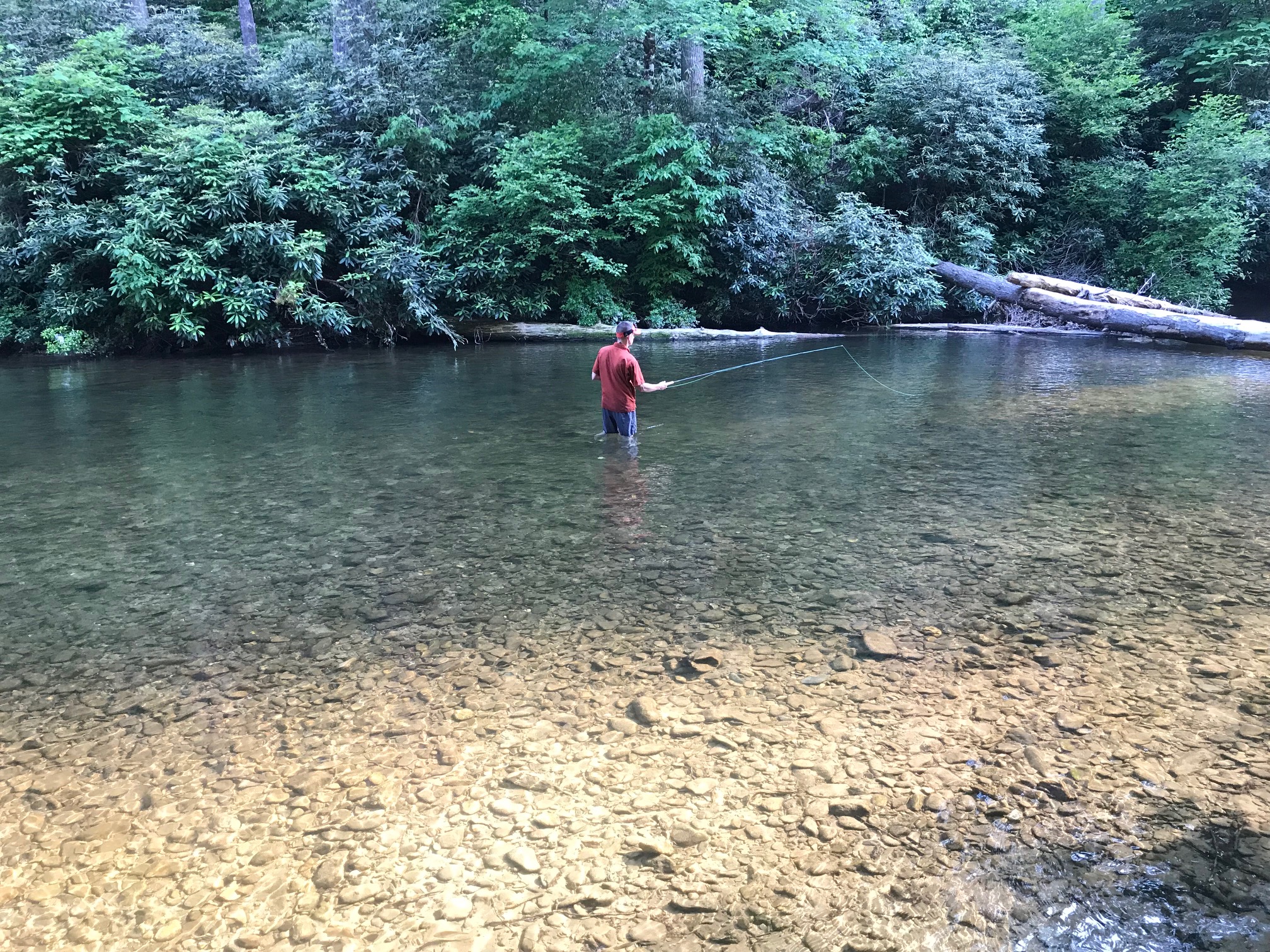 A Knoxville man tries his hand at fly fishing in Abrams Creek during a family camping trip on the southwestern side of Great Smoky Mountains National Park. Thomas Fraser/Hellbender Press
Green begets green in Smokies region; Big South Fork and Cumberland Gap also economic players
Recent federal analysis of spending by national park visitors is a testament to the economic benefits of environmental protection, scientific study and outdoor recreation.
The 12.1 million visitors to Great Smoky Mountains National Park in 2020 spent $1.024 billion in neighboring communities in both Tennessee and North Carolina, according to a study released this week by the National Park Service. Similar, localized releases were distributed into national park communities across the country.
Closer to home, that number represents the estimated visitor money spent in areas that include traditional “gateway” communities, such as Townsend and Gatlinburg, and Cherokee and Bryson City in North Carolina. Regionally, it’s at least a $5 million increase since 2012. Travel problems, housing and employee shortages, overdevelopment and environmental destruction are of course persistent in some of those areas.
- great smoky mountains economic impact
- great smoky mountains national park visitation
- conservation area economic impact
- big south fork
- big south fork national river and recreation area
- economic benefit of wild area
- obed
- cumberland gap
- federal park visitation and spending
- national park service units in tennessee
- economic impact of national parks in tennessee
Great Smokies rangers levy fines against visitor feeding Cades Cove bear peanut butter
Written by Thomas Fraser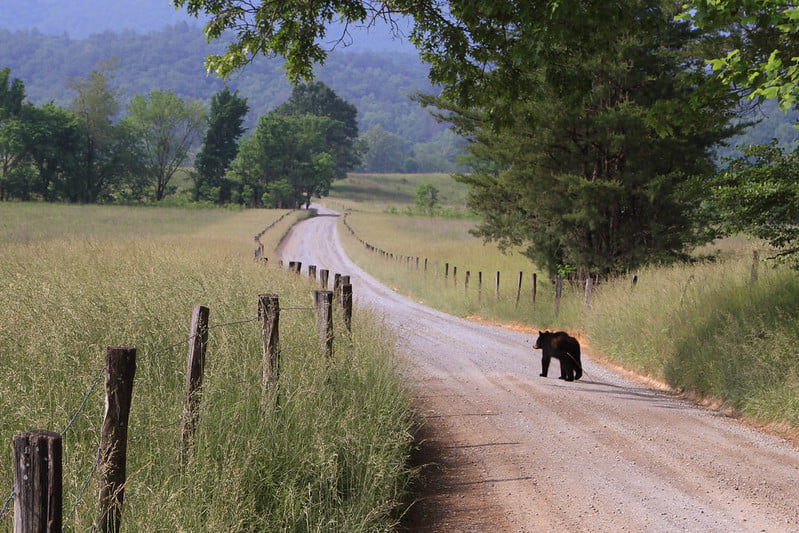 A black bear makes its way through Cades Cove in this National Park Service photograph. This is emblematic of Smoky Mountain bears on the move in the spring; the park service recently took action against a visitor who fed a bear peanut butter in the area. The bear in question had been feeding on walnuts for several weeks prior to the visitors’ introduction of human food, attractions to which can doom black bears because they are more prone to exhibit dangerous behavior toward people and become habituated, and even dependent, on their presence.
Smokies visitor feeding bear peanut butter in Cades Cove was reportedly caught on camera. That aided park rangers’ search for the perp.
A visitor to Cades Cove thought it would be wise to feed peanut butter to a black bear in Great Smoky Mountains National Park, and she got a ticket as a result. The person who received the citation, according to a news release from the park, was identified via video taken by another park visitor.
A National Park Service spokeswoman followed up with Hellbender Press the morning of June 8 in response to some questions. Rangers issued the citation to a 27-year-old woman, one of three adults in the vehicle. If the woman simply pays the fine and doesn’t contest it in court, she will pay a $100 fine, plus a $30 fee
Anyhoo, for Pete’s sake, don’t feed the bears. They’ve got enough problems without us getting involved.
“Managing wild bears in a park that receives more than 12 million visitors is an extreme challenge and we must have the public’s help,” said Great Smoky Mountains National Park Wildlife Biologist Bill Stiver. “It is critical that bears never be fed or approached — for their protection and for human safety.”
The full National Park Service release from Great Smoky Mountains National Park follows:
“Great Smoky Mountains National Park rangers issued a citation to visitors responsible for feeding a bear peanut butter in Cades Cove. Rangers learned about the incident after witnesses provided video documentation. Following an investigation, the visitors confessed and were issued a citation.
“Prior to the incident, the 100-pound male bear had been feeding on walnuts for several weeks along the Cades Cove Loop Road. The bear started to exhibit food-conditioned behavior leading wildlife biologists to suspect the bear had been fed. Biologists captured the bear, tranquilized it, and marked it with an ear tag before releasing it on site in the same general area. Through aversive conditioning techniques such as this, rangers discourage bears from frequenting parking areas, campgrounds, and picnic areas where they may be tempted to approach vehicles in search of food. This includes scaring bears from the roadside using loud sounds or discharging paint balls.
“Park officials remind visitors about precautions they should take while observing bears to keep themselves and bears safe. Until the summer berries ripen, natural foods are scarce. Visitors should observe bears from a distance of at least 50 yards and allow them to forage undisturbed. Bears should never be fed. While camping or picnicking in the park, visitors must properly store food and secure garbage. Coolers should always be properly stored in the trunk of a vehicle when not in use. All food waste should be properly disposed to discourage bears from approaching people.
“Hikers are reminded to take necessary precautions while in bear country including hiking in groups of three or more, carrying bear spray, complying with all backcountry closures, properly following food storage regulations, and remaining at a safe viewing distance from bears at all times. Feeding, touching, disturbing, or willfully approaching wildlife within 50 yards (150 feet), or any distance that disturbs or displaces wildlife, is illegal in the park.
“If approached by a bear, park officials recommend slowly backing away to put distance between yourself and the animal, creating space for it to pass. If the bear continues to approach, you should not run. Hikers should make themselves look large, stand their ground as a group, and throw rocks or sticks at the bear. If attacked by a black bear, rangers strongly recommend fighting back with any object available and remember that the bear may view you as prey. Though rare, attacks on humans do occur, causing injuries or death.
“For more information on what to do if you encounter a bear while hiking, please visit the park website at www.nps.gov/grsm/naturescience/black-bears.htm. To report a bear incident in the park, please call 865-436-1230.
“For more information about how to be BearWise, please visit www.bearwise.org. Local residents are reminded to keep residential garbage secured and to remove any other attractants such as bird feeders and pet foods from their yards. To report a bear incident outside of the park, please call Tennessee Wildlife Resources Agency or North Carolina Wildlife Resources Commission.”
This story has been updated with information supplied by the National Park Service in response to questions about the case from Hellbender Press.

Reckoning with racism with a walk in the woods
Written by Thomas Fraser
Video documents success of ‘Smokies Hikes for Healing’ endeavor
Great Smoky Mountains National Park Superintendent Cassius Cash was as shaken as the rest of us this past spring and summer when a national reckoning of racism erupted across the country following the homicide of George Floyd under the knee of a Minneapolis police officer.
Also like many of us, Cash, who is Black, wondered what he could do to help heal 400-year-old wounds.
He determined we needed to take a walk in the woods and talk about things.
“As an African American man and son of a police officer, I found myself overwhelmed with the challenges we faced in 2020 and the endless news cycle that focused on racial unrest,” Cash said in a press release distributed Feb. 26.
“My medicine for dealing with this stress was a walk in the woods, and I felt called to share that experience with others. Following a summer hike in the park, I brought together our team to create an opportunity for people to come together for sharing, understanding, and healing.”
Sixty people directly participated in Cash’s Smokies Hikes for Healing program, Smokies Hikes for Healing, which ran from August to December in the national park. Hundreds of people visited an accompanying website to learn more or acquire information on how to lead their own such hikes.
Cash, who credited the park team who helped him organize the innovative project, correctly determined there was no more appropriate place to honestly discuss racism and the importance of diversity than a hike in one of the most biologically diverse places on the planet.
David Lamfrom, Stephanie Kyriazis, and Marisol Jiménez, facilitated the hikes and created a “brave space for open conversations about diversity and racism,” according to the park release, which also announced the availability of the Smokies Hikes for Healing video produced by Great Smoky Mountains Association.
Friends of the Smokies and New Belgium Brewing Company also contributed financial support to the effort.