The Environmental Journal of Southern Appalachia

Ecological Society of America honors Oak Ridge National Laboratory scientists for sustainability research

Written by
 

ORNL researchers receive 2021 Sustainability Science Award for mapping human influence on U.S. river and stream changes 

Researchers from Oak Ridge National Laboratory mapped and quantified hydrological changes throughout the country due to urban development, energy production and other human factors and won a prestigious award for their efforts.

The team’s analysis was published in the Proceedings of the National Academy of Sciences and received the 2021 Sustainability Science Award from the Ecological Society of America.

“The Sustainability Science Award recognizes the authors of a scholarly work that make a substantial contribution to the emerging science of ecosystem and regional sustainability through the integration of ecological and social sciences. The researchers will be recognized during the society’s annual meeting in August,” according to an ORNL release announcing the award.

The research coupled U.S. Geological Survey stream-flow records with geospatial modeling to quantify human impact on national water resources and concluded the 7 percent of affected aquatic systems hold 60 percent of North American freshwater fish, mussels and other species.

“This work exemplifies how ORNL’s interdisciplinary research in environmental and geospatial science helps equip decision makers with the tools needed to move our nation toward a more sustainable future,” Stan Wullschleger, associate laboratory director for ORNL’s Biological and Environmental Systems Science Directorate, said in the release.

Lead author Ryan McManamay, an aquatic ecologist and faculty member at Baylor University, was with ORNL’s Environmental Sciences Division at the time of publication. Co-authors include ORNL’s Sujithkumar Surendran Nair, Christopher DeRolph, the late April Morton, Robert Stewart, Matthew Troia and Budhendra Bhaduri; Northern Arizona University’s Benjamin Ruddell; and the University of Tennessee’s Liem Tran and Hyun Kim.

“It was a privilege to work with this team that spanned across multiple disciplines and institutions,” said Bhaduri, an ORNL Corporate Research Fellow and director of ORNL’s Geospatial Science and Human Security Division. “Given the impacts of climate change, there has never been a more pressing opportunity to address environmental sustainability. It’s a tremendous honor to make this scientific contribution and to be recognized for it.”
Rate this item
(1 Vote)
Published in News

Related items

  • ORNL researcher models fire’s growing footprint in a changing climate
    in News

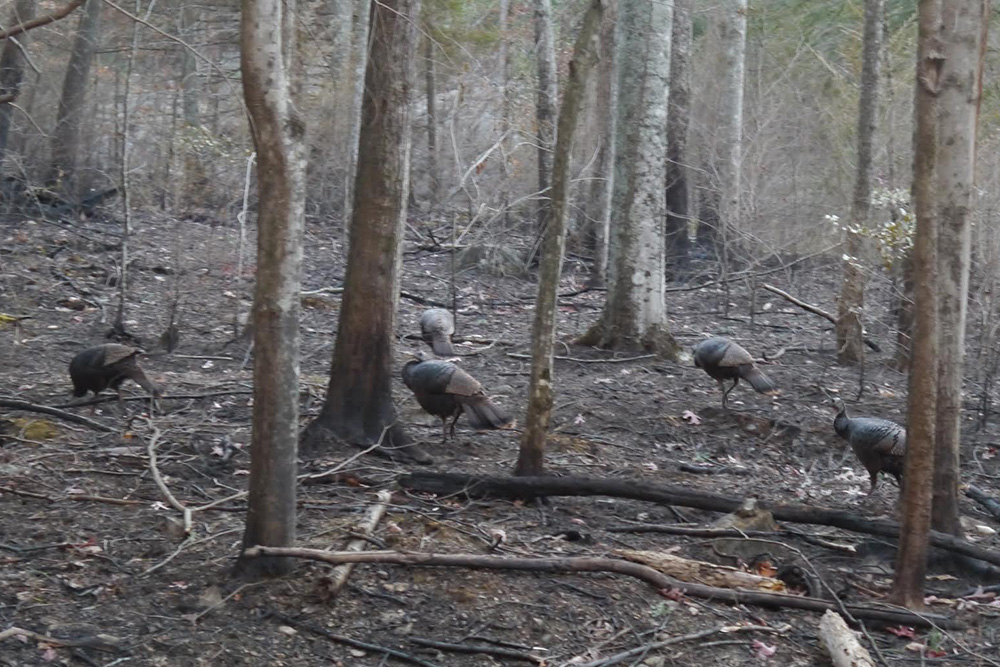
    COVER 1208 GatlinburgsInferno3Wild turkeys forage in charred hardwood forest soon after the 2016 Gatlinburg fires, which moved from the Smokies to developed areas in Sevier County. An ORNL model predicts wildfire threats will increase in the Southern Appalachians because of climate change. Thomas Fraser/Hellbender Press via Knoxville Mercury

    ORNL report: Local wildfire danger will likely loom larger because of climate change

    OAK RIDGE — This cruel summer, the Southern Appalachian region is already baking in above-normal temperatures and basking in poor air quality. 

    Air temperatures in Knoxville flirted with 100 degrees on July 6, which were well above average and prompted the National Weather Service to issue a heat advisory for much of the metropolitan area.

    It’s hard to definitively link a heat wave to global warming, but one oft-cited consequence of climate change is the growing intensity of wildfires, even in the traditionally moisture-rich Appalachians. The range of climate change effects is difficult to pin down, but one constant in the study of climate change is an expected increase in overall temperatures, which can power wildfires via both fuel increases and volatility.

  • Keeping energy inside: Grant to install 3-D printed walls at Knoxville’s oldest public housing complex
    in News

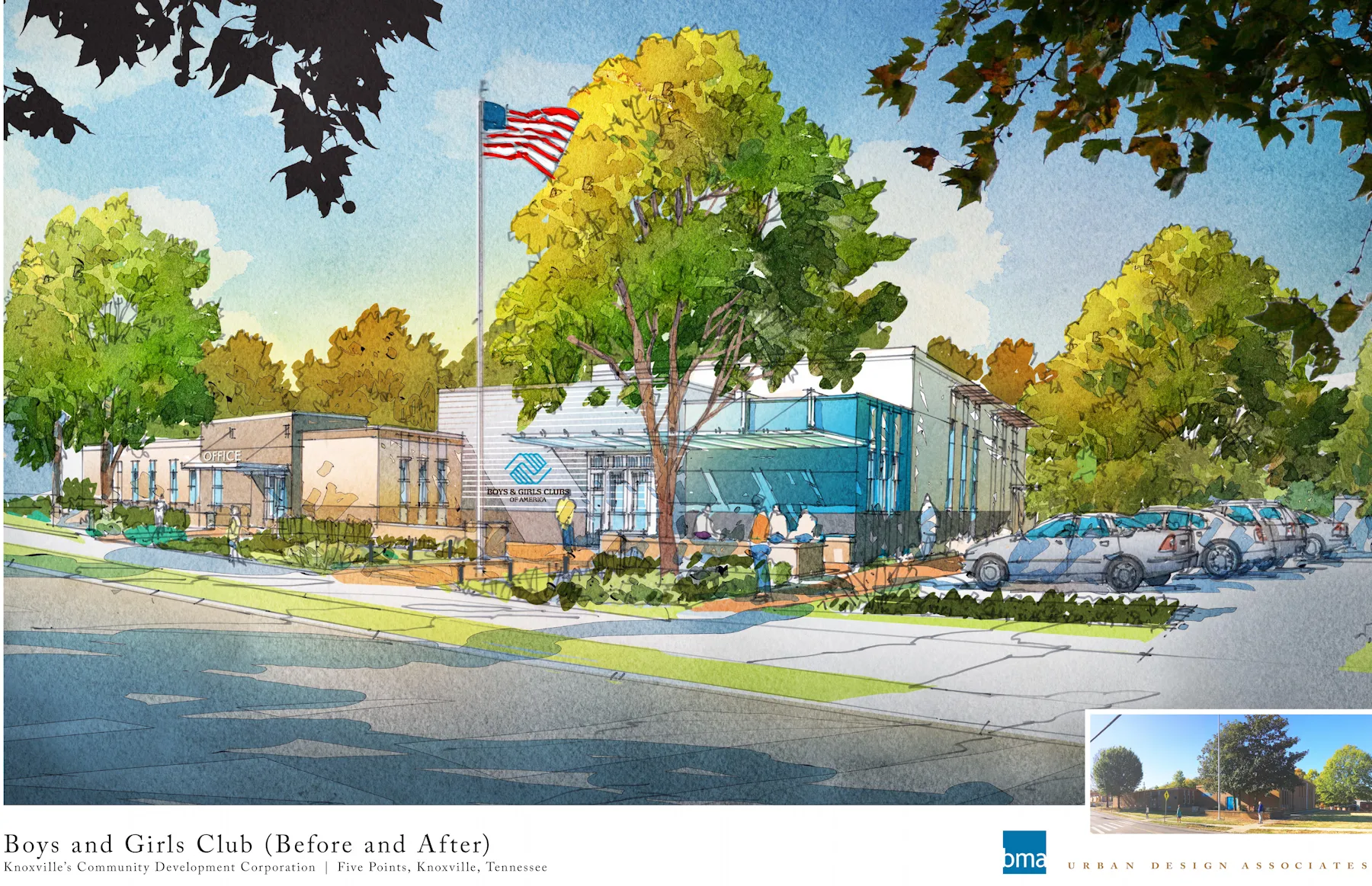
    boys and girls club before and afterThis is a possible result of ORNL/KCDC energy efficiency improvements set for Knoxville public housing funded by a Department of Energy grant. The project will include the Boys & Girls Club.  © 2016 urban design association

    Energy-efficiency upgrades based on ORNL walls set for Knoxville public housing

    KNOXVILLE — A city public housing project almost a century old is going to receive 3-D printed energy efficiency upgrades thanks to a grant from the U.S. Department of Energy.

    Scientists at Oak Ridge National Laboratory will partner with Knoxville’s Community Development Corporation to retrofit eight to 12 buildings at Western Heights using 3-D printed exterior “overclad” panels equipped with heat pumps and heat recovery systems. The Boys & Girls Club building at Five Points in Morningside will receive the same treatment.

  • Marie Kurz: Helping science on watersheds flow across disciplines
    in News

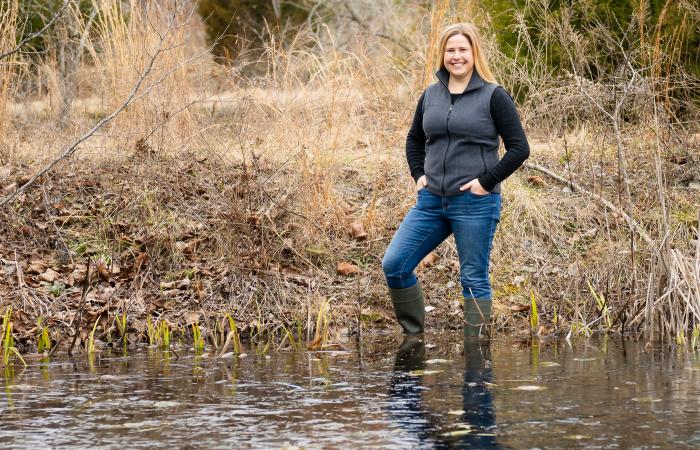
    Kurz1Marie Kurz is seen at a pond on the campus of Oak Ridge National Laboratory.  Carlos Jones/ORNL

    From California canyons to German creeks: Science is personal and practical for ORNL scientist Marie Kurz

    Kristen Coyne is a writer for Oak Ridge National Laboratory.

    OAK RIDGE — Spanning no less than three disciplines, Marie Kurz’s title — hydrogeochemist — already gives you a sense of the collaborative, interdisciplinary nature of her research at the Department of Energy’s Oak Ridge National Laboratory. Still, those six syllables only hint at the vast web of relationships encompassed in her work.  

    Kurz studies how rivers flow through landscapes; what kinds of nutrients, contaminants and other material sail through them; and how they transform along the way. As an experimentalist, her favorite part of the job is getting into the field. Depending on the season, Kurz can be found clad in tights, gloves reaching her shoulders, a neon vest and a ponytail-taming cap as she sloshes in olive hip waders through the particular stream under her scrutiny. The getup, she said, always makes her feel a bit like the Michelin Man.

  • Zigging and zagging to find the Zigzag
    in News

    Zigzag salamander UT doctoral student Bryce Wade examines a Southern zigzag salamander he found at Ijams Nature Center in South Knoxville. Keenan Thomas/Hellbender Press

    On the happy herping trail: Bryce Wade searches for salamanders

    KNOXVILLE — Bryce Wade scours the nature trail, turning over rocks and logs. On this overcast day at Ijams Nature Center, he searches beneath the leaves on the ground for one creature: salamanders.

    Underneath the rocks, logs and leaves, salamanders populate the cool, moist earth, avoiding the sun whenever they can. Wade is looking for a particular type: a winter species informally called the Southern zigzag salamander (Plethodon ventralis). 

  • Aerosols and atoms: ORNL supercomputer models airborne spread of Covid-19

    covid virus image

    New York Times: Oak Ridge supercomputer simulates spread of Covid-19 in water droplets

    Scientists studying the spread of the novel coronavirus utilized the world’s second-fastest computer at Oak Ridge National Laboratory to model the movements of millions of individual atoms that make up the virus and aerosols that can transport and transmit it. 

    The virus has killed nearly 1 million Americans and infected more than 50 million since a pandemic was declared in early 2020.

    “The researchers started by creating a model of the coronavirus, known as SARS-CoV-2, from 300 million virtual atoms,” the New York Times reported.

    Researchers then placed the virtual virus model in an intricately detailed and microscopic model of a water droplet such as the type exhaled by those infected with the virus. The supercomputer then calculated how the droplet and its attendant virus could, for example, move within a room where people are in close quarters and exhaling and inhaling the virus.

    To carry out this vast set of calculations, the researchers had to take over the Summit Supercomputer, the second most powerful supercomputer in the world

  • University of Tennessee climate panel: Scientists say don’t despair. Yet.
    in News

    bwhi1apicaaamlo.jpg large

    Scientists discuss climate challenges and solutions during 2021 One Health Day

    As climate experts and scientists huddled in Glasgow in an international effort to stem potentially disastrous global environmental changes, a panel of doctors representing multiple disciplines at the University of Tennessee and beyond offered their assessments of climate challenges and solutions.

    Their take on climate change? We have problems, but we also have solutions. Hopelessness will drive you crazy. Stay healthy, stay informed and do your part to mitigate the long-term environmental consequences of a changing Earth. 

    Above all: Don’t despair and don’t lose hope.

    The panel, held Nov. 3 at the UT Student Union and presented by the UT One Health Initiative, consisted of the following experts:

    — Dr. Gus Engman, Department of Forestry, Wildlife, and Fisheries, University of Tennessee Institute of Agriculture 

    — Dr. Kate Evans, Computational Sciences and Engineering Division, Oak Ridge National Laboratory

    — Dr. Joshua Fu, Department of Civil and Environmental Engineering, University of Tennesse

    — Dr. Sindhu Jagadamma, Biosystems Engineering and Soil Science, University of Tennessee Institute of Agriculture

    — Dr. Kristina Kintziger, Department of Public Health, University of Tennessee

    Answers have been edited for clarity and brevity and don’t include the full response. Questions were submitted ahead of time or during the panel discussion. 

    What do you see as the largest threats of climate change, especially related to your individual research interests?

    Engman: Changing precipitation patterns are something I think about a lot.

    Pretty much all the rivers in the world are expected to have changes to their flow regime.

    These changes in droughts and floods are a really large issue.

    I think a lot about aquatic communities. If we are scarce on drinking water, we are always going to prioritize people having that water, over the fish or the bugs in the streams. 

    There are all kinds of impacts to life histories and interactions with communities in streams. 

    When animals are stressed because of these changes in precipitation patterns and changes in flow patterns, they might become more susceptible to other stressors, like disease. 

    Changes in algal community composition can impact the entire water quality of a stream, and that might happen because of these changes in precipitation patterns.

    These places that are experiencing these extreme droughts really worry me. The Colorado River already doesn’t even flow all the way to the ocean anymore. That’s a huge change. Because we take up so much water for agriculture. 

    If a stream runs out of water, it’s not a stream anymore.

    Evans: From a meteorological perspective, the biggest event that hurts people's health is actually heat waves. A lot of press goes to tornadoes and hurricanes and storms but in fact these large domes of hot air (are deadly), which happen because of changes in the large-scale weather patterns.

    The greenhouse effect insulates the earth, it makes it more uniform in temperature and so that changes the flow patterns that go around the earth. That changes those big weather systems that come in and how long they stick around. 

    When you talk about these long droughts, we know that’s what's we have to understand: Will they last longer, be more humid, less humid, and that has huge impacts for human health as well as the food they eat and the plants that grow. 

    Kintziger: Heat also has a bigger impact on a more indirect pathway to human health. Not just heat-related illness but also cardiovascular impacts, renal impacts and even mental health impacts.

    Heat is the one that keeps me up at night. We are seeing increasing temperatures globally and we also have this urban heat island affect. 

    Our vulnerable populations in the cities — inner cities with lower-income housing, homeless populations — they are going to experience heat very differently than people who live in newer buildings with better cooling and infrastructure and have better capabilities for adapting to heat. 

  • ORNL’s comprehensive mapping of built environments aids disaster response

    Compass: ORNL mapping effort will aid rescue, risk assessment

    Oak Ridge National Laboratory scientists spent five years mapping virtually every structure in the U.S. and the data is bearing early fruit as it is used for response to disasters such as hurricanes and severe floods. 

    Mark Tuttle and Melanie Lavardiere, the team leaders of the project, have mapped “virtually every single structure in the United States and its territories,” Compass reports. 

    The information is used by disaster responders from the FEMA level and down. During a hurricane, for example, authorities can focus response efforts on the most vulnerable areas using the building-mapping database. 

    The database can also be used by insurers to charge rates more according to risk, and for structures covered under the National Flood Insurance Program, as is already happening.

    But the data is most valuable for saving lives and determining the most likely location those lives will have to be saved. 

    “After disaster strikes, the data can give a rapid indication of the scope of the damage and point responders in the right direction to assist in the recovery. Using the powerful computers available at ORNL, the team can process data quickly — producing in a matter of hours work that used to take months — and get it into FEMA’s hands for analysis,” Compass reports.

  • Oak Ridge National Laboratory land is an international treasure of biodiversity
    in News

    res1.jpgAquatic ecologist Natalie Griffiths studies nutrients and contaminants in the Weber Branch watershed, which is in the Oak Ridge Environmental Research Park. Courtesy Carlos Jones/ORNL

    ORNL research lands are an international ecological benchmark and diverse wonderland of trees, plants, mammals, reptiles and amphibians

    Abby Bower is a science writer for Oak Ridge National Laboratory.

    The Department of Energy’s Oak Ridge National Laboratory (ORNL) is a hub for world-class science. The nearly 33,000-acre space surrounding the lab is less known, but also unique. The Oak Ridge Reservation (ORR) is a key hotspot for biodiversity in the Southeast and is home to more than 1,500 species of plants and animals.

    At the intersection of Anderson and Roane counties is an important subset of the reservation — the Oak Ridge National Environmental Research Park, or NERP — a 20,000-acre ORNL research facility that has been internationally recognized by UNESCO as an official biosphere reserve unit.

    “The National Environmental Research Park is a living laboratory and a major resource for conducting ecological studies,” said Evin Carter, an ORNL wildlife ecologist and director of the Southern Appalachian Man and the Biosphere Program, or SAMAB. The NERP has been a core part of SAMAB, which has focused on sustainable economic development and conserving biodiversity in Southern Appalachia since 1989.

    With ORNL researchers and scientists from government agencies and academia using the NERP for diverse experiments each year, the park lives up to its status as a living laboratory.

    It also lives up to its reputation as a biodiversity hotspot. As one of seven DOE-established environmental research parks reflecting North America’s major ecoregions, it represents the Eastern Deciduous Forest. The NERP comprises parts of this ecoregion that have been identified repeatedly as priorities for global biodiversity conservation, Carter said.

    This designation means more than ever as climate change alters ecosystems and biodiversity declines worldwide. According to a landmark international report, on Biodiversity and Ecosystem Services, around one million plant and animal species are currently threatened with extinction. 

  • The 17-year cicada brood left behind some calling cards in the trees

    Tree browning cicadas1 1 Here is some evidence of tree browning and “flagging” caused by the recent appearance of Brood-10 cicadas earlier this summer. Courtesy Oak Ridge National Laboratory 

    Tree “flagging” is a lingering sign of the 17-year cicadas’ brief time on Earth

    (Alexandra DeMarco is an intern in ORNL’s media relations group.)

    On the road leading to the U.S. Department of Energy’s Oak Ridge National Laboratory, drivers may notice that many of the green trees lining the entrance to the lab are dappled with brown leaves. At first glance, the sight isn’t extraordinary, as deciduous tree leaves turn hues of oranges and browns before falling to the ground each autumn.

    Yet, just weeks past the summer solstice, this phenomenon is out of place and is in fact evidence of another natural occurrence: cicada “flagging.”

    This spring, Brood X cicadas emerged from the ground after 17 years and swarmed across the eastern United States, leaving a trail of exoskeletons and echoes of mating calls. Cicadas emerge in such large quantities to withstand predation and successfully maintain their populations, and trees actually play a key role in their life cycle.

    A male cicada attracts a female through a mating call, the sound responsible for cicadas’ shrill hum. After the two mate, the female cicada uses a sharp tubular organ called an ovipositor to slit the bark and split the sapwood of young tree branches to deposit her eggs there. These incisions, however, damage a tree’s vascular system and can cause stalks beyond the incision to die and wither, leaving behind twigs with brown leaves that resemble flags dangling from the trees.

    The eggs then grow into nymphs that make their way to below ground. An oft-repeated misconception is that they’ll stay dormant for 17 years. Actually, during that time, they go through 5 life stages while feeding on the xylem (tree sap) of roots. This may further weaken saplings that were heavily infested with cicadas.

  • Tennessee is a national leader in electric-car production and parts. Celebrate at this summer’s Get Off the Grid Fest in Chattanooga
    in News

    151694666 3601977996537551 5217723614434192164 n

    Not just for preppers anymore: Chattanooga energy-independence event promises three days of music, learning and fun “powered by the sun.” 

    A decade ago, the cost of the equipment needed to live off the grid limited the experience to the wealthy few. Presently, and in the near future, the technology is far more widely available to even modest income homesteaders. These days, you can’t afford NOT to get off the grid.” - Bill Fleming

    The Chattanooga and Middle Tennessee areas are among the top producers of electric cars in the nation. What better place to facilitate and celebrate the growing use of alternative fuels? 

    This summer’s Get off the Grid Fest near Chattanooga is a phenomenon with roots in the alternative energy movement of past decades. Today, it offers a strong vision for attaining energy independence and building sustainable communities for the present and future.

    The latest installment of the festival is set for the weekend of Aug. 20-22 at Camp Jordan in East Ridge. 

    Bill Fleming and Ed Witkin are bringing the traveling, biennial festival to East Tennessee this year. They are musicians and festival organizers and have been promoting and installing alternative energy technology for decades. The events are billed as ways “to explore and present practical methods of protecting and preserving our natural resources,” according to organizers, with a focus on harnessing alternative energy sources.

    The celebration of energy independence — and ways to achieve it — will include three music stages; a curated art exhibit; an electric vehicle exposition; a sustainability fair with workshops such as homesteading demonstrations; and a health and wellness tent. 

    The East Tennessee Clean Fuels Coalition and Drive Electric Tennessee are partnering with Stephen McCord to offer the Electric Vehicle Expo (EVX). 

    “EVX is Tennessee’s first multi-day music festival/exposition showcasing the latest in electric vehicle products, components, and services,” said McCord, the owner/operator of B Presents, a Nashville-based company that provides concert and event promotion, entertainment marketing, and promotional services.

    The Electric Vehicle Expo will include vendors across the entire EV spectrum, including OEMs, dealers, and suppliers for a full weekend of  presentations, test drives, workshops and guest speakers.