
Displaying items by tag: threatened species
For the win: The storied snail darter swims back from the brink
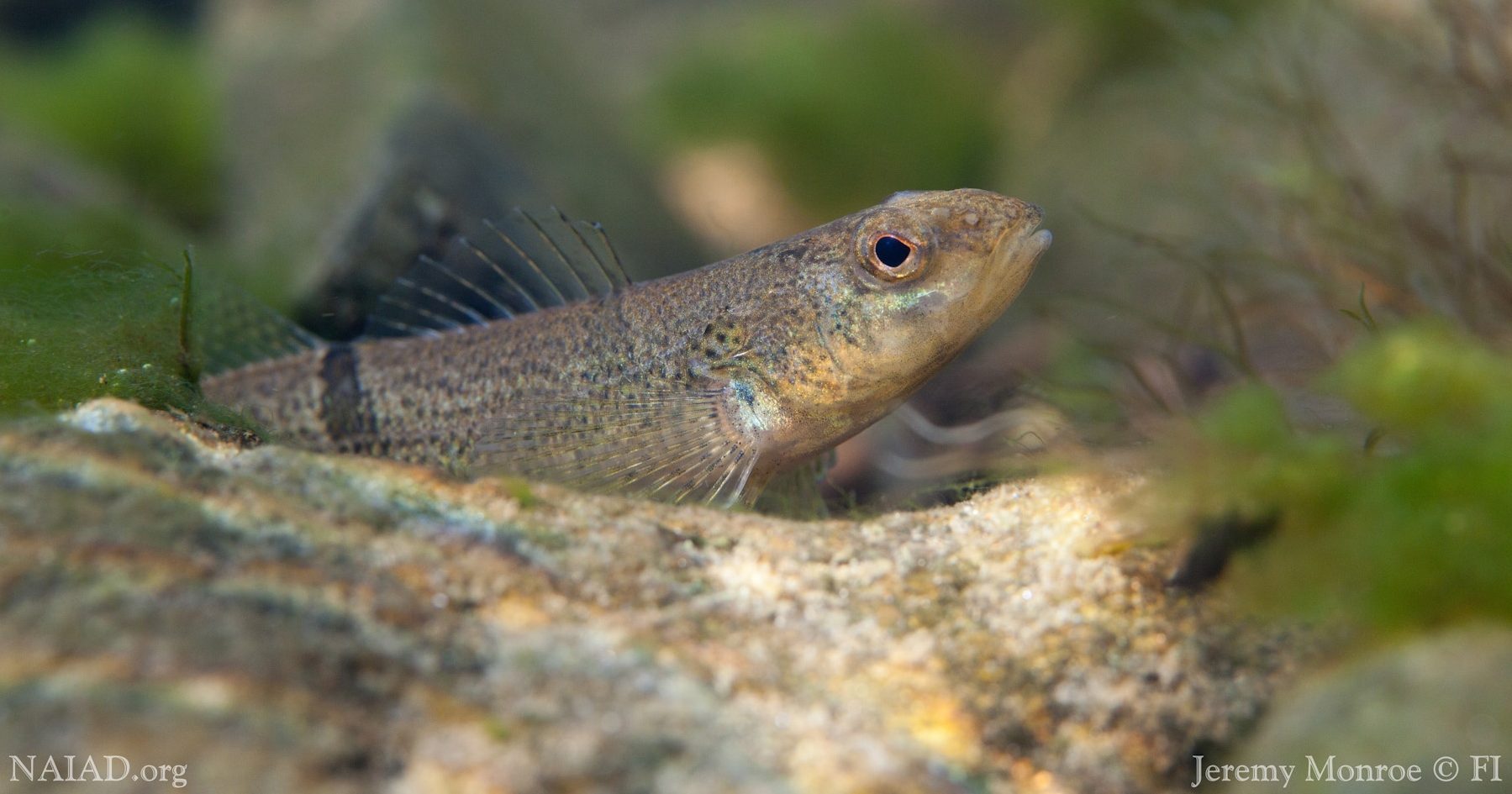 The snail darter, which caused an epic battle around TVA plans to dam the Tellico River in the 1970s, was recently removed from the Endangered Species List. Jeremy Monroe/Tennessee Aquarium
The little fish that caused a maelstrom over a TVA dam project gets the last laugh
TELLICO — In a win for endangered species protected by federal law, the U.S. Fish and Wildlife Service announced this week the fabled snail darter’s recovery and removal from the Federal List of Threatened and Endangered Wildlife.
Native to the Tennessee River watershed in Alabama, Georgia, Mississippi and Tennessee, the fish has long been an Endangered Species Act icon thanks to conservation efforts to save its habitat starting in the 1970s, when the Tennessee Valley Authority proposed construction of a dam on the Little Tennessee River. The snail darter (Percina tanasi) was central in the 1978 U.S. Supreme Court case Tennessee Valley Authority v. Hill, which solidified the scope of the then recently passed ESA.
- snail darter
- endangered species
- endangered species act
- tellico dam
- southern environmental law center
- snail darter removed from endangered species list
- tva vs hill
- little tennessee river
- eastern band of cherokee indians
- ramona mcgee
- george nolan
- tennessee valley authority v hill
- habitat conservation
- us supreme court
- percina tanasi
- threatened species
Oak Ridge National Laboratory land is an international treasure of biodiversity
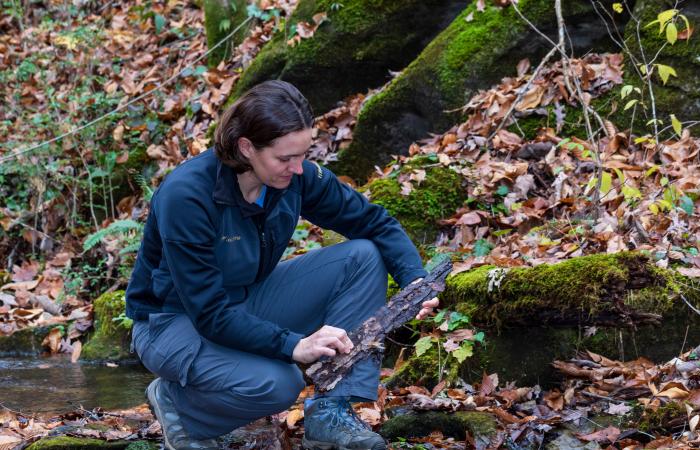 Aquatic ecologist Natalie Griffiths studies nutrients and contaminants in the Weber Branch watershed, which is in the Oak Ridge Environmental Research Park. Courtesy Carlos Jones/ORNL
ORNL research lands are an international ecological benchmark and diverse wonderland of trees, plants, mammals, reptiles and amphibians
Abby Bower is a science writer for Oak Ridge National Laboratory.
The Department of Energy’s Oak Ridge National Laboratory (ORNL) is a hub for world-class science. The nearly 33,000-acre space surrounding the lab is less known, but also unique. The Oak Ridge Reservation (ORR) is a key hotspot for biodiversity in the Southeast and is home to more than 1,500 species of plants and animals.
At the intersection of Anderson and Roane counties is an important subset of the reservation — the Oak Ridge National Environmental Research Park, or NERP — a 20,000-acre ORNL research facility that has been internationally recognized by UNESCO as an official biosphere reserve unit.
“The National Environmental Research Park is a living laboratory and a major resource for conducting ecological studies,” said Evin Carter, an ORNL wildlife ecologist and director of the Southern Appalachian Man and the Biosphere Program, or SAMAB. The NERP has been a core part of SAMAB, which has focused on sustainable economic development and conserving biodiversity in Southern Appalachia since 1989.
With ORNL researchers and scientists from government agencies and academia using the NERP for diverse experiments each year, the park lives up to its status as a living laboratory.
It also lives up to its reputation as a biodiversity hotspot. As one of seven DOE-established environmental research parks reflecting North America’s major ecoregions, it represents the Eastern Deciduous Forest. The NERP comprises parts of this ecoregion that have been identified repeatedly as priorities for global biodiversity conservation, Carter said.
This designation means more than ever as climate change alters ecosystems and biodiversity declines worldwide. According to a landmark international report, on Biodiversity and Ecosystem Services, around one million plant and animal species are currently threatened with extinction.
- oak ridge national laboratory
- ornl
- ecological benchmark
- oak ridge national environmental research park
- nerp
- biosphere reserve
- southern appalachian man and the biosphere
- samab
- biodiversity
- unesco
- oak ridge reservation
- orr
- ecoregion
- culturally significant plant species initiative
- cspsi
- evin carter
- kitty mccracken
- eastern band of cherokee indians
- neon
- national ecological observatory network
- northern longeared bat
- indiana bat
- grey bat
- endangered species
- threatened species
- purple gallinule