
1 No Poverty (2)
End poverty in all its forms everywhere
Food myths hurt Mother Earth
The average American family of four annually spends more than $2,000 on food they never eat!
Nearly one in nine people suffer from hunger worldwide.
Agriculture contributes to global greenhouse gas emissions, deforestation and soil degradation.
Climate change increases crop losses.
One third of all food produced in the world is lost or wasted.
It’s not just the food that’s wasted.
Consider the energy wasted to grow, process and transport it.
That all contributes to climate change, food shortages and to the rising costs of food, energy and health care.
Food waste stresses our environment, humanity and the economy.
— EarthSolidarity™
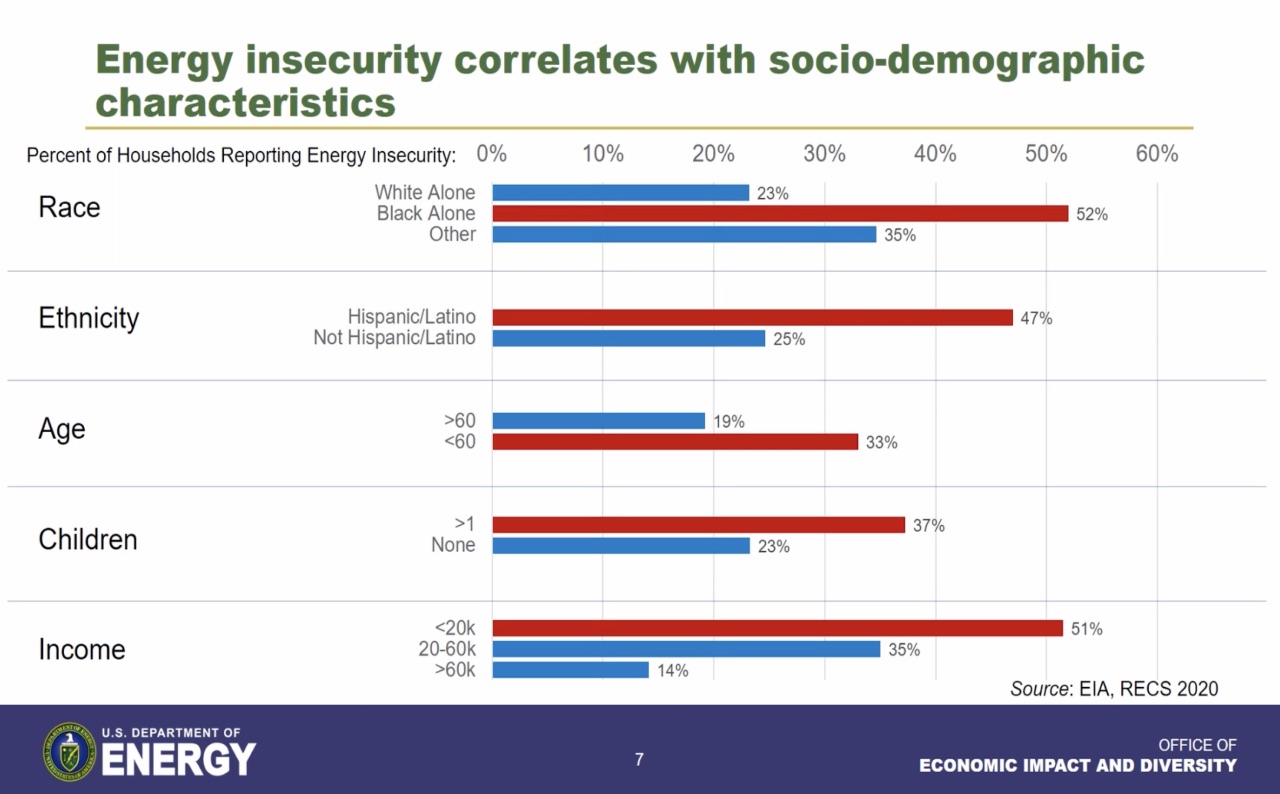 The inordinate burden of energy costs is shown in this slide presented by Tony Reames during a discussion of energy injustice at the University of Tennessee Howard Baker Center. U.S. Department of Energy
Department of Energy official pushes goals for energy equity in midst of power turmoil
KNOXVILLE — Energy injustice seems abstract until you run extension cords to your neighbor’s house and store their food in your fridge because their power got cut off.
What else are you supposed to do? Maybe start raising hell about the utility inequities faced by poor people that are clearer every day in an energy marketplace scarred by war and inflation and manipulated by global petroleum cartels?
“We’re at a critical moment in our society. Across the globe, we are hearing about energy insecurity, energy, affordability issues, a lack of resources,” said Tony Reames, Department of Energy deputy director of energy justice, a newly created position at DOE.
- howard h baker jr center for public policy
- tony reames
- energy injustice
- energy conservation
- minority energy use
- doe energy justice
- inflation reduction act
- inflation reduction act clean energy
- energy injustice black americans
- poverty
- utility disconnection
- energy insecurity
- make home more energy efficient
- social justice
- lowincome household
- minority household