
Thomas Fraser
Falling trees accountable for very few deaths in Smokies, but they do happen
CITIZEN TIMES: Child killed by falling tree was a very rare twist of horrible fate
Karen Chavez of the Asheville Citizen Times wrote a great article on tree-related deaths in Great Smoky Mountains National Park and beyond following the death last week of a Georgia child killed by a falling tree as she was occupying a tent in Elkmont Campground.
She reports the death of the child was only the 11th tree-linked death in the national park’s history.
The first such death was reported in 1934, when a Civil Conservation Corps worker was killed. Tree-related deaths since are normally associated with roadways and hiking trails.
“‘Deaths related to falling trees or limbs account for about 2 percent of total recorded deaths in the park. It’s an incredibly rare and tragic occurrence and accounts for the first-ever fatality caused by a tree falling on a tent in park history,’” according to an interview Chavez had with park spokeswoman Dana Soehn.
Updated: Summer of weather anomalies continues as deadly floods ravage SE Kentucky
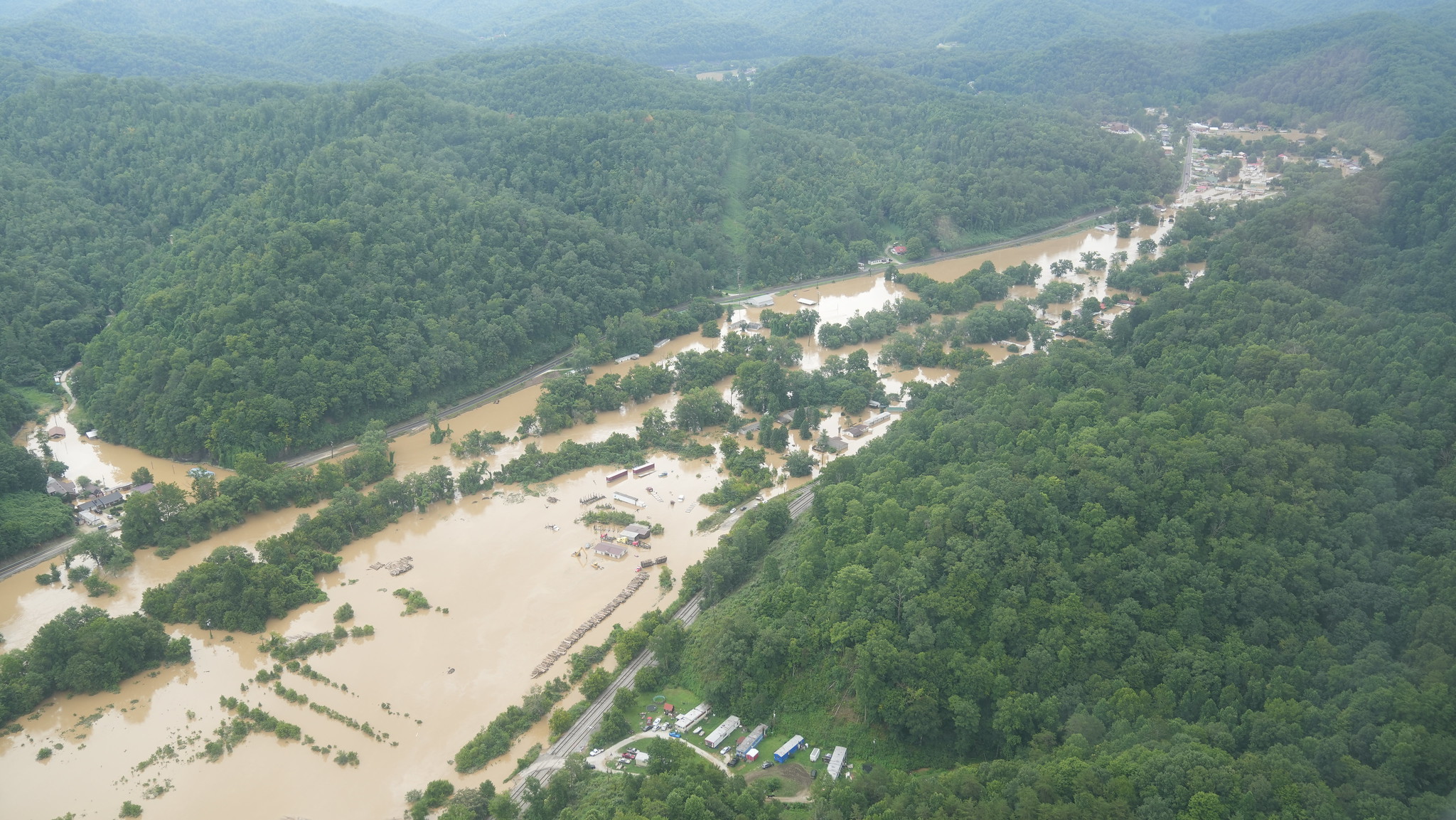 Heavy flooding is seen in eastern Kentucky this weekend. State of Kentucky/Office of Gov. Andy Beshear
Another round of severe flooding hits the Southern Appalachian region
UPDATED: The death toll from last week’s unprecedented flooding in Kentucky reached at least 29, as some areas contended with additional flooding over the weekend. Fifteen of those, including four children, died in Knott County, which is about 100 miles north of Kingsport.
Water service to nearly 67,000 connections has been affected, as well as 17 wastewater-treatment systems in eastern Kentucky, according to Gov. Andy Beshear’s office.
“We are currently experiencing one of the worst, most devastating flooding events in Kentucky’s history. The situation is dynamic and ongoing,” Beshear said in a statement.
“What we are going to see coming out of this is massive property damage and we expect loss of life. Hundreds will lose their homes. And this will be yet another event that will take not months, but years, for our families to rebuild and recover from.”
Falling tree kills child in Great Smokies
ELKMONT — A 9-year-old girl died early Wednesday after a tree fell on a tent she was occupying in Great Smoky Mountains National Park.
The unidentified child was among a group of people camping in Elkmont Campground when the red maple, 2 feet in diameter, fell shortly after midnight and crushed the girl in her tent, according to the National Park Service.
The girl and her family had traveled to the national park from Georgia. Her father and two siblings weren’t injured, according to the park service.
Elkmont Campground remains open, but the family’s campsite and an adjacent campsite were temporarily closed.
Congo retreats from climate commitments to fuel its fossil energy sector
NYT: Why should we care when you built your world with fossil fuels?
The government of Congo is recruiting fossil-fuel extractors to suck oil from beneath tropical forest and bog ecosystems that rival the Amazon in their role as carbon sinks.
Opponents say it’s another step in knocking over the dominoes of climate renewal as Russia’s invasion of Ukraine continues to roil energy markets and threaten international commitments to addressing climate change.
“The oil and gas blocks, which will be auctioned in late July, extend into Virunga National Park, the world’s most important gorilla sanctuary, as well as tropical peatlands that store vast amounts of carbon, keeping it out of the atmosphere and from contributing to global warming,” according to the New York Times.
Leaders say the global energy paradigm has shifted to the point it makes little sense to prioritize the natural environment over boosting the economy of an impoverished nation.
According to NYT: “That’s our priority,” Mr. Mpanu said, in an interview last week. “Our priority is not to save the planet.”
Torrential rains in Smokies destroy trails, roads and other infrastructure
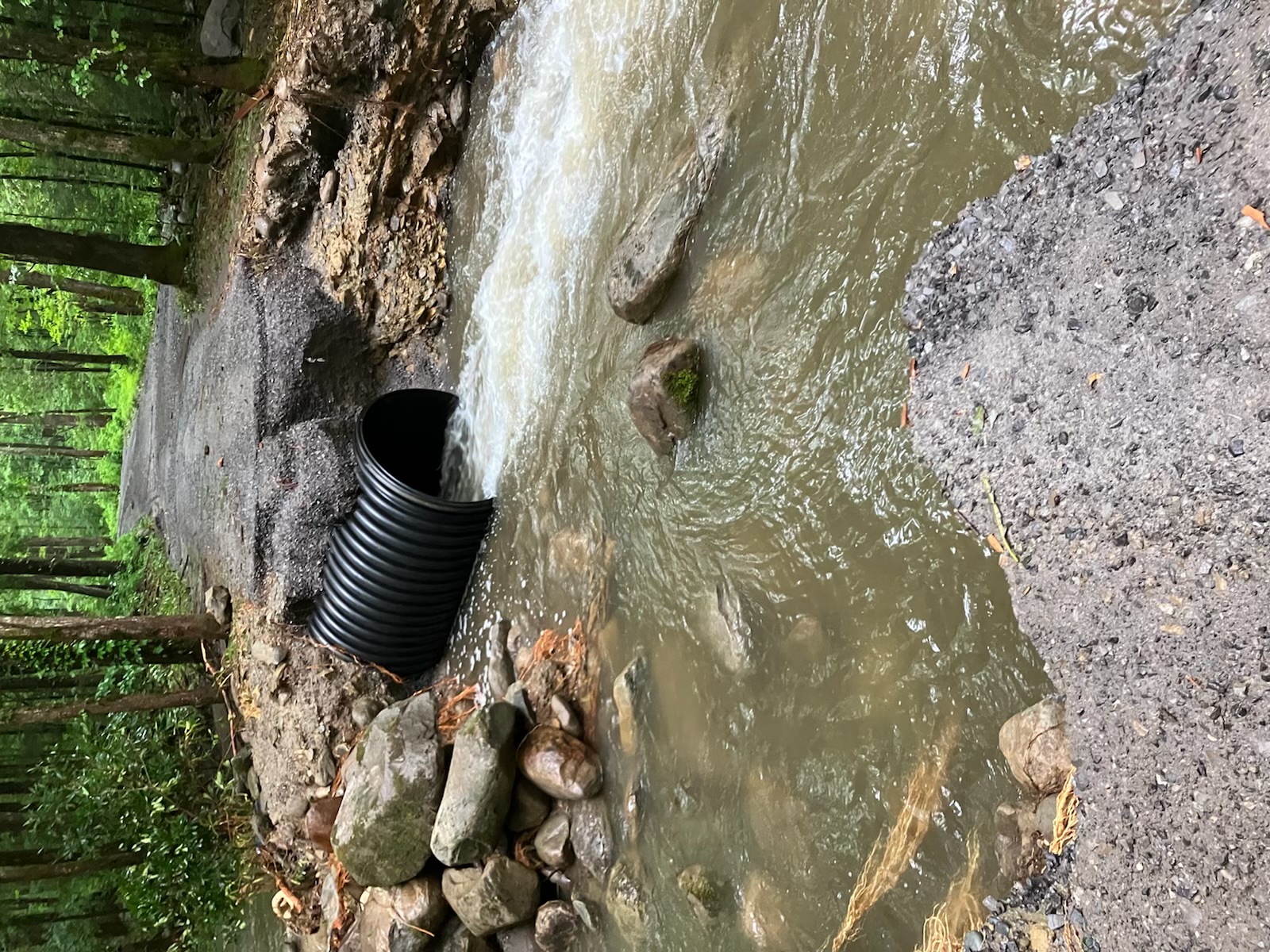 A washout is seen along Porters Creek Road in Great Smoky Mountains National Park following torrential rain on July 12. National Park Service
Flooding causes Smokies damage, prompts water advisory for Sevierville
SEVIERVILLE — Extremely heavy rain on July 12 in the Smoky Mountains caused a cascade of problems now just coming to light.
Sevierville and Sevier County issued a boil-water advisory early Thursday after debris flushed by Tuesday’s floodwaters clogged the city water utility’s main intake on the French Broad River, leading to pressure decreases that opened up lines to possible outside contamination.
In Great Smoky Mountains National Park, Greenbrier campground was closed indefinitely after the swollen Middle Prong of the Little Pigeon River wiped out roads, trails and bridges in the area.
HuffPost: More than 50 House Republicans want to repeal a century-old excise tax that bankrolls wildlife conservation
In the latest “gun rights” lash-out from the GOP, legislation has been filed to abolish firearms taxes levied on gunmakers that fund wildlife conservation.
The Republican legislation is framed as a way to defend gun purchasers from odious taxation under the 2nd Amendment umbrella, but leading hunting and fishing interests said the proposal is misguided and misses the target by a wide mark.
The levy as currently written applies to gunmakers, not individual firearms purchasers.
The GOP target is the Pittman-Robertson Act, which “helped confront decades of overhunting and habitat loss by creating a financial link between hunting and conservation,” according to HuffPost.
“This year, the Interior Department will distribute a record $1.5 billion to state wildlife agencies through the Pittman-Robertson Act and its fisheries equivalent, the Dingell-Johnson Sport Fish Restoration Act. To date, the programs have divvied up a combined $25.5 billion for conservation and outdoor recreation projects,” according to reporting from HuffPo reporter Chris D’Angelo.
ORNL researcher models fire’s growing footprint in a changing climate
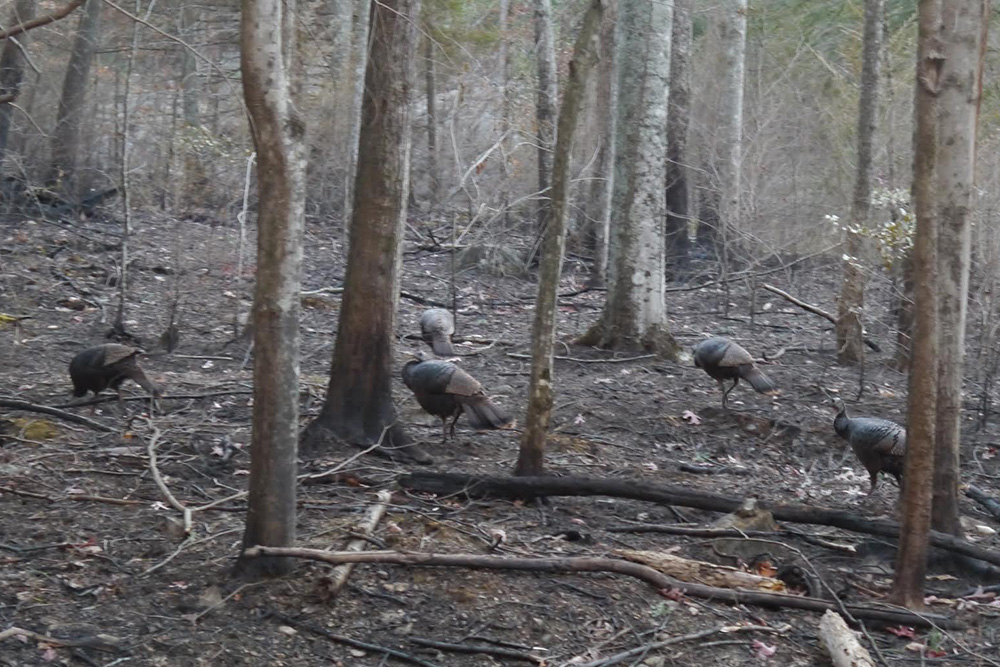 Wild turkeys forage in charred hardwood forest soon after the 2016 Gatlinburg fires, which moved from the Smokies to developed areas in Sevier County. An ORNL model predicts wildfire threats will increase in the Southern Appalachians because of climate change. Thomas Fraser/Hellbender Press via Knoxville Mercury
ORNL report: Local wildfire danger will likely loom larger because of climate change
OAK RIDGE — This cruel summer, the Southern Appalachian region is already baking in above-normal temperatures and basking in poor air quality.
Air temperatures in Knoxville flirted with 100 degrees on July 6, which were well above average and prompted the National Weather Service to issue a heat advisory for much of the metropolitan area.
It’s hard to definitively link a heat wave to global warming, but one oft-cited consequence of climate change is the growing intensity of wildfires, even in the traditionally moisture-rich Appalachians. The range of climate change effects is difficult to pin down, but one constant in the study of climate change is an expected increase in overall temperatures, which can power wildfires via both fuel increases and volatility.
- oak ridge national laboratory
- wildfire
- wildfire risk
- climate change wildfire
- jaifu mao
- thanksgiving fire of 2016
- sevier county wildfire
- wears valley wildfire
- brush clearing for wildfire
- smokies wildfire mitigation
- smokies fire
- computational earth model system
- peter thornton
- southern appalachian bioregion
- southern appalachian climate change
- southeast wildfire risk
- heat wave
- global warming
- earth system model
- wildfire carbon emission
- ornl
Cumberland wildlands grow in popularity and boost area economies

2021 economic numbers prove small parks have big impacts
ONEIDA — Both the Obed National Wild and Scenic River and Big South Fork National River and Recreation Area offer wilderness options free of the hassles associated with Great Smoky Mountains National Park, the most visited national park in the country.
The Cumberland Plateau-area destinations continue to grow in popularity as more tourists seek solace in nature, a trend that began during the Covid-19 pandemic.
Those tourists also spend millions of dollars in nearby rural communities, some of which face chronic economic challenges.
Rare bipartisan legal effort under way for widespread wildlife protections
NYT: Recovering America’s Wildlife Act a big bipartisan push to preserve animal species
New York Times columnist Margaret Renkl noted recently that a precious opportunity has presented itself to strengthen wildlife-protection laws and add to environmental protections across the nation.
The Nashville-based journalist said the act, known as RAWA, “is poised to become the single most effective tool in combating biodiversity loss since the Endangered Species Act.” The resolution is carried in the House by Michigan Democrat Rep. Debbie Dingell.
“This bill provides funding for (1) the conservation or restoration of wildlife and plant species of greatest conservation need; (2) the wildlife conservation strategies of states, territories, or the District of Columbia; and (3) wildlife conservation education and recreation projects,” according to the U.S. Congress.
“The Department of the Interior must use a portion of the funding for a grant program. The grants must be used for innovative recovery efforts for species of greatest conservation need, species listed as endangered or threatened species, or the habitats of such species.
“In addition, the bill requires certain revenues generated from fees and penalties for violations of environmental requirements to be used as a source for the funding.”
The legislation, which has already passed the House of Representatives, would allocate $1.4 billion each year across the country to protect and restore endangered plant and animal populations, and protect species already tipping toward endangered status. It is up for consideration in the Senate, where it has already garnered the support of at least a dozen Republicans and a majority of Democrats, virtually ensuring its passage, according to Renkl.
“You don’t have to nurse a fondness for spotted owls or snail darters — creatures at the heart of two of the most contentious environmental debates in recent history — to understand that what is best for the ecosystems we share with nonhuman animals is what’s best for us, too,” Renkl wrote.
Smokies rangers kill bear after it hurts Elkmont campers while seeking food
6-minute video about what to do if you see a black bear
Smokies officials say euthanized bear was overweight and seeking human food
GATLINBURG — Great Smoky Mountains National Park wildlife biologists and park rangers responded to Elkmont Campground on Sunday (June 12) after a peculiarly large black bear injured a toddler and her mother sleeping in a tent.
Wildlife biologists captured the responsible bear, and it was euthanized Monday, June 13, according to a news release from the park service.
“The bear weighed approximately 350 pounds, which is not standard for this time of year, suggesting the bear had previous and likely consistent access to non-natural food sources,” said Lisa McInnis, resource management chief.