
News (340)
Project would burnish Knoxville’s outdoor credentials
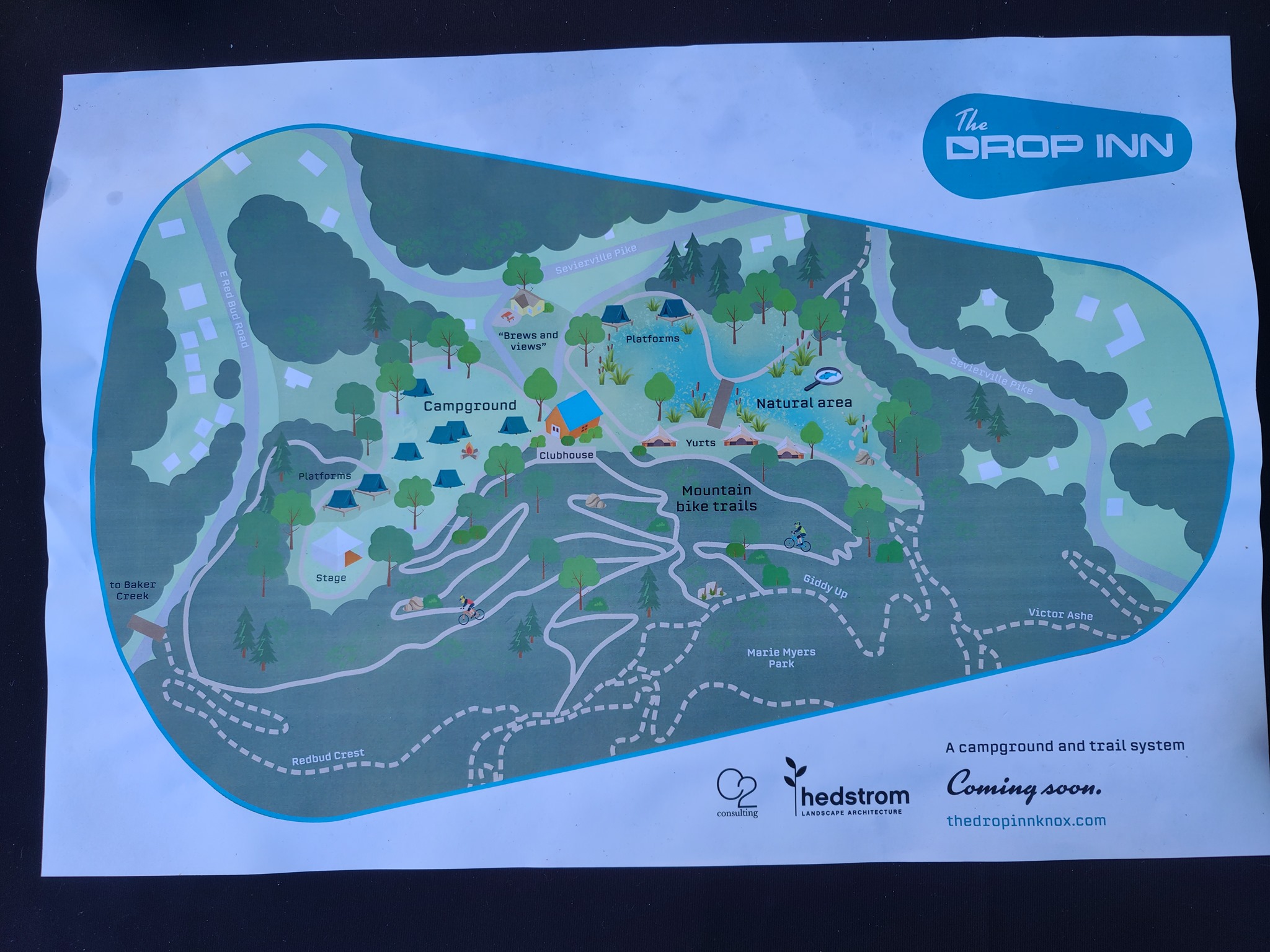
A group of local outdoor enthusiasts intend to establish a “bike-in bike-out” campground and construct an amenity-filled clubhouse and nature exhibits on 16 acres adjacent to Knoxville’s Urban Wilderness.
Carter Miller, a South Knoxville native, is the project’s general manager, partnering with locals Eva Millwood and Bryan Foster to craft the space on Sevierville Pike.
They gently dropped their “Drop Inn” concept Saturday at the Appalachian Mountain Bike Club fall festival in South Knoxville.
“We’re stepping out today with our new project that’s been in the works this year... it’s gaining momentum, and we are really, *really* stoked about it!” Millwood said on social media.
“So it’s The Drop Inn, Knoxville’s first on-trail bike-in, bike-out campground in the urban wilderness. A total of 16 acres adjacent to Marie Myers and William Hastie parks, with trail connectors along the Year Round Get Down.
Millwood said a formal media announcement is planned soon.
This article has been edited for clarity.

Scientists discuss climate challenges and solutions during 2021 One Health Day
As climate experts and scientists huddled in Glasgow in an international effort to stem potentially disastrous global environmental changes, a panel of doctors representing multiple disciplines at the University of Tennessee and beyond offered their assessments of climate challenges and solutions.
Their take on climate change? We have problems, but we also have solutions. Hopelessness will drive you crazy. Stay healthy, stay informed and do your part to mitigate the long-term environmental consequences of a changing Earth.
Above all: Don’t despair and don’t lose hope.
The panel, held Nov. 3 at the UT Student Union and presented by the UT One Health Initiative, consisted of the following experts:
— Dr. Gus Engman, Department of Forestry, Wildlife, and Fisheries, University of Tennessee Institute of Agriculture
— Dr. Kate Evans, Computational Sciences and Engineering Division, Oak Ridge National Laboratory
— Dr. Joshua Fu, Department of Civil and Environmental Engineering, University of Tennesse
— Dr. Sindhu Jagadamma, Biosystems Engineering and Soil Science, University of Tennessee Institute of Agriculture
— Dr. Kristina Kintziger, Department of Public Health, University of Tennessee
Answers have been edited for clarity and brevity and don’t include the full response. Questions were submitted ahead of time or during the panel discussion.
What do you see as the largest threats of climate change, especially related to your individual research interests?
Engman: Changing precipitation patterns are something I think about a lot.
Pretty much all the rivers in the world are expected to have changes to their flow regime.
These changes in droughts and floods are a really large issue.
I think a lot about aquatic communities. If we are scarce on drinking water, we are always going to prioritize people having that water, over the fish or the bugs in the streams.
There are all kinds of impacts to life histories and interactions with communities in streams.
When animals are stressed because of these changes in precipitation patterns and changes in flow patterns, they might become more susceptible to other stressors, like disease.
Changes in algal community composition can impact the entire water quality of a stream, and that might happen because of these changes in precipitation patterns.
These places that are experiencing these extreme droughts really worry me. The Colorado River already doesn’t even flow all the way to the ocean anymore. That’s a huge change. Because we take up so much water for agriculture.
If a stream runs out of water, it’s not a stream anymore.
Evans: From a meteorological perspective, the biggest event that hurts people's health is actually heat waves. A lot of press goes to tornadoes and hurricanes and storms but in fact these large domes of hot air (are deadly), which happen because of changes in the large-scale weather patterns.
The greenhouse effect insulates the earth, it makes it more uniform in temperature and so that changes the flow patterns that go around the earth. That changes those big weather systems that come in and how long they stick around.
When you talk about these long droughts, we know that’s what's we have to understand: Will they last longer, be more humid, less humid, and that has huge impacts for human health as well as the food they eat and the plants that grow.
Kintziger: Heat also has a bigger impact on a more indirect pathway to human health. Not just heat-related illness but also cardiovascular impacts, renal impacts and even mental health impacts.
Heat is the one that keeps me up at night. We are seeing increasing temperatures globally and we also have this urban heat island affect.
Our vulnerable populations in the cities — inner cities with lower-income housing, homeless populations — they are going to experience heat very differently than people who live in newer buildings with better cooling and infrastructure and have better capabilities for adapting to heat.
 A postman butterfly feeds on a bloom in the Tennessee Aquarium’s Butterfly Garden in Chattanooga. At any one time, the garden may host 1,000 to 1,500 butterflies representing more than 200 species. Courtesy Tennessee Aquarium
Butterflies are back at the Tennessee Aquarium after pandemic bottleneck
Some of the Tennessee Aquarium’s most entrancing, cherished residents — and there are literally thousands of them — have been absent for more than a year and a half.
The aquarium has been unable to source butterflies to fill the Ocean Journey building’s Butterfly Garden since early 2020 because of supply chain disruptions.
The butterflies typically originate from Costa Rica. Every week, about 500 butterfly chrysalises — the life stage between caterpillars and full-fledged adults — are delivered to the aquarium. By raising specific plants, Costa Rican farmers can attract butterflies that use the plants as egg-laying sites and feeding sources for their offspring. By collecting and shipping chrysalises to facilities like the aquarium, farmers can earn a reliable income without resorting to destructive agricultural practices that threaten their country’s rainforests.
And just in time for the holidays, the Tennessee Aquarium’s Butterfly Garden will reopen to the public Nov. 5. This warm, light-filled gallery in Chattanooga is once again filled with these jewel-like insects, which flutter in the air by the hundreds.
“They have so many bright colors and intricate patterns that they’re kind of like living works of art,” said entomologist II Rose Segbers. “The butterfly garden is special because it’s completely immersive. There really aren’t any barriers between guests and the butterflies or the habitat.
“You can see everything just like you would in nature, and a butterfly might even land on you.”
Walking through the garden is like being whisked into the steamy, lush wilds of a Costa Rican rainforest. The interior of the gallery is always kept warm and humid — a welcome escape from the cooler, dreary days of autumn — and seemingly every leaf, blossom and branch serves as temporary resting spot for butterflies of every description.
At any one time, the garden houses as many as 1,500 butterflies. These can come from any of more than two dozen species, from cerulean-winged blue morphos to enormous tawny owls with their tell-tale eyespots.
“You get a lot of variety in here,” Segbers said. “If you come here one week, you’ll see a certain variety of butterflies, but if you come back a week later, you might see completely different ones. It gives people a good excuse to keep coming back.”
The cocoon-like chrysalises can be viewed hanging from racks through a special viewing window in the garden. Their shells often look drastically different from the butterflies within. Who would suspect that the familiar orange, black and white monarch butterfly would come from a gold-fringed, jade chrysalis or that leaf-like pink or green chrysalises are host to brilliant yellow cloudless sulfurs?
 Entomologist Rose Segbers pins blue morpho butterfly pupae to a hanging tray, where they will hang until they emerge in a few weeks time. Courtesy Tennessee Aquarium
From climate change to water quality, UT One Health Day examines the challenges of our time
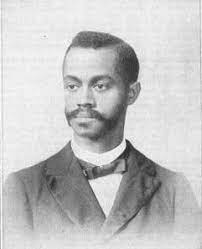 Charles Henry Turner
The University of Tennessee One Health Initiative will host an impressive array of climate-related discussions, presentations and museum tours Wednesday, Nov. 3, at the UT Student Union on Cumberland Avenue in Knoxville. A virtual option is also available for the day-long event, which is affiliated with the 6th Annual World One Health Day.
The day will feature a “One Health and Climate Change” expert panel discussion, which is set for noon and includes perspectives ranging from the UT Institute of Agriculture to Oak Ridge National Laboratory.
A kayak outing and trash cleanup along the Tennessee River and its tributaries are also planned, as is a tour of UT Gardens, and the herbarium. McClung Museum at Circle Park will offer up its freshwater mussel collection for closer inspection and host a tour examining archaeology findings related to the indigenous inhabitants of Tennessee.
Check out University of Tennessee One Health Day for a full schedule and more information.
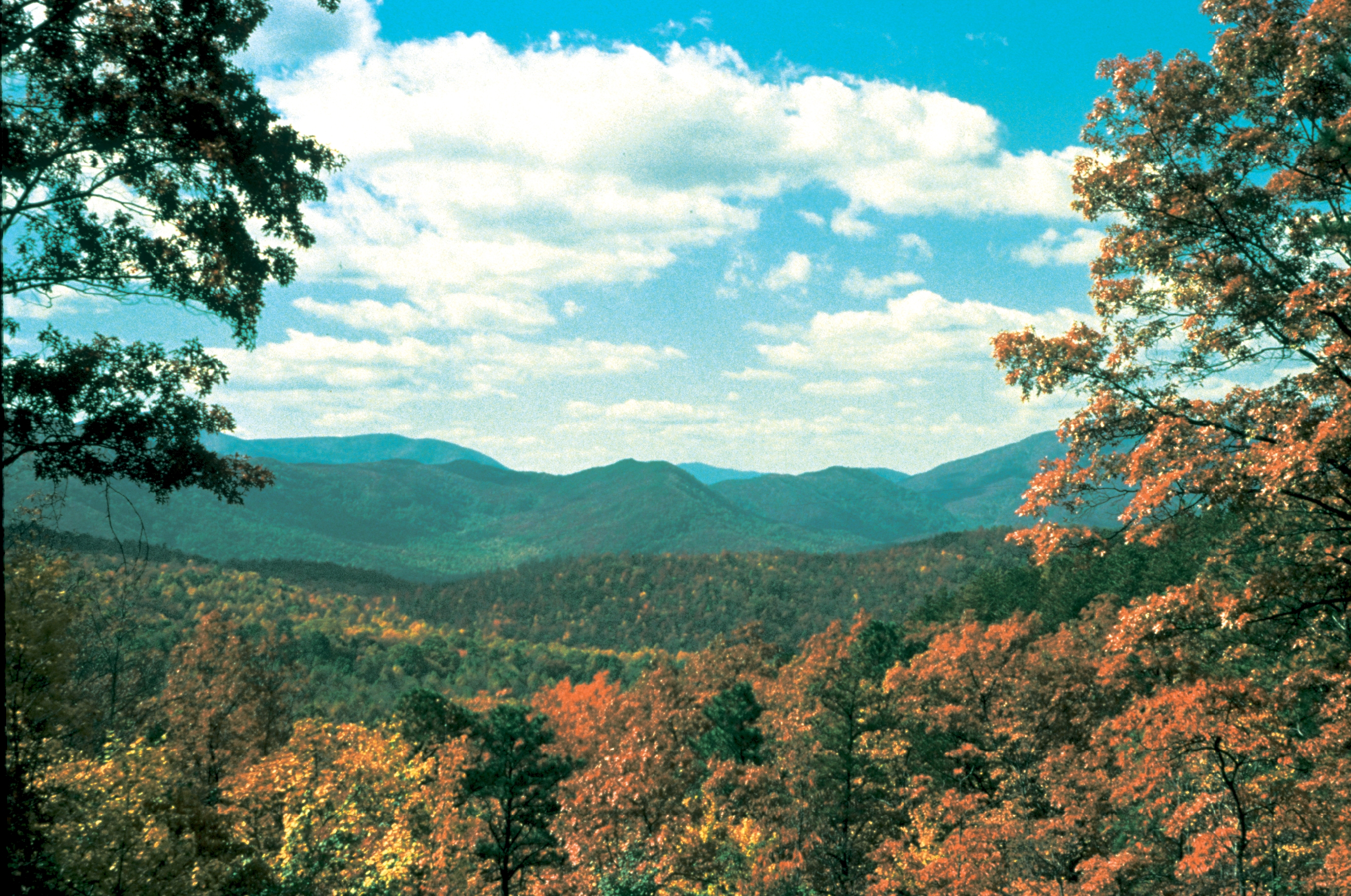 This view from Heintooga Ridge Road offers a good vantage point to absorb the brilliant fall colors breaking out across the mountains in North Carolina in Great Smoky Mountains National Park. Research indicates the reliable fall color regime in the Southern Appalachians is affected by climate change. Courtesy National Park Service
It’s just the latest way humans have altered Appalachian forests
This story originally appeared in the Conversation. Marc Abrams is a professor of forest ecology and physiology at Penn State.
Fall foliage season is a calendar highlight in states from Maine south to Georgia and west to the Rocky Mountains. It’s especially important in the Northeast, where fall colors attract an estimated US$8 billion in tourism revenues to New England every year.
As a forestry scientist, I’m often asked how climate change is affecting fall foliage displays. What’s clearest so far is that color changes are occurring later in the season. And the persistence of very warm, wet weather in 2021 is reducing color displays in the Northeast and mid-Atlantic. But climate change isn’t the only factor at work, and in some areas, human decisions about forest management are the biggest influences.
Longer growing seasons
Climate change is clearly making the Northeast warmer and wetter. Since 1980, average temperatures in the Northeast have increased by 0.66 degrees Fahrenheit (0.37 Celsius), and average annual precipitation has increased by 3.4 inches (8.6 centimeters) — about 8 percent. This increase in precipitation fuels tree growth and tends to offset stress on the trees from rising temperatures. In the West, which is becoming both warmer and drier, climate change is having greater physiological effects on trees.
My research in tree physiology and dendrochronology — dating and interpreting past events based on trees’ growth rings — shows that in general, trees in the eastern U.S. have fared quite well in a changing climate. That’s not surprising given the subtle variations in climate across much of the eastern U.S. Temperature often limits trees’ growth in cool and cold regions, so the trees usually benefit from slight warming
In addition, carbon dioxide — the dominant greenhouse gas warming Earth’s climate — is also the molecule that fuels photosynthesis in plants. As carbon dioxide concentrations in the atmosphere increase, plants carry out more photosynthesis and grow more.
- climate change in appalachia
- fall leaf color changes
- leaf season
- fall foliage in smokies
- fall foliage in appalachians
- climate change effect on leaf display
- are tree color changes happening later?
- when is good to see fall foliage in smokies
- best leaf color in smokies
- when do leaves change in smokies
- fall colors in smokies
- best time to see fall leaf color in east tennessee
- the conversation
- marc abrams
- penn state
Big South Fork seeking information on vehicles dumped in Blue Hole

The National Park Service and officials with Big South Fork National River and Recreation Area are still looking for those responsible for dumping derelict vehicles in a remote part of the park known as Blue Hole.
Park staff found two vehicles and a boat illegally discarded in a section of the park closed to traffic. The junk was discovered Aug. 26 and staff and rangers had to pulled from other projects to clean up the mess.
Park staff recovered an abandoned vehicle, UTV, and boat from the Blue Hole section of the park that appeared to have been dumped in separate incidents.
“The resulting cleanup pulled staff away from planned trail work and public safety duties. Additionally, illegally dumping trash and other items create a negative visitor experience for those hoping to enjoy the serene natural beauty of Big South Fork NRRA,” said Superintendent Niki Stephanie Nicholas in a press release.
“Visitors are reminded that abandoning property in the park is prohibited by federal law.”
Anyone with information concerning these incidents is encouraged to contact the NPS at 423-223-4489 or leave a confidential message on the Resource Protection Tip Line at 423-569-7301.
The 24-hour tip line allows callers to remain anonymous.
You are invited to Friday’s Great Smokies African American Experience Project Townhall meeting
Oak Ridge National Laboratory helps keep our cool as refrigerant restrictions begin
Written by Thomas Fraser
Brian Fricke, group leader for Building Equipment Research, conducts testing in his refrigeration system research lab at Oak Ridge National Laboratory. Jason Richards/ORNL
ORNL pursues refrigerant efficiencies and alternatives as we warm the Earth to keep things cold
You can flick it off; it’s cool.
Finally there’s a window, literally, for the annual retirement of your air conditioner. But the freezer aisles at your favorite supermarket aren’t going anywhere.As summer slowly slips into autumn and we aspire to warm ourselves through winter, let’s consider the cost, economically and environmentally, of keeping ourselves under blankets in August or loading up on frozen burritos on a broiling day inside the deliciously cool air of a grocery store freezer aisle.Let’s cast a cold eye toward Oak Ridge National Laboratory, where engineers are developing improved storage and transmission techniques to limit the harrowing climate-change effects of coolants and refrigerants, even as new pollution restrictions come into effect.Coolants have played a role in environmental change and global warming since the very advent of the crudest cooling devices.Refrigerants have even driven human-settlement patterns and development of areas with harsh, hot climates such as the American South and Southwest. They’ve been rough on the Earth’s atmosphere and played an oversized role in climate change.It’s kind of complicated:Chlorofluorocarbons (CFC) used in 20th-century cooling and refrigeration systems thinned the ozone layer.Then the hydrofluorocarbons (HFC) that replaced them turned out to be greenhouse gases that in some cases were 4,000 times more potent than carbon dioxide, itself a powerful driver of climate change.The recent federal climate change directive requires an 85-percent phaseout of HFCs over the next 15 years.So what will replace those coolants as heat waves associated with climate change only increase, in the near-term at least, the use of refrigerators and air conditioners across the world?Scientists and engineers at ORNL are working on the next generation of coolants — and the efficiency and safety of their delivery systems — as HFCs are phased out.Published in NewsPublished in News

Anti-nuke nun jailed after Y-12 protest dies at 91
News Sentinel: Nun who served time after Oak Ridge weapons protest dies in Pennsylvania
Sister Megan Rice, who along with two others were prosecuted by the federal government after breaking into the Y-12 nuclear weapons complex in Oak Ridge, died of congestive heart failure Oct. 10 in Rosemont, Pennsylvania.
Rice, a member of the order of the Society of the Holy Child Jesus, penetrated the secure perimeter of Y-12 in July 2012 along with two other Catholic activists for prayers and protests outside a bunker containing uranium, according to the Associated Press via the News Sentinel. The incident prompted numerous inquiries about the security of Y-12 and put the inherent danger of nuclear armament in the media spotlight.
The trio was charged with felony sabotage but served only two years of their federal prison terms.
“While testifying during her jury trial, Rice defended her decision to break into the Oak Ridge uranium facility as an attempt to stop “manufacturing that...can only cause death,” according to a trial transcript.'
“I had to do it,” she said of her decision to break the law.
“My guilt is that I waited 70 years to be able to speak what I knew in my conscience.”
Permafrost is a ticking methane bomb
Smithsonian: In Russia, even rocks emit greenhouse gases
The melting Siberian tundra north of the Arctic Circle released millions of tons of methane last year as regional temperatures rose to 11 degrees (°F) above average.
Methane has a shorter effect than carbon dioxide on global atmospheric change but is still 70 times more potent than CO2 in its overall global-warming potential. Its accelerated release on such a vast scale represents an immediate challenge to restricting overall global warming to less than 3 degrees (°F) by the end of the century, which scientists agree is necessary to prevent dramatic climate change. Methane’s potent global warming potential is why many conservationists oppose the use of natural gas as an energy source.
But in Siberia, even the rocks are emitting methane. Scientists were surprised to find that limestone exposed by disappearing permafrost itself generated high levels of methane. Tundra fires have also accelerated the release of methane and other gases, and have come at great cost to the Russian government and the rural inhabitants of the vast region.
That means economical and practical means must be developed elsewhere, at least, for methane management.
But according to the United Nations Economic Council for Europe:
“Despite methane’s short residence time, the fact that it has a much higher warming potential than CO2 and that its atmospheric volumes are continuously replenished make effective methane management a potentially important element in countries’ climate change mitigation strategies. As of today, however, there is neither a common technological approach to monitoring and recording methane emissions, nor a standard method for reporting them.“
More...
Tennessee Lookout: (Part II) Thick covey of opposition to TWRA quail management at expense of mature hardwood forest
Written by Anita Wadhwani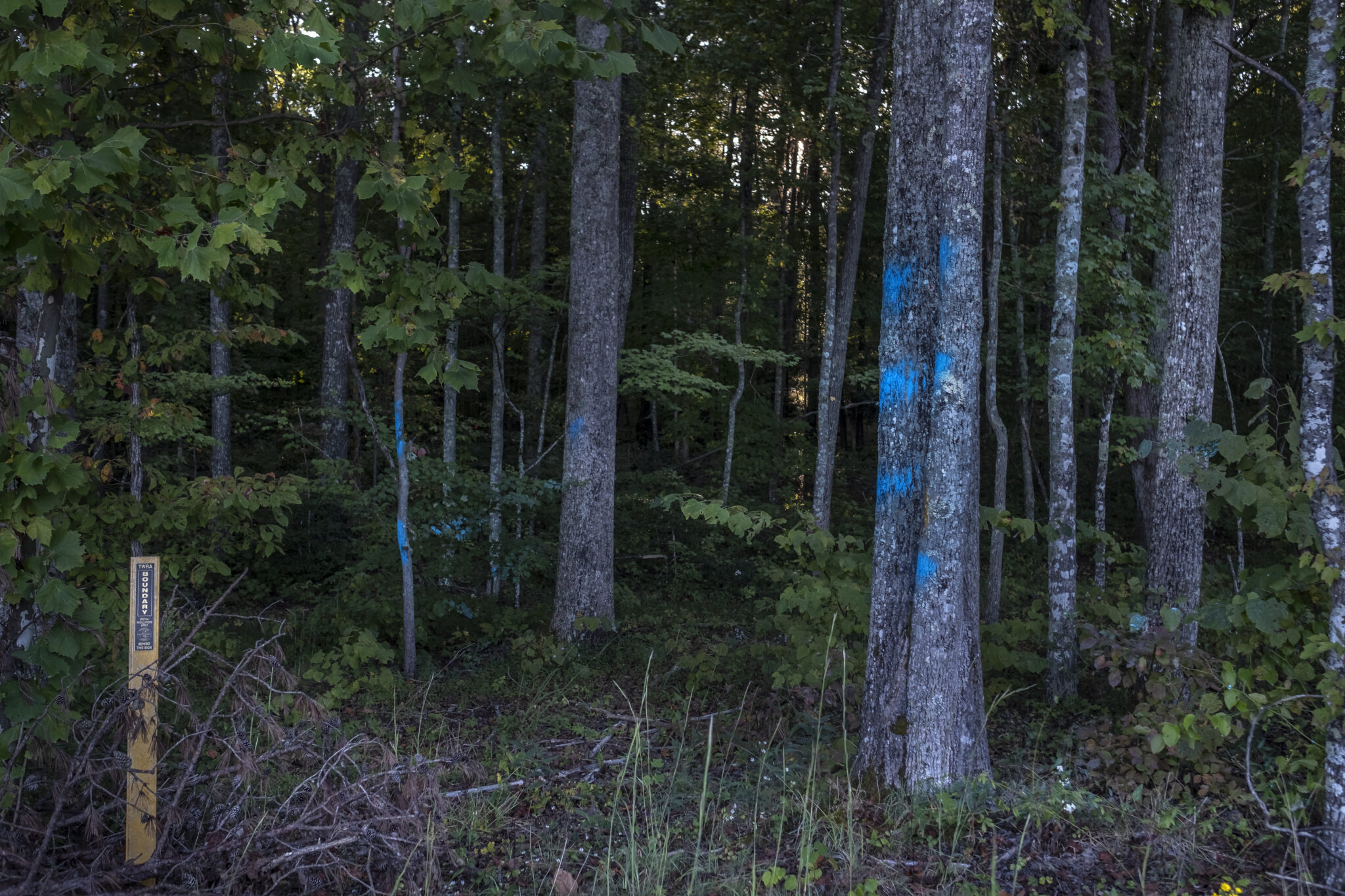 Tree trunks in the Bridgestone Firestone Centennial Wilderness Area in Sparta marked for clearcutting, despite local opposition. John Partipilo/Courtesy Tennessee Lookout
Hundreds of citizens publicly reject TWRA Middle Tennessee deforestation plans
This story was originally published by the nonprofit Tennessee Lookout and is shared (with much appreciation) with Hellbender Press via Creative Commons License.
Officials with the Tennessee Wildlife Resources Agency faced considerable pushback Monday night (Oct. 4) at a public meeting in Sparta over plans to raze old growth forest in a popular hunting and recreation area located about halfway between Nashville and Knoxville.
A standing room-only crowd of more than 200 people filled the town’s small civic center to hear directly from state officials about what had been — until now — an unpublicized internal agency plan to clear forest on public lands in the Bridgestone Firestone Centennial Wilderness Area to create grassland habitat for northern bobwhite quail, a game bird whose populations have plummeted in Tennessee.
“Bridgestone Firestone is one of the gems of White County,” said Elizabeth McDonald, one of two dozen people who spoke against the plan until the meeting grew too late to get through the long line of residents who signed up to address the TWRA.
“It’s a place that is so beautiful, so intact, and it can never be replaced. I appreciate caring about quails, but you have people in this room who, for generations, have called this home. You have to understand you are attacking our homes.”
The meeting was organized by Rep. Paul Sherrell, a Republican who represents the area, after an internal TWRA map leaked to a local resident revealed plans to cut 2,000 acres of hardwood trees on the property bequeathed to the state by the Bridgestone Corporation in 1998.
The map quickly circulated among residents, and so did the outrage. The old-growth timber slated for demolition lines the path heading to Virgin Falls State Natural Area, where the tree canopy also shades hiking trails through a series of scenic waterfalls. The forested area slated for removal forms part of a popular deer and turkey hunting area, too.
Sen. Paul Bailey, R-Sparta, and Sen. Heidi Campbell, D-Nashville — who said she has heard complaints from her Nashville constituents and others across the state who routinely visit the wilderness area — also attended the meeting.
In a series of powerpoint presentations, TWRA officials outlined the urgent need to establish grassland habitats in Tennessee, not only for the Northern Bobwhite, but for native plants and birds for whom savannas — sparsely treed grassland — are critical to survival.
Clearing forest would benefit at least 70 species with the greatest conservation needs, said Wally Akins, TWRA’s wildlife and forestry assistant chief.
“Closed-canopy forests have limited value to many species,” he said.
Hundreds of native plant species remain essentially dormant underneath the forest canopy, waiting to emerge, said Dwayne Estes, executive director of the Southeastern Grasslands Initiative. Savannas are “the forgotten landscape of the South,” he said.
ORNL’s comprehensive mapping of built environments aids disaster response
Compass: ORNL mapping effort will aid rescue, risk assessment
Oak Ridge National Laboratory scientists spent five years mapping virtually every structure in the U.S. and the data is bearing early fruit as it is used for response to disasters such as hurricanes and severe floods.
Mark Tuttle and Melanie Lavardiere, the team leaders of the project, have mapped “virtually every single structure in the United States and its territories,” Compass reports.
The information is used by disaster responders from the FEMA level and down. During a hurricane, for example, authorities can focus response efforts on the most vulnerable areas using the building-mapping database.
The database can also be used by insurers to charge rates more according to risk, and for structures covered under the National Flood Insurance Program, as is already happening.
But the data is most valuable for saving lives and determining the most likely location those lives will have to be saved.
“After disaster strikes, the data can give a rapid indication of the scope of the damage and point responders in the right direction to assist in the recovery. Using the powerful computers available at ORNL, the team can process data quickly — producing in a matter of hours work that used to take months — and get it into FEMA’s hands for analysis,” Compass reports.
Tennessee Lookout: Tennessee Wildlife Resources Agency reportedly plans to raze mature hardwood forest
Written by Anita Wadhwani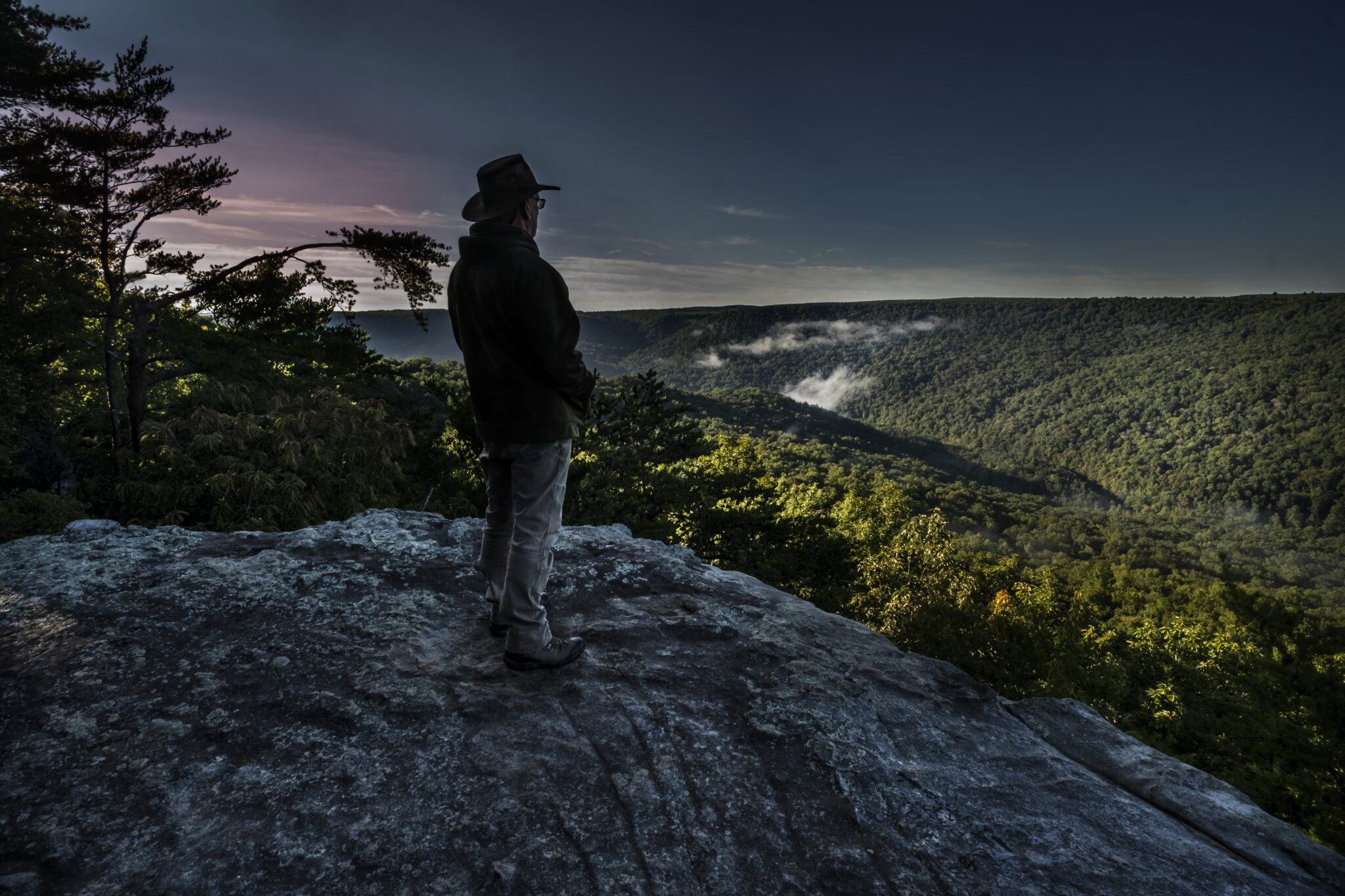 Mike O’Neal, a longtime hunter, surveys an expanse of the Bridgestone Firestone Centennial Wilderness Area in Middle Tennessee where clearcutting of public hardwood forest is planned to create quail habitat. John Partipilo/Courtesy of Tennessee Lookout
The plan to clear forest for quail habitat is raising the ire of hunters and hikers, as well as a bipartisan group of state lawmakers
This story was originally published by the nonprofit Tennessee Lookout and is shared (with much appreciation) via Creative Commons License.
It’s a pretty bird, easily recognizable by dark stripes on rust colored feathers and a distinct two-syllable chirp that announces its name: “bob” (the high note) then “white” at a lower pitch — also known as the northern bobwhite, a species of quail.
The otherwise unassuming bird is now at the center of a fight over public lands in White County, Tennessee, pitting the Tennessee Wildlife Resources Agency against an unlikely coalition of hikers, hunters, cavers, local business leaders and state lawmakers on both sides of the political aisle.
Internal TWRA documents leaked to a local hunter last month revealed plans to clearcut 2,000 acres of old-growth hardwood forest in the Bridgestone Firestone Centennial Wilderness Area to establish quail habitat and a research center focused on the birds, whose steeply declining populations have spurred national efforts to restore grasslands where the species thrive.
The land slated for deforestation, a late-1990s gift to the state from the Bridgestone Corporation – then the Bridgestone/Firestone company — is part of stunning and centuries-old vistas visible along the path heading to Virgin Falls State Natural Area, where 7 waterfalls are connected by trails through tall canopies just north of Fall Creek Falls. For generations, the area has also drawn deer and turkey hunters to state owned land that offers hunting access at a fraction of the cost often associated with hunting on private property.
“It’s going to scar the view-shed for most of the Bridgestone property,” said Marvin Bullock, president of the Sparta-White County Chamber of Commerce.
Bullock is an energetic booster who grew up in the area and takes pride in his track record at the chamber. The county has seen a tourist-driven economic turnaround in recent times – aided, in some respects, by the pandemic. Six years ago, when Bullock first started the job, there were 50 empty storefronts and office spaces in downtown Sparta.
“Now you’d be hard-pressed to find 10,” he said. “We have 400 remote workers and 80 Airbnbs. That’s a good indication of what an attraction Virgin Falls is. Right now we have some hardwoods that three of us together couldn’t reach around. It would take generations to grow them back. This is a really terrible idea that is not just aesthetically unattractive, it is economically unattractive.”
TWRA gets pushback
Since the map was leaked last month, hikers and hunters, and environmental groups such as the Sierra Club and the Tennessee Scenic Rivers Association, which is concerned about potential erosion damage to the Caney Fork River from clearcutting, have mobilized members across the state to weigh in. A bipartisan trio of lawmakers, Rep. Paul Sherrell, R-Sparta, Sen. Heidi Campbell, D-Nashville and Rep. John Ray Clemmons, also a Nashville Democrat, have pressed TWRA for answers. A community meeting organized by Sherrell is set for Monday evening in Sparta.
“You’re going to be walking through a burned-out wasteland if this happens,” said Campbell, who said she has been getting emails from constituents upset by the plans.
After weeks of pushback, TWRA has begun to respond publicly — a step it has not been required to take in its deforestation plans for public lands. The agency has no public notice requirements when it clears timber on the nearly 1.5 million acres is controls across the state, a sore point among those now learning of the plans in White County.
TWRA biologist Aubrey Deck told the Lookout last week that some of the pushback is a result of a misunderstanding.
The leaked map, Deck said Friday, is a “conceptual map for a larger project, not a planning map,” he said.
“The only plan right now is for 250-290 acres (of deforestation),” he said. “The exact acreage is still to be determined.”
But Deck made clear that agency officials have hopes for a wider deforestation effort.
Feds reopen plans for long-delayed 9-mile Foothills Parkway segment from Wears Valley to Gatlinburg near Great Smoky Mountains National Park
Written by Thomas Fraser
Plans for new parkway segment were hatched long ago; project would also include improvements to Wears Valley park entrance
Just a few years after the “Missing Link” of the Foothills Parkway was finally finished following decades-long delays, the National Park Service now has its sights set on constructing a new 10-mile section of parkway on the Tennessee side of Great Smoky Mountains National Park that would extend from Wears Valley to the heavily traveled Gatlinburg Spur.
The leg of the roadway has long been included in a plan for full completion of the parkway. About 30 miles have been completed from Tallassee, Tennessee to Wears Valley. This section would extend from the current parkway terminus in Wears Valley to the Gatlinburg Spur near Pigeon Forge.
Park officials said in a press release announcing the opening of the project’s public comment period that the unfinished section is the only stretch of incomplete, congressionally approved roadway in the U.S.