
News (340)
 The calico pennant dragonfly (Celithemis elisa) is among 77 new species discovered in Great Smoky Mountains National Park over the last decade. Wikipedia Commons
Apps and public research help uncover new layers of life in Southern Appalachia
This article was originally published by Smoky Mountain News.
Visitors armed only with a free app and love of nature have documented more than 4,000 species in Great Smoky Mountains National Park since 2011, according to the nonprofit Discover Life in America, including 77 not previously documented in the park by anyone else.
DLiA, which manages the All Taxa Biodiversity Inventory project that aims to catalogue all species residing in the extremely diverse park, recently analyzed more than 71,000 records from the app, iNaturalist, to discover the impact these casual observations have made on the project.
Southeast electric vehicle sales increased 49 percent last year. Overall U.S. auto sales increased only 3 percent.
Written by Stan Cross Illustration courtesy of Southern Alliance for Clean Energy
Annual SACE, Atlas Public Policy data indicates rapidly escalating and enduring demand for electric vehicles in Southern U.S.
Stan Cross leads Knoxville-based Southern Alliance for Clean Energy's electric transportation policy and utility reform efforts across the Southeast.
When will the electrification of America’s cars, trucks, and buses really take off?
Imminently, if not already. Look to the Southeast, which is experiencing impressive EV market growth despite a lack of state-level EV-supportive policies, incentives and regulations.
The Southern Alliance for Clean Energy and partner, Atlas Public Policy, updated key year-end indicator data from the annual “Transportation Electrification in the Southeast” report to capture regional and state-specific growth in Alabama, Florida, Georgia, North Carolina, South Carolina and Tennessee.
This is a critical time for the expanding EV market. The pandemic has exposed global supply chain weaknesses related to auto manufacturing and battery production that can only be solved by increasing domestic production of critical materials and components.
The Russian invasion of Ukraine is once again exposing the entanglement of America’s commitment to global democracy and dependency on oil for transportation, and highlighting the national security benefits of rapidly transitioning to electric mobility powered by domestic electricity.
Tennessee Lookout: GOP legislators move to usurp even more local control with pro-pipeline bill
Written by Dulce Torres GuzmanGOP-led Legislature aims to ban local decisions on fossil-fuel infrastructure
This story was originally published by Tennessee Lookout.
Per updated TL reporting, this bill was deferred to March 15 for committee consideration.
Memphis activist Justin Pearson spent years trying to pass legislation to protect his city’s natural drinking water, but a bill being fast tracked through the state Legislature is threatening his efforts.
Last week, environmental activists learned that Rep. Kevin Vaughan, R-Collierville, and Sen. Ken Yager, R-Kingston, are seeking to pass a bill aimed at removing local government control over land use zoning for fossil fuel infrastructure.
Both the Tennessee State House and Senate Commerce Committees will vote on HB2246 and SB2077 on Tuesday, and if the bill passes, it could be on the Legislature floor by Thursday.
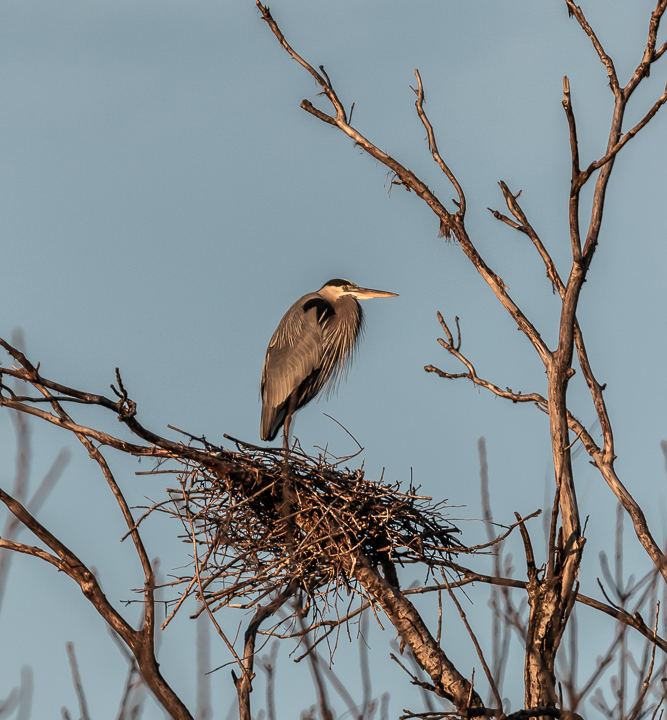 A great blue heron is seen above a nest in the Tennessee River Valley. Herons moved northward to the valley from tiny remaining Florida rookeries after the birds were annihilated in the early 20th century for hat decorations. Betty Thompson
After their kind almost vanished, great blue herons took a minute to take to the Tennessee Valley. Now they are here in a big way.
"Life breaks free, it expands to new territories, and crashes through barriers painfully, maybe even dangerously, but, uh, well, there it is," said Jeff Goldblum's Malcolm in 'Jurassic Park.' "Life finds a way."
In the early 20th century, after it became illegal to hunt for feathers, as referenced in this previous Hellbender Press story, herons began to recover.
But it took a while. The curious thing with great blue herons, which perhaps attests to the tenacity of nature itself, is that for years they really had little presence in the Tennessee Valley, even after the principal dams and reservoirs were completed. There were plenty of shallow waters for fish eaters.
After cleanup, what’s the future of the South Knoxville Superfund site?
Written by S. Heather Duncan The Montgomery Village public housing complex in South Knoxville is separated only by railroad tracks from the Smoky Mountain Smelters Superfund site (and the Witherspoon dump site). S. Heather Duncan/Hellbender Press
A better use of the SMS/Witherspoon properties in Vestal may be constrained by toxic legacy and uncertain ownership
An imminent cleanup of a Superfund site in Vestal could pave the way for redevelopment and new life for the highly polluted property. But its future is complicated by muddy ownership and contradictory visions for its use.
The Smoky Mountain Smelters company left behind soil, groundwater and surface water pollution when it shuttered in 1994. But federal infrastructure funding is now slated to finish off a cleanup begun by the federal Environmental Agency at the Maryville Pike tract. Groundwater contamination below the surface is the most significant remaining problem.
- vestal superfund site
- witherspoon property knoxville
- superfund sites in knoxville
- what happened to witherspoon superfund site
- epa bona fide prospective purchaser program
- montgomery village apartments
- contaminated ground water
- brownfield remediation
- maryville college
- underserved community partnership
- norfolksouthern
- csx transportation
- drugrelated crime
- tax auction
- joe hultquist
- smokey mountain smelters
- world’s fair park to mcghee tyson airport light rail
- david witherspoon
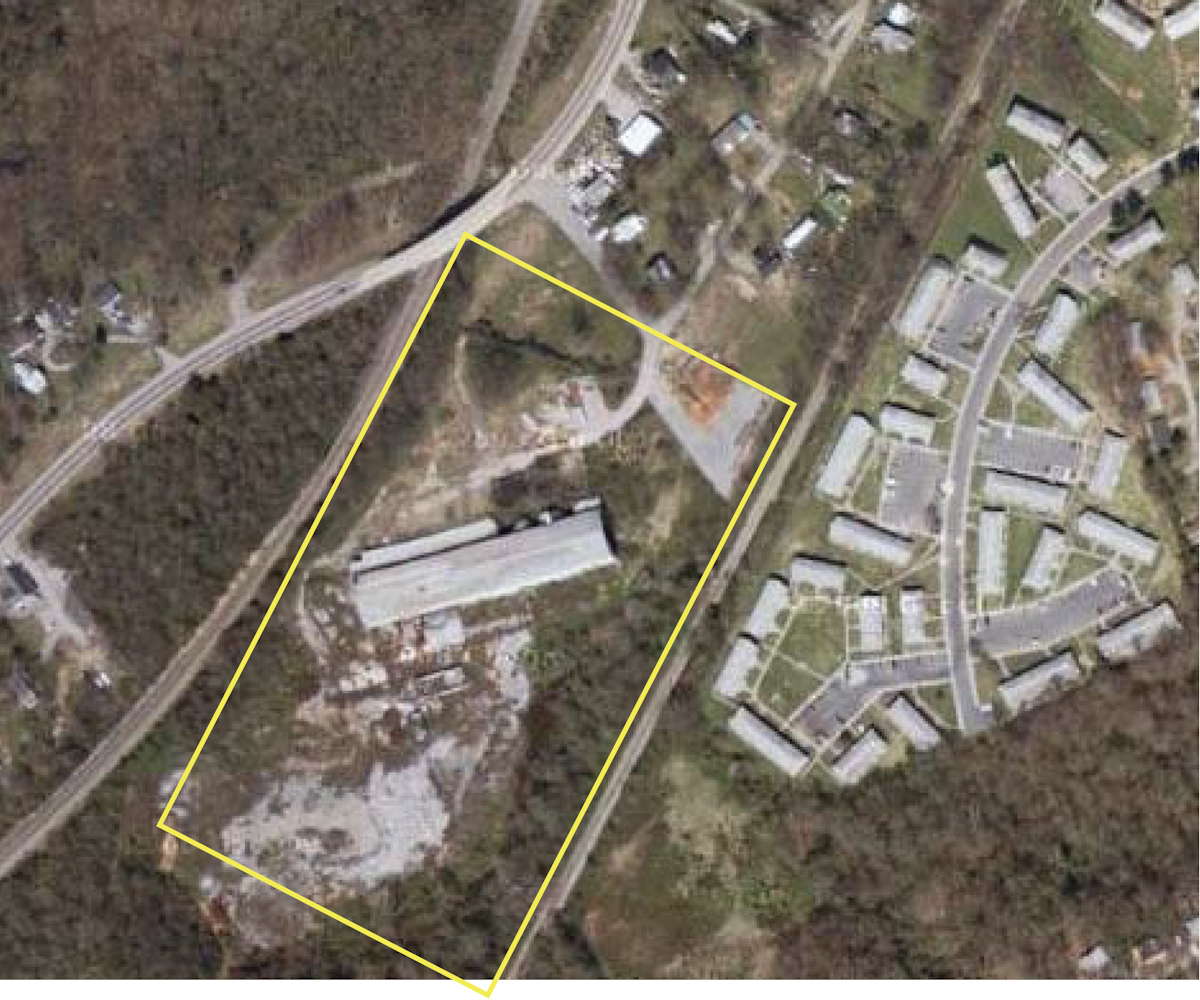 Aerial view (ca. 2002) of Smokey Mountain Smelters Superfund site, located between two rail lines. At left is the overpass of Maryville Pike, at right a section of Knox County Development Corporation’s Montgomery Village Apartments. The large smelter hall and a few of the apartment buildings have since been removed. Image from TN Dept. of Health
Knoxville’s most polluted former industrial site is slated for a massive cleanup soon thanks to funding from the bipartisan infrastructure bill Congress recently passed. The Smokey Mountain Smelters site in Vestal has spent more than a decade on the National Priorities List, commonly called the “Superfund” list, of the most contaminated properties in the U.S.
The work could start within just a few months, said Rusty Kestle, Environmental Protection Agency project manager for the site. He said it’s the top priority in the Southeast for the infrastructure funding because it’s among the most affordable and ready for action.
 A child snaps a photo of a flower beetle on a wild hydrangea in Great Smoky Mountains National Park. Valerie Polk
Grab your phone and get to some citizen science
Rhonda Wise writes for the public affairs office of Great Smoky Mountains National Park
Discover Life in America (DLiA), the nonprofit science research partner, is inviting the public to participate in the Smokies Most Wanted program. This initiative allows visitors to help preserve park species by recording sightings of animals, plants, and other organisms from their smartphones using the iNaturalist app.
Baby whale! Cruise with a humpback and her calf at Tennessee Aquarium 3D movie
 Sylvia Earle Courtesy Catarina Fazenda
The Tennessee Aquarium IMAX Theater in Chattanooga premiered its new 3D educational movie Ocean Odyssey on March 4.
Author, oceanographer and National Geographic Explorer-in-Residence Sylvia Earle visited the aquarium to help launch the movie, which she and Rupert Degas narrate.
The movie follows a humpback whale mother and calf as they navigate the East Australian Current from the Great Barrier Reef to Antarctica. The planet’s oceans are home to the most diverse and abundant array of life on earth, but they are threatened by climate change, pollution and acidification. Still, life lives on.
The Tennessee Aquarium encourages filmgoers to enhance the 3D film experience with a visit to the Secret Reef exhibit in their Ocean Journey building. This exhibit replicates the Flower Garden Banks off the coast of Texas and Louisiana.
In 1990, Dr. Sylvia Earle became the first woman appointed chief scientist at the National Oceanic and Atmospheric Administration.
She left that agency to work in the private sector to promote healthy oceans and public access to ocean environments, including Mission Blue.
(Part 1) Flight to safety: Herons barely survived a bloody fashion trend
Written by Stephen Lyn Bales Great blue herons and other heron species were reduced to a handful of rookeries after numbers plummeted because of high demand for their plumage. Courtesy Betty Thompson
Herons were almost a victim of their own beauty
plume. noun. a long, soft feather, or arrangement of feathers used by a bird for display
During our Gilded Age of opulence and corruption, members of polite society wore alligator shoes, top hats made from beaver pelts, ivory buttons, whalebone corsets and dead foxes draped around their shoulders. After all, status had its price and the surrounding wild lands were bountiful.
In the late 1800s and early 1900s, most fashion-conscious women would not be seen in public without a hat adorned with feathers. In 1915, at the height of this fashion craze, an ounce of plumes sold for $32, the same going rate as an ounce of gold. The most highly coveted feathers were “aigrettes,” which are the long, silky white nuptial plumes of egrets and great blue herons. Plume hunters could make a sizable sum of money for a day’s work with a gun.
Kayaker drowns in Smokies near Smokemont
An Ohio woman drowned Thursday while kayaking the Oconaluftee River near Smokemont Campground in Great Smoky Mountains National Park.
It was the first fatality of the year in the park.
Rangers said Megan Thompson, 34, of Cleveland Heights, Ohio was trapped underwater “between a fallen tree and the riverbank” after floating through a rapid. It was not immediately clear whether she was out of her boat.
Her fellow boaters alerted rangers at 2:18 p.m. and her body was recovered at 2:57 p.m., according to a release from the park service.
Drowning is the third-leading cause of death in the Smokies, after vehicle and aircraft accidents.
This story will be updated.
More...
The digital Hellbender Press has been here a year. These are your favorite stories so far.
Written by Hellbender Press
Hellbender Press (Est. 1998) is ready to fight
We’ve got our sea legs after a maiden year-long digital voyage. Thanks to those who saw us through and made our latest digital endeavor a success.
Hellbender Press has a long way to go, and we hope y’all help push us along. Expect more news and features and an enhanced website moving forward.
The Environmental Journal of Southern Appalachia plans a main news dump every Monday, Wednesday and Friday, but will update the site daily as possible, and when breaking news requires it.
Also stay tuned for regional environmental news on our social media at Facebook and Twitter.
We are working on an RSS/newsletter feature so you can digest the newest news bits at your leisure.
Big plans, but we need your help. Donations and grants to Hellbender Press are tax-deductible via Foundation for Global Sustainability, and we would love to feature your science, environment or natural history journalism, from the Cumberland Plateau to Chilhowee Mountain and Cataloochee. Hit us up via email at Hellbender Press if you want a platform for your work to advance science, truth, social justice and environmental conservation and preservation. Also hit us up with story ideas or news tips.
Please consider riding for the Hellbender brand as best you can.
Meanwhile...
Thanks to all who graciously shared their talents to get us under way, including everybody on the editorial board.
Here are the most-viewed stories since we went live in February 2021. It’s just a raw numbers rundown. It’s not weighted for social media vagaries, and many of the stories likely had more views than recorded.
It’s still a solid approximation of what you liked best. We appreciate you.
Seal it up: Inefficiency increases energy costs across the board
Editors note: SACE executive director Stephen Smith is on the board of Foundation for Global Sustainability. Hellbender Press operates under the FGS nonprofit umbrella.
The Southern Alliance for Clean Energy (SACE) released its fourth annual “Energy Efficiency in the Southeast” report, which tracks recent policy developments and performance trends in electric utility efficiency from 2020.
It continues to highlight that despite being a proven low-cost clean energy resource with enormous potential to reduce carbon emissions and customers’ energy burden, Southeastern utilities continue to underinvest in energy efficiency.
As a result, households in many Southeastern states have some of the highest electricity usage and monthly energy bills in the nation. Some states and utilities are making progress, and it’s not too late for local policymakers to take advantage of untapped efficiency savings to help reach crucial decarbonization goals.
- Download the “Energy Efficiency in the Southeast” fourth annual report
- Read an excerpt from the accompanying report blog post below, or read the full post here.
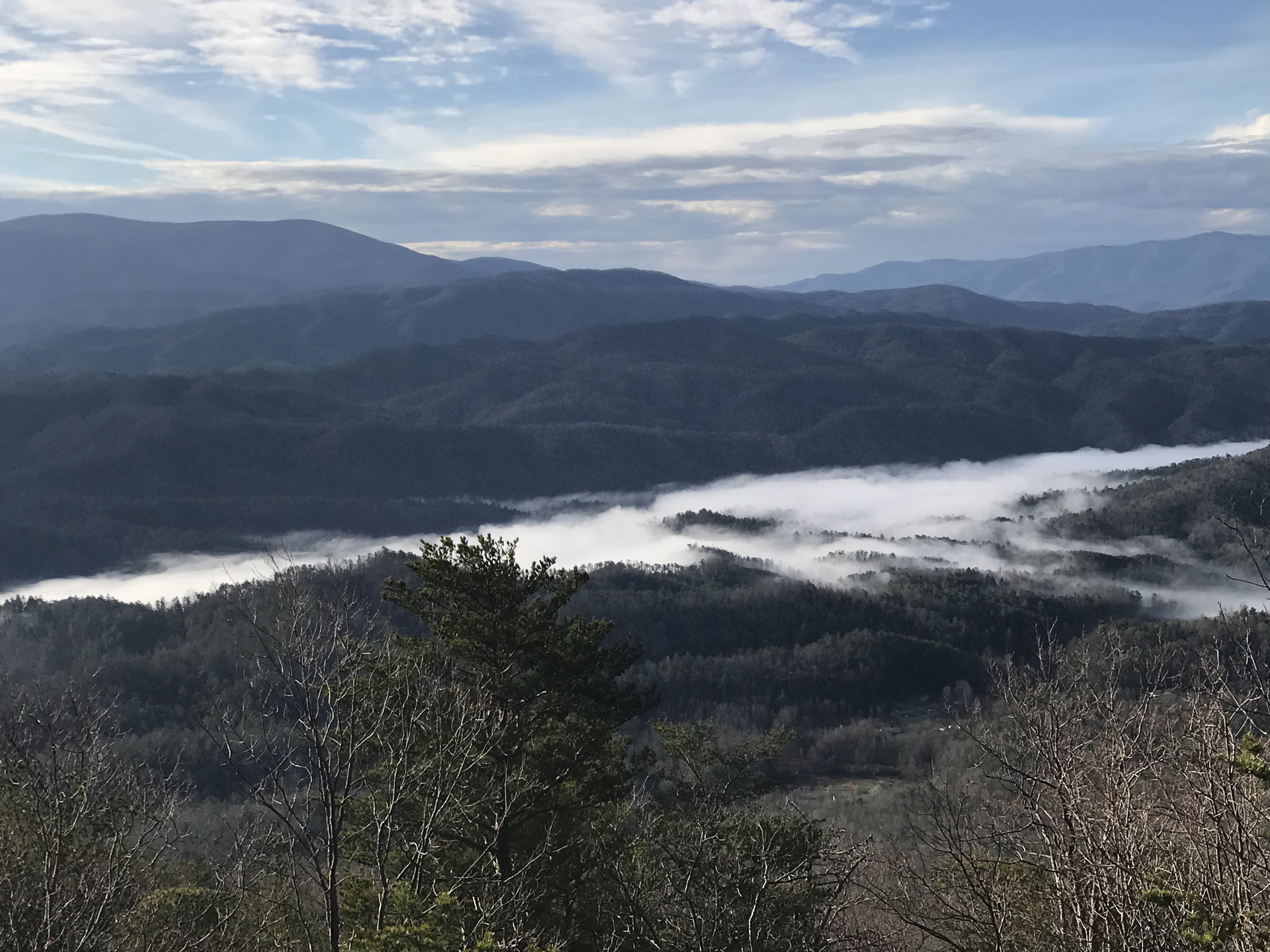 A view of the Smokies from the southern section of Foothills Parkway. Thomas Fraser/Hellbender Press
Hellbender told ya so: Big money in hand for southern Foothills Parkway rehab
Hellbender Press reported some particulars months ago, but the National Park Service today announced the official receipt of $30 million dollars for rehabilitation of the southern section of Foothills Parkway between Calderwood and Walland.
It’s been a busy news week out of Great Smoky Mountains National Park, especially related to the Foothills Parkway: Earlier this week the park service announced the latest phase of comment on plans to establish a series of mountain bike trails in Wears Cove at the terminus of that parkway section. Hellbender covered that, too.
Maybe too much Smokies, if that’s a thing, but we felt obligated to report via a park press release the final dispersal of funds for the planned improvements we reported on months ago. Significant traffic closures will likely begin this spring.
National Park Service pedals toward construction of mountain-bike trails and concessions in Wears Cove
Written by Thomas Fraser National Park Service via WBIR
Feds and boosters have considered trail network since completion of the “Missing Link”
WEARS VALLEY The National Park Service moved this week into the latest public-input phase regarding proposed construction of a Smokies-area mountain-biking destination on federal land near the current terminus of a recently completed section of Foothills Parkway that runs from Walland to Wears Valley.
The plan calls for miles of single-track mountain bike trails of varying skill levels and vendors catering to bicyclists. Park service documents indicate a rest station with picnic facilities, bathrooms and bicycle rental and repair facilities sited in Wears Cove southeast of the parkway terminus at Wears Cove. The parcel is already part of a federal easement for another extension of the parkway that would connect with the Gatlinburg Spur.
“The Wears Valley portion of the Foothills Parkway could provide visitors new opportunities to experience the Park through mountain biking because it is within the Park’s general development zone and transportation management zone and is not managed as wilderness,” according to park service documents.
- wears valley mountain biking proposal
- foothills parkway
- foothills parkway extension
- walland to wears valley foothills parkway
- environmental assessment
- nepa national environmental policy act
- mountain bike park
- karst
- public comment
- public input
- decision making
- mountain bike trail
- planning
- trail system