

Earth (60)
Planet Earth, the only speck in the Universe confirmed by humans to have evolved higher forms of life. Watch NASA's phenomenal movie summarizing Life on Earth.
Children categories
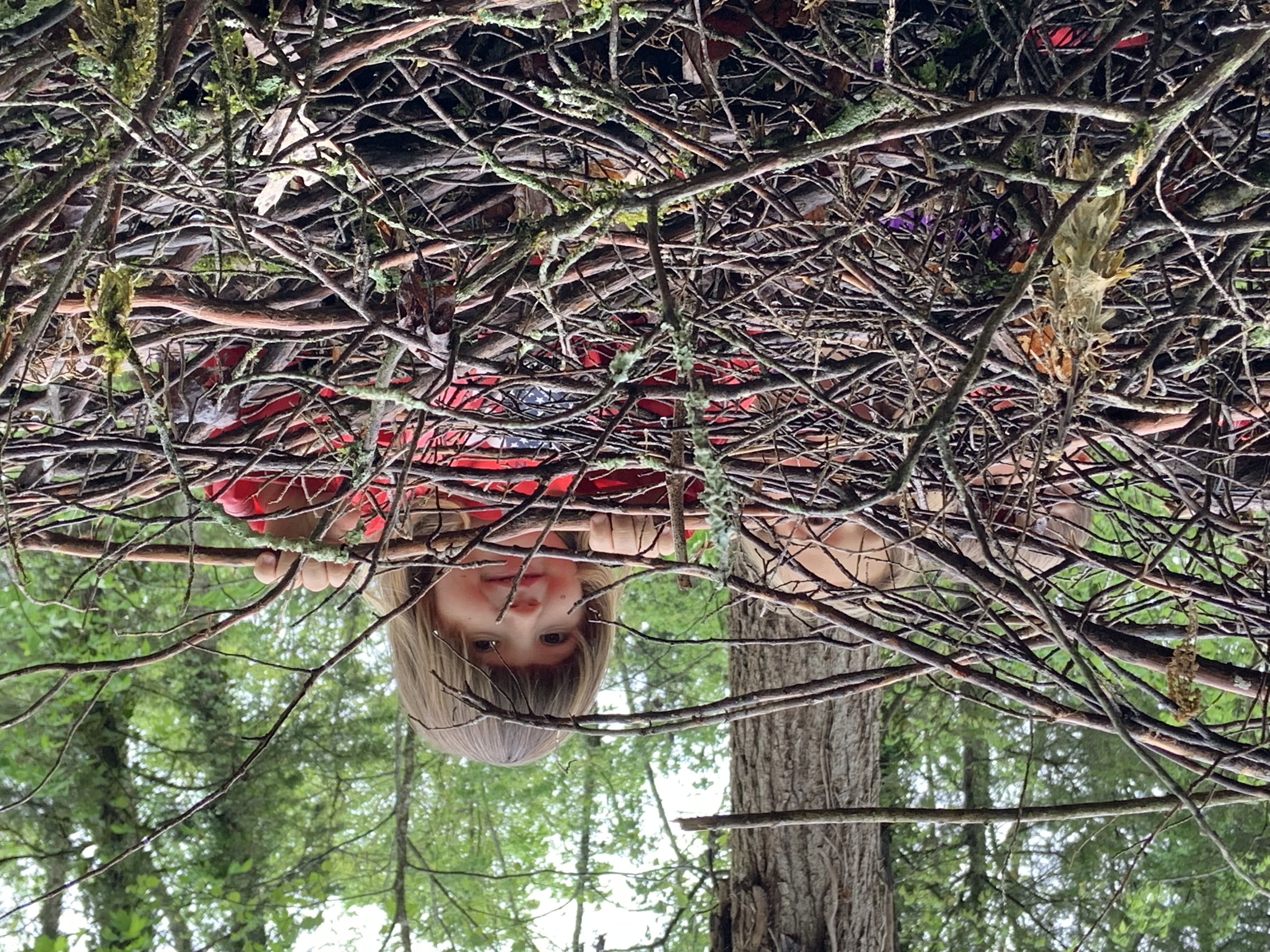 A child defends an elaborate stick fort at Ijams Natural Playscape, which opened this week at the South Knoxville nature center. Ijams Nature Center
New Ijams playground reconnects kids with neighborhood woods, forts and creeks of yore
KNOXVILLE — Ijams Nature Center officially opened a portal into pure childhood beast mode this week.
The Ijams Nature Playscape at Grayson Subaru Preserve is specifically designed for young children to play in a creek, climb hills, dig, build, crawl and engage with nature in an organic, unstructured way. The new space features a large nest, tunnels, log steps and different rooms to play in.
“For generations, many of us had the opportunity to roam and play in the woods, empty lots and fields that surrounded our homes and neighborhoods,” Ijams Executive Director Amber Parker said. “We remember the freedom we had to use our imagination, test ourselves and become a part of the natural landscape, at least until we were called home for dinner.”
- ijams nature center
- ijams educational program
- ijams natural playscape
- kid at ijams
- ijams activity
- cindy hassil
- grayson at ijams
- knoxville outdoor activities for kid
- is knoxville sustainable
- knoxville good place for kid
- childhood outdoor education
- south knoxville
- amber parker
- grayson subaru knoxville
- grayson nature
- is grayson sustainable?
- ijams history
- playgrounds knoxville
- playgrounds near knoxville downtown
- natural playground
- importance of children playing in nature
- nature daycamp knoxville
Sam Adams raises trees like healthy children at the University of Tennessee
Written by Keenan Thomas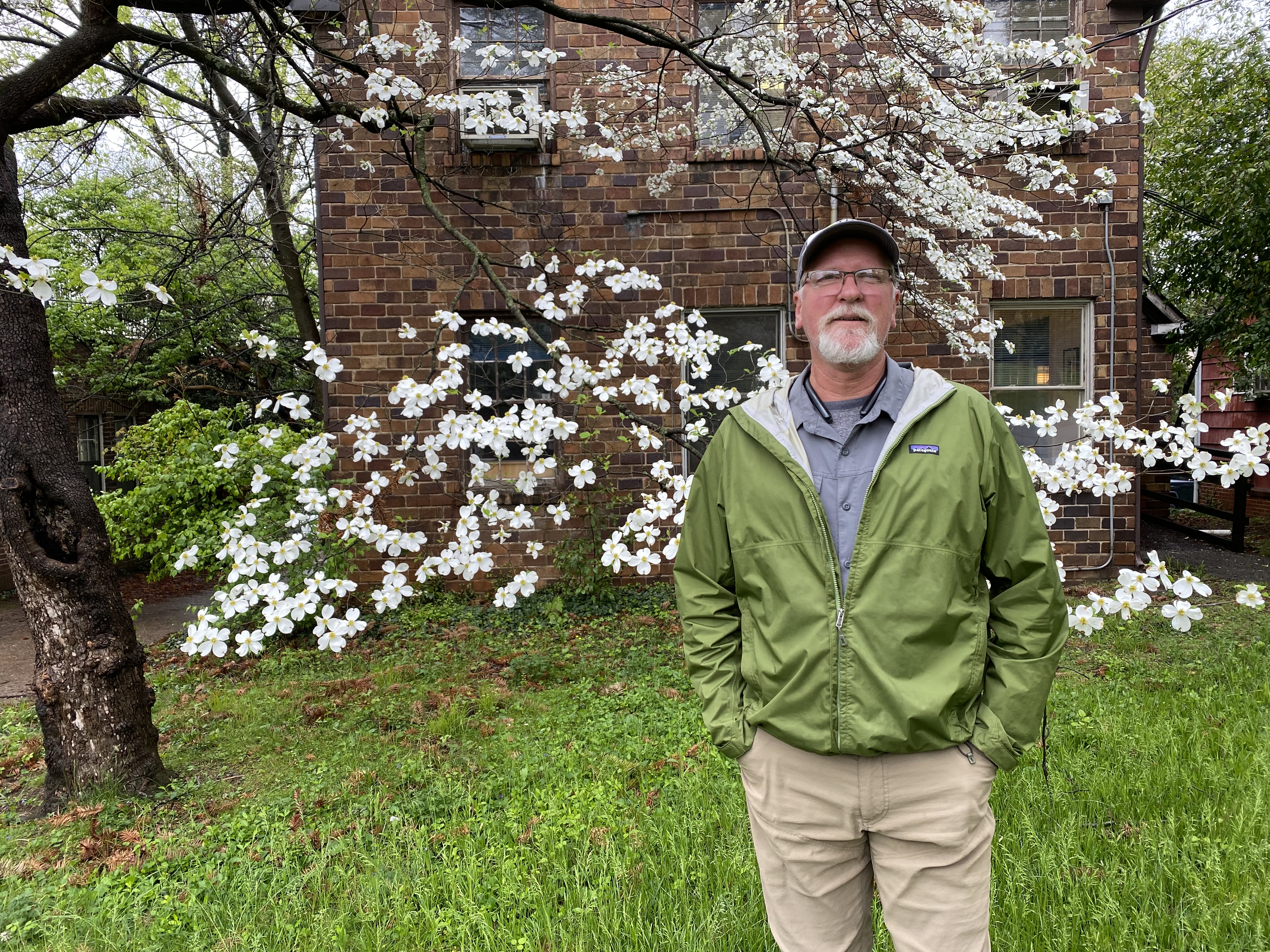 University of Tennessee arborist Sam Adams stands in front of a blooming dogwood on the campus of UTK. Keenan Thomas/Hellbender Press
First campus arborist continues climb up Utree Knoxville
KNOXVILLE — Students at the University of Tennessee walk by hundreds of trees every day without thinking about them.
Sam Adams was thinking about them even before he became UT’s first arborist.
Adams, 58, has cared for trees in the field of arboriculture for decades. He’s worked privately and publicly, including as arborist supervisor for Sarasota County, Florida. He graduated with a degree in environmental studies at Warren Wilson College in North Carolina, where he initially pursued a degree in English.
- ut arborist
- ut tree
- sam adams utk
- jim cortese
- trees knoxville
- University of Tennessee
- university of tennessee knoxville
- sam adams
- jack neely
- knoxville history project
- knoxville history
- cortese tree
- keenan thomas
- ut journalism school
- hellbender press ut
- knoxville persimmon
- trees in knoxville
- utk history
- civil war knoxville
- the hill ut
- tree care
- what does an arborist do?
- clearing trees at utk
 The horizon over Argentina is seen in this image taken from the International Space Station. NASA
Earth Day is every day, but it’s officially on Friday, April 22 this year. Get involved.
The 2022 observance of Earth Day is officially Friday, April 22, but the Knoxville area plans celebrations, work parties and seminars in honor of the 50-year-old annual recognition of Mother Nature through Saturday. Here’s a quick look at some local ways to love your mama. This list will be updated.
Blount County Commission committee rallies against Smokies parking fees ahead of superintendent Q&A
Written by Thomas FraserGATLINBURG — Great Smoky Mountains National Park Superintendent Cassius Cash hosted a dgital meeting April 14 urging the implementation of a $5 daily parking fee for Smokies visitors to raise money for park maintenance, law enforcement and visitor services.
The meeting included an overview presentation introducing the rate changes and a question and answer session.
 The city of Knoxville has started a pilot composting project for residents and restaurants. Come meet cool people and learn more about limiting food waste and sip some beers April 9 at Crafty Bastard Brewery. City of Knoxville
Learn how to reduce food waste Saturday at Crafty Bastard Brewery
Paige Travis is a public information specialist for the city of Knoxville.
KNOXVILLE — The Waste and Resources Management Office invites the public to learn how to reduce food waste and drink a special brew Saturday, April 9 at the culmination of Tennessee Food Waste Awareness Week.
“The city of Knoxville is committed to reducing the amount of food waste that we put into our landfill,” said Waste and Resources Manager Patience Melnik, whose department recently launched the Knoxville Compost Pilot Project.
Hellbender Press previously reported on efforts to reduce food waste at the University of Tennessee.
Updated: Hatcher Mountain fire nearly extinguished; 300 structures affected
Written by Thomas Fraser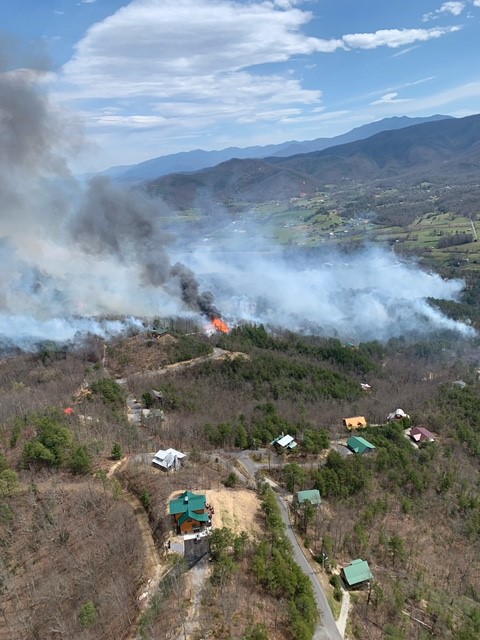 Sevier County Emergency Management Agency
Forest fire above Wears Valley in Sevier County nears full containment; Seymour fire under control
UPDATE APRIL 4: The Sevier County Emergency Management Agency said the Hatcher Mountain/Indigo Lane fire is largely extinguished. Fire crews continue to further subdue the Millstone Gap fire near the Sevier/Blount county line.
The National Weather Service warns of continued high fire danger citing breezy winds and low humidity. Widespread rainfall is forecasted to fall beginning tomorrow.
Officials said the Hatcher Mountain fire ultimately burned 2,500 acres, and damaged or destroyed 300 structures.
UPDATE APRIL 1: Fire crews focusing on the stubborn Hatcher Mountain fire had to pivot in part early Friday to also fight a new wildfire in Seymour near the Blount and Sevier county lines.
Sevier County officials said the Wears Valley-area fire was 45-percent contained this afternoon following a significant brew-up late Thursday. At least 100 structures/dwellings had been “affected” by the fire, which has consumed at least 3,739 acres. Numerous rental cabins and homes have been lost.
 Marie Kurz is seen at a pond on the campus of Oak Ridge National Laboratory. Carlos Jones/ORNL
From California canyons to German creeks: Science is personal and practical for ORNL scientist Marie Kurz
Kristen Coyne is a writer for Oak Ridge National Laboratory.
OAK RIDGE — Spanning no less than three disciplines, Marie Kurz’s title — hydrogeochemist — already gives you a sense of the collaborative, interdisciplinary nature of her research at the Department of Energy’s Oak Ridge National Laboratory. Still, those six syllables only hint at the vast web of relationships encompassed in her work.
Kurz studies how rivers flow through landscapes; what kinds of nutrients, contaminants and other material sail through them; and how they transform along the way. As an experimentalist, her favorite part of the job is getting into the field. Depending on the season, Kurz can be found clad in tights, gloves reaching her shoulders, a neon vest and a ponytail-taming cap as she sloshes in olive hip waders through the particular stream under her scrutiny. The getup, she said, always makes her feel a bit like the Michelin Man.
- ornl
- kristen kurz
- watershed research
- ornl scientist
- oak ridge national laboratory
- east fork poplar creek oak ridge
- water pollution
- oak ridge scientist
- critical interface science
- water flow
- eddy
- swirl
- vortex
- stream ecology
- hydrology
- transient storage zone
- sediment
- biogeochemistry
- microbiology
- watershed modeling
- polyfluoroalkyl substance
- pfas
Parson Branch Road improvements under way in Smokies
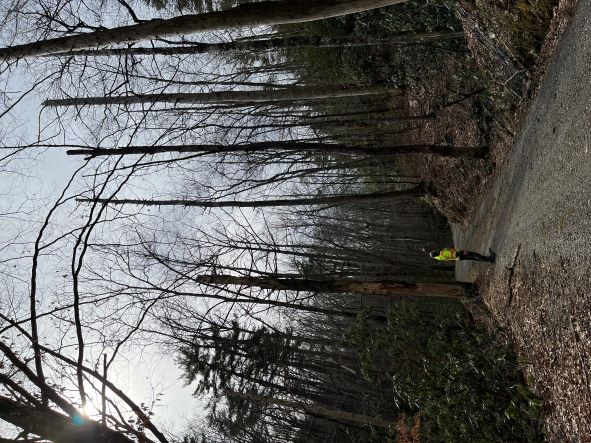 Dead hemlocks are seen along Parson Branch Road near Cades Cove. National Park Service
CADES COVE — Great Smoky Mountains National Park contractors began removing at least 800 dead hemlock trees along Parson Branch Road, an eight-mile primitive backcountry road that connects Cades Cove with U.S. 129 on the western edge of the park.
The road has been closed since 2016 because of the tree hazards and damage to the road surface. The hemlocks succumbed to the hemlock woolly adelgid, an exotic insect that has wreaked havoc on hemlock stands and their accompanying ecosystems.
The road passes several trailheads, and is used by emergency vehicles as needed. The park initially identified some 1,700 trees that posed a hazard to the adjacent roadway, but that number has naturally declined by about half over the past six years.
Friends of Great Smoky Mountains National Park provided $100,000 for the hazard-mitigation project. That was matched with $50,000 from the federal government.
Once the dead trees are removed, work will begin to rehabilitate the roadway and ensure its safety.
The roadway could reopen this summer, according to a news release from the National Park Service.
Black bear killed man whose body was found by Hazel Creek in Great Smoky Mountains National Park
Written by Thomas FraserRangers shot and killed bear eating body at campsite 82
(This story has been updated)
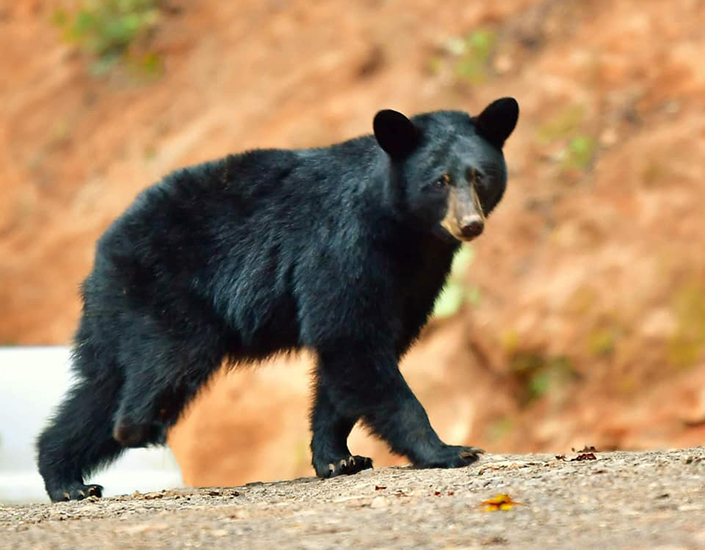
A black bear killed a man whose body was found by backpackers at a Hazel Creek campsite in September 2020.
Patrick Madura died “due to trauma caused by a bear,” according to a news release from Great Smoky Mountains National Park.
He would be only the second park visitor known to be killed in a bear attack in the 80-year history of the national park.
Glenda Bradley was killed in a predatory bear attack on the Little River trail in 2000. Two bears were shot and killed by park rangers after a Boy Scout troop came upon the incident. The animals, a sow and yearling, were eating and attempting to cache Bradley’s body when they were killed.
Madura’s body was found by backpackers arriving at campsite 82 on Sept. 11, 2020. They first noticed an empty tent, then saw a bear “scavenging” the victim’s body across the creek.
Rangers responding to the subsequent emergency call found a bear eating Madura’s body and shot and killed the animal. Hazel Creek Trail and the campsite were temporarily closed following the incident.
Madura, 43, of Elgin, Illinois was hiking and camping alone when he was attacked, according to the park service. No additional information about food storage issues or what may have precipitated the attack was immediately available from the park service.
Madura was an accomplished outdoorsman with a masters in biology and was trained as an EMT and firefighter, according to local reporting from the Chicago area following his death last year.
Fatal attacks are extremely rare, given the number of visitors to the national park, the most visited in the country. Nonfatal attacks, while still rare, are more common. A bear attacked a teenager as she slept in a hammock near the Maddron Bald trail in the Cosby area earlier this year; she was airlifted from the park with serious injuries but was expected to make a full recovery. The bear involved in that attack was euthanized as well.
Rangers urge visitors to be Bearwise, but regularly encounter improper interactions between bears and visitors, such as an incident this summer in which a woman was cited for feeding a bear peanut butter from a vehicle in Cades Cove.
More...
 Courtesy of Help Asheville Bears
By any other name: From poaching to cars and traps, black bears face diverse human threats in Southern Appalachians
Activists and state agencies agree bear poaching is an age-old problem in the mountains of Tennessee and North Carolina, but they diverge when it comes to some key aspects of the crime and its prevention.
The non-profit Help Asheville Bears is raising awareness of threats to bears on both sides of the state lines and getting coverage on local media outlets like this piece on Knoxville-based WBIR. Its message has also appeared on a billboard in Sevierville. The Arden, N.C.-based group offers a tip line, rewards and also supports what could be described as a self-styled anti-poaching militia.
“Bear poaching is a big deal. It happens anywhere where there are bears,” said Jody Williams, the founder of Help Asheville Bears, which is responding to what its members see as an increasing threat to the very symbol of wild Southern Appalachia. HAB is especially concerned about trapping that Williams said has left limbless bears limping throughout the mountains.
The group is demanding Amazon quit selling leg-snare traps with a petition on Change.org that has gotten more than 220,000 signatures.
A video at the top of the page shows images and footage of bears with missing limbs as sad flute music plays.
“We currently follow 12 cases of bears missing limbs in a 25 mile radius of the Asheville area and 15 missing limbs within 90 miles of Asheville,” according to the Help Asheville Bears website.
“Help Asheville Bears intends to help prevent illegal bear trapping in the South Asheville and Arden areas, where there has been much photographic evidence of illegal trapping, especially bears missing limbs.”
- bear poaching
- smoky mountains bear poaching
- limbless bear
- legless bear
- save asheville bears
- twra bear
- bear trap
- trap sold on amazon
- poacher strike force
- help asheville bear
- leg trap
- leg trap amazon petition
- danger to bear
- don't feed bear
- bearwise
- tennesse wildlife resources agency
- north carolina wildlife resources commission
- black bear
As Rotty Top the corpse flower bloom ends its act on a malodorous note, it’s evident that a lot of people love nature – even its most indelicate stank
Written by JJ Stambaugh
Hundreds of humans attracted to stench of Rotty Top; Hard Knox Wire performs autopsy on UT corpse flower phenom
(This story was originally published by Hard Knox Wire).
“What I feel the most is excited from all the exposure that folks are getting of biology and the greenhouses,” said UT biology greenhouse director Jeff Martin. “I didn’t realize this many people would be interested, and it’s great. Hopefully, this will get people a little more interested in other types of plants.”
She came, she reeked, she conquered.
That’s how the history books may recall Rotty Top’s brief tenure as the biggest star on the University of Tennessee campus in July 2021.
The corpse flower (or titan arum, to the biologists among us) finally bloomed early Thursday morning after two weeks of teasing its keepers — and the public — that it was about to drop its leaves and saturate its surroundings with the odor of decaying flesh.
Hundreds of visitors had already visited Rotty Top in the days preceding the rare event (the plant blooms at best once every decade), but on Thursday it seemed as though they were all returning at once. Shuttle buses carried curious fans from a nearby parking garage to the Hesler Biology Building on Circle Drive, and scores of people crowded around the titan arum’s enclosure to get a whiff of its infamous scent.
 The Tennessee Aquarium’s Gentoo penguin chick weighs more than 2 kilograms at 28 weeks old. Casey Phillips/Tennessee Aquarium
Baby penguin, endangered turtles and puffer fish are the newest additions to the Tennessee Aquarium
(Casey Phillips is a communications specialist at the Tennessee Aquarium in Chattanooga)
As any parent knows, kids tend to do whatever you least expect. In the case of an endangered four-eyed turtle hatchling at the Tennessee Aquarium, however, merely existing was — in itself — a huge surprise.
On July 11, a volunteer was tending an enclosure in a backup area of the River Journey exhibit. This habitat was only supposed to house a female endangered four-eyed turtle (Sacalia quadriocellata, a largely montaine species native to parts of China and Vietnam), but the volunteer soon discovered that the adult turtle wasn’t alone. Perched atop a layer of vegetation was a tiny hatchling that, by all accounts, shouldn’t have been there.
“The adult female hadn’t been with a male in over a year, so we did not check to see if she had laid this year,” says Bill Hughes, the aquarium’s herpetology coordinator. “To say the least, finding an egg, let alone a hatchling, was unexpected.”
 Tennessee Aquarium Herpetology Coordinator Bill Hughes holds a recently hatched endangered four-eyed turtle. Casey Phillips/Tennessee Aquarium
 Here is some evidence of tree browning and “flagging” caused by the recent appearance of Brood-10 cicadas earlier this summer. Courtesy Oak Ridge National Laboratory
Tree “flagging” is a lingering sign of the 17-year cicadas’ brief time on Earth
(Alexandra DeMarco is an intern in ORNL’s media relations group.)
On the road leading to the U.S. Department of Energy’s Oak Ridge National Laboratory, drivers may notice that many of the green trees lining the entrance to the lab are dappled with brown leaves. At first glance, the sight isn’t extraordinary, as deciduous tree leaves turn hues of oranges and browns before falling to the ground each autumn.
Yet, just weeks past the summer solstice, this phenomenon is out of place and is in fact evidence of another natural occurrence: cicada “flagging.”
This spring, Brood X cicadas emerged from the ground after 17 years and swarmed across the eastern United States, leaving a trail of exoskeletons and echoes of mating calls. Cicadas emerge in such large quantities to withstand predation and successfully maintain their populations, and trees actually play a key role in their life cycle.
A male cicada attracts a female through a mating call, the sound responsible for cicadas’ shrill hum. After the two mate, the female cicada uses a sharp tubular organ called an ovipositor to slit the bark and split the sapwood of young tree branches to deposit her eggs there. These incisions, however, damage a tree’s vascular system and can cause stalks beyond the incision to die and wither, leaving behind twigs with brown leaves that resemble flags dangling from the trees.
The eggs then grow into nymphs that make their way to below ground. An oft-repeated misconception is that they’ll stay dormant for 17 years. Actually, during that time, they go through 5 life stages while feeding on the xylem (tree sap) of roots. This may further weaken saplings that were heavily infested with cicadas.