

Earth (60)
Planet Earth, the only speck in the Universe confirmed by humans to have evolved higher forms of life. Watch NASA's phenomenal movie summarizing Life on Earth.
Children categories
 The Midwest U.S. is seen in this image taken at night from the International Space Station. It's a good representation of the challenges presented by light pollution in the Southern Appalachians and beyond. NASA
Light pollution is disrupting the seasonal rhythms of plants and trees, lengthening pollen season in US cities
This story was originally published by The Conversation. Yuyu Zhou is an associate professor of environmental science at Iowa State University.
City lights that blaze all night are profoundly disrupting urban plants’ phenology — shifting when their buds open in the spring and when their leaves change colors and drop in the fall. New research I coauthored shows how nighttime lights are lengthening the growing season in cities, which can affect everything from allergies to local economies.
(Hellbender Press has covered light pollution, such as this great article from Rick Vaughan).
In our study, my colleagues and I analyzed trees and shrubs at about 3,000 sites in U.S. cities to see how they responded under different lighting conditions over a five-year period. Plants use the natural day-night cycle as a signal of seasonal change along with temperature.
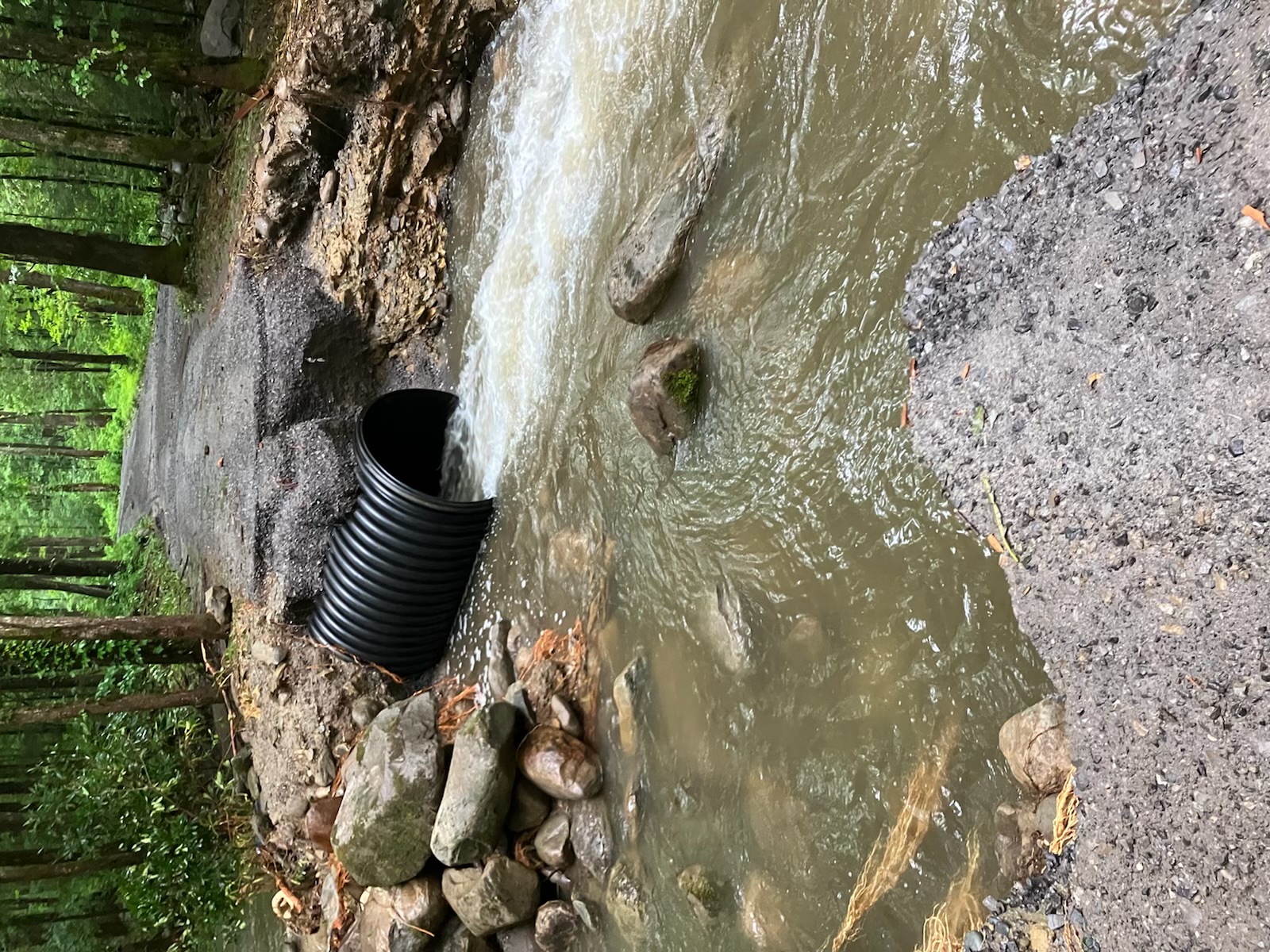 A washout is seen along Porters Creek Road in Great Smoky Mountains National Park following torrential rain on July 12. National Park Service
Flooding causes Smokies damage, prompts water advisory for Sevierville
SEVIERVILLE — Extremely heavy rain on July 12 in the Smoky Mountains caused a cascade of problems now just coming to light.
Sevierville and Sevier County issued a boil-water advisory early Thursday after debris flushed by Tuesday’s floodwaters clogged the city water utility’s main intake on the French Broad River, leading to pressure decreases that opened up lines to possible outside contamination.
In Great Smoky Mountains National Park, Greenbrier campground was closed indefinitely after the swollen Middle Prong of the Little Pigeon River wiped out roads, trails and bridges in the area.
Falcons in flight: Gatlinburg couple earns top conservation honors from Tennessee Wildlife Federation
Written by Deborah Sosower![Worsham Conservationist of the Year1]() Arrowmont supporters Margit and Earl Worsham named Conservationists of the Year by Tennessee Wildlife Federation
Arrowmont supporters Margit and Earl Worsham named Conservationists of the Year by Tennessee Wildlife Federation

This story was provided by Arrowmont School of Arts and Crafts.
GATLINBURG — Margit and Earl Worsham stood in front of family, friends, and fellow conservationists on stage in Nashville this spring and were presented with a unique award of mahogany shaped like a peregrine falcon in flight.
They were named the Tennessee Wildlife Federation’s 2022 Conservationists of the Year at the federation’s 57th Annual Conservation Awards in May.
It’s a prestigious honor presented to nominees considered to have the most significant contribution to the cause of natural resources conservation in Tennessee.
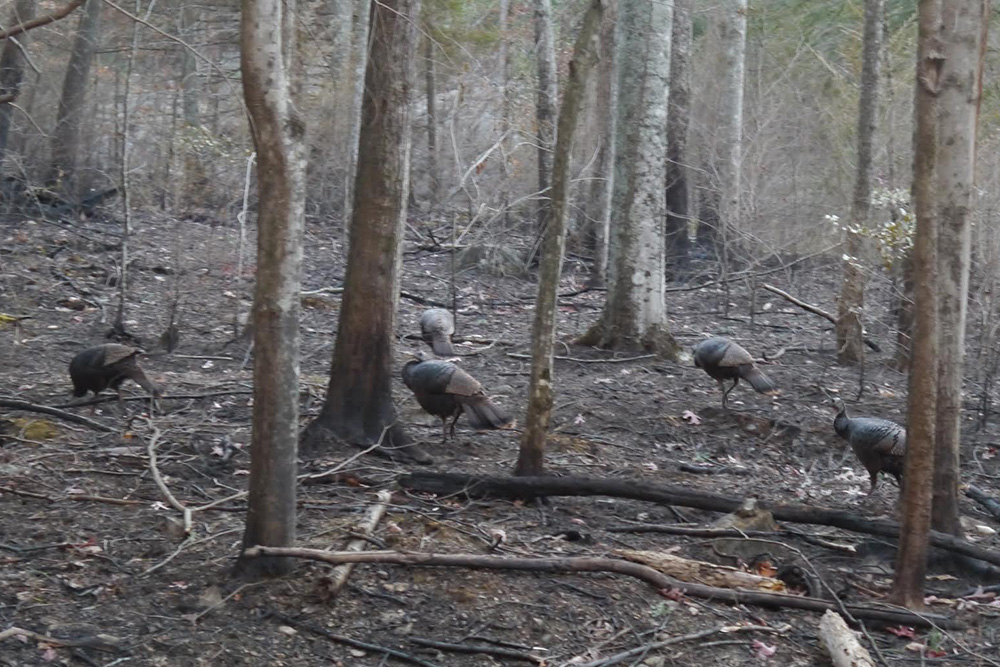 Wild turkeys forage in charred hardwood forest soon after the 2016 Gatlinburg fires, which moved from the Smokies to developed areas in Sevier County. An ORNL model predicts wildfire threats will increase in the Southern Appalachians because of climate change. Thomas Fraser/Hellbender Press via Knoxville Mercury
ORNL report: Local wildfire danger will likely loom larger because of climate change
OAK RIDGE — This cruel summer, the Southern Appalachian region is already baking in above-normal temperatures and basking in poor air quality.
Air temperatures in Knoxville flirted with 100 degrees on July 6, which were well above average and prompted the National Weather Service to issue a heat advisory for much of the metropolitan area.
It’s hard to definitively link a heat wave to global warming, but one oft-cited consequence of climate change is the growing intensity of wildfires, even in the traditionally moisture-rich Appalachians. The range of climate change effects is difficult to pin down, but one constant in the study of climate change is an expected increase in overall temperatures, which can power wildfires via both fuel increases and volatility.
- oak ridge national laboratory
- wildfire
- wildfire risk
- climate change wildfire
- jaifu mao
- thanksgiving fire of 2016
- sevier county wildfire
- wears valley wildfire
- brush clearing for wildfire
- smokies wildfire mitigation
- smokies fire
- computational earth model system
- peter thornton
- southern appalachian bioregion
- southern appalachian climate change
- southeast wildfire risk
- heat wave
- global warming
- earth system model
- wildfire carbon emission
- ornl

2021 economic numbers prove small parks have big impacts
ONEIDA — Both the Obed National Wild and Scenic River and Big South Fork National River and Recreation Area offer wilderness options free of the hassles associated with Great Smoky Mountains National Park, the most visited national park in the country.
The Cumberland Plateau-area destinations continue to grow in popularity as more tourists seek solace in nature, a trend that began during the Covid-19 pandemic.
Those tourists also spend millions of dollars in nearby rural communities, some of which face chronic economic challenges.
The South’s hidden climate threat
Written by Dan Chapman Spreading avens are seen in bloom in the Appalachians. The endangered long-stemmed perennials survive in higher mountain elevations but their lack of space to move higher in elevation in times of climate change and warming further threaten the plant. USFWS
It’s not just the coastlines that are recording climate change. Even the mountains of North Carolina are feeling the heat — including some endangered plants
“Atlanta reporter Dan Chapman retraced John Muir’s 1867 trek through the South, including the naturalist’s troubling legacy, to reveal environmental damage and loss that’s been largely overlooked.” This is an excerpt published by The Revelator from his book, A Road Running Southward: Following John Muir’s Journey Through an Endangered Land.
BOONE — It’s a wonder anything survives the ice, snow, and winds that pummel the ridge, let alone the delicate-seeming yellow flowers known as spreading avens.
The lovely, long-stemmed perennials are exceedingly rare, officially listed as endangered, and found only in the intemperate highlands of North Carolina and Tennessee. They sprout from shallow acidic soils underlying craggy rock faces and grassy heath balds. At times blasted with full sun, but mostly shrouded in mist, the avens are survivors, Ice Age throwbacks that refuse to die. Geum radiatum is only known to exist in fourteen places, including hard-to-find alpine redoubts reached via deer trail or brambly bushwhacking.
Smokies rangers kill bear after it hurts Elkmont campers while seeking food
Written by Thomas Fraser6-minute video about what to do if you see a black bear
Smokies officials say euthanized bear was overweight and seeking human food
GATLINBURG — Great Smoky Mountains National Park wildlife biologists and park rangers responded to Elkmont Campground on Sunday (June 12) after a peculiarly large black bear injured a toddler and her mother sleeping in a tent.
Wildlife biologists captured the responsible bear, and it was euthanized Monday, June 13, according to a news release from the park service.
“The bear weighed approximately 350 pounds, which is not standard for this time of year, suggesting the bear had previous and likely consistent access to non-natural food sources,” said Lisa McInnis, resource management chief.
Updated: Power line project threatens regionally popular greenway on the Oak Ridge Reservation
Written by Wolf NaegeliOAK RIDGE — WBIR channel 10 News 2-minute video highlighting a controversy that has been brewing for a decade.
Infographics and more details added May 5, 2022
Tree clearing would radically degrade the visual experience and take away shade crucial to enjoyment of a walk during increasingly hot weather
On April 4, TRISO-X LLC, a subsidiary incorporated last August by X-Energy LLC, disclosed plans to build a plant at Horizon Center to manufacture a new kind of “unmeltable” tri-structural isotropic nuclear fuel (TRISO) for high-temperature pebble-bed gas reactors. It will use uranium, enriched to less than 20 percent, to fabricate spherical, billiards-ball sized High-Assay Low-Enriched Uranium (HALEU) pebbles.
Horizon Center,
situated among sensitive natural areas, was designed as an upscale light-industrial and office park. Despite its fancy landscaping with sculpture gardens, it failed to attract the many buyers that had been anticipated when it was created a quarter century ago. A principal argument for its establishment was that Oak Ridge needed to attract more private enterprise to reduce dependency on Federal jobs.
Terragenics’ $38 million plant, which was built to manufacture implantable radioactive pellets to treat prostate cancer never went into full production and was abandoned in 2005. 2015, with Governor Haslam in attendance, Canadian CVMR promised 620 jobs, using the plant for it’s first U.S. production site and to move its headquarters to it from Toronto, too.
 Parson Branch Road in Great Smoky Mountains National Park was reopened May 26 after a six-year closure. National Park Service
Parson Branch Road had been closed since 2016 because of washouts and danger from trees killed by the hemlock woolly adelgid
This article was provided by Great Smoky Mountains National Park Public Information Officer Dana Soehn.
CADES COVE — Great Smoky Mountains National Park officials celebrated on Thursday (May 26) the reopening of Parson Branch Road with a ribbon-cutting event honoring the crew who performed the needed work and the Friends of the Smokies who provided critical funding to support the efforts. The historic gravel road, originally constructed in 1838, is now reopened to the public after a six-year closure.
“We are pleased to reopen Parson Branch Road in time for the 2022 summer season,” said Deputy Superintendent Alan Sumeriski. “Not only does this restore access to one of the most special places in the Smokies, it also allows another opportunity for people of all abilities to spread out and explore less traveled areas of this very busy park.”
Smokies to reopen Parson Branch Road after massive clearance of trees killed by exotic insect
Written by Thomas FraserCADES COVE — Great Smoky Mountains National Park on Thursday plans to officially reopen Parson Branch Road, first cut through the ridges around Cades Cove 180 years ago.
The narrow, 8-mile one-way mountain road out of Cades Cove to U.S. 129 has been closed since 2016 following washouts that were compounded by a steady diet of collapsing diseased and dead hemlocks. A ceremony is set for Thursday morning at the beginning of the road in Caves Cove.
The road was closed because of the tree hazards and damage to the road surface. The hemlocks succumbed to the hemlock woolly adelgid, an exotic insect that has wreaked havoc on hemlock stands and their accompanying ecosystems.
More...
Updated: Knox County Commission greenlights Dry Hollow housing, with changes
Written by Thomas FraserOpposition still stands against Dry Hollow housing proposal on Knox commish agenda
KNOXVILLE — Compass reported that Knox County Commission voted 8-3 Monday night to approve a new housing development in South Knox County, “despite fierce opposition from surrounding residents.
“Local residents haven’t stopped a development, but they forced some changes,” Compass reported.
“But the conditions imposed by Commission limit the subdivision in the Dry Hollow area to 180 homes on the flattest, most developable part of the property — down from 255 that the Knoxville-Knox County Planning Commission had approved.”
Court finds TVA contractor potentially liable for Kingston coal-ash cleanup injuries and deaths
Written by Jamie Satterfield On Dec. 23, 2008, a massive dam at the Kingston coal-fired power plant in Harriman, Tenn., ruptured and spilled 1.1 billion gallons of coal ash into the Clinch and Emory rivers. Appalachian Voices teamed up with Southwings to take pictures from the air and launched two separate missions by water to test the river and fish for pollutants as a result of the spill. Appalachian Voices
Contractor that cleaned up infamous TVA ash spill not immune from responsibility for alleged unsafe worksite
This story was originally published by Tennessee Lookout.
CINCINNATI — A federal appellate court last week struck down a last-ditch appeal by a Tennessee Valley Authority contractor accused in the mass poisoning by radioactive coal ash waste of the utility’s Kingston disaster workforce.
The 6th Circuit U.S. Court of Appeals ruled Jacobs Engineering Inc. cannot ride the coattails of TVA governmental immunity because TVA itself would not have been immune from liability had sickened workers chosen to sue the utility.
Opponents of Oak Ridge waste dump, citing comms breakdown, urge extension of public comment period
Written by Thomas Fraser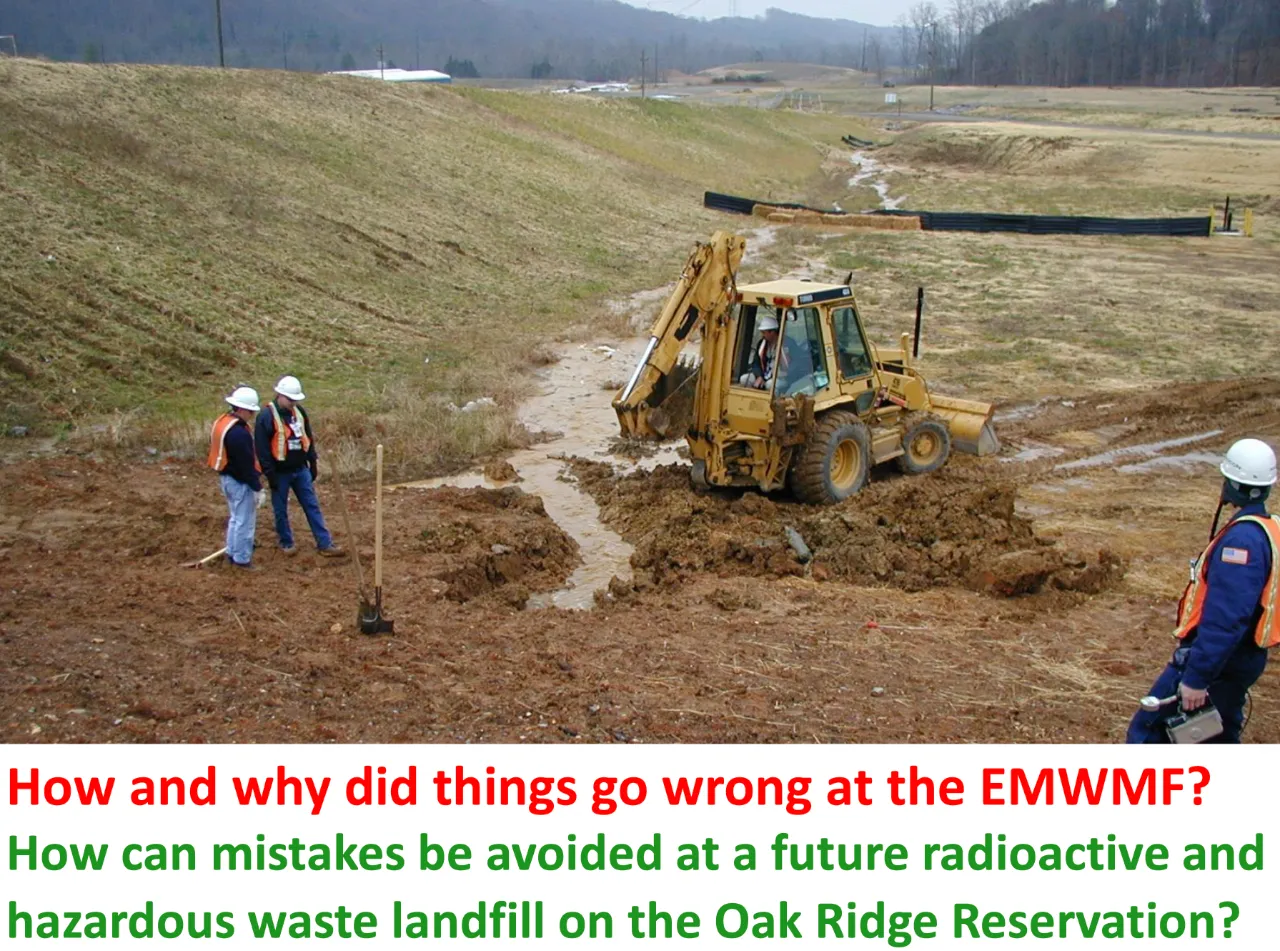 Image from a 2018 memorandum authored by experts including former Department of Energy employees in Oak Ridge. EMWMF is the present landfill that has a history of failures and is reaching capacity. Ecologists say, after a decade DOE still is not adequately addressing waste acceptance criteria and feasible alternatives.
Public can comment in person Tuesday night in Oak Ridge on proposed DOE waste dump
OAK RIDGE — The Southern Environmental Law Center blistered the Department of Energy in a letter ahead of a May 17 hearing on construction of a toxic-waste landfill that opponents said poses contamination threats to portions of the Clinch River watershed and downstream TVA reservoirs.
The hearing is set for 6-8 p.m. Tuesday, May 17 at the Pollard Technology Conference Center, 210 Badger Ave. This email address is being protected from spambots. You need JavaScript enabled to view it. will be accepted through June 7.
The Department of Energy wants to bury contaminated debris from demolition of Manhattan Project-era complexes and associated legacy toxins from the Oak Ridge Reservation. The drawn-out debate about how best to safely store the materials now focuses on the transparency of the decision process and the health of the Bear Creek watershed and downstream pollution threats to the Clinch River.
- doe
- doe waste dump
- does oak ridge have nuclear waste
- oak ridge landfill
- oak ridge
- bear creek valley
- oak ridge reservation
- radioactive waste
- hazardous waste
- advocates for the oak ridge reservation
- southern environmental law center
- selc
- aforr
- clinch river
- tva reservoir
- soggy bottom
- environmental quality advisory board
- eqab
- public participation
- public meeting
- environmental management disposal facility
- emdf
 Erich Henry and Julia Konkel of the Blount County Soil Conservation District pose by a recent project. Blount County Soil Conservation District
Erich Henry and Julia Konkel anchor East Tennessee soil
MARYVILLE — The Dust Bowl was a time of extreme drought in the Southern Plains in the 1930s. The dry topsoil whipped by winds created the infamous “bowl of dust.” It polluted the air and made it nearly impossible to grow crops or maintain livestock.
East Tennessee gets more rain than the Southern Plains but regional farmers to this day unknowingly use bad agricultural practices.
Blount County Soil Conservation District’s Director Erich Henry doesn’t want history to repeat itself.