
News (340)
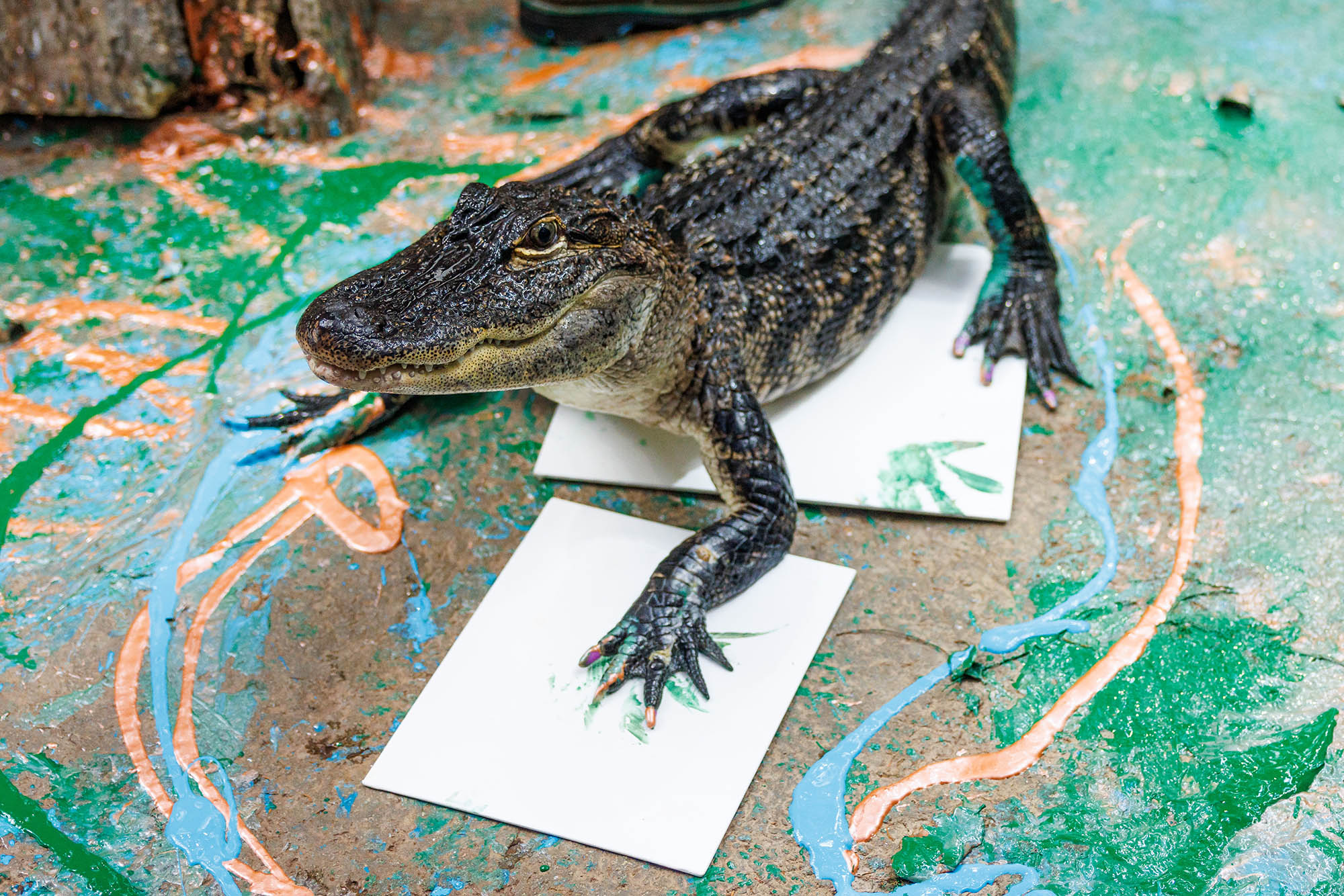 An American alligator (Alligator mississippiensis) paints art for the fall fundraising auction for the Tennessee Aquarium. The auction runs through Sept. 26. Tennessee Aquarium
Wildlife masterpieces mark an artistic autumnal fundraiser for the Tennessee Aquarium
CHATTANOOGA — While getting ready to tackle his next artistic masterpiece at the Tennessee Aquarium, Avior the red-ruffed lemur likes to take a few steps to center himself: languid naps in the sunshine, delicate nibbles of romaine lettuce, a resounding howl to focus his energy.
Only after these rituals are complete can this master of composition — a true “Lemur-nardo” da Vinci — begin putting paw and tail to canvas to create his next opus.
Avior’s latest triumph — made using non-toxic, animal-friendly tempura paint, naturally — is a 16-by-20-inch piece created in collaboration with his fellow lemurs and social media star Atlanta-based artist Andrea Nelson (TikTok video). Avior and Nelson’s masterwork is one of more than two dozen pieces of art made by aquarium animals now up for bid during the Tennessee Aquarium’s online fall fundraising auction. The auction will conclude at noon on Monday, Sept. 26.
Hunters are invited to go whole hog on the Tennessee side of Big South Fork
Written by Thomas Fraser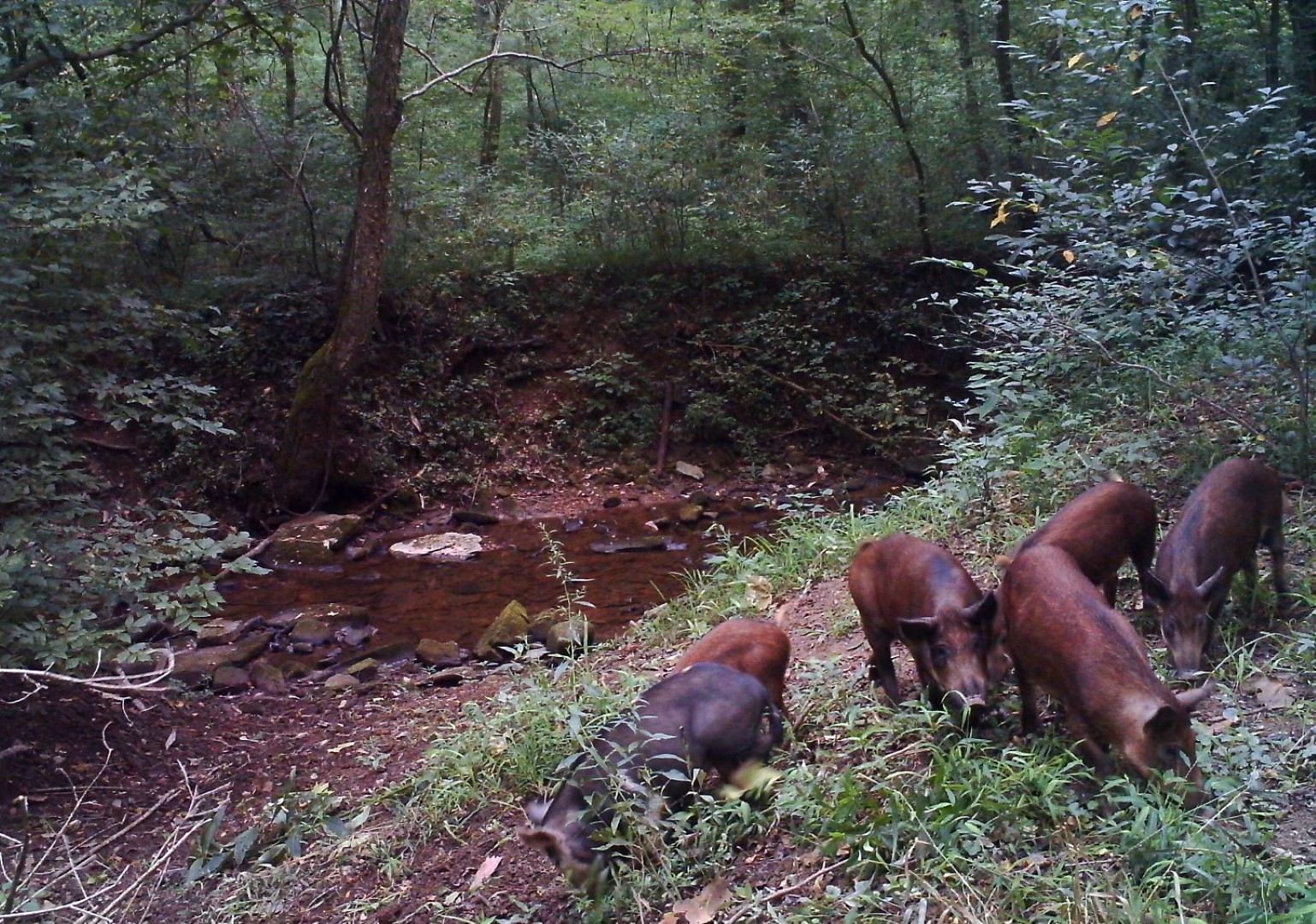 Wild hogs are seen rooting in a sensitive area. Hog season opens later this month in Big South Fork. National Park Service
ONEIDA — Big South Fork National River and Recreation Area this week announced regulations for those wanting to kill invasive wild hogs during the 2022 fall and winter seasons.
Most hog populations within the protected areas of BSF are believed to be present on the Tennessee side of the park, which spans the Kentucky border. Feral hogs have been present in East Tennessee for generations. They destroy local flora and fauna mainly by rooting in low-lying mountain and valley areas. They are especially fond of salamanders, many species of which are in grave decline. In Great Smoky Mountains National Park, hunters are regularly deployed to cull hogs throughout the park.
“The wild hog is an invasive exotic species that has a significant negative impact to native species and do a great deal of damage to farmlands and residential areas. The damage they cause threatens park resources including federally listed plants,” according to a release from the park service.
Foreign freshwater jellyfish have been swimming among us since the 1930s
Written by Stephen Lyn Bales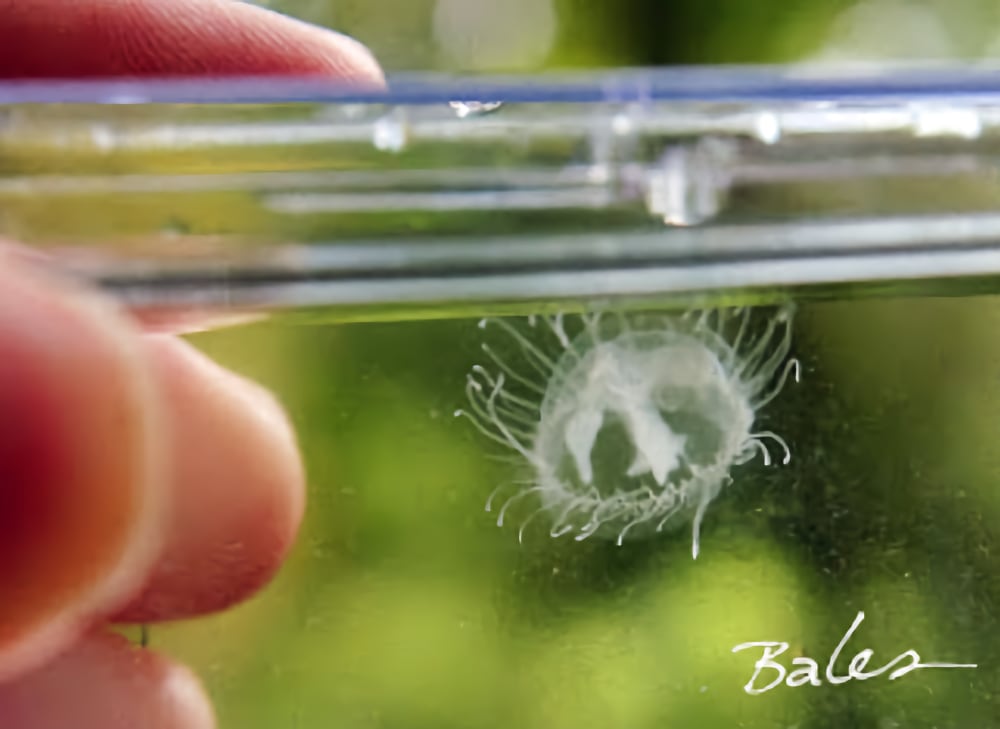
Freshwater jellyfish: Here one year, gone the next.
KNOXVILLE — Paddling along the still water of Mead’s Quarry Lake you notice the air bubbles created by your oars. They are all around your canoe near the surface.
It’s a hot early September afternoon and the nearly transparent bubbles seem to take on a life of their own. You slow to watch and yes, they undulate, rising and falling in the pristine water of the abandoned marble quarry.
Air bubbles do not undulate!
Taking a clear plastic cup, you lean over the gunwale and scoop up one of the penny-sized bubbles to get a closer look.
Tentacles? Air bubbles do not have tentacles. What you are looking at is a freshwater jellyfish and the heat of late summer is its mating season. It’s a blossom of jellyfish as hundreds gather together near the water’s surface. They are commonly known as peach blossom jellyfish.
Citizen scientists are taking stock in Smokies, and the inventory keeps increasing
Written by Thomas Fraser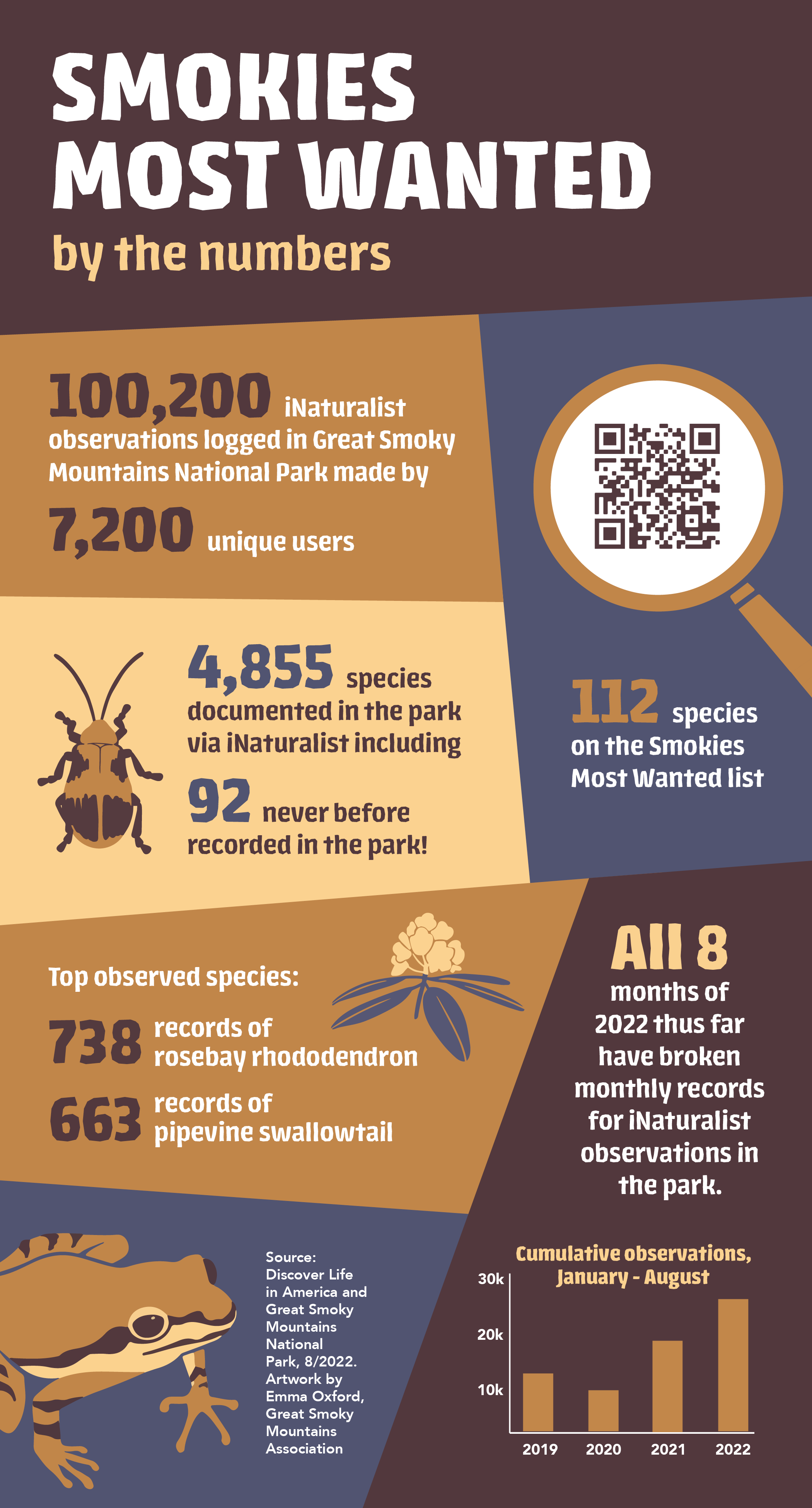
This story was provided by Great Smoky Mountains National Park.
Next demonstration on Thursday, Oct. 20
GATLINBURG — Great Smoky Mountains National Park is celebrating the success of a community science project led by nonprofit partner Discover Life in America (DLiA) called Smokies Most Wanted. The initiative encourages visitors to record life they find in the park through the iNaturalist nature app. DLiA and the park use these data points to map species range, track exotic species, and even discover new kinds of life in the park.
“iNaturalist usage in the Smokies has skyrocketed from just four users in 2011, to 3,800 in 2020, to now more than 7,100 users,” said Will Kuhn, DLIA’s director of science and research.
In August, the project reached a milestone, surpassing 100,000 records of insects, plants, fungi, and other Smokies life submitted through the app. Among them are 92 new species not previously seen in the park.
Public comment: Environmental group leaders say TVA makes input difficult
Written by Dulce Torres Guzman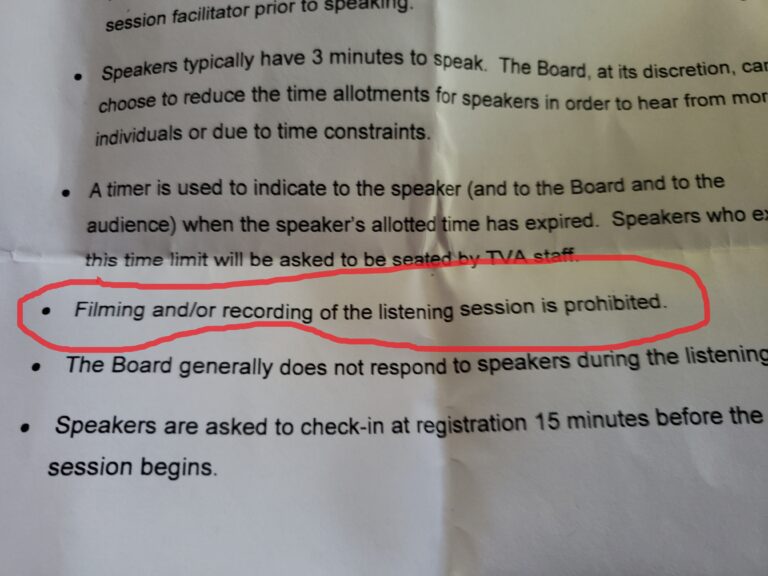 Scott Banbury with the Tennessee Chapter of the Sierra Club said a handout provided at TVA’s Aug. 30 listening session stated recordings of the meeting were not allowed; a TVA spokesperson said recordings are, in fact, allowed. Flyer provided by Scott Banbury
Is TVA trying to gag its critics?
This story was originally published by Tennessee Lookout.
KNOXVILLE — While the Tennessee Valley Authority, a utility company that provides power to millions in Tennessee and other states, allows for public input into decisions, the process isn’t simple or transparent, say some regular attendees.
Take, for instance, a recent public listening session: representatives of the Tennessee Chapter of the Sierra Club say they were told they could not record the session despite a spokesman for TVA saying the opposite.
According to TVA spokesperson Scott Brooks, attendees are always allowed to record public meetings, provided they don’t cause a disturbance, but minutes before the session, members of the Tennessee chapter of the Sierra Club were prohibited from doing so.
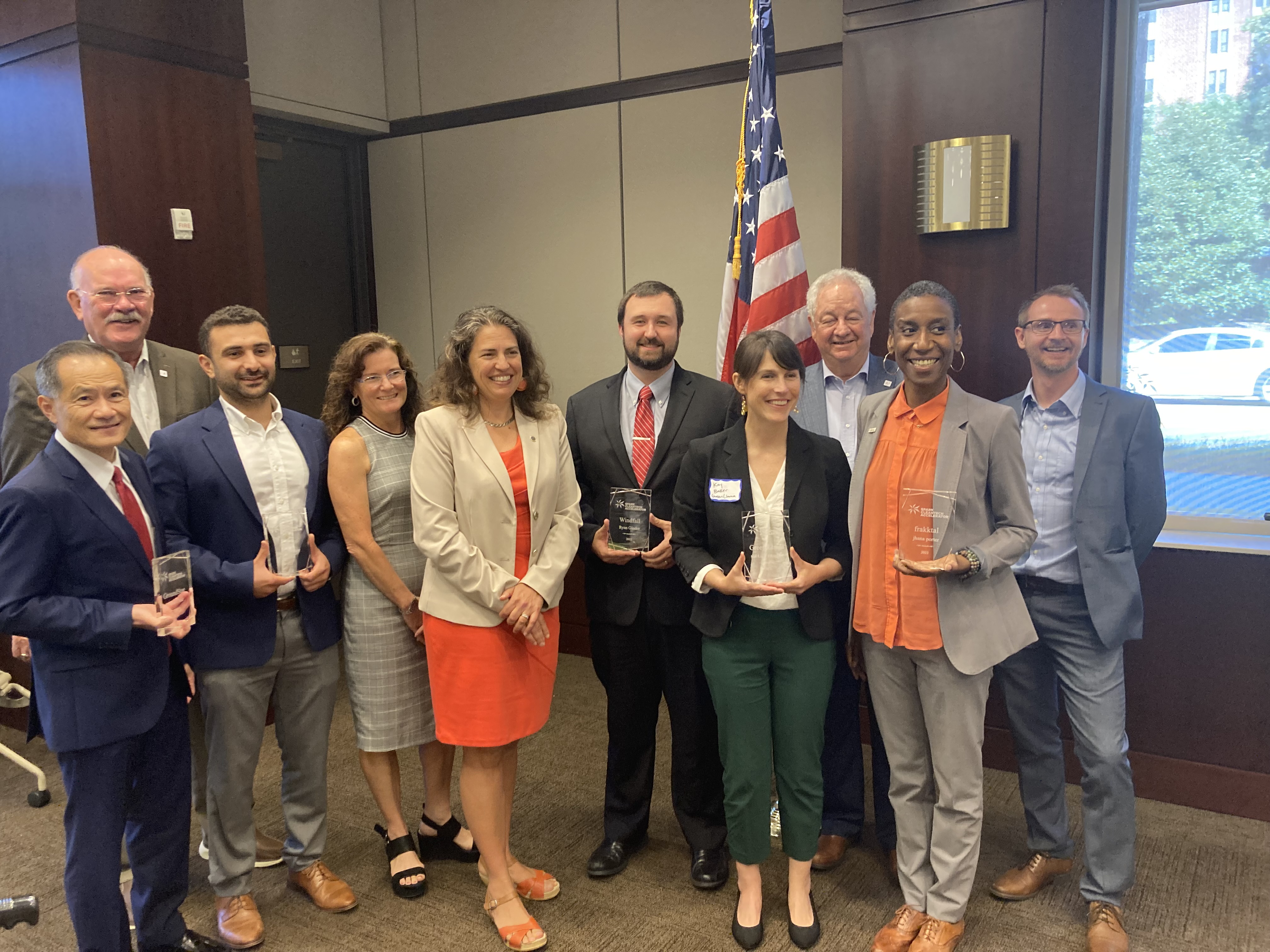 Spark CleanTech Accelerator participants join Knoxville Mayor Indya Kincannon during an Aug. 31 awards ceremony. Ben Pounds/Hellbender Press
Knoxville celebrates sustainable technology startups from across the country
KNOXVILLE — Leaders of start-up green businesses specializing in services and products ranging from carbon reduction to cleaning products and piping wrapped up some warp-speed lessons Aug. 31.
At the conclusion of the three-month Spark CleanTech Accelerator the leaders of environmentally sustainable businesses from across the country took home some awards and got a strategic pep talk from Knoxville Mayor Indya Kincannon.
“I’m very committed to all things green and sustainable,” she said. “Orange and green are complementary colors." She spoke of making Knoxville a “clean tech hub,” not just for Tennessee but internationally. She envisioned “a cleaner Knoxville and a cleaner world.”
- spark clean tech acclerator
- University of Tennessee
- university of tennessee research park
- knoxville sustainability
- knoxville mayor sustainability
- indya kincannon
- ut research foundation
- frakktal
- groundstar
- tom rogers ut
- launch tennessee
- ben pounds journalist
- windfall
- 3d printing knoxville
- green llama
- raev
Smokies researchers make a formal acquaintance with a familiar salamander
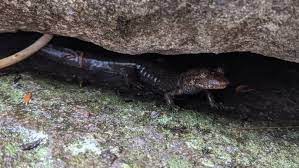 Jonathan Cox
Great news from the Smokies via Instagram!
The “salamander capital of the world” just gained a new member! Meet our 31st species: the Cherokee black-bellied salamander, or Desmognathus gvnigeusgwotli. Its species name means “black belly” in the Cherokee language. Scientists used genetics to find out that it is different from the other black-bellied salamander in the park.
This salamander is common throughout the park and is known for its extremely dark belly and hunting along the banks of streams. If you see a large, dark-bodied salamander with a flattened tail resting on a river rock or poking its head out of a streamside hole, it’s likely the Cherokee black-bellied!
Remember to always appreciate salamanders and other wildlife from afar. Many of our salamanders breathe through their skin. The oils on our hands can stress them out, disrupt their breathing or even spread infections. Please help us keep our salamanders slimy and avoid picking them up!
— Great Smoky Mountains National Park
Last chance for comments in support of saving the country’s best remaining forests
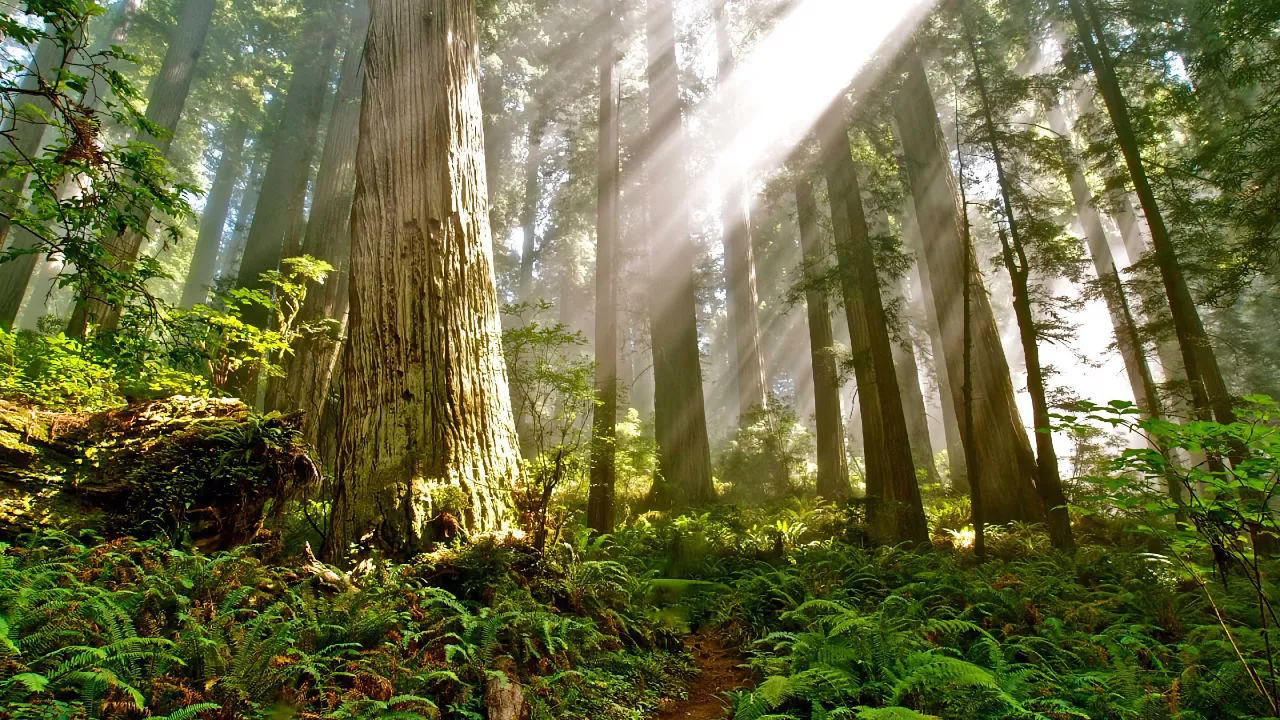 Old Growth U.S. National Park Service
On July 14, the U.S. Department of Agriculture and U.S. Department of the Interior opened a public comment period following President Biden’s Executive Order to conserve mature and old-growth forests.
The deadline for comments is Tuesday, Aug. 30. Now is the time to protect our federally managed forests to safeguard our communities from the future impacts of climate change. Make your voice heard and submit a comment to the U.S. Forest Service and the Bureau of Land Management.
The mature and old-growth trees in our federally managed forests are one of this country’s greatest resources. These forests provide critical habitats for wildlife, prevent erosion and flooding, protect our drinking water, and are an essential climate solution.
United States forests cover about 290 million hectares of land and make up the fourth largest forest area of any country in the world. In 2019, the carbon sequestered in these forests offset approximately 12 percent of United States greenhouse gas emissions.
— Sierra Club
 The Dust Bowl of the 1930s resulted in the displacement of tons of soil in the midst of a drought similar to the one that grips the Southwest today. Library of Congress
Dirt is far from just dirt. It’s a foundation for life.
This story was originally published by The Revelator.
Look down. You may not see the soil beneath your feet as teeming with life, but it is.
Better scientific tools are helping us understand that dirt isn’t just dirt. Life in the soil includes microbes like bacteria and fungi; invertebrates such as earthworms and nematodes; plant roots; and even mammals like gophers and badgers who spend part of their time below ground.
It’s commonly said that a quarter of all the planet’s biodiversity lives in the soil, but that’s likely a vast understatement. Many species that reside there, particularly microorganisms such as viruses, bacteria, fungi and protists, aren’t yet known to science.
- the revelator
- soil type
- soil moisture
- why is soil important
- drought
- soil microbe
- biodiversity
- soil microorganism
- nutrient cycling
- reading university
- climate change
- soil degradation
- plastic pollution
- genetically modified organism
- pesticide
- artificial fertilizer
- land use change
- compaction
- erosion
- convention on biodiversity
- soil biodiversity observation network
- global soil biodiversity initiative
- ecosystem research
- multidimensionality
- macroecology
- farm to fork strategy
- microbial transplants
- soil quality
- soil sealing
Climbers can clean their crags during Obed event
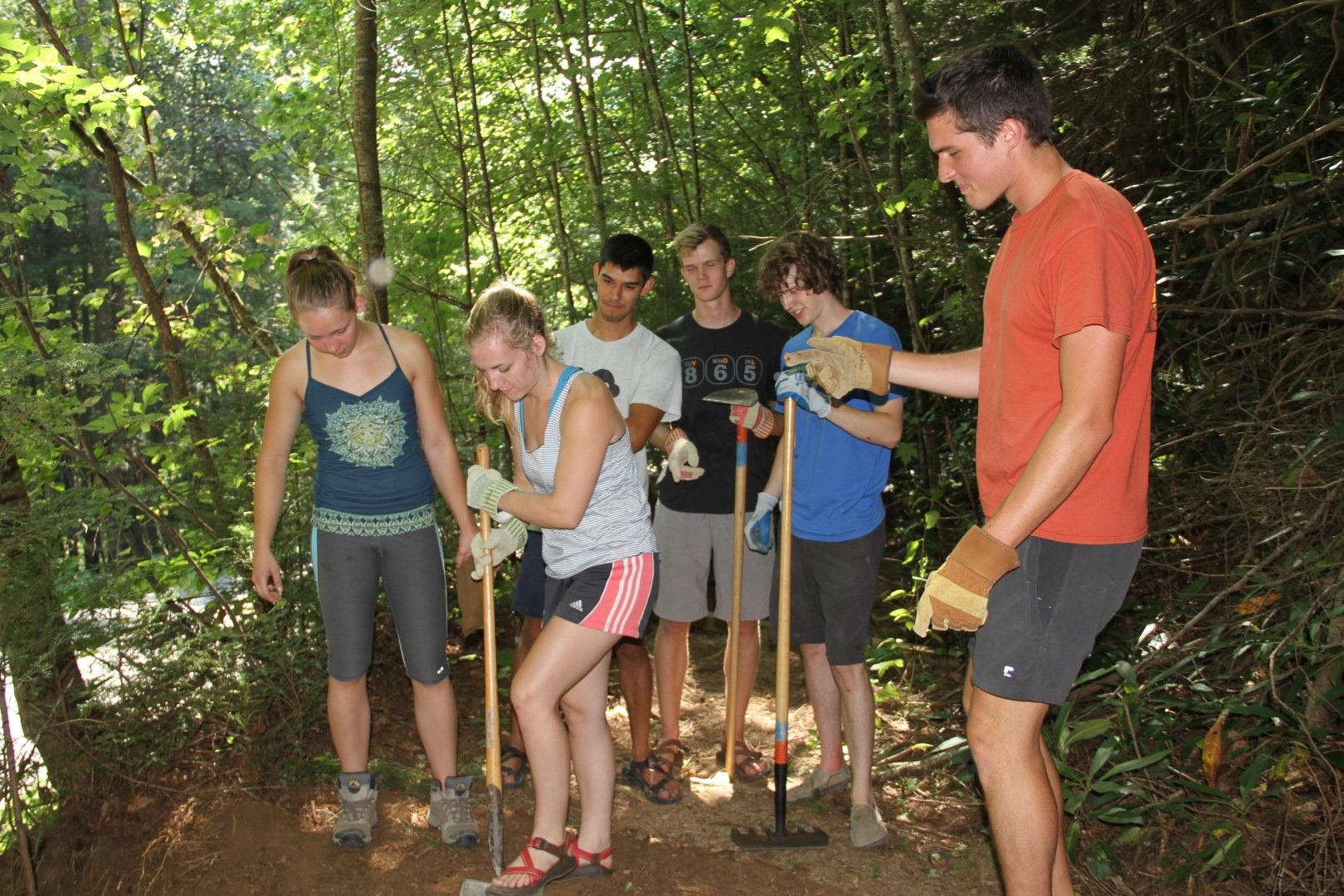 Volunteers are needed to improve and maintain climbing and approach areas at the Obed. National Park Service
WARTBURG — The Obed Wild and Scenic River will host the park’s annual Adopt-a-Crag event on Saturday, Sept. 11 in cooperation with the East Tennessee Climbers Coalition.
Volunteers are needed to help with a variety of projects, including general trail maintenance and litter pickup. Participants should meet at the Lilly Pad Hopyard Brewery at 9 a.m. to register and receive a project assignment. Carpooling is suggested, and volunteers should bring their own lunch, water, hand tools and gloves.
When the work is done, volunteers are invited to spend the day climbing, kayaking or hiking. The ETCC plans a volunteer appreciation dinner that evening at the Lilly Pad.
For more information, contact the Obed Wild and Scenic River at (423) 346-6294.
More...
Southeast Tennessee ridges and rivers will benefit from $10m infusion of federal natural resource funding
Written by Casey Phillips A crimper is attached to the back of a tractor on a farm in the Sequatchie River Valley. A relatively recent agricultural technique, crimping has been shown to reduce farmers’ input costs and improve soil quality. Recently, USDA approved funneling $10 million into a six-county region of Southeast Tennessee. This money will fuel conservation-minded improvements for landowners, including lowering the cost to rent equipment like crimpers and subsidize the planting of cover crops to improve soil health and reduce sedimentation in nearby streams. Tennessee Aquarium
Targeted collaborative conservation will help local agricultural operations improve soil and water quality and protect aquatic life
CHATTANOOGA — Tennessee is as much a patchwork quilt of farms as it is an intricately woven lacework of streams and rivers. Soon, farmers and the aquatic life living alongside them will reap the benefits of $10 million in federal funds to support water-friendly agricultural improvements in the rolling uplands of the state’s southeastern corner.
The U.S. Department of Agriculture (USDA) approved the allocation of more than $197 million to support Regional Conservation Partnership Programs (RCPP) throughout the nation. These initiatives promote coordination between USDA’s Natural Resources Conservation Service (NRCS) and partnering organizations that are already engaged in conservation efforts.
- tennessee aquarium conservation institute
- tennessee aquarium
- tennessee department of environment and conservation
- farmland preservation
- land water preservation in se tennessee
- usda
- regional conservation partnership program
- ridge to river
- walden ridge
- sequatchie valley
- laurel dace
- natural resources conservation service
- chattanooga environment
- southeast tennessee environment
- tennessee endangered fish
- rcpp
Updated 8/23: Knox County Commission approves changes to “use-on-review” policy
Written by Wolf NaegeliKnox County Commission finalizes action to limit citizen rights to oppose developments.
KNOXVILLE — County Commission passed on second reading Monday an amendment to the county’s process for appealing Planning Commission decisions, according to Compass.
Hellbender’s initial story and updates follow:
“The revised measure passed on first reading with seven out of 11 votes, but Commission Chair Richie Beeler said his support was soft and he would need to be persuaded to vote for it a second time next month. If approved, the ordinance would give developers the option to have appeals of their plans heard by the BZA or in Chancery Court,” Compass reported.
Residents and developers who do not agree with a decision of the Knoxville-Knox County Planning Commission to permit or deny a land use that is somewhat unusual for their neighborhood can appeal to the city’s Board of Zoning Appeals (BZA). If their appeal is denied they may further appeal to the City Council, and as a last resort to the Circuit Court.
Knox County residents and developers, however, are not allowed to appeal to County Commission if the county BZA denies their appeal. For a second reconsideration, they must directly go to court, which tends to be prohibitively expensive for many.
Now Jacobs and most county commissioners want to take away the option to appeal to the BZA for such projects outside the city limits, leaving the Circuit Court as the one and only way to have concerns reconsidered.
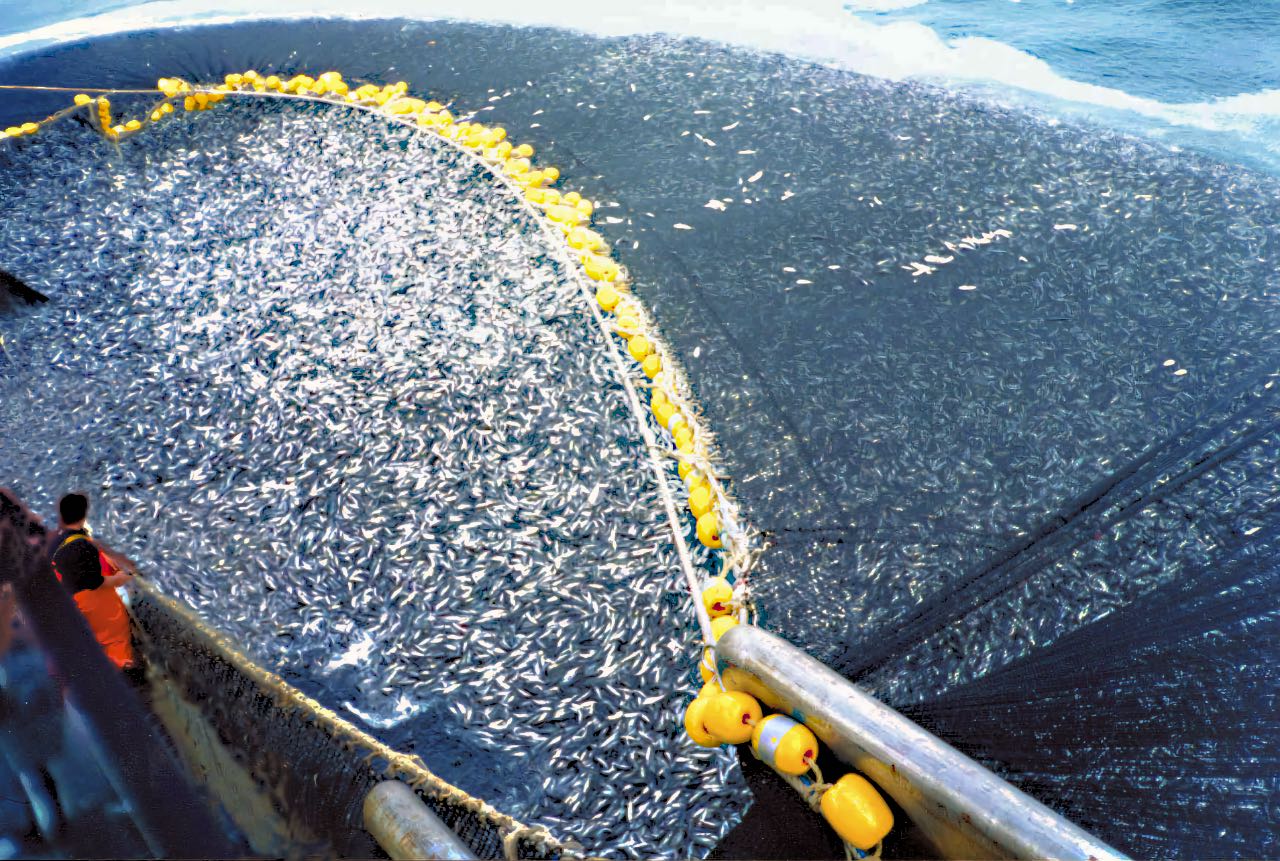 A purse seine on a Chilean fishing vessel captures tons of mackerel. NOAA
We need to navigate to where fish sticks in your mind
You can read Coty Perry’s full report on overfishing at YourBassGuy.com.
When you hear about sustainability, one thing that often flies under the finder is the topic of overfishing. Many will say that overfishing is a natural response to the need for more fish, but it runs much deeper than that.
The goal of this article is not to shame any specific industry, country or company. The goal is to shine light on an issue I believe is highly under-reported by mainstream media.
MEMPHIS — Area residents were invited to a film screening of “Keep the Lights On” and a panel discussion at the Memphis Rox climbing gym with community members, local advocates and policy experts. The event, which ran from 10 a.m. to 4 p.m. Saturday, Aug. 20, coincided with Global Climbing Day, and professional rock climbers Nina Williams, Manoah Ainuu (who recently summited Everest), Olympic Silver Medalist Nathaniel Coleman, and Fred Campbell hosted and participated in community and climbing-oriented events prior to the film screening and conversation.
The film follows Memphis Rox staff member and leader Jarmond Johnson, recounting his experiences with intermittent energy access growing up in South Memphis, his growth into a gang activist and mentorship role at Rox, and, ultimately, working with professional rock climber and environmental activist Alex Honnold (best known for the academy award-winning film, Free Solo) to bring solar energy to the gym. Following the screening, Jarmond and a panel of experts discussed takeaways from the film, and how equitable access to solar energy could help all Memphians keep their lights on.
— Southern Alliance for Clean Energy