
News (340)
That ain’t country: Activists protest proposed downtown tree removal in Knoxville
Written by Thomas FraserKNOXVILLE — People assembled at 6 p.m. Aug. 19 to speak for the trees threatened by development of an art installment at the half-acre Cradle of Country Music Park at the corner of Gay Street and Summit Hill Drive downtown.
The Harvey Broome Chapter of the Sierra Club organized the protest against the removal of five mature oak trees to make way for the sculpture and its base, which was originally commissioned to a New York City artist in 2018 and will cost the city $600,000, according to reporting from Compass. The online news outlet also reported Friday that Councilwoman Seema Singh has requested a pause in the project to determine whether there are alternatives to removing the trees.
Coral, waste, water and weeds: Environmental vignettes from a UT journalism class
Written by Kaylee Walper, Mallory DeVore, Grace Ellison, Kathryn Kavanagh An empty Circle Park is seen in April. The park is adjacent to the UT School of Journalism and Electronic Media. Steven Bridges/University of Tennessee
Everybody has a story about the natural environment. Look around, and into yourself.
University of Tennessee journalism professor Mark Littmann asks students in his environmental writing class every semester to write short sketches about environmental issues they may observe during any given day. Such an assignment requires an almost poetical approach. Here's a sampling from spring semester.
A reef of bones
Huge schools of rainbow-colored fish weave through the brightly colored corals as Sir David Attenborough describes a day in the life of a fish on the television screen. A little girl is mesmerized; this is no Disney fantasy but real life. The nature shows on Animal Planet capture her imagination and soon mornings and afternoons are spent watching big cats and meerkats navigate the wild spaces they call home. She finds an instant favorite in the book “The Rainbow Fish” and celebrates turning four with a sparkly rainbow fish cake, hand decorated with sprees for rainbow scales. She insists someday she will swim among the fish in their magical undersea world.
Activists urge TVA to take advantage of historic US climate bill for energy-efficiency improvements
Written by Dulce Torres Guzman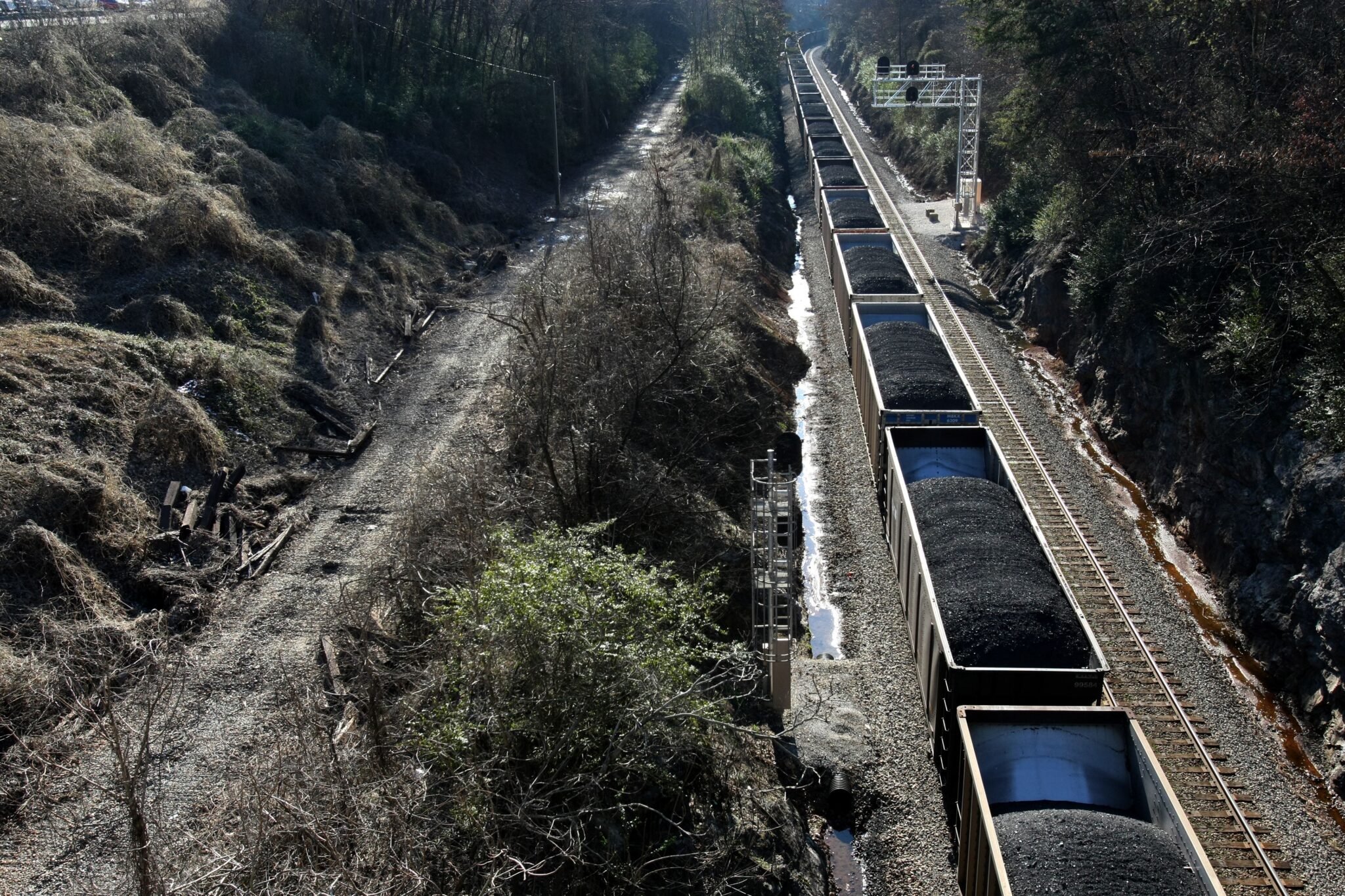 A hopper car on a train filled with coal to be delivered to a TVA coal-fired plant. John Partipilo/Tennessee Lookout
Climate bill designates TVA as a potential recipient of clean energy investments and loans
This story was originally published by Tennessee Lookout.
KNOXVILLE — Clean-energy advocates are urging the Tennessee Valley Authority to use funds provided through the Inflation Reduction Act to deliver environmentally friendly energy to Tennessee customers.
The massive bill Congress passed Friday includes $370 billion for clean energy investments and listed TVA as an entity that is eligible to take advantage of clean energy credits and loans to significantly reduce the cost of energy-efficient infrastructure.
On Aug. 12, the Clean Up TVA Coalition, including the Sierra Club, the Southern Alliance for Clean Energy and Appalachian Voices, urged TVA to take advantage of the legislation and make funds available to its affiliated local power companies, which can then offer energy-efficient options for customers.
- tennessee clean energy
- tva fossil fuel
- tva clean energy
- us climate bill
- inflation reduction act
- tennessee lookout
- alternative energy
- alternative energy tva
- sierra club
- southern alliance for clean energy
- sace
- sace utilities report
- clean up tva coalition
- appalachian voices
- sunrise movement nashville
- utility energy efficiency
 You might have to pay to park at some of these trailheads in Great Smoky Mountains National Park starting next year. These old trail badges are displayed in Fontana Village on the south side of the Smokies. Thomas Fraser/Hellbender Press
Smokies parking fees will generate $7 million in revenue for park infrastructure
GATLINBURG — Getting outside just got more expensive.
Great Smoky Mountains National Park officials announced Monday the park would proceed with plans for a $5/per day parking pass required of all cars staying in one spot for more than 15 minutes.
Weekly passes will be $15, and annual passes will be available for $40, according to a release from the park service. Fees will also increase $3 for backcountry and campground permits, meaning campers and backpackers will have to fork over $8 a night.
Monarch butterflies, an ephemeral but regular glimpse of beauty, are fluttering toward extinction
Written by Stephen Lyn Bales  A monarch butterfly, recently declared endangered despite decades of conservation, is seen atop a coneflower. Stephen Lyn Bales
Dramatic monarch declines mean the bell tolls for we
KNOXVILLE — Monarch butterflies are ephemeral by nature. The orange and black dalliances that flitter through our lives, our yards, and our countryside like motes of dust are here one minute and gone the next. We pause for a few seconds to watch the “flutter-bys” and then move on.
For about all of the Lepidopteran family, where they come from, where they go, their raison d'être, we don’t ask. They are winged wisps that pass through our busy lives. But that is not true with this orange and black butterfly, named to honor King William III of England, the Prince of Orange. But two people did ask.
Norah and Fred Urquhart lived in Southern Canada and in the late 1930s they noticed that the monarch butterflies seemed to all be fluttering south this time of the year. Could they possibly be migrating and if so, where did they go? The notion that a butterfly might migrate south for the winter seemed hard to fathom. Yes, broad-winged hawks migrate. But a flimsy butterfly?
- monarch butterfly
- monarch
- are monarchs endangered?
- stephen lyn bales
- stephen bales
- ijams nature center
- lepidoptera
- catalina aguado
- norah and fred urquhart
- flight of the butterflies
- xerces society
- great smoky mountains institute at tremont
- danaus plexippus ssp plexippus
- endangered species
- international union for conservation of nature
- pesticide
- pollinator
- habitat loss
- climate change
- herbicide
- mexico
At Gray Fossil Site, paleontologists let the bone-crushing dog out
Written by East Tennessee State University Illustration of the Gray Fossil Site bone-crushing dog, recently determined to have been active in the ancient Southern Appalachians. Mauricio Anton via ETSU
Discovery of ancient ambush predator is one of few large carnivores found at East Tennessee paleontological site
JOHNSON CITY — Overseen by the Don Sundquist Center of Excellence in Paleontology at East Tennessee State University, researchers have studied the Gray Fossil Site for over 20 years. They have identified many extinct animal and plant species of the Pliocene epoch that lived there some 5 million years ago. While large herbivores are well known from the site, large predators are relatively uncommon, so far including only alligators and scarce remains of at least one sabertooth cat.
Now, there’s a new predator on the scene.
A recent study published in the Journal of Paleontology describes a single right humerus (upper arm bone) of an animal named Borophagus, a member of an extinct group more commonly called bone-crushing dogs. The animal is so named for its powerful teeth and jaws. This is the first evidence of any animals in the dog family from the Gray Fossil Site.
The research was conducted by Emily Bōgner, a doctoral student at the University of California, Berkeley, and alumnus of ETSU’s paleontology master’s program, and Dr. Joshua Samuels, associate professor in the ETSU Department of Geosciences and curator at the Gray Fossil Site and Museum.
 A rainbow pierces gray skies during the 2021 United Nations Climate Change Conference in Glasgow. United Nations
Climate activists stress positives of Senate climate bill despite its shortcomings
Amy Rawe is communications director for Knoxville-based Southern Alliance for Clean Energy.
KNOXVILLE — The U.S. Senate passed the Inflation Reduction Act (IRA), an estimated $430 billion bill, of which approximately $370 billion will be allocated to investments in clean energy and to address climate change.
It’s the single largest climate investment in U.S. history, and if it passes the House, will put the country on a path to be able to achieve roughly 40 percent emissions reduction from 2005 levels by 2030, reestablishing our influence in meeting the Paris Agreement goal of limiting global warming to 1.5 degrees Celsius.
- southern alliance for clean energy
- climate bill
- inflation reduction act
- alternative energy
- sace
- stephen smith
- solar power
- southeast climate change
- electric car
- electric cars in southeast
- senate climate change
- amy rawe
- wind power
- what's in climate change bill?
- carbon dioxide
- carbon dioxide ppm
- global climate change
- global climate change knoxville
Dems pass huge climate bill assailed by some as another fossil energy sop
Written by Airiana Figueroa and Jacob Fischler
Record-setting bill will fund extensive efforts to address climate change, but the sausage-making deal is decried by some as a ‘suicide pact’
This story was originally published by Tennessee Lookout.
WASHINGTON — The U.S. Senate, along party lines, passed a sweeping energy, health care, climate and tax package Sunday afternoon, following an overnight marathon of votes that resulted in just a handful of notable changes to the legislation.
The 755-page bill was passed after Vice President Kamala Harris broke a 50-50 tie in the evenly divided Senate. It now heads to the House, where Democratic leaders have announced they will take it up on Friday.
At last, we have arrived,” Senate Majority Leader Chuck Schumer said. Democratic senators broke out into applause as Harris announced passage of the bill, expected to total more than $700 billion.
Schumer, a New York Democrat, said he dedicated the measure to young Americans who have pushed and protested for the Senate to take action on climate change.
An under-appreciated Black scientist pioneered the modern study of bees and other insects
Written by Edward D. Melillo Zoologist Charles Henry Turner was the first scientist to prove certain insects could remember, learn and feel. Charles I. Abramson via The Conversation
Charles Henry Turner concluded that bees can perceive time and develop new feeding habits in response
This story was originally published by The Conversation. Edward D. Melillo is a professor of history and environmental studies at Amherst College.
On a crisp autumn morning in 1908, an elegantly dressed African American man strode back and forth among the pin oaks, magnolias and silver maples of O’Fallon Park in St. Louis, Missouri. After placing a dozen dishes filled with strawberry jam atop several picnic tables, biologist Charles Henry Turner retreated to a nearby bench, notebook and pencil at the ready.
Following a midmorning break for tea and toast (topped with strawberry jam, of course), Turner returned to his outdoor experiment. At noon and again at dusk, he placed jam-filled dishes on the park tables. As he discovered, honeybees (Apis mellifera) were reliable breakfast, lunch and dinner visitors to the sugary buffet. After a few days, Turner stopped offering jam at midday and sunset, and presented the treats only at dawn. Initially, the bees continued appearing at all three times. Soon, however, they changed their arrival patterns, visiting the picnic tables only in the mornings.
Falling trees accountable for very few deaths in Smokies, but they do happen
CITIZEN TIMES: Child killed by falling tree was a very rare twist of horrible fate
Karen Chavez of the Asheville Citizen Times wrote a great article on tree-related deaths in Great Smoky Mountains National Park and beyond following the death last week of a Georgia child killed by a falling tree as she was occupying a tent in Elkmont Campground.
She reports the death of the child was only the 11th tree-linked death in the national park’s history.
The first such death was reported in 1934, when a Civil Conservation Corps worker was killed. Tree-related deaths since are normally associated with roadways and hiking trails.
“‘Deaths related to falling trees or limbs account for about 2 percent of total recorded deaths in the park. It’s an incredibly rare and tragic occurrence and accounts for the first-ever fatality caused by a tree falling on a tent in park history,’” according to an interview Chavez had with park spokeswoman Dana Soehn.
More...
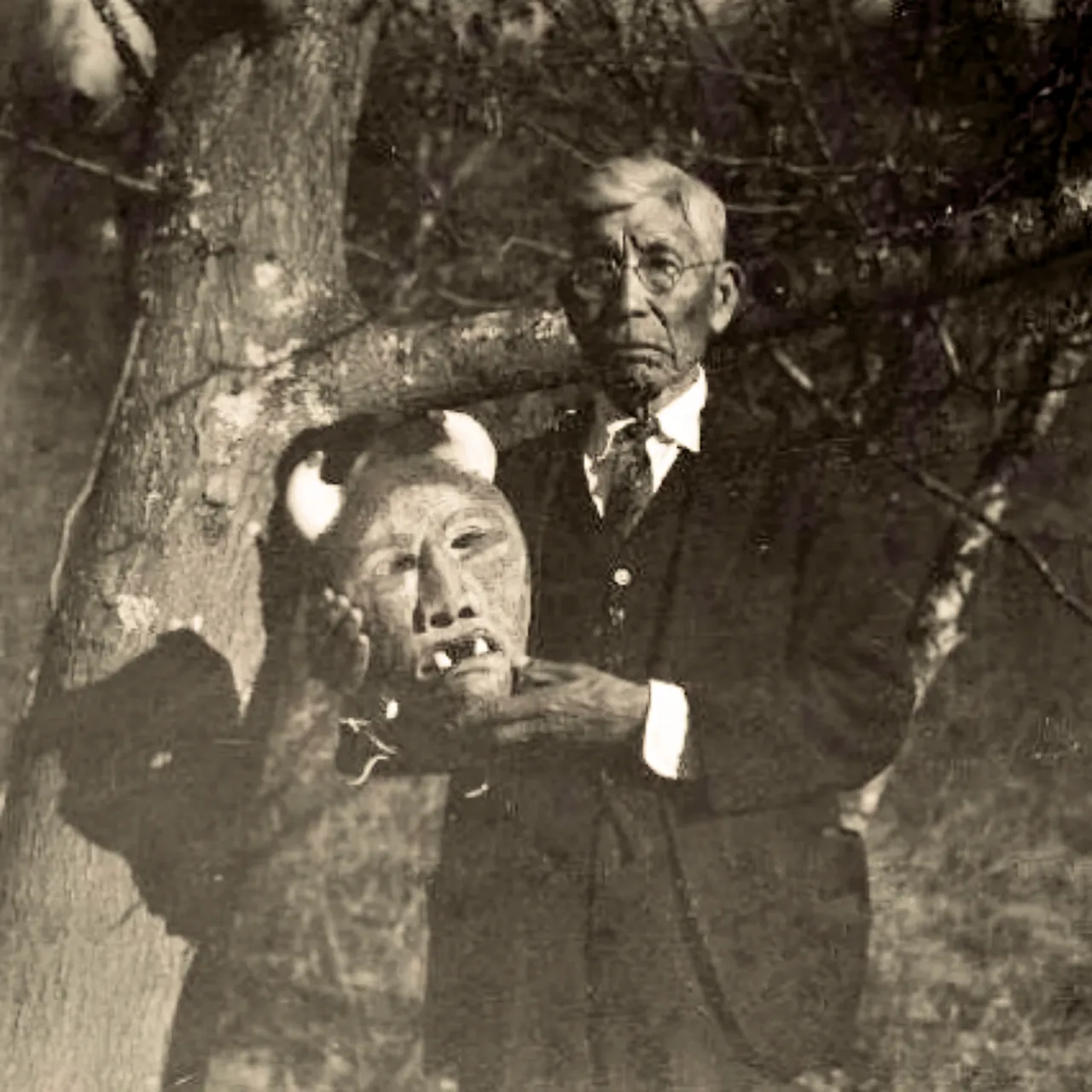 Cherokee tribal council member, historian and ethnographer Will West Long holds a traditional Cherokee mask, which he often recreated. He was an active chronicler of Cherokee custom, heritage and tradition and died in 1947 on the Qualla Reservation in Swain County, North Carolina. WikiCommons
As plans gel for massive new developments, has the Eastern Band lost its ancient way?
SEVIERVILLE — The Tennessee Department of Transportation is eyeing a second interchange for exit 407 at Highway 66 along Interstate I-40 in Sevier County.
Exit 407, already one of the most congested interchanges in Southern Appalachia, accesses the main highway to Great Smoky Mountains National Park, the most visited national park in the nation. The park reported a record 14 million visitors in 2021.
The exit also serves crowds flocking to Pigeon Forge and Gatlinburg.
But the new interchange would primarily serve a 200-acre development to be called Exit 407: The Gateway to Adventure.
Scheduled to open spring 2023, and fully operational in 2024, it’s expected to attract 6.7 million people annually. The first phase includes a theme park and a 74,000-square-foot convenience store with 120 gas pumps, making it the world’s largest such store.
- exit 407
- eastern band of cherokee indians
- cherokee
- buc'ees
- world's largest convenience store
- cherokee, nc
- qualla boundary
- theme park at exit 407
- cherokee 'the right way'
- great smoky mountains national park
- great smokies visitation
- sevier county
- swain county
- cherokee casino
- when will buc'ees open in sevier county
- buc'ees beef jerky
- trail of tears
- pigeon forge
- gatlinburg, tn
- traffic in smokies
- traffic in sevier county
- will west long
- cherokee tradition
- cherokee heritage
- what was cherokee's connection to the environment
- rick vaughan
- hellbender press cherokee
- i40 exit for smoky mountain
- did cherokee hunt mastodon?
Updated: Summer of weather anomalies continues as deadly floods ravage SE Kentucky
Written by Thomas Fraser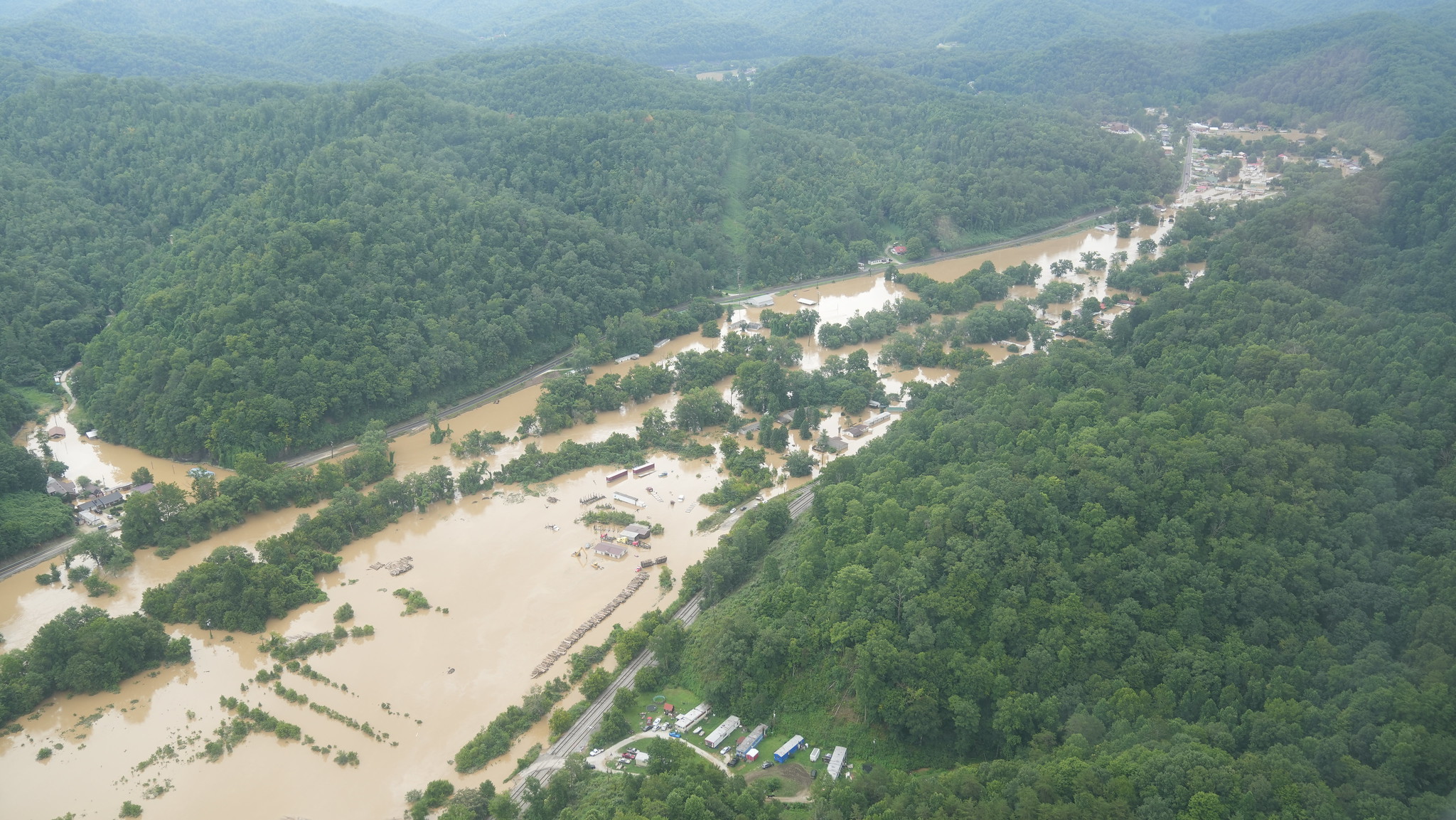 Heavy flooding is seen in eastern Kentucky this weekend. State of Kentucky/Office of Gov. Andy Beshear
Another round of severe flooding hits the Southern Appalachian region
UPDATED: The death toll from last week’s unprecedented flooding in Kentucky reached at least 29, as some areas contended with additional flooding over the weekend. Fifteen of those, including four children, died in Knott County, which is about 100 miles north of Kingsport.
Water service to nearly 67,000 connections has been affected, as well as 17 wastewater-treatment systems in eastern Kentucky, according to Gov. Andy Beshear’s office.
“We are currently experiencing one of the worst, most devastating flooding events in Kentucky’s history. The situation is dynamic and ongoing,” Beshear said in a statement.
“What we are going to see coming out of this is massive property damage and we expect loss of life. Hundreds will lose their homes. And this will be yet another event that will take not months, but years, for our families to rebuild and recover from.”
Falling tree kills child in Great Smokies
ELKMONT — A 9-year-old girl died early Wednesday after a tree fell on a tent she was occupying in Great Smoky Mountains National Park.
The unidentified child was among a group of people camping in Elkmont Campground when the red maple, 2 feet in diameter, fell shortly after midnight and crushed the girl in her tent, according to the National Park Service.
The girl and her family had traveled to the national park from Georgia. Her father and two siblings weren’t injured, according to the park service.
Elkmont Campground remains open, but the family’s campsite and an adjacent campsite were temporarily closed.
Congo retreats from climate commitments to fuel its fossil energy sector
NYT: Why should we care when you built your world with fossil fuels?
The government of Congo is recruiting fossil-fuel extractors to suck oil from beneath tropical forest and bog ecosystems that rival the Amazon in their role as carbon sinks.
Opponents say it’s another step in knocking over the dominoes of climate renewal as Russia’s invasion of Ukraine continues to roil energy markets and threaten international commitments to addressing climate change.
“The oil and gas blocks, which will be auctioned in late July, extend into Virunga National Park, the world’s most important gorilla sanctuary, as well as tropical peatlands that store vast amounts of carbon, keeping it out of the atmosphere and from contributing to global warming,” according to the New York Times.
Leaders say the global energy paradigm has shifted to the point it makes little sense to prioritize the natural environment over boosting the economy of an impoverished nation.
According to NYT: “That’s our priority,” Mr. Mpanu said, in an interview last week. “Our priority is not to save the planet.”